Vatican City - Leo XIV has appointed Cardinal Konrad Krajewski as Metropolitan Archbishop of Łódź, transferring him from his office as Almoner of His Holiness and Prefect of the Dicastery for the Service of Charity. The decision brings back to Poland, to his own Łódź, one of the most heavily promoted figures of Francis’s pontificate, elevated over the years into a symbol of a form of charity also displayed as a political and ecclesial hallmark.
The Pope’s decision carries a significance that goes beyond a simple change of office. Leo XIV is placing men of proven loyalty in sees of particular weight, tracing with prudence but also with clarity the geography of his own government. Krajewski, who arrived in the Vatican as a simple master of ceremonies in the days of Saint John Paul II and gradually rose to the highest levels of the Curia, is now leaving the Roman stage to return to the diocese from which he first departed. In this move one can discern a style that restores form and proportion to papal governance, after a season in which such decisions often seemed sacrificed to improvisation, personalisation and media gesture. For Krajewski, this is therefore a return that is biographical, ecclesial and institutional all at once: a return to his native land, but also a sterner test, because governing a diocese and managing relations with the faithful and the clergy is particularly difficult.
The story of Konrad Krajewski
Born in Łódź on 25 November 1963, he entered the city’s diocesan seminary in 1982 and obtained a degree in theology from the John Paul II Catholic University of Lublin. He was ordained a priest on 11 June 1988. In the first years of his ministry he served first as parish vicar in Rusiec and then in Łódź, in a pastoral path that preceded his Roman studies and his later service in the Curia.
His formation developed in a marked way along liturgical lines. In Rome he obtained a licentiate in liturgy from the Pontifical Liturgical Institute of Sant’Anselmo and then a doctorate in theology, specialising in liturgy, from the Pontifical University of Saint Thomas Aquinas. In those same years he collaborated with the Office for the Liturgical Celebrations of the Supreme Pontiff and served as chaplain to the orthopaedic and trauma clinic of La Sapienza University. Having returned to his homeland, he became master of ceremonies to the Archbishop of Łódź, taught in the diocesan and religious seminaries of the archdiocese and at the Academy in Warsaw, and also served as rector of the diocesan seminary. In 1998 he returned to Rome, where he was taken on by the Office for the Liturgical Celebrations of the Supreme Pontiff; the following year, on 12 May 1999, he was appointed Pontifical Master of Ceremonies, serving alongside Saint John Paul II, Benedict XVI and Francis.
Into Francis’s inner circle
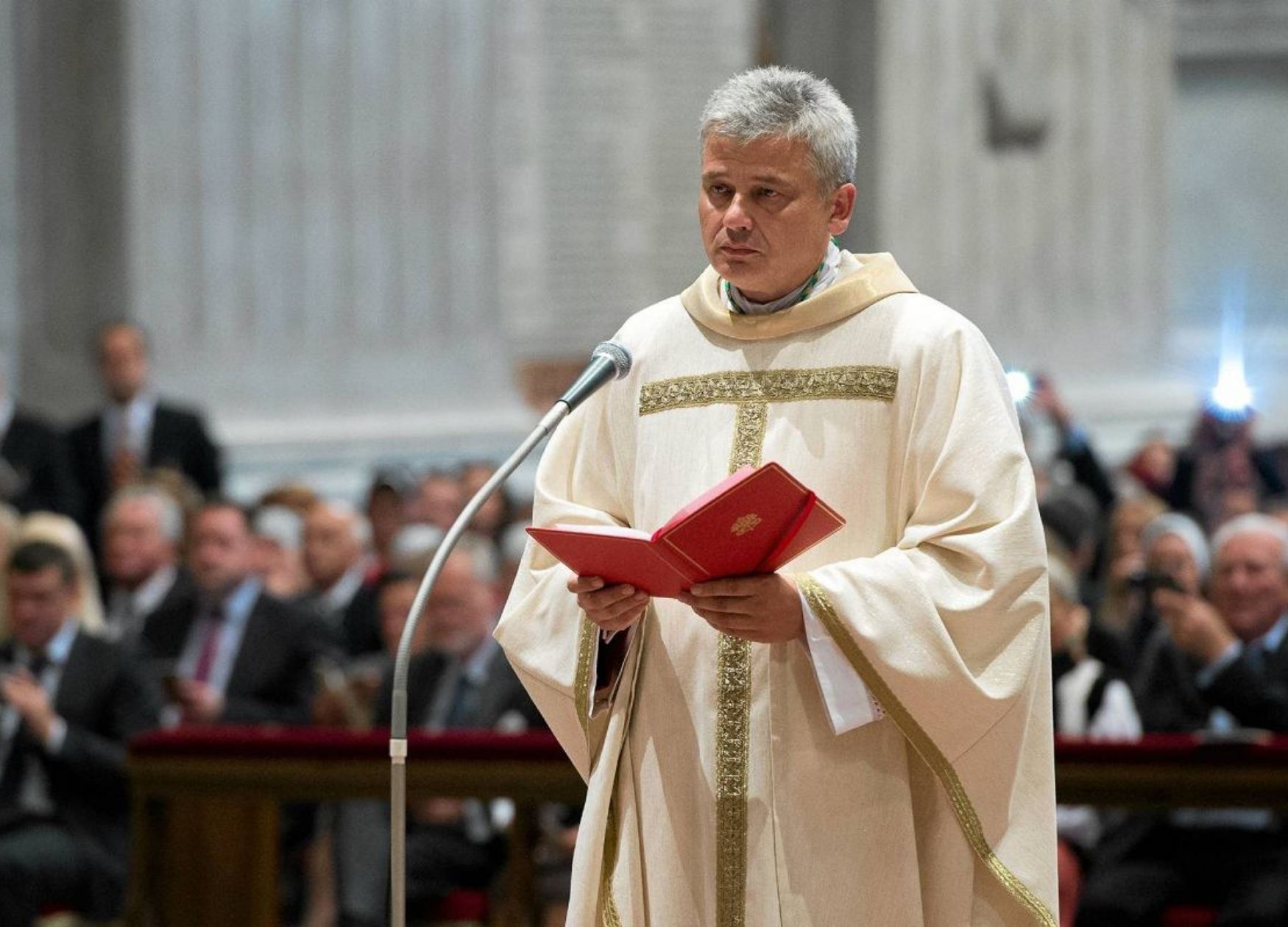
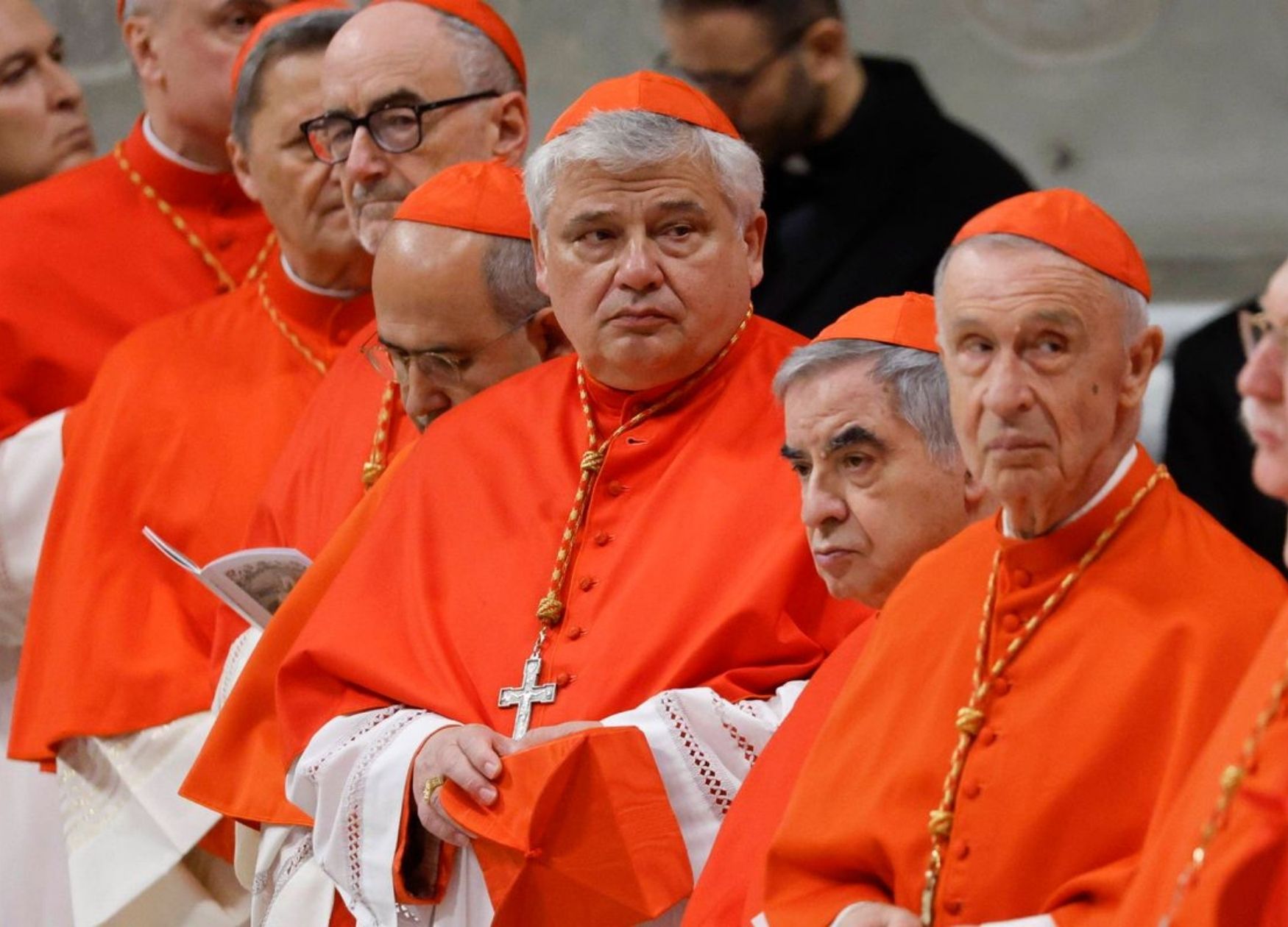
The turning point came in 2013, when Pope Francis immediately chose him as Almoner of His Holiness and raised him to the episcopate with the personal title of archbishop. His episcopal consecration was celebrated on 17 September that year. At the consistory of 28 June 2018, Francis created him cardinal, assigning him the deaconry of Santa Maria Immacolata all’Esquilino. Since 2022 he has led the Dicastery for the Service of Charity.
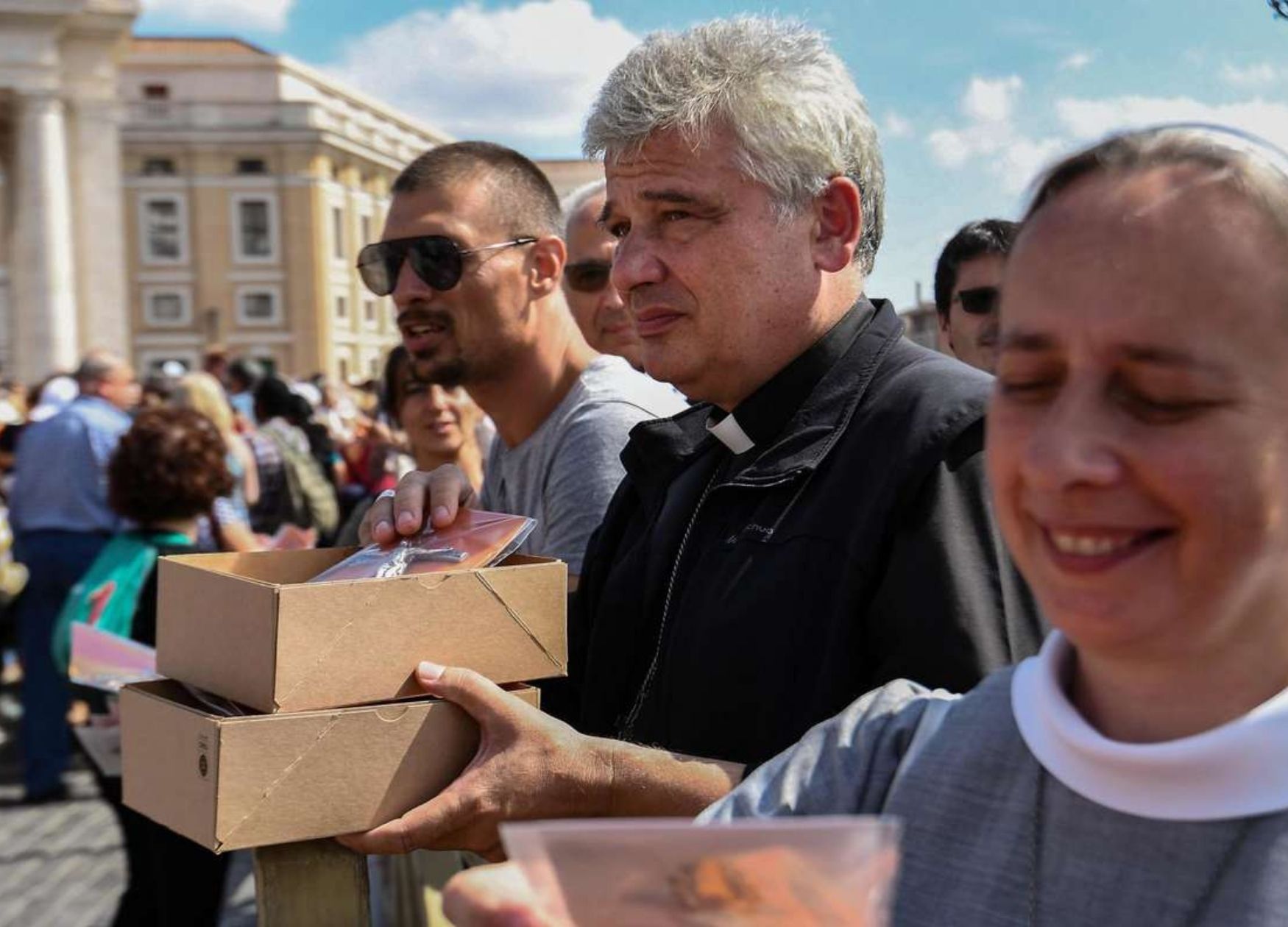
In these years, Krajewski’s name has become identified with a form of ecclesial presence that was highly exposed in the public sphere and deliberately removed from the more traditional codes of the Curia. It was Pope Francis himself who told him that there should be no desk in his office: a programmatic image, almost a manifesto, translating into action the desire for an almoner constantly on the move, visible, recognisable, immediately associable with the Pope’s charity. From there came his work among the homeless around Termini station and in the harsher outskirts of the Eternal City, followed by his direct management of initiatives for the poor of Rome, the reception of refugees, humanitarian interventions and missions to Ukraine after the outbreak of the war. All this made Krajewski an eccentric figure in comparison with the usual profile of a curial prelate, turning him into one of the Pope’s most exposed collaborators in the field of a charity that was not only operative, but also highly representative.
The media logic of a ministry
In reality, Francis did not alter the nature of the Apostolic Almonry, which has always carried out works of charity in the name of the Pontiff; he did, however, substantially change the profile of the Almoner. Where previously there had chiefly been discreet, orderly coordination exercised by the office according to an institutional logic, Bergoglio wanted the man on the front line, the face before the structure, the person before the function. In this too one sees a typical trait of his pontificate: the insistence on the immediate gesture, the “Instagrammable”, the “made-for-television”, on the concrete scene, on the symbolic force of the image. And Krajewski, by disposition, was perfectly suited to that approach. He was seen on several occasions in St Peter’s Square moving barriers, intervening without mediation even in situations of hardship, in brisk, rough-edged ways far removed from a gentler manner. It was a profile that Francis considered effective and which, for precisely that reason, became one of the most recognisable icons of his ecclesial season.
A man of deep faith
It must, however, be acknowledged that Krajewski never separated charity from prayer. He is a man formed in the Polish school of John Paul II, and thus marked by a spirituality that is concrete, disciplined and deeply Christ-centred. Even on the rare occasions when he spoke in public – because his exposure came above all through images, footage and a representation carefully amplified by Vatican channels – he always led everything back to Jesus Christ. In his language, the poor never became a sociological category or an ecclesial slogan: they remained the face of Christ to be recognised, served and venerated.
For this reason, Krajewski cannot be dismissed as an ideologue of charity or as a mere media creation of the Bergoglian pontificate. Certainly, the communications machine often turned him into a symbol, at times even into a concrete emblem of a certain papal narrative. But behind that construction there is a man who acted because he truly believed in what he was doing. In this respect, one of his public interventions remains particularly significant and worth hearing again: the presentation of Pope Leo XIV’s Apostolic Exhortation Dilexi Te. In those words there emerge accents of faith that are clear, sober and essential, capable of showing that, at least in his case, action never claimed to replace adoration, and that service to the poor was never conceived apart from the primacy of the interior life.
The new post in Poland
His arrival in Łódź now places him at the head of a metropolitan see of real importance in the Polish ecclesial landscape. The archdiocese comprises the central part of the Łódź Voivodeship; the archiepiscopal seat is in the city of the same name, where the Cathedral of Saint Stanislaus Kostka stands. Within its territory there are 219 parishes distributed across 35 deaneries. According to the figures reported for 2023, the archdiocese counted 1,351,780 baptised Catholicsout of 1,433,180 inhabitants, equal to 94.3 per cent of the population, with 753 priests, 16 permanent deacons, 257 religious brothers and 431 religious sisters. The suffragan Diocese of Łowicz forms part of its ecclesiastical province.
The history of the see also explains the symbolic weight of the appointment. The Diocese of Łódź was erected on 10 December 1920 by Benedict XV; in 1992 it was raised to the rank of archdiocese and in 2004 it became a metropolitan see. In recent decades it has been led, among others, by Marek Jędraszewski and then by Grzegorz Ryś. It was precisely Ryś’s departure that opened the vacancy of the see: on 26 November 2025, Leo XIV appointed him Archbishop of Kraków, leaving Łódź without its pastor at a moment when the Polish Church continues to grapple with pastoral tensions, declining religious practice and a redefinition of the relationship between centre and ecclesial peripheries.
Today Leo XIV entrusts Łódź to a cardinal who knows that diocese from the inside, even though he has been far from it for many years. Krajewski retains its ecclesial language, its cultural sensibility and its living memory; yet he also brings with him almost thirty years of Roman experience, shaped in the palaces of the Curia and at the symbolic heart of Bergoglio’s pontificate. His return, therefore, marks an institutional transition, because it places at the head of an important see a man who will now have to measure himself against the ordinary governance of a local Church after a long season lived under the glare of the Vatican spotlights.
A season comes to an end
The transfer also brings to a close a particular phase for the Dicastery for the Service of Charity, which in these years was often used as the immediate shop window for a papal image built around closeness, suffering and direct contact with the least. In time, the point became obvious: the link between the Almoner and the Pope, which should have remained clear and institutional, progressively came to centre on the person of Krajewski, almost to the point of overlapping the face of the office with that of its holder. When an office identifies too strongly with the man who holds it, the function recedes and personalisation takes the place of structure.
With the appointment of the new Prefect, a Spanish Augustinian religious, a bishop for many years and close to Leo XIV, the Pope seems to want to restore to this dicastery a firmer and more straightforward profile: certainly to represent him, but above all to serve well. What matters is that charity should truly reach the poor, with effectiveness, continuity and discretion. Publicity adds nothing to good works; personalisation often impoverishes them. It would indeed be healthy to recover an elementary truth, now almost lost: not everything that appears corresponds to reality, and not everything that remains outside the frame therefore does not exist. Many of the most serious, most effective and most faithful works are carried out far from the cameras, in silence and daily dedication.
Fr.L.S.
Silere non possum