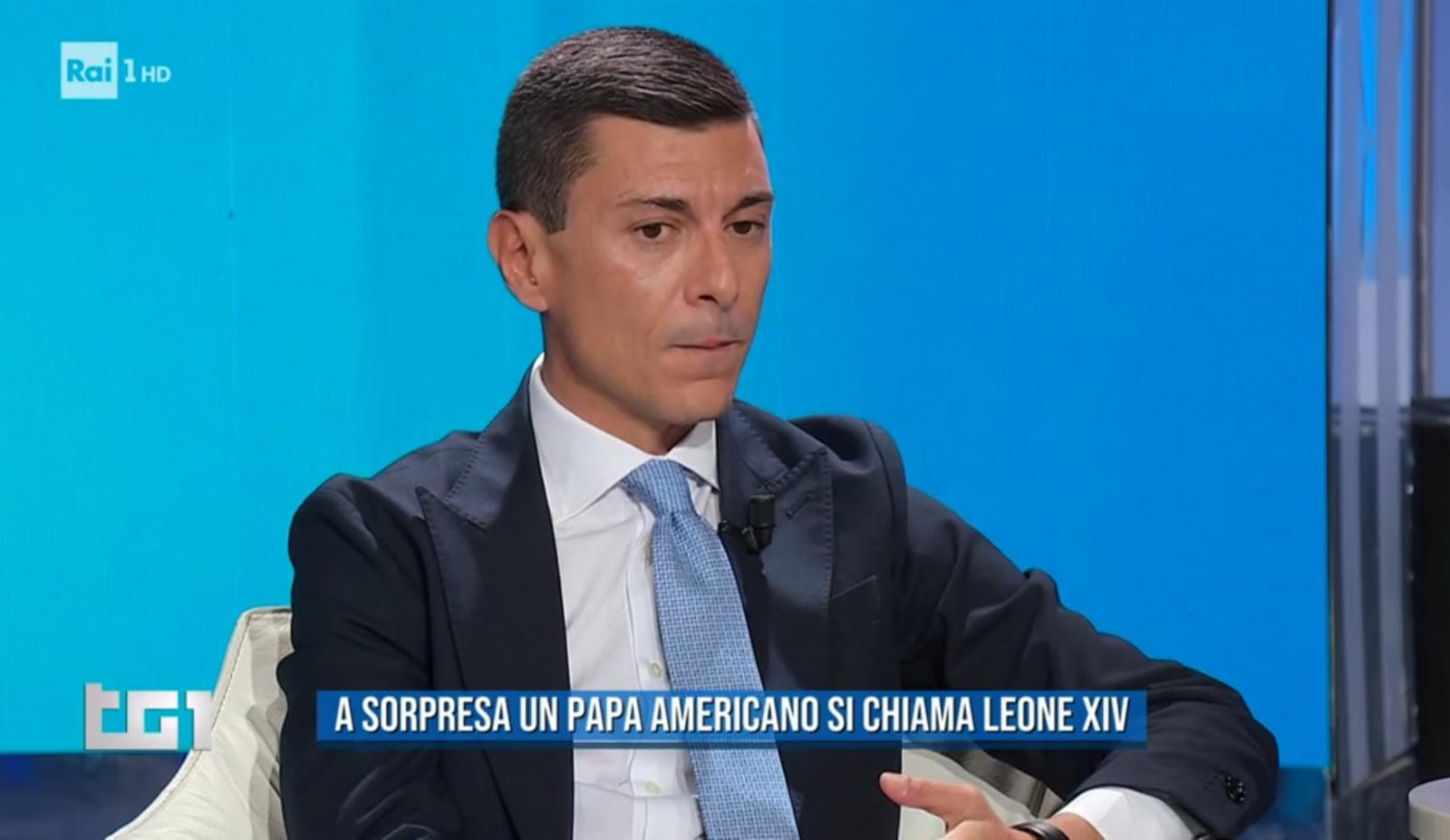
Rome - Francesco Capozza, the Vatican correspondent for Il Tempo, has become the focus of mounting scrutiny from those who follow Vatican affairs and court reporting. The picture is set out in a lengthy investigation by the news outlet Silere non possum, which documents a series of extremely serious allegations: from public homophobic and sexualised insults directed at priests and laypeople, through to ongoing criminal proceedings for extortion, harassment and stalking. It is a complex affair, backed up by court papers, formal complaints, social media posts and audio-video recordings.
The language: homophobic slurs and sexualised content
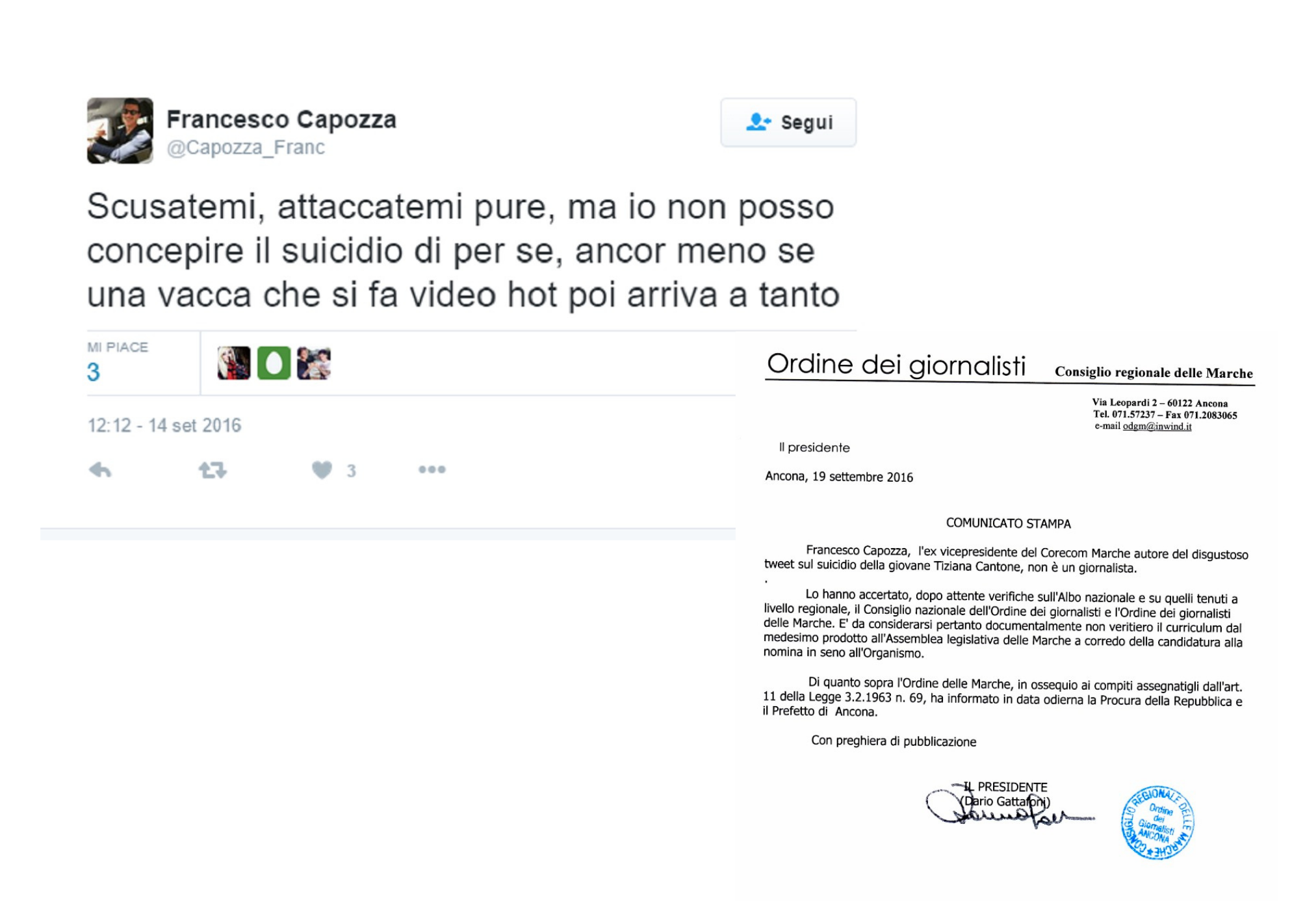
Capozza - who, it should be noted, is not registered with the Order of Journalists, which has in fact reported him for falsely claiming to be a journalist, including on the CV he submitted to the Marche Regional Authority - is the author of numerous social media livestreams and posts in which sexually explicit and markedly homophobic language repeatedly crops up against members of the clergy.
In a publicly available TikTok livestream, Capozza referred to Father Enzo Fortunato in sexual and homophobic terms, before going on to defame the head of a well-known Atelier on the basis of nothing more than gossip. In the same broadcast he went so far as to accuse Cardinal Angelo Bagnasco outright of having breached the secrecy of the Conclave, dragged Cardinal Marcello Semeraro into the affair, and levelled unfounded accusations at a priest.
Particularly serious, in terms of the persistent pattern of behaviour, is the Instagram livestream of 1 May 2026, during which Capozza also defamed a barrister of the Milan Bar. A formal report on that broadcast has been submitted to the Milan Bar Council, so that it may consider what protections to afford the professional involved. It is also worth recalling that back in 2016, when he held the post of Vice-President of Corecom Marche - a role from which he was subsequently removed - Capozza publicly called Tiziana Cantone a "cow", the woman who took her own life after private videos of her went viral. The remark was posted on his Twitter account whilst Cantone was already dead by suicide, and provoked considerable outrage at the time.
The extortion and stalking case brought by an ex-partner
Beyond the verbal misconduct, the Vatican reporter is facing extremely serious criminal proceedings. The Rome Public Prosecutor's Office has applied to commit him for trial on charges of extortion, harassment and stalking of a former partner. According to the prosecution case, supported by chat logs and audio recordings on file, Capozza is alleged to have extorted money from his former partner by threatening to out him publicly as gay.
Capozza was questioned on 23 April 2026. The case, which has been on foot for some time, has been subject to significant delays because - as the file shows - for over a year the defendant was recorded as "untraceable" by the police. The presumption of innocence until final judgment naturally applies.
Civitavecchia: faeces on the neighbours' car, threats and the "press card" as a weapon
A second legal front has opened in Civitavecchia, the town where Capozza lives and which he openly flags up on his social media profiles. Two of his neighbours have reported him to the police for extremely serious conduct: he is alleged to have smeared faeces on their car, thrown excrement into their garden and scratched the same vehicle. These incidents were accompanied by repeated threats in which, according to prosecution papers, Capozza resorted to lines such as «I'm a journalist» and «you'll see now» - brandishing the prospect of a hostile newspaper piece as a form of intimidation, and doing so on the back of a professional title which, as the Order of Journalists has confirmed, he does not in fact hold.
The two neighbours have produced audio, video and photographic evidence, and Capozza has already been served with a summary penal order, which he will of course be able to challenge through the proper channels. What emerges is a pattern of repeated intimidation, consistently built around a bogus professional title.
The stalking of Silere non possum
The third strand concerns the years-long obsession Capozza has displayed towards the news outlet Silere non possum and its editor, Marco Felipe Perfetti. Silere non possum is an online daily, properly registered in Estonia, which covers the Vatican and the Catholic Church and has, over the years, become a key reference point for Vatican news. The conduct is documented by the outlet itself with hundreds of posts, screenshots, videos and court filings.
According to the reconstruction of events, Capozza has published the home address and personal and family documents of the editor, in spite of data-protection law; he has turned up at the editor's home to verify the address in person; he has shown up at the outlet's registered office in Rome; he has systematically contacted priests and former seminarians to obtain private information; he has accused various prelates of being "sources" for Silere non possum; and to every article Silere non possum has published he has responded with an unbroken stream of homophobic insults, innuendo and defamatory remarks, going so far as to declare publicly that he wants to "destroy" and "erase" the outlet's editor.
In the face of what Silere non possum describes as inertia on the part of the Rome and Civitavecchia Public Prosecutors' Offices and the Postal Police, the outlet has opted for the civil route, suing Capozza for defamation and seeking damages for each individual post. Capozza's lawyers, it should be noted, failed to attend the compulsory mediation required by law before civil proceedings can begin.
The questions that remain
Looming in the background is an institutional question which the outlet puts squarely on the table: how is it possible that Francesco Capozza is still accredited to the Holy See Press Office, given that he is not a journalist on the professional register and given that he is facing pending criminal proceedings for offences of particular gravity? How is it possible that someone who insults priests by branding them as homosexuals can hold accreditation at the Pope's Press Office?
It is a question which, leaving aside the parties' respective positions, goes directly to the responsibility of those who manage Vatican accreditations - Paolo Ruffini, Andrea Tornielli and Matteo Bruni - and to the overall credibility of the Vatican press corps. Whilst proceedings take their course, and whilst the presumption of innocence applies to all, the available documentation - formal complaints, summary penal orders, indictments, recordings - calls for a reckoning that no one can put off any longer.
Marco Perfetti
Silere non possum