Tallinn - On 6 September 2025, the Catholic Church beatified Archbishop Eduard Profittlich in Estonia, a Jesuit, a martyr of Soviet communism, and a figure now central not only to the small local Catholic community but also to the historical consciousness of the entire country. In recent days, the diocese in Tallinn organised a conference entitled “Blessed Eduard Profittlich and the Holiness”, as an opportunity to explore more deeply the ecclesial, spiritual and public significance of that beatification. In this context, Silere non possum interviewed the Bishop of Tallinn, Philippe Jean-Charles Jourdan, who offered a very profound key to understanding the matter: Profittlich’s story is not merely a memory of the past, but a proposal for the present.
 Diocese of Tallinn
The witness of Blessed Profittlich
To understand the scale of what is taking place in Estonia, one must first return to the figure of Eduard Profittlich.
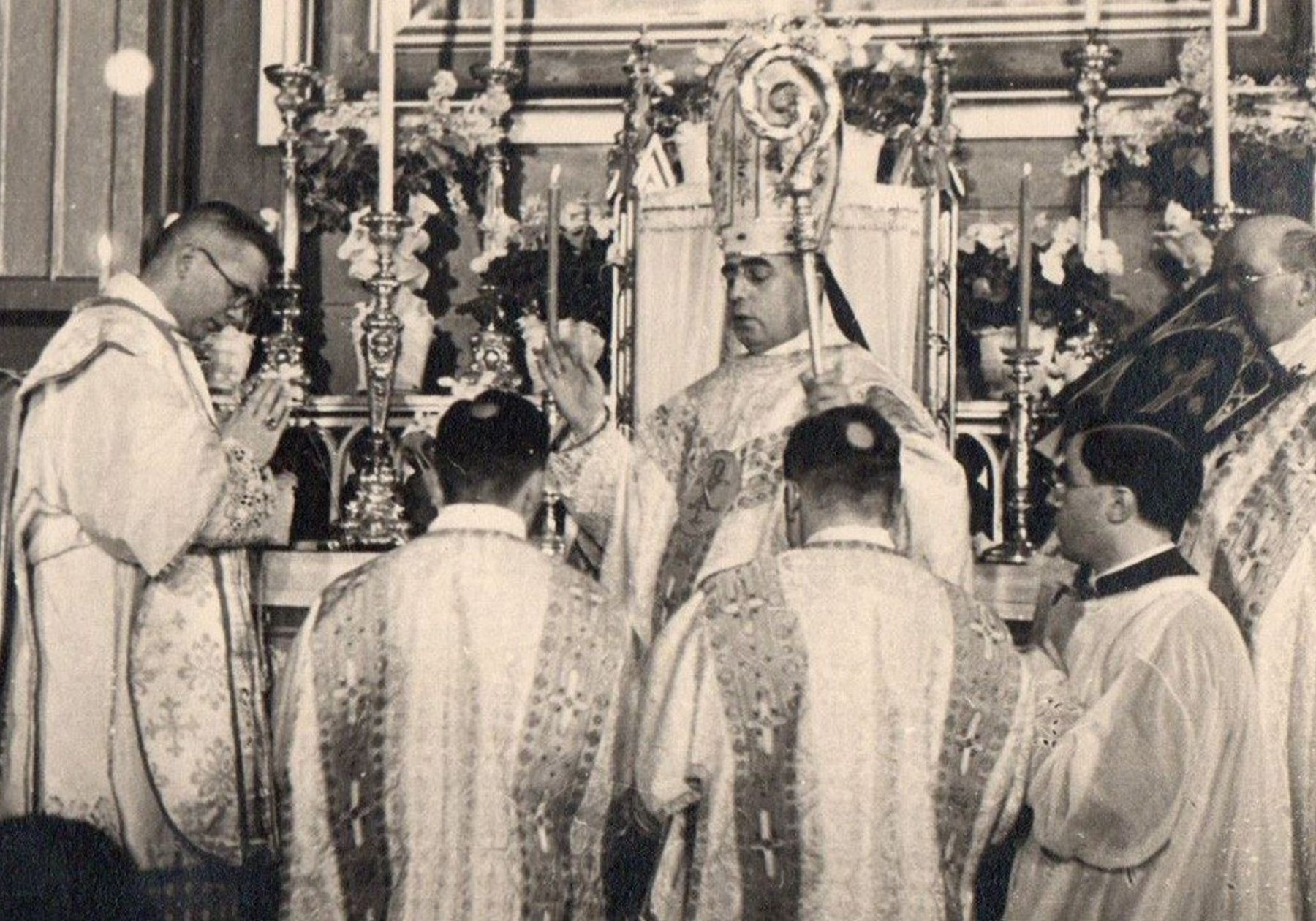
Born on 11 September 1890 in Birresdorf, Germany, he entered the Society of Jesus in 1913. After studying philosophy and theology, he was ordained a priest in 1922. He also prepared for missionary work in the East and, after pastoral experience in Poland, Germany and Hamburg, he arrived in Tallinn in 1930 as parish priest of the Church of Saints Peter and Paul. The following year, Pius XI appointed him Apostolic Administrator of Estonia. Profittlich devoted himself to organising the life of the Catholic Church in a small, scattered and multilingual territory, founding new parishes, promoting the Catholic press and working to ensure that the Church would not be seen as something foreign, but as a presence close also to the Estonian people. In 1935 he obtained Estonian citizenship, and in 1936 he was appointed titular archbishop. When the Soviet occupation overwhelmed Estonia in 1940, he refused to leave the country. Arrested by the NKVD on 27 June 1941, he was imprisoned in Kirov, subjected to interrogations and accused of anti-Soviet agitation and espionage. He died in prison on 22 February 1942, before the death sentence could be carried out.
 Diocese of Tallinn
The beatification in Tallinn
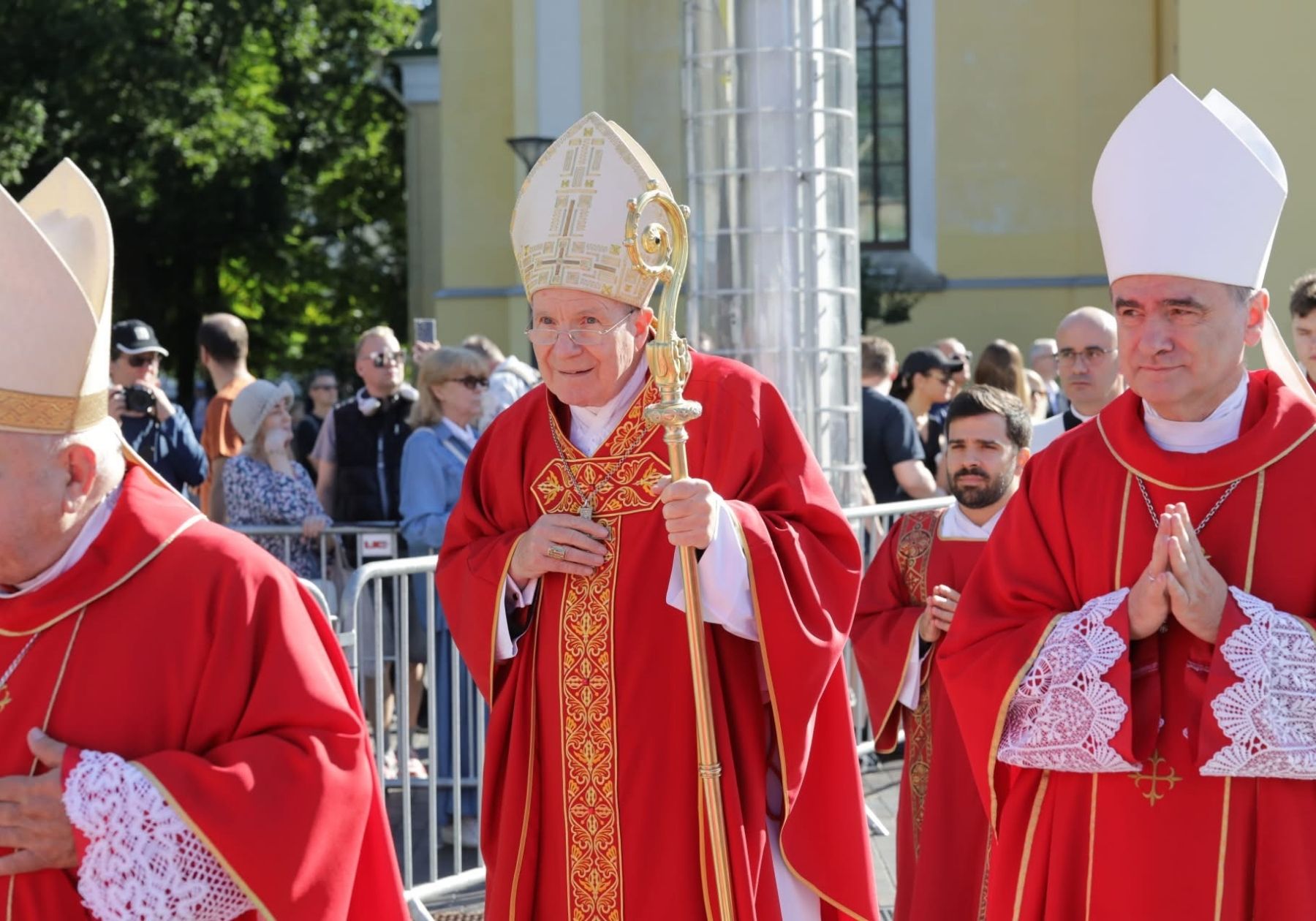
The Eucharistic celebration with the rite of beatification, which took place on 6 September, had a significance that went well beyond the ecclesial sphere. The Holy Mass, celebrated in Freedom Square in Tallinn, took place in the presence of the Apostolic Nuncio to the Baltic States, Archbishop Georg Gänswein, and was presided over, on behalf of the Pope, by Cardinal Christoph Schönborn O.P. Civil authorities and representatives of other Christian communities were also present, a sign of a memory that in Estonia touches deeply on the country’s history and national life.
In his homily, Cardinal Schönborn recalled a decisive phrase of Profittlich’s, written in a letter to his family during one of the most dramatic moments of the Soviet occupation: “It is right that the shepherd remain with his flock and share with it both joys and sorrows… I am firmly convinced that, if God walks with me, I shall never be alone.” In those words, his choice was already clear: he could have returned to Germany, but chose instead to remain beside his faithful. A decision which, as Schönborn recalled, cost him his life. “For his flock, his sheep, Father Profittlich was ready to give his life,” said the Cardinal, reading in the Jesuit’s martyrdom not an impulsive or sentimental gesture, but an act of fully Christian fidelity, carried out with what he described as “the joy of Christ”.
Schönborn then placed the story of the new Blessed within the tragic setting of Europe in the 1940s, marked by Nazism and Soviet communism, by concentration camps and gulags - in other words, by systems that had turned contempt for the human person into a political method. In that context, the figure of Profittlich stood out, the Cardinal explained, for the dignity with which he faced his persecutors and for the profoundly contemporary character of his witness. The beatification, observed the Archbishop Emeritus of Vienna, comes at a time when “old wounds threaten to reopen”, while war has returned to the daily life of Eastern Europe and the persecution of Christians continues in many parts of the world. For this reason, the new Blessed “shows the way for the Christian in times of persecution.”
 © Diocese of Tallinn
A conference to rediscover holiness
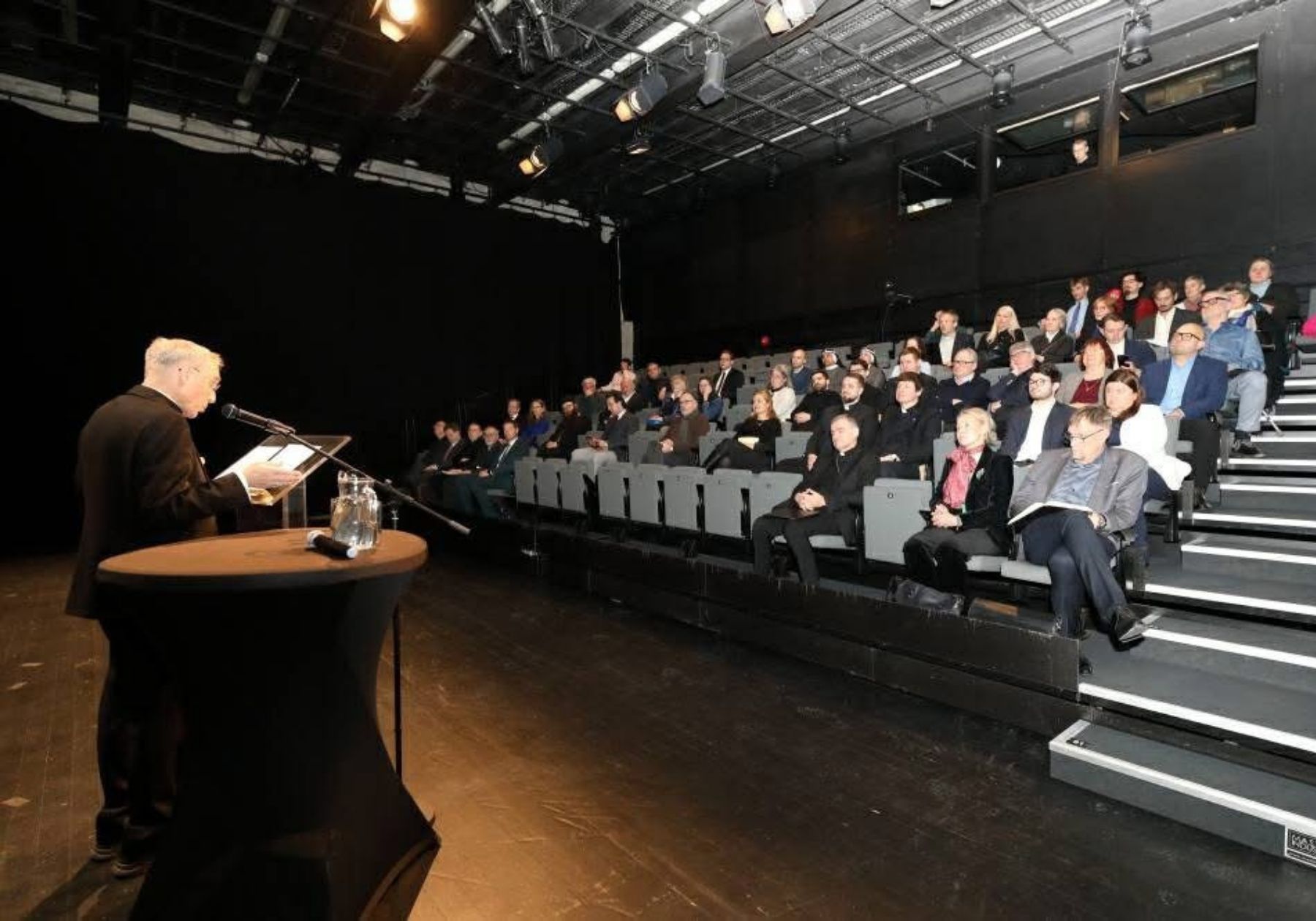
A few months after that celebration, on 20 and 21 February 2026, the Diocese of Tallinn chose to continue this path with an international conference dedicated to Blessed Eduard Profittlich and to the theme of holiness. It was not a formal commemoration, but a substantial reflection developed on several levels. Bishop Philippe Jourdan opened the proceedings with a lecture entitled: “Be holy, I the Lord your God, am holy”: holiness in the Bible and in our lives. This was followed by contributions on contemporary martyrdom, on the relationship between the Russian martyrs of the twentieth century and Profittlich’s cause, and on the Blessed’s Ignatian spirituality. On the second day, the Secretary for Relations with States at the Holy See’s Secretariat of State, Archbishop Paul Richard Gallagher, also contributed, alongside talks devoted to Christian life and to Profittlich’s path to holiness. The programme concluded with the blessing of the chapel dedicated to the new Blessed in the crypt of Saints Peter and Paul Cathedral, followed by Holy Mass and a reception.
Bishop Jourdan: “We could say that we are bringing the saints back home!”
It is precisely in the light of this conference that the interview given by the Bishop of Tallinn to Silere non possum takes on particular significance. Asked whether the aim was to revisit the figure of the Blessed after the beatification or to translate his witness into concrete choices for the diocese, Jourdan replied: “The beatification of Eduard Profittlich has a huge significance for our diocese and our country.” This is not, therefore, simply a matter of local devotion. For the Bishop, Profittlich’s was “the first beatification in the history of our country, the first beatification since the 16th century in Northern Europe”, and at the same time “a symbol of the tragedy lived by the people of Estonia during the 20th century.” Within this framework, one also understands the meaning of the initiatives that accompanied the rite on 6 September. Jourdan recalled the public reading of the names of the 23,000 people from Estonia who died in the concentration camps of the Soviet Union, organised in the twenty-four hours before the beatification. The message is unmistakable: the memory of Profittlich is set within the wider memory of the martyrs and victims of Soviet oppression. For this reason, the conference, the Bishop explained, was “the solemn start” of a broader process of rediscovering the life and death of the Blessed and, at the same time, the very meaning of holiness. With a striking phrase, the Bishop added: “In protestant countries, like ours, where there was no beatification or canonization in centuries, we could say that we are bringing the saints back home!” Even more significant is the ecumenical reading offered by Jourdan: “Historically, the saints divided us, catholics and protestants. Now I feel that the saints are bringing us together!”
Speaking to Silere non possum, Bishop Jourdan also pointed to the essential features of Profittlich’s holiness. More than in three words, his portrait may be condensed into three attitudes: fidelity, steadfastness and peace. The Blessed, the Bishop said, “was faithful to the church and the people of Estonia and chose to stay”, when many people were faced with the dilemma of whether to leave or remain. For Jourdan, precisely today, in the face of the dangers and tensions marking Eastern Europe, Profittlich can become “the saint of the people who chose to stay.” Nor is that all. The Bishop recalled how he was able to bring together people of different nationalities, separated by political events and even placed on opposing sides. In this sense, he emerges as a maker of peace. There is one final trait that is especially striking: “Every single person was for him important.” The willingness to give time to each individual person, Jourdan observed, remains a concrete example above all for priests in missionary territories, “as is nowadays Estonia and the whole of Europe.”
The final point raised in the interview is perhaps the most interesting on the ecclesial and cultural level. What can a beatification mean for a secular and plural country such as Estonia? The Bishop’s answer avoids any triumphalist rhetoric. Profittlich’s beatification, he says, is first and foremost “a sign of hope for our nation.” But it is also something more: a test of the Church’s credibility. “If the Church is all the time speaking that we should be holy, but nobody in our time or our space is never declared to have been holy, it is as if the Church would be only speaking, but not really helping people toward sanctity.” From this comes a conclusion: “Especially in countries like ours, the credibility of the church is more in the holiness that in the preaching.” And, recalling Saint John Paul II, the Bishop made the point clearly: contemporary man wants to see the faith lived, not merely to hear it spoken about.
In the words of Bishop Philippe Jean-Charles Jourdan, it is clear that the beatification of Archbishop Eduard Profittlich is not being lived by the Estonian Church as a ceremonial episode to be filed away in the diocesan calendar. It has instead become a criterion. For the Church, this small yet fervent community, it means asking what it truly means to remain, to serve, to unite and to bear witness. For Estonian society, it means recognising that the memory of the persecutions of the twentieth century belongs not only to the history books, but continues to call for credible figures. And for Europe, once again marked by wars, fears and fractures, the witness of this Jesuit bishop who died in Kirov in 1942 is a reminder that holiness is not an escape from history: it is the most serious way of living within it.
fr.F.G.
Silere non possum
INTERVIEW
SNP Journalist: Your Excellency, a conference on Blessed Eduard Profittlich has recently taken place in Tallinn, and we had the joy of seeing him beatified here, also in the presence of civil authorities and representatives of other Christian communities. What was the aim of this conference: to revisit Blessed Profittlich's figure after the beatification, or to translate his witness into concrete choices for the Diocese of Tallinn?
Bishop: «The beatification of Eduard Profittlich has a huge significance for our diocese and our country. His was the first beatification in the history of our country, the first beatification since the 16th century in Northern Europe, and a symbol of the tragedy lived by the people of Estonia during the 20th century. For that reason, we decided to organize also 24 hours before the beatification a public reading of the names of the 23 000 people from Estonia who died in the concentration camps of the Soviet Union. All those circumstances explain why we decided to give a solemn start to a period of discovering the meaning of the life and death of Blessed Eduard Profittlich, and rediscovering the meaning of holiness. This conference was the solemn start, but it is going on. In catholic countries you don't need a conference to discover the meaning of holiness. In protestant countries, like ours, where there was no beatification or canonization in centuries, we could say that we are bringing the saints back home! I was very pleased to see the very positive reaction of the lutheran church and other protestant communities in our country. Historically, the saints divided us, catholics and protestants. Now I feel that the saints are bringing us together!»
SNP Journalist: You spoke about 'holiness in the Bible and in our lives'. If you had to sum up holiness according to Profittlich's witness in three words, which would you choose?
Bishop: «It is difficult to summarize a whole life in 3 words. But I would say: He was faithful to the church and the people of Estonia and chose to stay, when many people in Estonia were in front of a dilemma, leave or stay. Today also, in front of the dangers and challenges we see in Eastern Europe and many other countries, blessed Eduard could be the saint of the people who chose to stay. Many non-catholic Estonians know mainly about Blessed Profittlich, that he chose to stay. He brought together different nationalities, which were at the time enemies, or at least separated by political events. It is quite similar with what we are living now in Eastern Europe. In that sense, he was a creator of peace.
Every single person was for him important and he was able to give his time for one person. This disponibility is certainly an example for everybody and especially for every priest in countries of mission as is nowadays Estonia and the whole of Europe».
SNP Journalist: In your letters you insist that this beatification also concerns the whole nation. Concretely, what can it mean for a secular and plural country such as Estonia?
Bishop: «The beatification of Eduard Profittlich is a sign of hope for our nation, because his death is also a symbol of the tragedy lived by the people of Estonia during the 20th century, and in a certain way during all their history. Beatification, or canonisation, is an important sign of credibility of the Church, especially in such secular or plural country like ours. If the Church is all the time speaking that we should be holy, but nobody in our time or our space is never declared to have been holy, it is as if the Church would be only speaking , but not really helping people toward sanctity. So, especially in countries like ours, the credibility of the church is more in the holiness that in the preaching. As Saint John Paul II said, the man of our time, more than hearing about faith, want to see the faith in the life of each christian, and this is exactly what holiness is about»