Vatican City - This morning, Leo XIV appeared, as is customary, at the window of the Apostolic Palace for the Angelus, offering a reflection firmly situated within the Lenten journey. At its centre was the Gospel account of the raising of Lazarus, read as a foretaste of Christ’s victory over death and as a key to understanding the now imminent Easter mystery.
The Pontiff recalled Jesus’ words to Martha: “I am the resurrection and the life; whoever believes in me, though he die, yet shall he live.” He explained that this statement concerns every believer and finds its foundation in Baptism, through which new life is received. From this perspective, the events of the Passion - from the entry into Jerusalem to the burial - take on a meaning that goes beyond the mere account of suffering and opens onto the fullness of salvation.
In his address, Leo XIV also offered a critical reading of the contemporary condition. He spoke of a world “in constant search of novelty and change”, often willing to sacrifice time, relationships and values in the belief that these can satisfy the human longing for fulfilment. The Pope traced this tension back to a deeper need: “a need for the infinite that each of us carries within”, whose answer cannot be found in what is destined to pass away. In this light, the story of Lazarus takes on an existential dimension. The Pontiff invited the faithful to recognise those inner “boulders” - selfishness, materialism, violence, superficiality - which confine the human person to a condition of isolation and disorientation. Thus, the call contained in Jesus’ words - “Come out!” - becomes an invitation to emerge from these closures and live in the light of love, renewed by grace.
After the Marian prayer, the Pope’s attention turned to the international situation. Leo XIV spoke of his “dismay” in the face of conflicts in the Middle East and in other parts of the world, denouncing the suffering of the victims and describing war as a “scandal for the whole human family”. His words stressed the need not to become accustomed to violence and to keep prayer alive as a concrete plea for the cessation of hostilities and for the opening of paths of dialogue.
This passage is consistent with the line already traced on other occasions in the pontificate, where the spiritual dimension is not separated from historical responsibility. The appeal to the dignity of every person and to dialogue as the foundation of peace was expressed in clear terms, with explicit attention to the human consequences of conflict.
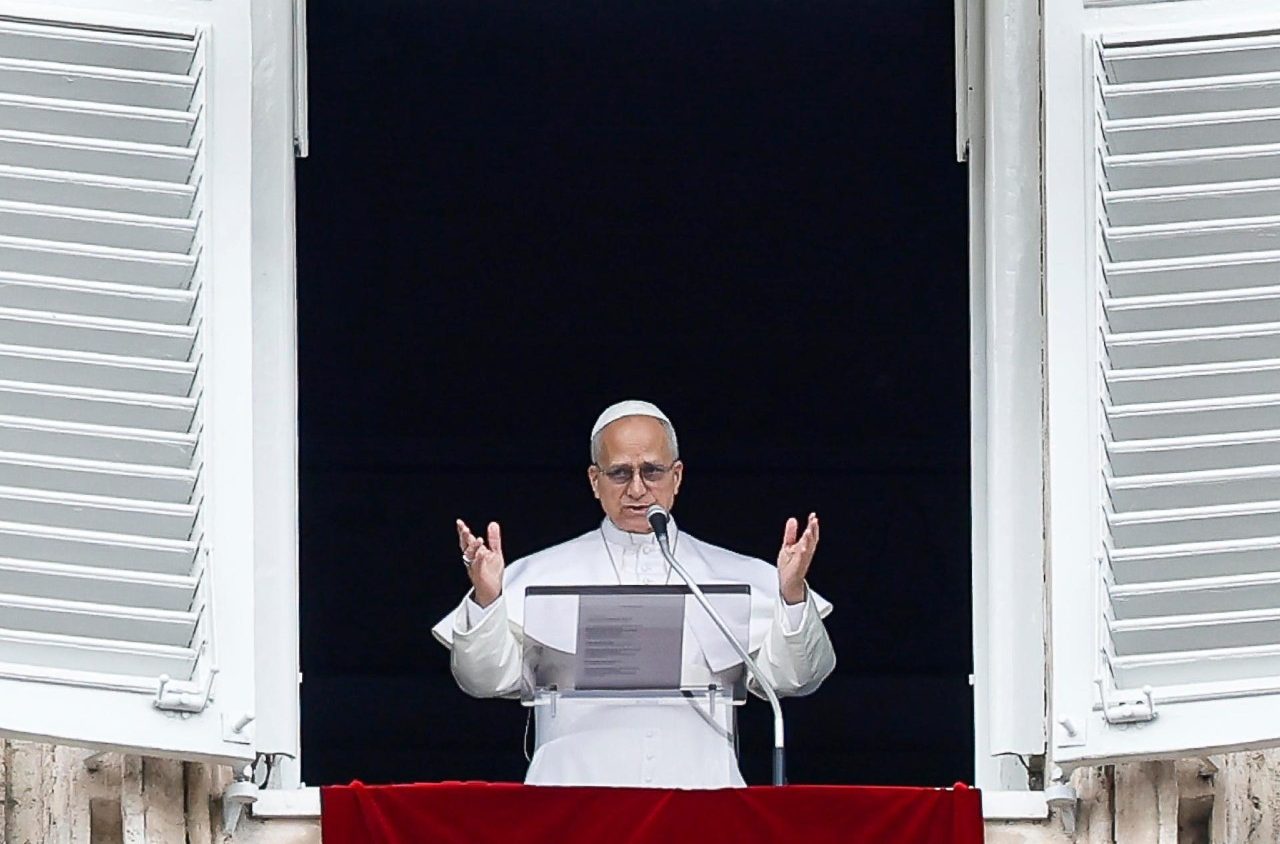
Angelus. Leo XIV: “Let us free our hearts from habits, conditioning and ways of thinking that confine us in the tomb of selfishness”
At the Angelus on the Fifth Sunday of Lent, the Pope recalls the Gospel of Lazarus, invites the faithful to come out of their inner “tombs”, and once again appeals for peace in regions wounded by war.
SUPPORT SILERE NON POSSUM
If this article is online, it is also thanks to your support.
Silere non possum chooses to make most of its investigations and content freely accessible, because independent journalism must be able to reach everyone.
Supporting our work means allowing us to continue verifying, reporting and publishing what others would prefer to keep hidden.