
The three Baltic states have stepped up their request to NATO. On 21 May 2026, the presidents of Estonia, Latvia and Lithuania - Alar Karis, Edgars Rinkēvičs and Gitanas Nausėda - issued a joint statement after a series of airspace violations by unmanned aerial systems coming from the direction of the Russian Federation and Belarus. In the text, the heads of state also denounce a Russian disinformation campaign against the Baltic states, which Moscow has accused of allowing their territories or airspace to be used for drone attacks against targets in Russia.
The response from the three presidents is firm: Estonia, Latvia and Lithuania, as NATO Allies, state that they have never allowed their territories to be used for attacks against Russia. The statement also rejects the threats made by Moscow against Latvia during the United Nations Security Council meeting on 19 May. According to the Baltic leaders, Russia’s accusations are intended to divert the international community’s attention from its war of aggression against Ukraine and from Kyiv’s right to defend itself, as recognised under Article 51 of the United Nations Charter.
The most politically significant passage, however, concerns NATO. The three presidents are calling for the current air policing mission over the Baltic skies to evolve into a genuine air defence mission. The distinction is substantial. Air policing provides surveillance, interception and rapid response in peacetime; the Baltic request points instead to a more integrated posture, better able to deal with concrete threats, in particular drones and unmanned aerial systems. The statement expressly refers to strengthening the Allied presence in the three countries with counter-drone capabilities.
NATO’s Baltic Air Policing mission has protected the skies of Estonia, Latvia and Lithuania since 2004, the year in which the three countries joined the Atlantic Alliance. Allies with the necessary capabilities contribute on a rotational basis, with aircraft based mainly at Šiauliai in Lithuania and, since 2014, also at Ämari in Estonia. The pressure of recent months, however, shows that simple airspace surveillance risks proving insufficient in the face of drones, electronic interference, diverted flight paths and information campaigns designed to increase political instability and fear within Baltic societies.
NATO Secretary General Mark Rutte has already linked the incidents to Russia’s war against Ukraine. At a press conference on 20 May, responding to a question about drones entering Baltic airspace, Rutte said that even when drones come from Ukraine, the political and military cause remains the Russian aggression that began in 2022. He also recalled that on 19 May a Romanian F-16 engaged in NATO’s Baltic Air Policing mission shot down a drone in Estonian airspace.
The Baltic case forms part of a wider dynamic. Moscow is using drone incidents to accuse the countries closest to Ukraine of complicity and to turn an air security issue into an instrument of political pressure. The foreign ministers of Estonia, Latvia and Lithuania had already rejected Russia’s accusations in April, describing them as part of a disinformation campaign and reiterating that the Baltic states had not allowed their airspace to be used for attacks against Russia.
The European Union has also reacted. Commission President Ursula von der Leyen described Russia’s public threats against the Baltic states as “unacceptable”, stressing that a threat against one member state concerns the entire Union. She also attributed direct responsibility to Russia and Belarus for the drones putting the security of Europe’s eastern flank at risk.
The statement by the Baltic presidents is therefore a direct message to the Allies: the eastern flank is asking for more than political reassurance; it wants concrete capabilities. Estonia, Latvia and Lithuania identify several priorities: investment in air defence, the strengthening of NATO’s Eastern Sentry and Baltic Sentry activities, the timely implementation of the Baltic Defence Line, and support for the European initiative Eastern Flank Watch. At the centre remains the protection of airspace, which has become one of the most exposed points in European security.
The call to move from air policing to air defence marks a shift in perspective. For the Baltic states, the threat no longer belongs only to the theoretical realm of deterrence. It now takes the form of drones, alerts, interceptions, propaganda and diplomatic threats. The response they are asking of NATO is a presence capable of seeing, identifying and neutralising more rapidly whatever enters Allied airspace. In other words, a form of defence better suited to the war now being fought on Europe’s eastern borders.
fr.C.V.
Silere non possum
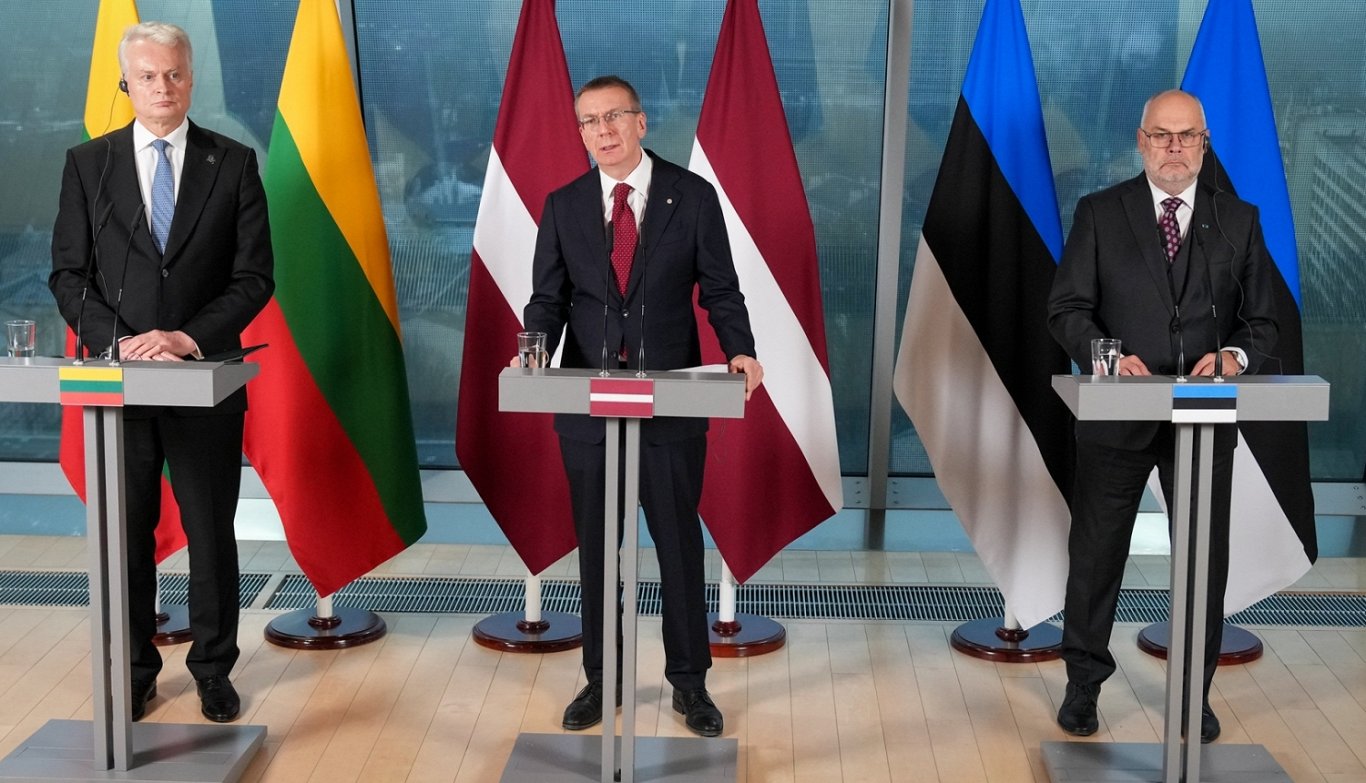
Baltic leaders urge NATO to turn air policing into air defence
After drone incursions and Russian threats, Estonia, Latvia and Lithuania call for stronger Allied protection, counter-drone capabilities and a tougher defence posture on Europe’s eastern flank.
PDF
Attached document
Attached document 1
SUPPORT SILERE NON POSSUM
If this article is online, it is also thanks to your support.
Silere non possum chooses to make most of its investigations and content freely accessible, because independent journalism must be able to reach everyone.
Supporting our work means allowing us to continue verifying, reporting and publishing what others would prefer to keep hidden.