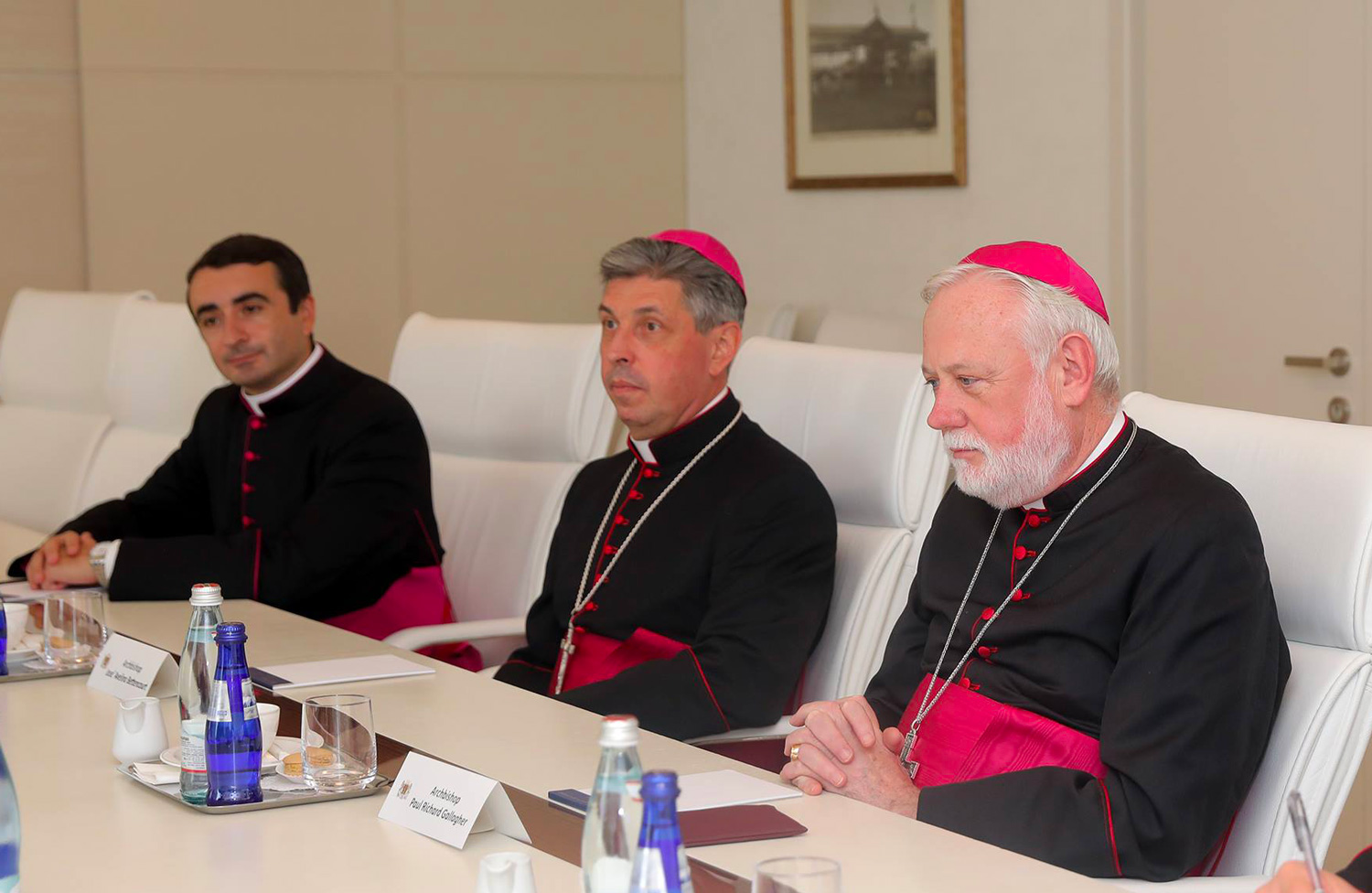
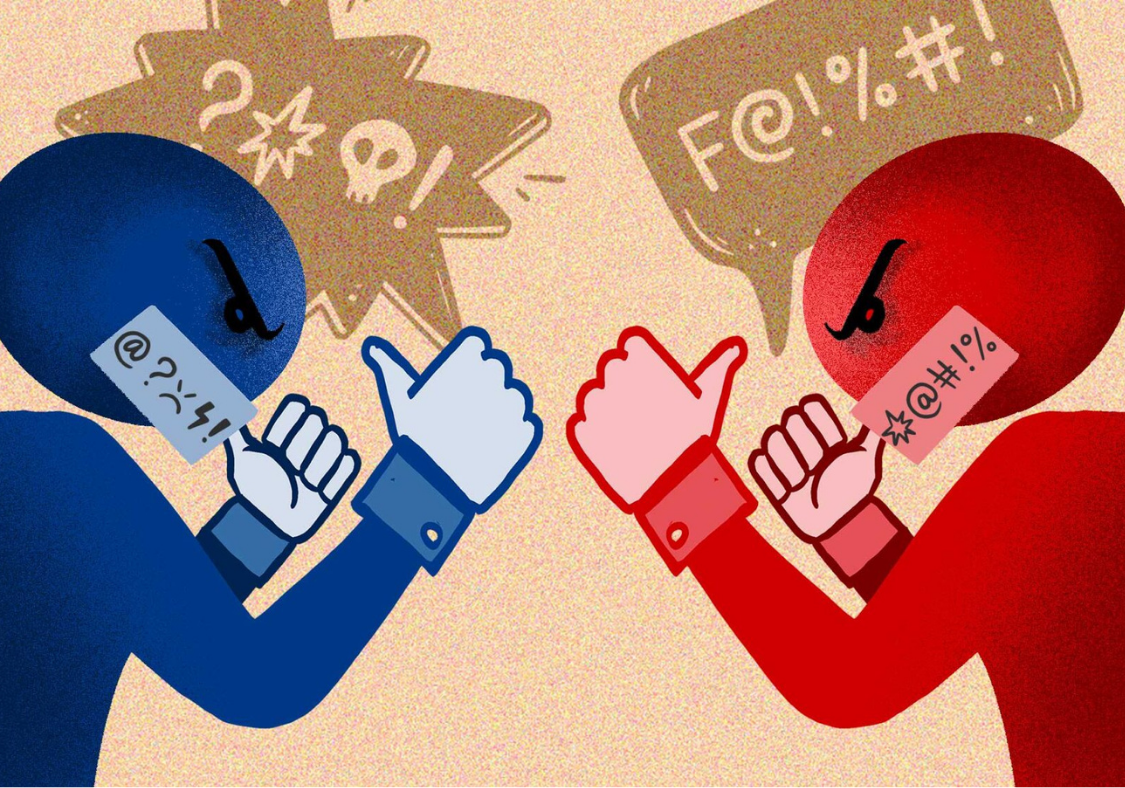
Over the years, Silere non possum has fought some very real battles with a particularly problematic section of the clergy: people who, with remarkable regularity, seem to find one another. Gossips seek out other gossips; those who have been removed because their fellow priests recognised something deeply harmful in the way they behaved often end up associating with others who have been through similar experiences. The same happens with those who develop an obsession with homosexuality, talk about it incessantly and are extraordinarily quick to attribute it to others. They often seek out, spend time with and identify with people who share the same fixation, almost reinforcing one another in a way that allows them to avoid looking too closely at themselves. Very often, what emerges is an inability to confront parts of themselves they would rather not acknowledge.
In short, these are the sorts of people who systematically attribute to others precisely what they themselves do, almost as a way of avoiding any scrutiny of their own behaviour. They gossip and accuse everyone else of gossiping; they speak ill of everyone and insist that it is always other people doing the bad-mouthing; they have been removed from their dioceses and then tell people that, in fact, it was others who were pushed out. And so it goes. Sad stories and, in the long run, terribly repetitive ones. Anyone who has spent more than a few years inside the Church knows these dynamics by now and can easily recognise certain patterns, which recur with almost predictable regularity.
The presbyterate, unfortunately, has its problems too. It is not immune, untouchable or somehow exempt.
Over the years, many priests, bishops and cardinals have told us: ‘You do good work, you defend priests from a press that is often only too eager to attack them, but sometimes there also needs to be the courage to say that there are deeply problematic individuals within the clergy.’
That is true. And that is precisely why the ability to distinguish matters. Reality contains far more shades than certain characters are capable of tolerating. They need constantly to divide everything into two camps: black or white, friends or enemies, good or bad. It is one of the traits that makes them so easy to recognise.
Saying that there is a certain readiness today to attack the clergy does not mean excusing every kind of behaviour. Drawing attention to one aspect of a bishop’s conduct does not amount to passing judgement on the person as a whole, nor on everything he has done or will do. Criticising an event or a decision does not mean condemning people.
A journalist’s job is to analyse, investigate, explain and bring to light what deserves to be understood. Some people, watching journalism from a distance without ever having practised it, imagine that it consists of producing scoops and competing to see who can make the most sensational claim. Others reduce it to a stream of behind-the-scenes stories, indiscretions and bogus confidences supposedly coming from ‘the very highest places’.
Silere non possum has never understood journalism in those terms and has never practised it that way. When it has considered it necessary to bring hidden facts to light, it has done so because there was a higher interest at stake: the truth.Never for the pleasure of reporting something before anyone else, still less to indulge that childish ‘we know, they don’t’mentality. Indeed, very often facts have been brought into the open to free people from the blackmail of those who would say: ‘Careful, because I know.’ Once everybody knows, the problem disappears. That is also why our sources have always been protected and guarded with the utmost care.
Silere non possum was created for precisely this purpose: to explain, analyse and address even those subjects that some people would rather keep out of the discussion.
And the figures bear that out. Over the years, Silere non possum has grown considerably and has since developed into something much larger. Our readers appreciate this work and tell us so regularly: in an increasingly crowded landscape of new crank blogs, websites and online outlets where embarrassing characters vent their grievances, each with their own obsessions and fixations, they recognise in Silere non possum a balance that has become increasingly difficult to find.
So when someone who feels targeted, directly or indirectly, by what we write or say tries every possible means to discredit us or to ‘warn’ others about our work, he often succeeds only in revealing to the person he is speaking to that he has something to protect, or something he fears may come to light. Evidently, in what Silere non possum has uncovered, he has recognised something that concerns him closely enough to make him feel personally implicated.
They demand attention, but lack credibility
In recent years, generative AI has flooded the web with cheap illustrations: distorted faces, public figures turned into grotesque caricatures, absurd reconstructions, images designed to provoke immediate ridicule, outrage or amusement. They have become a routine feature of many Facebook pages, tacky little websites and blogs built around engagement. It is curious to see them used so consistently by publications that claim a journalistic role and, at times, complain that institutions and serious readers do not take them seriously enough.
The problem is not artificial intelligence itself. Research published by Poynter in 2025 showed that the public is more accepting of clearly non-photorealistic AI illustrations than of synthetic images pretending to document reality. Respondents were also more comfortable with their use to represent abstract concepts, the distant past or the future.
An image generated by artificial intelligence does not, therefore, automatically make a newspaper unreliable — or something that aspires to call itself one without really possessing the characteristics of a newspaper. It depends on how the image is used, the context in which it appears and the function it is meant to serve. It can illustrate an analysis, represent a concept or accompany an argument.
The problem begins when synthetic imagery becomes a regular part of an editorial language in which reporting, sarcasm, personal insinuation and hostility towards the subjects of one’s fixations become indistinguishable. At that point, even calling it news would be rather generous. A newspaper deals with reality in all its breadth; certain blogs, by contrast, end up circling endlessly around the same targets, the same subjects and the same dislikes. In some cases, it is no longer even an editorial line, but a collection of genuine personal obsessions.
That is when the image starts to tell you something about the person who chose it. Aristotle explained that persuasion also depends on ethos, on the character a speaker reveals through his discourse. Applied to a blog, the point is fairly simple: the authority it claims matters less than the image of itself it constructs every day.
Authority cannot be self-certified
A blog may choose to call itself a magazine, but if it depicts its opponents through crude caricatures, alternates gossip about a priest’s private life with personal digs at anyone who has challenged it - bishops, priests or laypeople alike - and uses the same language as a social-media spat, then that becomes its public ethos. The blog ends up reflecting above all the problems, fixations and obsessions of the people behind it. A journalistic publication, by contrast, deals with a range of subjects and does not become the personal venting outlet of someone who is not a journalist but enjoys playing one between a coffee and a shot of grappa.
Authority, after all, has one inconvenient feature: it cannot be awarded to oneself. Pierre Bourdieu would have called it symbolic capital. Prestige exists because it is recognised by those who consume the product and/or by others operating in the same field. Money, visibility and notoriety can be accumulated directly; professional credibility, by contrast, requires somebody else to grant it.
The same applies to journalism. A small publication can become an indispensable source if, over time, it proves that it possesses documents, understands the environments it covers, verifies information rigorously and corrects mistakes when necessary. It may be inconvenient, even irritating to those working in that field, especially when it touches a raw nerve and exposes mistakes that some people would rather have kept out of sight. That is perfectly normal.
But if, despite all this, everyone continues to draw on that source because they know how painstakingly its information is checked, because it publishes documents, reconstructs events accurately and entrusts analysis to people who genuinely understand the subjects concerned - well enough to explain them and make them comprehensible - then that is what journalistic authority looks like. And in journalism, authority is built in precisely this way: over time, through serious work, not through a ‘counter-narrative’.
A major newspaper can squander the trust it has built up over decades precisely when it starts assuming that its name, history and accumulated prestige are enough automatically to guarantee reliability. That mentality remains widespread in Italy, but it has helped drive part of the public towards other platforms. All too often even prestigious newspapers have published inaccuracies, repeated false stories or mounted outright campaigns, sometimes bending journalism to suit personal battles. Size guarantees nothing.
But those clamouring for a recognition they do not yet possess - particularly when their actual reach is rather less impressive than they like to suggest - ought to take particular care over the language with which they present themselves. If a blog routinely uses artificial images to mock the people it writes about, the effect does not stop with the graphics. A reasonable reader will begin to wonder how much distance there really is between the author and the target of the article. A source will consider whether to entrust it with information. A colleague, before repeating information it has published, will take into account the context in which it appeared. There is no need to invoke ostracism to explain such caution. If you are not reliable, what you publish is worth nothing.
When the image comes before the facts
Professional codes, after all, have long insisted on keeping different registers distinct. The Society of Professional Journalists asks journalists to identify commentary and advocacy clearly and to avoid any deliberate distortion of facts or context, including visual information; illustrations and reconstructions must be recognisable as such.
The principle goes beyond simple labelling. A news article can, of course, contain a view and even a severe judgement. But when the image introducing it has already made the subject look ridiculous, the reader is given the judgement before encountering the facts.
Walter Lippmann devoted Public Opinion, in 1922, precisely to the distance between the world and the representations through which we come to know it. He spoke of the ‘pictures in our heads’, the mental images through which individuals organise a reality too vast to be known directly. A century later, that insight has acquired an almost literal form: anyone producing news today has machines capable of manufacturing, within seconds, whatever representation of a person is most convenient. They can make him look ridiculous. Sinister. Stupid. Pathetic. They can try to cast shadows over an enemy even when those shadows do not exist and have plainly been invented.
When this possibility is used systematically, the editorial choice - let us call it that, even though on certain blogs the ‘editorial choice’ is really whatever comes from the gut - comes before the argument. There is no longer any need to demonstrate why someone deserves contempt: it is enough to show him already transformed into a caricature.
Karl Kraus spent decades savaging the Viennese press precisely because he believed that the corruption of journalistic language was not merely a matter of style. In the pages of Die Fackel, he hunted down clichés, bombast, automatisms and stock phrases because he saw in them a careless way of thinking about reality. Transposed into the digital ecosystem, the problem is strikingly similar. Visual sloppiness, too, can become a habit of mind.
The synthetic images infesting social media were created above all to reduce the cost of production and increase the reaction they provoke. Poynter has documented the spread of this material, designed to generate interactions, from absurd sacred and religious figures to sentimental or grotesque scenes circulating mainly on Facebook and blogs. It works for an entertainment page. For a blog that goes so far as to call itself a ‘magazine’, it amounts to a choice about how it wants to position itself.
Why serious newsrooms exercise caution
Major news organisations are fully aware of this. When the Associated Press updated its rules on 23 July 2026, it broadened some permitted uses of AI - preliminary research, transcription, translation and headline suggestions - while reiterating that verification, accountability and editorial judgement remain the responsibility of journalists. It also continues to prohibit the use of generative AI to create, alter or enhance news photography. There is a reputational reason for that caution too. The Reuters Institute found in its Generative AI and News Report 2025 that only 12 per cent of respondents across six countries felt comfortable with news produced entirely by AI, compared with 62 per cent for news produced entirely by humans. Many expected AI to make news cheaper and faster, while at the same time making it less transparent and less trustworthy.
Consider, for example, what has been happening in coverage of the war in Ukraine, where some news organisations have circulated as authentic images that had in fact been generated by artificial intelligence. That is another reason why these tools need to be used with extreme caution: when a synthetic image is placed in a journalistic context, readers can easily attribute to it a documentary value that it simply does not have.
The point, however, predates the technology. A publication may choose to build its fortunes around insulting the object of its own obsession - and often one need only scroll through the number of articles devoted to the same targets again and again to understand what is going on. That is a legitimate choice, but it inevitably has consequences.
It becomes far less convincing, however, when the very same publication starts clamouring for the world to recognise it as a reliable, authoritative source, even one deserving financial support. As long as readers are looking for a couple of laughs, they may well come back: sometimes they will laugh at the target, at other times they will laugh directly at the person doing the writing. That is normal; social media have accustomed people to it. But expecting them actually to pay to read tirades, grudges and personal fixations means seriously overestimating their gullibility.
Wanting to be treated as a source while behaving like an account engaged in daily personal spats creates a tension that complaints are unlikely to resolve. If the AI image ridiculing an opponent, the cheap dig and the information itself regularly end up in the same container, people will eventually judge that container by what they see.
R. E.
Silere non possum