Heiligenkreuz - The apostolic visitation of the Cistercian abbey of Heiligenkreuz has now officially concluded. The announcement was made to the monastic community this morning by the Abbot President of the Austrian Cistercian Congregation, Dom Pius Maurer OCist, during a conventual chapter held on the mandate of the Dicastery for Institutes of Consecrated Life and Societies of Apostolic Life. The matter had already come to light in June last year, when Silere non possum published confidential documents revealing the intervention of the Holy See in one of the most vital and rapidly growing monastic realities in the German-speaking world. Rome’s decision drew attention precisely because of the profile of Heiligenkreuz Abbey: a numerous and influential community which, over the years, has succeeded in attracting vocations and in consolidating a significant presence in the ecclesial life of Austria.
By decree of 5 June 2025, the Dicastery ordered the apostolic visitation, appointing as visitors the Benedictine Abbot Primate Jeremias Schröder OSB and Sister Christine Rod MC. After months of work, in-depth discussions with 90 monks and with numerous people from outside the community, the procedure reaches its formal conclusion today. Sister Christine Rod herself, speaking before the monks in Chapter, offered the first explanations regarding the outcome of the visitation, responding to some of the questions that had arisen. At a later stage, Abbot Primate Jeremias Schröder and the visitor will return to engage with the monastery more fully and in greater detail on the conclusions that have been reached.
The Dicastery’s directions
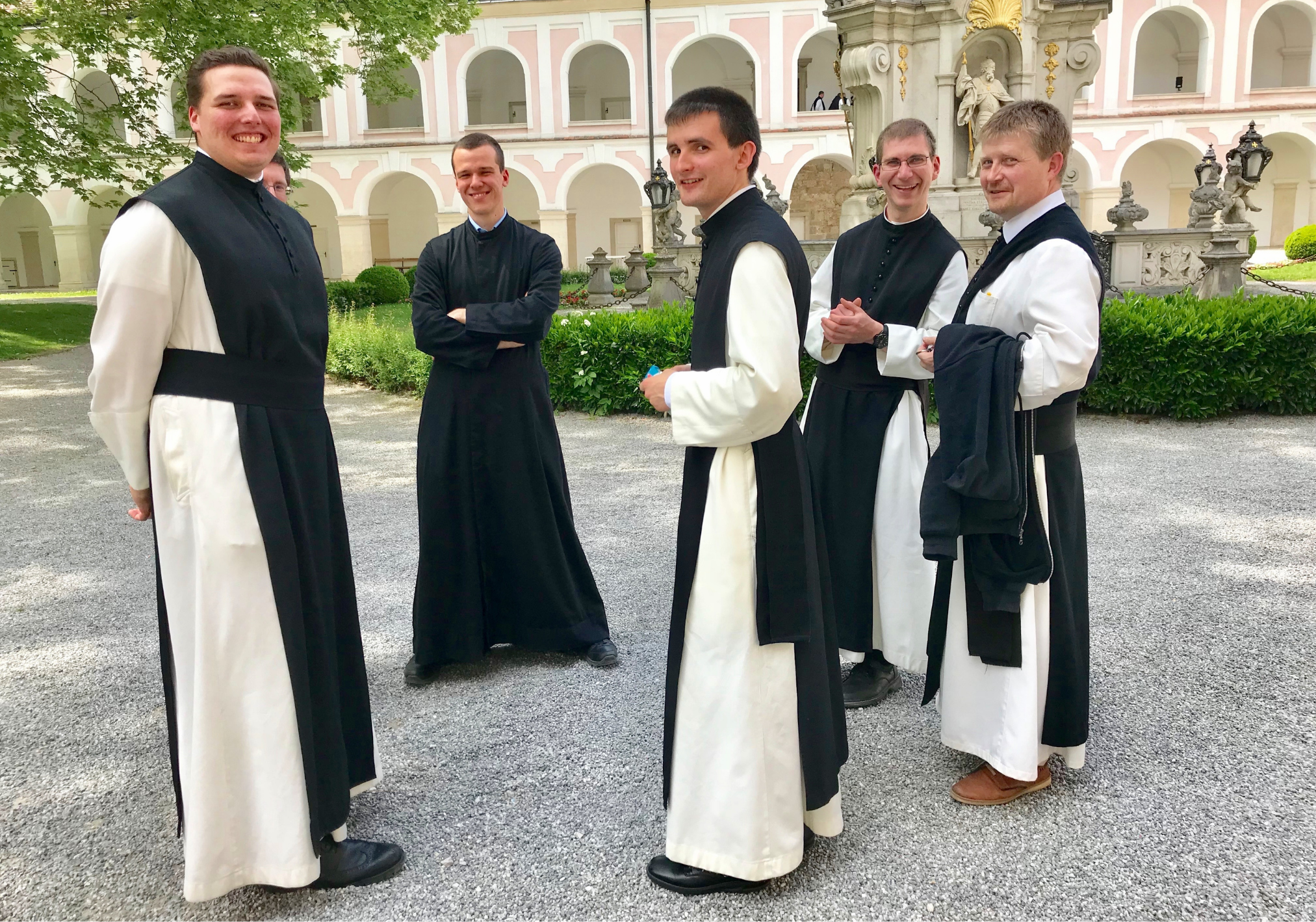
The lines laid down by the Dicastery touch on several aspects of the abbey’s life. First of all, there is a call for a more orderly and effective capacity for communication, both within the community and towards the outside world. The point is difficult to understand, especially when one considers that this monastic reality combines rigorous fidelity to the ritesand discipline of religious life with an intelligent and well-judged presence on social media, designed to communicate the beauty of the monastic vocation and to make this experience known to young people and the faithful. The Dicasteryalso calls for strategic reflection on the future of the abbey and on the priority of its tasks. There are also observations concerning the community’s theological and spiritual orientation. This is a criticism that deserves to be read for what it is, especially if one considers that Heiligenkreuz gave rise to the only Catholic faculty in the whole of Austria, the Philosophisch-Theologische Hochschule Benedikt XVI, named precisely after Benedict XVI, and has always offered serious, structured formation, firmly grounded in Thomism.
Evidently this does not meet with the approval of Sister Simona Brambilla and Sister Tiziana Merletti, whose formation is clearly of a different kind. Observations were also made regarding the accompaniment of young men towards monastic life and the priesthood. Here too, the point is difficult to ignore: the large number of young vocations provokes more irritation than interest in Rome. Once again, the message conveyed is that of a Church which looks with suspicion precisely at those realities that display vitality, attractiveness and vocational fruitfulness. Other considerations have come from Rome concerning a vaguely defined need to clarify the abbey’s identity and its self-understanding. It is a vague, elastic formula, useful, as so often happens, for saying everything and nothing; and precisely for that reason well suited to justifying interventions that are deliberately left undefined in their contours, yet very concrete in their effects.
“Ecclesiastical” hypocrisy
Naturally, in keeping with the usual register of ecclesiastical language, there could be no shortage of thanks to Abbot Maximilian Heim OCist for his “extraordinary personal commitment” on behalf of the abbey and for having contributed decisively to the community’s “remarkable flourishing”. It is the lexicon - now thoroughly absorbed even by the religious women placed at the head of the Dicastery - of an ecclesiastical rhetoric capable of praising while striking, commending while cutting down, thanking while placing under supervision. After all, this is often how things work in the Catholic Church: you bring a community back to life and you are placed under visitation, because at the end of the day all those young people are a problem; you reopen a seminary and they tell you that you have done excellent work, only then to explain that it is too much, that there must not be too much growth, that expansion is not wanted; you revive a diocese and someone promptly arrives to let you know that this will not do either, that you must be removed as bishop because you have aroused the jealousy of your fellow bishops or of your priests. Naturally, all of this comes with many thanks, polite words and carefully packaged compliments. This is one of the tragedies of the Church: “let what you say be simply ‘Yes’ or ‘No’”, as Jesus said, remains even today a word that is largely ignored.
What is said publicly
Sister Christine Rod explained that, during the months of the visitation, she had come to know Heiligenkreuz as “a spiritual place” and had found “a great willingness to collaborate”, adding that the directions given by the Dicastery represent “an important operational framework for the future of the abbey”. Dom Pius Maurer likewise insisted on the positive value of the path that has been followed. The Abbot President spoke of a community made up of “many good monks”, capable of remaining dynamic and authentically monastic in the future as well. Maurer described the apostolic visitation as “a precious stimulus” for positive long-term development.
Abbot Maximilian Heim, who suffered a heart problem shortly after this visitation was announced, publicly expressed gratitude to the Dicastery and to the two visitors for the discussions held “in a climate of esteem” and for the directions offered to the community for the future. After all, when Rome decides to intervene so heavily in the life of a community, the real options are only two: to resist, knowing full well that the risk is removal without too many niceties, as happened to the abbess of Vittorio Veneto; or to give thanks and remain silent. This is precisely what the Dicastery relies upon: a psychological, material and economic subordination that ends up profoundly conditioning the freedom of the people involved.
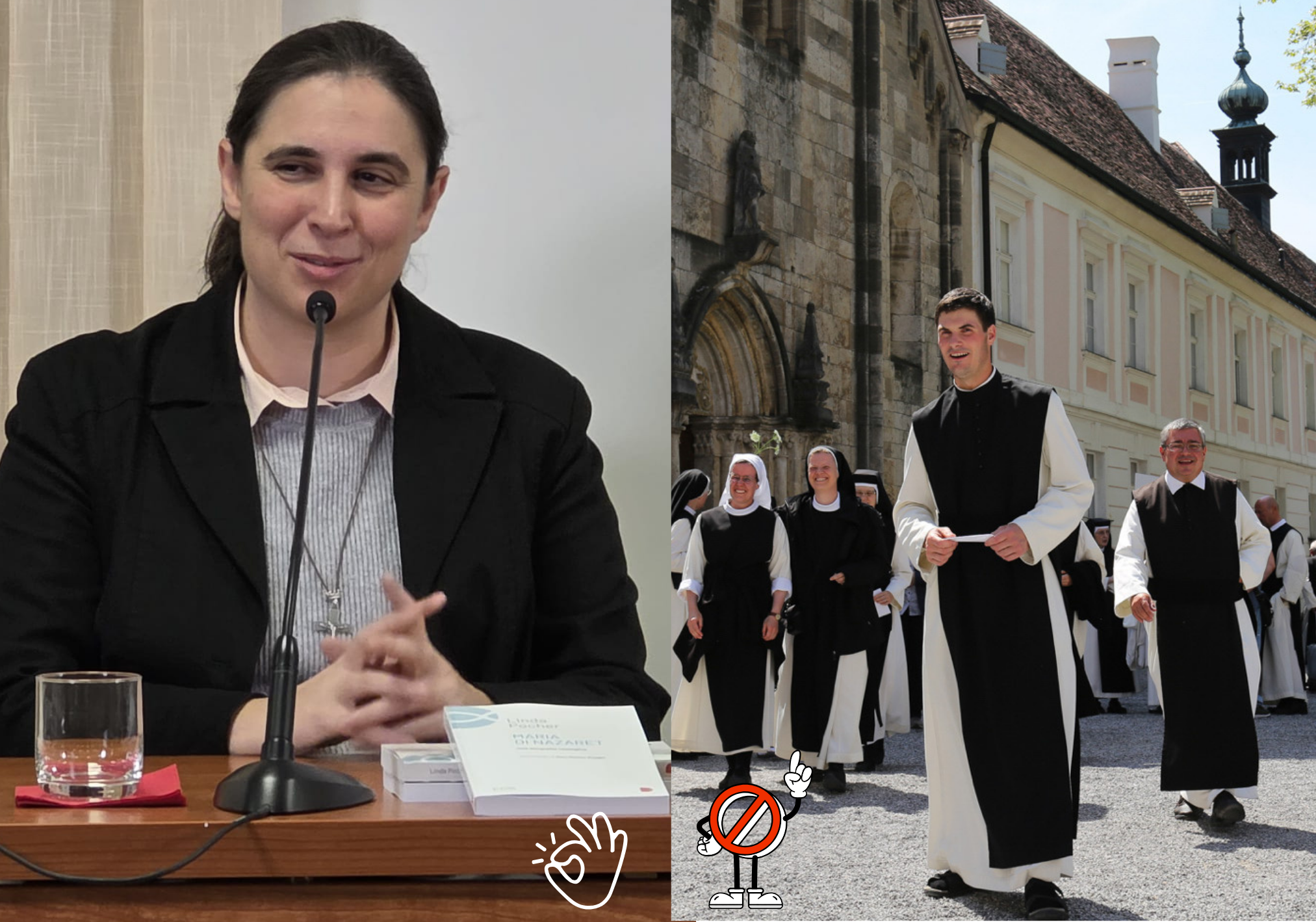
What remains is bitterness, because by 2026 these dynamics have not only failed to change, they have in fact become worse. There was a time when the Holy See would never have thought of laying hands on a flourishing sui iuris abbey, full of vocations, theologically sound and, above all, capable of supporting itself through its own work. Today, the exact opposite happens: small realities, with nuns going about without a veil, are funded by federations led by feminist and ideological women, while serious and flourishing monasteries are struck in an ideological way, so as to push young monks to give up and leave. Sister Linda Pocher is left free to go around promoting heresies even on the ordination of women; the monks of Heiligenkreuz, by contrast, are told that they must review their theological and philosophical formation. What can one say - what is the world coming to?
fr.L.M.
Silere non possum