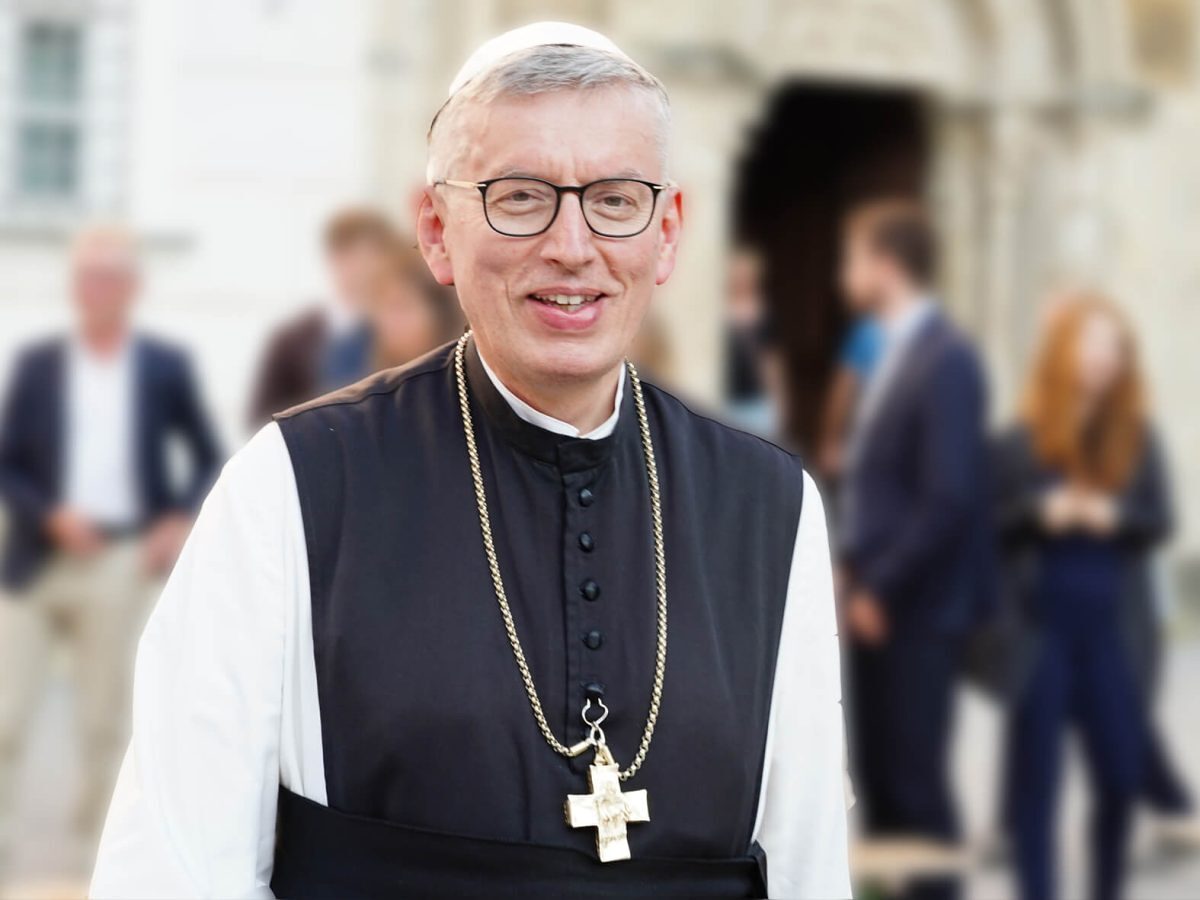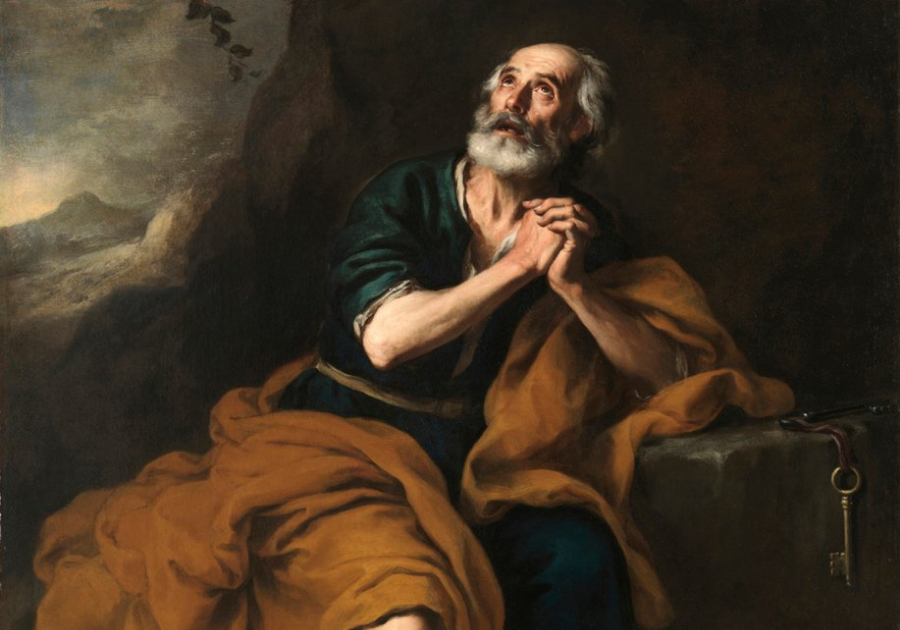
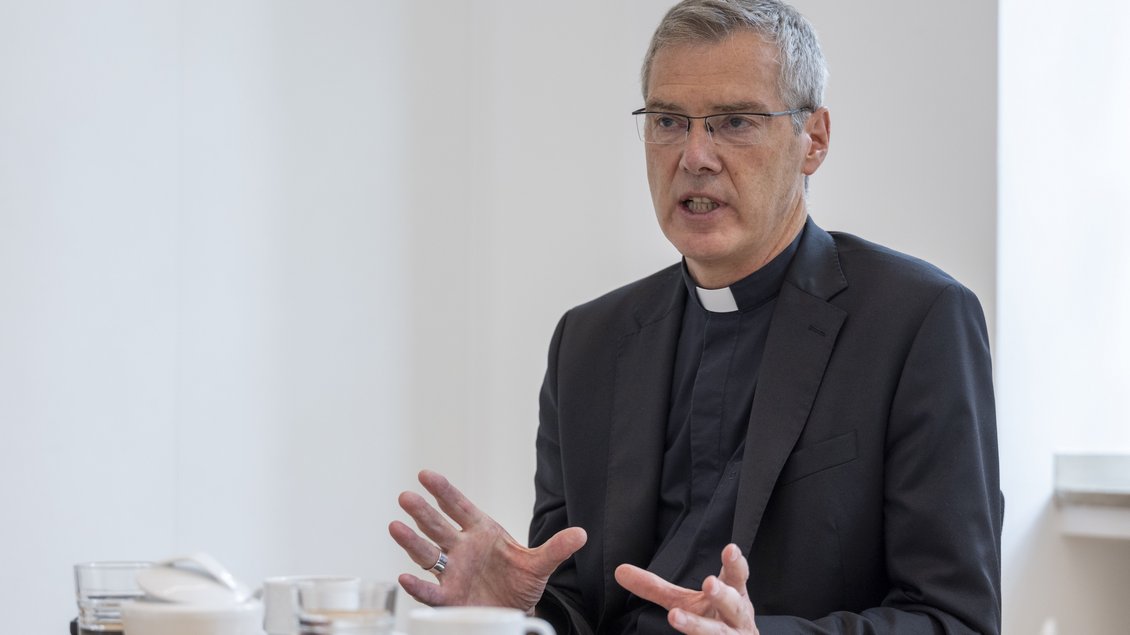
Last January, Leo XIV took up an invitation from the Spanish saint John of Ávila when he wrote to the presbyterate of Madrid: “Be wholly His.” Do not be good. Do not be efficient. Do not be presentable. Be His. In those three words, compressed into a single phrase, lies Robert Francis Prevost’s entire vision of the priesthood. Everything else — fraternity, mission, the credibility of one’s life — comes afterwards. Or rather, it can only flow from there.
One year on from that event — his election — which radically changed the Church, I would like to dwell on one aspect of this pontificate which is particularly important for us, and whose absence we had felt keenly in recent years.
The young priest and the climate that receives him
If it is true that there are many difficulties a priest must face every day, it is equally true that today many young men are being ordained and are happy — yes, happy — to give their lives to God and to the Church. They are the same young men who are often misunderstood and who, as soon as they are ordained, find themselves having to deal with the old Sixty-Eighter parish priest who tries to fit them into his own categories and labels them: modernists, traditionalists. They are the same men who, full of energy and eagerness, find themselves in ageing presbyterates, made up above all of elderly priests or, at times, of relatively young figures who were ordained through troubled personal histories and circumstances and who, within an already suffering presbyterate, create division rather than foster unity. They are the ones who take out their unhappiness on food, the ones who wear a purple cassock while still young because that garment is their only reason for living. They are the ones who spend their time on social media, rolling from one profile to another in search of their eternal enemy — usually the person who has pointed out all these critical issues and who had already, in the past, shown how such people were more harmful than helpful in a particular Church, especially a small one short of new vocations.
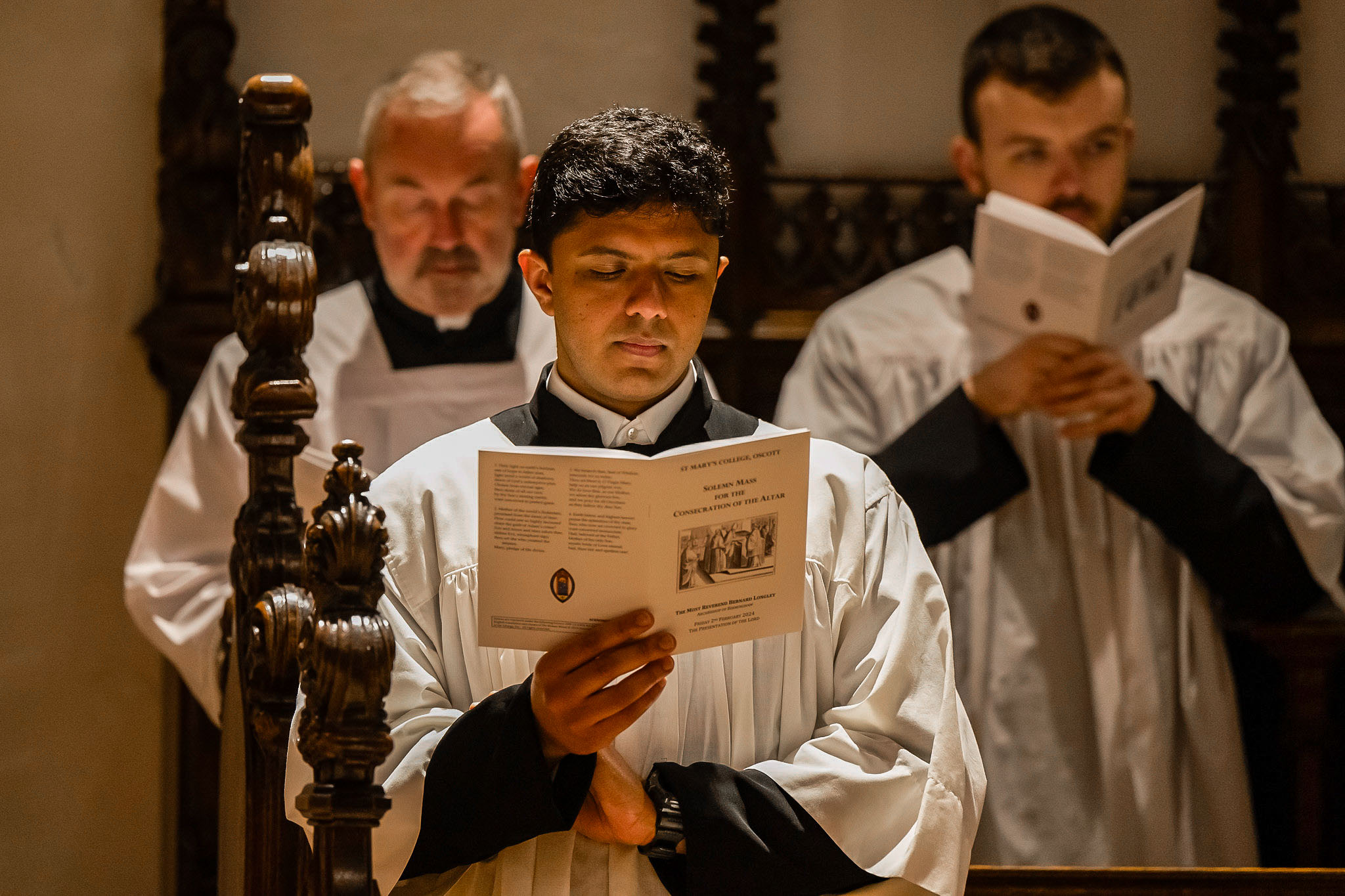
They are the sort of people for whom the altar of a seminary chapel is better suited to serving as a sacristy than as a place of prayer: a space on which to spread out chasubles stolen from some old parish and copes ready for the next parade, rather than a place where vocations are formed and God is encountered.
This is the climate with which the young priest must contend: the willing priest, the one full of vitality and eager to offer his gifts and talents to his Church, to his presbyterate, to his bishop. Over the past twelve years this priest has lived in a climate that began at the top and spread through different parts of the Church, where there was always a harsh word for the priest and the consecrated person. Always a rebuke, a stigma, a cliché to be promoted. No word of encouragement.
The fetish and the poisoned presbyterate
And let us say it plainly, without fear of telling the truth: over the past twelve years those who found fertile ground were precisely those figures — relatively young too, bearing in mind that in the Church one is young until sixty, sic! — who created division. Because the Pope did not strike at them, even though they had a fetish for lace, a fetish for the rochet, a fetish for the purple cassock, a fetish for birettas, a fetish for the organ. And let the term be clear: fetish, not a healthy love for the liturgy and for beauty. Fetish in the proper sense of the word: an obsessive and irrational attachment to an object that becomes an end in itself, emptied of all spiritual meaning and turned into an idol to be displayed. But why did Francis not strike at them? He did not strike at them — and we saw this clearly in the fact that he kept beside him an embarrassing figure who, at every Vetus Ordo Mass, was and is in the front row with sashes, birettas and lace — nothing could be further from Francis’ other and opposite fixations. Yet he did not remove him from there because he was useful.
How many priests, sadly even young ones, poison the presbyterate in our particular Churches with the same style as this figure whom Leo XIV fortunately drove out in January, after the embarrassing episode in the Hall of Benediction. How many there are. Several, unfortunately. They are those figures who throw themselves at food with anger and then, at clergy meetings, always sit in the back row, forming little groups where they gossip about the bishop or their confrères. Appointments and gossip. They are the same ones who go around with buckled shoes, cassock neatly arranged, sashes and bags full of lace and frills, moving from one church in the diocese to another to stage parades, not celebrations.
In reality, it was against these figures that Pope Francis lashed out when he used certain terms — terms that cannot even be repeated, so vulgar and sweeping were they — without ever truly hitting the mark. Because these are the priests who, besides never having reached a mature acceptance of themselves, project onto others what they themselves are really living. They spend their time gossiping and spreading chatter about their confrères and superiors.
Then, as we have now grown used to seeing in the Church, along come the “far-sighted bishops” who, instead of assigning these figures to some remote parish in order to make them work rather than wander around curial circles, give them exactly the roles they are so desperately seeking. And so you find them in the cathedral acting as masters of ceremonies, claiming that they “can wear the purple cassock” even when they go to bed because they “are the bishop’s masters of ceremonies”. As if. You find them around the diocese in green, yellow and blue mozzettas, and instead of being kept at a proper distance from the roles they crave, they are entrusted with very particular churches where their abrasive characters and inclination to gossip do nothing but drive away simple people — the very people the Gospel asks us to go out and seek. Then they quarrel with the organists, surround themselves with a crowd of unresolved young lads whom they place at their side for “unknown” reasons, organise celebrations with the little nest of vipers they have built around themselves, only to fall out with them and speak ill of them behind their backs every other day.
Projection
The young priest who is prayerful, mature and willing must instead deal with these figures every time he comes to the cathedral to take part in a Mass with the bishop. He has to deal with those who, as soon as they see him with his group of altar servers or confirmation candidates, start chatting and slandering. Because when there are parts of your life you have never faced and which you live under repression, you end up projecting them onto others constantly. If you do not live your sexuality and affectivity maturely, you project them onto others, and so everyone becomes sexualised, everyone “is engaged”, everyone “is a woman”, and therefore you speak about them in feminine terms. A modus operandi which, moreover, is very common in those circles which they condemn verbally and by day. Psychology has written rivers of pages on this subject, but unfortunately in certain seminaries there are formators who prefer to let their students gorge themselves and then improvise as therapists with them, with results that are clearly visible in everyday pastoral life.
The mature young priest, who does not seek appointments and has no fetishes but lives his ministry with balance and serenity, is often not even considered by the bishop. And that is how the curia, the cathedral environment, the central environment closest to the bishop, become suffocating and unliveable places. “That is why I would not even want to go to the Chrism Mass,” says a priest ordained only a few months ago, adding that these dynamics are already clearly visible in the seminary, “but as we know, formation has nothing objective about it: everything depends on the rector and the bishop of the day.” Besides the fact that “with the idea that we have to ordain because there are few of us, some attack those deemed immature because perhaps they are more devout and attached to tradition in a healthy way, while cheerfully allowing to continue those who not only cling to ape-like imitations of tradition, but — and this is the serious problem, the one Pope Francis was also pointing to — are divisive, gossipy and project onto others what they themselves actually do or would like to do.”
A path, not an invective
In this year of his pontificate, Leo XIV has intervened several times and has offered reflections to priests, seminarians and consecrated men and women which touch precisely these nerves. He has not done so with vulgar or harsh words, which risk discouraging those who carry out their ministry well and perhaps also scandalising the laity, who then tar everyone with the same brush. He has done so by indicating a path, the only path that can break these dynamics. Because if a bishop is holy, if a presbyterate is holy, if a seminary is full of people who live their vocation seriously and place Christ at the centre, as Leo XIV has explained, we can be certain that there would be no place for unresolved figures full of problems. They would leave; they would be automatically marginalised. And there are several examples, including in the Italian Church, where this happens and where it is a good thing. Divisive, problematic priests, with pitiable histories, who are automatically pushed to the margins, kept outside their dioceses and even forbidden to return. Of course, they should be suspended a divinis, but we know that unfortunately there are bishops who are strong with the weak and weak “with the strong”. And this marginalisation is not contrary to the Gospel: those who convert, change style, mature and face their own critical issues can always return. The problem lies elsewhere. It lies with those who live the priesthood as a caste — those who think that belonging to the presbyterate means having “arrived” and that those outside it “did not make it” — and who construct an elitist and profoundly distorted vision of ordained ministry. A vision which, fortunately, belongs to only a few, but on which the synodal “fathers and mothers” unfailingly rely when they try to attack the ordained ministry. It is the worst Achilles’ heel into which the theory of clericalism inserts itself: it is not produced by the critics, it is produced by these figures and by their idea of priesthood as a social achievement.
It must be said clearly: those who leave the seminary do not necessarily do so for strange reasons. Excluding the cases — which Silere non possum has in some instances documented and denounced when necessary in order to protect their victims — of those who accused priests or seminarians in order to cover their own repression and dissatisfaction, the reality is much simpler.
Some leave because they honestly recognise that this is not their vocation. Some leave because a particular formation setting is not suited to them. Some leave because they do not share certain methods or dynamics. There are many reasons, and what matters is that people are happy and follow what the Lord has planned for them. To claim that anyone who speaks about the Church by highlighting both lights and shadows does so because he “failed to become a priest” says a great deal about those who think it and nothing about anyone else. The priesthood is a vocation like the others. It is not paradise. It is within this context — poisoned presbyterates, approximate formation and elitist visions of priesthood — that Leo XIV’s proposal is situated.
Belonging to Christ
In this first year Leo XIV has intervened and said clearly that the priest must know to whom he belongs. Not in a juridical sense — though for some that is already a problem — but in an existential sense. In his letter to the presbyterate of Madrid, he chose to close with the words of St John of Ávila: “Be wholly His.” Do not be good, do not be efficient, do not be up to date. Be His. This is the key to everything. A priest who has lost the sense of this belonging can continue to function for a long time — to celebrate, administer, listen, plan — but he has already begun to hollow himself out. Leo XIV calls this by a phrase he has repeated in different contexts: “reducing ministry to a function to be carried out.” It is the pathology that worries him most, more than scandal, more than rebellion. The priest-functionary — the one who carries things out without any longer knowing why — is, for this Pope, the sign of a spiritual failure that unfolds slowly and silently.
From here arises the first concrete demand that Leo XIV places as a condition of healthy ministry: the interior life. Not as an additional devotional practice for those with a contemplative temperament, but as the foundation without which everything else collapses. “This friendship with Christ is the spiritual foundation of ordained ministry, the meaning of our celibacy and the energy of the ecclesial service to which we dedicate our lives,” he told the priests gathered at the meeting promoted by the Dicastery for the Clergy. And he added something rare in its concreteness: “When you need help, seek a good companion, a spiritual director, a good confessor. No one here is alone.” This is not a suggestion for moments of crisis. It is an ordinary condition of ministry. The Pope speaks of a confessor for the interior life, but psychological support too — entrusted to serious professionals, not improvisers — is useful and necessary. It must be kept firmly in mind, however, that psychology is not spiritual direction and spiritual direction is not psychology. Whoever mixes the two, or worse replaces one with the other, is dangerous for those entrusted to him.
The priest who governs himself alone, who has no one before whom he can lay down the weight of what he carries, is already exposed, even if outwardly he holds together, Leo tells us. To the priests of Madrid he said it with the image of the confessional: “Do not stop going to confession, returning always to the mercy you proclaim.” The channel needs to drink the water it carries.
Loneliness and the presbyterate
The loneliness of the priest is another great theme close to Leo XIV’s heart — one of those issues that must be faced with balance and which Prevost also faces personally. His relationship with his secretary is not merely one of service but one of true friendship and spiritual fatherhood. The same is true of his bond with the Augustinian community: Prevost, even as a cardinal, always preferred to be with his confrères rather than withdraw alone into his own flat. He would have lunch with them. Of course, he is a religious; that must be clear. Not everyone in the Church is called to live this kind of life, but loneliness and isolation are not required of the secular priest either. He is called to live differently from religious, but not for that reason to remain alone.
Yesterday, in Naples, he openly named “the sense of pastoral isolation” as one of the heaviest burdens of contemporary clergy, recognising the fatigue of those who listen to difficult stories, perceive hidden needs, engage with pastoral languages that no longer seem to reach young people, and often do so alone. The answer the Pope proposes is not consolatory: it is structural. And he has said so on several occasions, with a clarity that leaves no room for convenient interpretations. Prevost asks for priestly fraternity lived as a concrete fact, not as an ideal to be evoked at conferences. The diocesan priest is not called to the common life of religious, but he must be able to count on a presbyterate of confrères who care for one another, not on an environment where people chatter, spread rumours, look at each other askance, criticise one another, envy one another, ignore one another. Leo XIV has said that fraternity is a “constitutive element of the identity of ministers, not just an ideal or a slogan.” Constitutive. He has asked for concrete forms of mutual accompaniment and real sharing in pastoral action. And to the priests of Madrid he wrote without diplomatic circumlocutions: “Stand together against the individualism that impoverishes the heart and weakens the mission.” Pastoral loneliness is not a cross to be borne in silence: it is a temptation resisted together, or not resisted at all.
The people, the façade, the threshold
Then there is the relationship with the people, and here Leo XIV touches on something theologically dense. Ordination does not separate the priest from the flesh of his people — and this is exactly the point that strikes those who see the priesthood as an “achievement reached or missed”. Ordination configures one to Christ — alter Christus, he writes to Madrid — but Christ became flesh, touched lepers, ate with sinners, wept before the tomb of Lazarus. He was not separated from human life: he was immersed in it to the end.
In the homily at the ordinations of 31 May last year, he asked the new priests to conceive of themselves in the manner of Jesus: “The people whom the Father places on your path are people of flesh and blood. Consecrate yourselves to them, without separating yourselves from them, without isolating yourselves, without turning the gift received into a kind of privilege.” Clerical distance — the kind that disguises itself as invective, as a clique, as an élite — is, for Prevost, a form of betrayal of the vocation. The depth of priestly joy, he insisted, is proportionate to the bonds the priest builds with the people from whom he comes and to whom he is sent. This is not a pastoral drift, but the embodiment of what Christ asks of us. The exemplary nature of life, in this framework, is neither moralism nor ecclesiastical discipline. Leo XIV roots it in Paul’s words to the elders of Ephesus: “You yourselves know how I lived among you.” The credibility of the priest does not arise from perfection but from transparency, from the courage not to hide behind anything or anyone. The priest must arrive at ordination aware of what he is and who he is: not perfect, but not someone who gives himself over to backstage intrigue, to distorted narratives, to speaking ill of his confrères, to labelling others, to insults, to fixation on sex, to foul language declined in the feminine. The priest is the one who looks at the other with mercy and truth. And he is recognisable precisely because he does not hide.
In his letter to the priests of Madrid, the Pope used the image of the cathedral façade for this: “His life is called to be visible, coherent and recognisable, even when it is not always understood.” The façade does not exist for itself: it leads inside. In the same way, the priest is never an end in himself. His whole life is called to point beyond itself. For religious and consecrated men and women, the vision extends with its own emphases, but the substance does not change. Leo XIV asks consecrated life to stand on the frontiers without the security of maps already drawn, to preserve charisms without turning them into museum pieces, to live obedience as an act of love, quoting Augustine: “Do you have charity? Show me its fruit. Let me see obedience.” To hermits he recalled Evagrius Ponticus: “A monk is one who, separated from all, is united to all.” Contemplation is not flight from the world and from the other: it is the most radical form of solidarity with the world.
Joy as theology
All this — the interior life, fraternity, rootedness in the people, transparency of life — rests on one final certainty that Leo XIV never abandons: joy. A joy that is neither temperament nor pastoral optimism, but a theological response to one’s vocation. The priest who is not happy in his priesthood — not always, not every day, but in the most fundamental sense — is a priest who has ceased, at least in part, to believe in what he celebrates. And unhappiness, when it is not faced, finds outlets in ways we know well: speaking ill of others, taking obsessive refuge in lace and frills, aping confrères and superiors — not only in real life but also in YouTube videos — turning anyone who does not think like you into an enemy to be struck. These are the symptoms of a priesthood that has lost its source.
Leo XIV knows this, and that is why he returns to this point with a constancy that is not rhetoric. If we wanted to draw an identikit of the priest according to Leo XIV, the portrait would be this: a man who truly prays, who has someone with whom to speak and grow in his interior life, who does not live alone, who stands among his people without distance or privilege, who carries the burden of ministry without allowing himself to be consumed by it. A man before being an “oratory organiser”. And at the root of everything, men who know they have been called — not recruited, not trained, not selected: called. This is the word Leo XIV entrusts to every priest: “Be wholly His.” Because a priest who is wholly Christ’s has no time to be anything else. And a priest who is not wholly Christ’s, whatever else he may be, is not enough.
fr.I.L. and fr.S.P.
Silere non possum