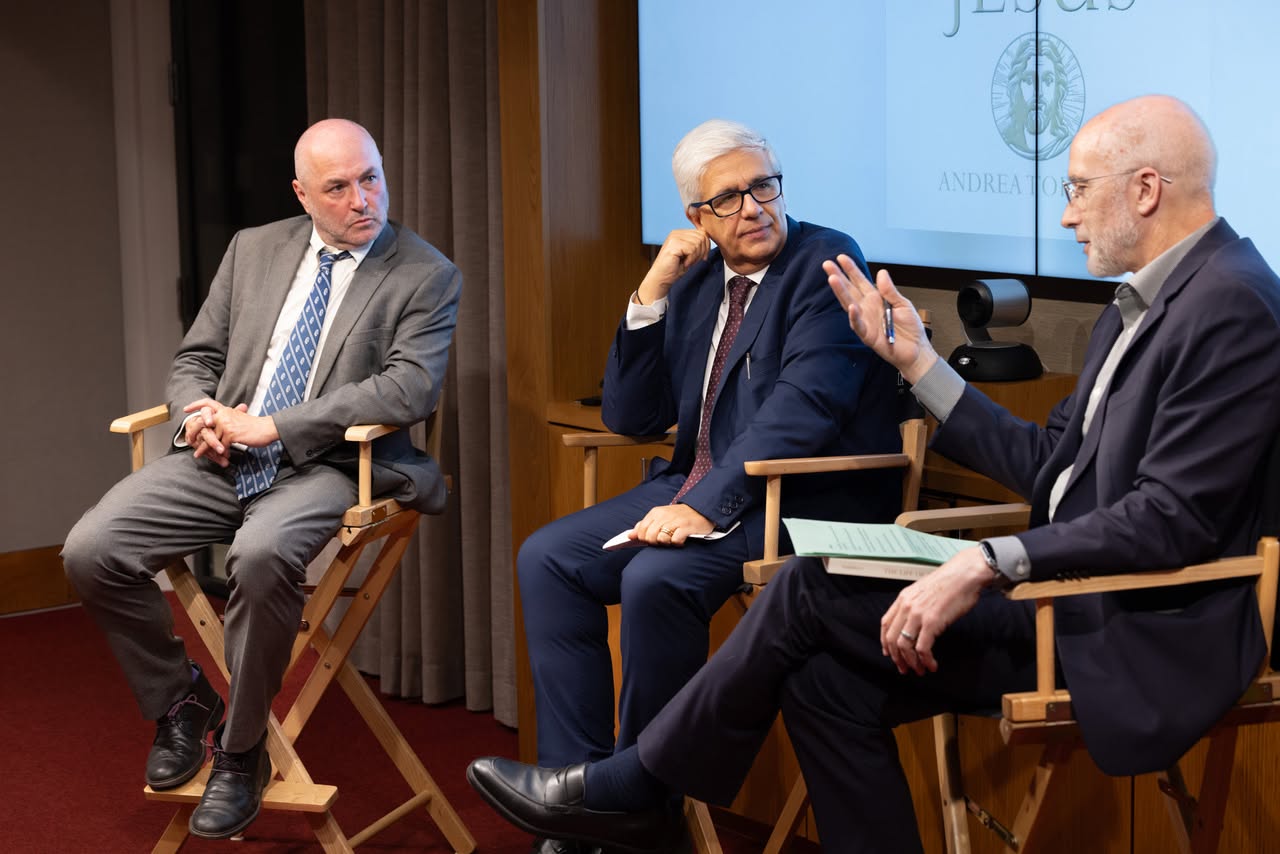
Rome - Just days before the new Prefect of the Dicastery for Communication is due to arrive at the Vatican, Andrea Tornielli, editorial director of Vatican media, has seen fit to set himself up as an expert in technology, algorithms and cryptocurrencies as well. It is a new specialism for the former La Stampa journalist, who over the years has demonstrated a remarkable ability to adapt his public profile to the requirements of each successive pontificate.
In 2010, when he styled himself a ‘Vatican insider’, Tornielli was one of Benedict XVI’s staunchest defenders. By 2018, once the wind in Rome had changed, he had already become one of Francis’s most zealous interpreters and apologists. Today, under Leo XIV, he presents himself as the guardian of the authentic meaning of the Pope’s words, dispensing lessons urbi et orbi to journalists, commentators and readers alike.
In a recent editorial, Tornielli explained that the Pope, ‘even when he speaks about peace and war, welcoming migrants or how to remain human in the age of artificial intelligence’, remains always and solely ‘a spiritual leader’. He recalled that the temporal sovereignty accorded to the Pontiff is a guarantee of his independence, rather than evidence of a ‘dual mission’. Any exaltation of the Pope’s role as a head of state, he wrote, would therefore be ‘misleading’, because it would end up obscuring his ‘one true mission as universal Pastor’.
There is a certain irony in seeing this thesis presented as some kind of original insight by the very person who, for years, helped turn every word, gesture and decision of the Pope into material for political confrontation, ecclesiastical propaganda and media positioning. Tornielli maintains that the Pope ‘is simply proclaiming the Gospel’ when he speaks about peace, migrants, poverty, religious freedom and care for Creation. That clarification would carry rather more weight had the media under his direction genuinely followed this principle, instead of deciding from one occasion to the next which papal statements to amplify, which to play down and which to bend to the convenience of the moment.
The computer and cryptocurrency wizard
The editorial director of Vatican media has now also set himself up as a bitcoin expert in order to celebrate Magnifica humanitas, Leo XIV’s encyclical. Once again, however, the problem lies not only in what he has written — an approximate text, marred by grammatical and substantive errors — but in the increasingly evident gulf between the lessons delivered in public and the conduct that has long been criticised in Vatican circles. Behind closed doors, the language and priorities attributed to Tornielli often appear considerably less evangelical, spiritual and disinterested than those displayed in his official editorials.
In its 13 July edition, beneath Leo XIV’s Angelus meditation at Castel Gandolfo, the Holy See’s newspaper devotes an extensive feature to cryptocurrencies and blockchain, ‘in dialogue with the encyclical Magnifica humanitas’. The article carries two bylines: those of Emanuele Colombo and Andrea Tornielli, the man who is supposed to guarantee the quality of everything produced by Vatican media. The result is a small handbook of everything a newspaper should never publish: embarrassing typographical errors, factual mistakes, outdated figures presented as current and partisan arguments passed off as neutral descriptions of reality.
Let us begin with the mistakes visible to the naked eye, the sort that a proofreader — if such a figure still existed at L’Osservatore Romano — would have caught within thirty seconds.
A festival of typos
The company that issues the world’s most important stablecoin is called Tether. In the Pope’s newspaper, it becomes ‘Theter’. Not in a minor aside, but in the key passage in which it is described as ‘the most important stablecoin issuer in the world’ and the seventh-largest buyer of US government debt. We are talking about a company worth hundreds of billions of dollars, yet the newspaper cannot even spell its name correctly. It is like signing an analysis of the motor industry that refers to ‘Ferarri’.
Then comes the jewel in the crown: meme coins are said to be ‘often known by the epithet sheet coin’. The slang term is, notoriously, something else and considerably less elegant, as anyone with even a passing familiarity with the subject knows. ‘Sheet coin’ appears in no glossary. It is the clumsy attempt to sanitise an English swearword by someone who has evidently heard it in passing and has never read a line about the subject he claims to be explaining to readers. It would have been enough to write ‘tokens with no value whatsoever’. But that would have required knowing what one was talking about.
Then there is Kevin Warsh, described as the ‘attuale Governatore della Banca Centrale America’ — the ‘current Governor of the America Central Bank’. Three errors in six words: a minor record. The institution is called the Federal Reserve. In Italian, the correct generic expression would at most be banca centrale americana: America is a noun, whereas the sentence requires the adjective americana. Banca Centrale America is therefore neither grammatical Italian nor meaningful English. And Warsh, in office since 22 May 2026, is not the ‘Governor’ but the Chairman of the Board of Governors: at the Fed, the governors are the members of the board, while the person at its head is the Chair. These are elementary distinctions for anyone who has read a single page of economics; apparently irrelevant details for those writing about global finance in the Holy See’s newspaper.
There are also computers described as being ‘sparsi in tutto il modo’. The intended phrase was sparsi in tutto il mondo, ‘scattered throughout the world’, but the letter n has apparently disappeared in production, turning mondo, ‘world’, into modo, ‘way’ or ‘manner’. Then come the ‘milioni di individui’ who ‘abbiaMo deciso’ to buy bitcoin. The sentence requires abbiano deciso, the third-person plural form agreeing with ‘millions of individuals’; instead, it prints abbiaMo deciso, a first-person plural form meaning ‘we have decided’, complete with a stray capital M. Both grammar and proofreading appear to have been casualties of the rush.
The article cannot even agree with itself: first it says that blockchain ‘was created in 2009’; a few lines later, that ‘the date of blockchain’s birth coincides’ with 2008. Nakamoto’s white paper dates from October 2008 and the first block from January 2009. It would have been enough to explain that. But explaining something requires having understood it.
The substantive errors
While the typos may raise a smile, the substantive errors are more troubling, because they appear in a text presented as an examination of papal teaching and which readers will assume to be reliable.
The article claims that migrant remittances ‘can cost more than 20 per cent’ and that ‘the use of stablecoins makes it possible to eliminate these costs’. Both statements are false or seriously misleading. The global average recorded by the World Bank stands at around 6 to 7 per cent; even the most expensive corridors, those in sub-Saharan Africa, average approximately 8 per cent. Cases exceeding 20 per cent are extreme exceptions, not the norm implied by the article. As for ‘eliminating’ costs, stablecoins may reduce them, but they do not remove them altogether. Network fees, exchange-rate spreads and, above all, the costs of converting local currency into digital currency remain. In poorer countries, that conversion is precisely the most expensive part of the chain. Those who actually work on remittances know this.
The same pattern is repeated with the GENIUS Act: stablecoin issuers supposedly have ‘a legal obligation to invest in US government debt’. The legislation requires reserves to be held in safe, liquid assets, including cash, insured deposits, repurchase agreements and government money-market funds, as well as short-term Treasury securities. The purchase of US debt is a market effect, not a statutory obligation. The difference between the two ought to be explained particularly clearly by the Pope’s official newspaper.
Then there is the casual treatment of figures. The market capitalisation of cryptocurrencies is said to stand ‘today at approximately 4.2 trillion dollars’. The problem is that the source cited dates from the third quarter of 2025, ten months before publication, in a market that can double or halve over that period. An October ‘today’ passed off as a July ‘today’. To make the figures more ‘concrete’, the article then compares that market capitalisation with Italy’s GDP: a stock compared with an annual flow, the sort of methodological error that earns a red-pencil correction in the first year of an economics degree. Finally, there are the ‘millions of computers’ supposedly managing the ledger: full nodes on the Bitcoin network number in the tens of thousands. But ‘millions’ sounds better — and who is going to check?
Apologetics masquerading as analysis
The most serious problem, however, lies not in the individual errors but in the article’s entire approach. It repeats the standard narrative of the sector’s enthusiasts and presents it as an objective description. Traditional currencies ‘can be printed without limit’; bitcoin is a ‘scarce asset, even scarcer than gold’, a ‘safe-haven asset’ and the ‘digital gold of the young’. On the environmental issue, which independent research regards as one of the phenomenon’s most critical aspects, the only voices heard are those of the ‘numerous industry operators’ who claim that mining may actually encourage green energy. In other words, the interested parties are promoted to the position of expert witnesses. There is not a line about academic estimates and no opposing view. In the newspaper that ought to embody the Church’s social doctrine, readers are essentially given the sales pitch of a crypto fund, framed by a few quotations from St John Chrysostom.
Why it happens
Once again, for the umpteenth time, we ask the same question: how is it possible for all this to appear as a double-page spread in the Holy See’s newspaper, carrying the byline of the editorial director of the Dicastery for Communication? The answer has been in plain sight for years. Andrea Tornielli writes about everything: canon law without being a canon lawyer, Vatican law without being a jurist, theology without being a theologian, as well as liturgy and geopolitics — and now blockchain, stablecoins and the tokenisation of financial markets. There is no subject on which the editorial director does not feel obliged to enlighten the faithful and, above all, the clergy. Each time, the result is the same: the superficiality of someone who has hurriedly read what others have studied for years.
Why the urgency to fill two pages on a subject so plainly outside the writers’ expertise? The answer emerges from the article itself, in the unintended candour of certain lines conceived more to attract attention in the papal apartments than to inform readers: ‘This is the first time cryptocurrencies have made an appearance in an encyclical.’ And so it was essential to be there. Magnifica humanitas had to be celebrated, its authors had to establish themselves as prompt interpreters of the new pontificate and Leo XIV had to be shown an apparently efficient communications machine ready to promote his teaching.
Behind this eagerness, however, one can discern a far less noble urgency: to prevent the Pope from noticing the gulf between the official narrative and what is actually happening within the offices of Vatican communications. Leo XIV, who could hardly obtain an accurate picture of the situation from L’Osservatore Romano, might eventually come to understand that many of the allegations published by Silere non possum are well founded. Above all, he might realise that, while he is celebrated in front of the cameras and every word he speaks is amplified, behind the scenes there are those working in the opposite direction.
The fear, ultimately, is straightforward: that the Pontiff may understand the game being played, identify the internal resistance and decide to dismiss those who have transformed the Holy See’s communications into an instrument of self-protection, power management and personal survival.
It is a pity that the best way to honour an encyclical is not to comment upon it with errors deserving of a teacher’s red pen. If paragraph 160 warranted further examination — and it did — there are economists, including some excellent ones at universities, who could have written about it with genuine expertise. But that would have required taking a step back. At Piazza Pia, stepping back is not considered an option.
So where was Monda?
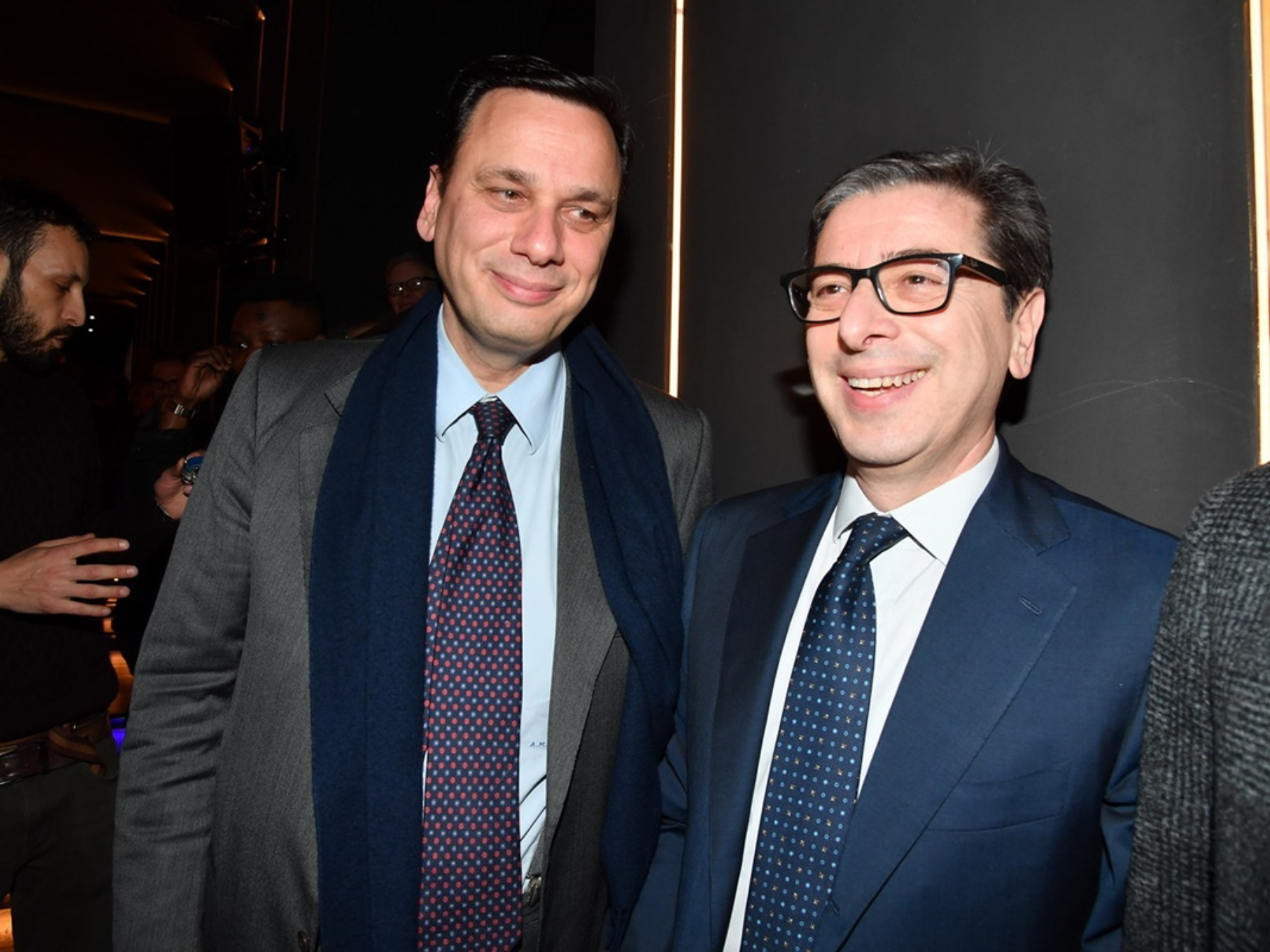
There is also a second responsibility that cannot be ignored: that of Andrea Monda, editor of L’Osservatore Romano. A newspaper editor is responsible for what goes to print. Everything: headlines, articles and typographical errors. ‘Theter’, ‘sheet coin’, the ‘Central Bank America’, the mangled grammar, the dates contradicting one another from one column to the next: every one of these horrors passed before the eyes of a newsroom and an editor without anyone raising a hand.
This is not the first time, as anyone who follows the sorry affairs of this newspaper knows well. Errors accumulate issue after issue, and nobody corrects them, nobody checks them and nobody reads the copy again. There are only two possibilities. Either L’Osservatore Romano lacks the structure needed to carry out these checks, in which case one must ask what purpose is served by the staffing levels and budgets of the most expensive dicastery in the Roman Curia; or the structure exists but does not function, in which case the question becomes a different and more uncomfortable one.
The final paradox is supplied by the article itself, when it warns that we cannot ‘allow ourselves to delegate the question of trust entirely to codes and mathematical rules’. Quite right. Trust is built through care, verification, expertise and the humility to allow knowledgeable people to write. None of those qualities is present in those two pages.
The newspaper founded to serve as the Holy See’s most authoritative voice deserves better than the hastily written schoolwork of those who need everyone to know that they have read the encyclical. Its readers — and, before them, the Pope — deserve better.
T.C. and Fr.E.R.
Silere non possum