Austria’s coalition government agreed on Monday to reform the country’s system of compulsory national service, settling an issue that had long divided the governing parties. The agreement was reached during the summer cabinet meeting held in Salzburg. Under the compromise, known as the “6+3 model”, basic military service, or Grundwehrdienst, will remain unchanged at six months, followed by three months of compulsory troop and militia training. Whether this additional training will take place immediately after basic service or at a later date has yet to be decided as part of the reform’s implementation.
The measures also cover the alternative civilian service, known as Zivildienst, which will remain at nine months for the time being. From 1 January 2027, however, participants will be able to extend their service voluntarily by a further two months. The new arrangement will be formally evaluated during the first six months in which it is in force.
A safeguard clause, described as the “national service guarantee”, will then apply from 2028. If the annual number of military conscripts falls by more than 7.5 per cent below the threshold of 15,000 personnel, the two-month extension will become permanent and compulsory from the following year, increasing the total duration of civilian service to eleven months. The additional two months may be completed flexibly, subject to agreement with the host organisation.
Measures intended to make military service more attractive include an increase in monthly pay from the current €625 to €1,000 and, for the first time, an entitlement to leave for conscripts. The package also provides for an annual civil-protection exercise involving the Austrian Armed Forces, civilian service personnel and emergency organisations.
It also includes a reform of emergency civilian service, intended to allow former participants to be recalled more quickly if required for national defence or in the event of a disaster, as well as a stated commitment to open the “Dienst für Österreich” to women by removing the obstacles that currently prevent their participation.
Chancellor Christian Stocker of the Austrian People’s Party, the ÖVP, said the agreement remained faithful to the tiered model proposed by the National Service Commission, although it differs from the commission’s recommendation on the most contentious issue. The advisory body had proposed eight months of basic military service followed by two months of exercises, but that option was ultimately abandoned in favour of the less demanding compromise.
The agreement must now secure the support of the opposition, as any extension of civilian service requires a two-thirds majority in Parliament. The government hopes to obtain the necessary votes in the coming weeks, with the aim of bringing the reform into force on 1 January 2027.
Political reactions have divided along largely predictable lines. Freedom Party leader Herbert Kickl described the measure as yet another watered-down compromise produced by a governing coalition with no clear direction. He called for fresh elections and criticised the failure to consult the public.
David Stögmüller, the Greens’ defence spokesman, was also critical. He said that while the dispute over the number of months could now be regarded as settled, questions remained over what the reform would actually involve. At regional level, Styria’s governor, Mario Kunasek of the FPÖ, said the model ultimately failed to satisfy any of the parties involved fully.
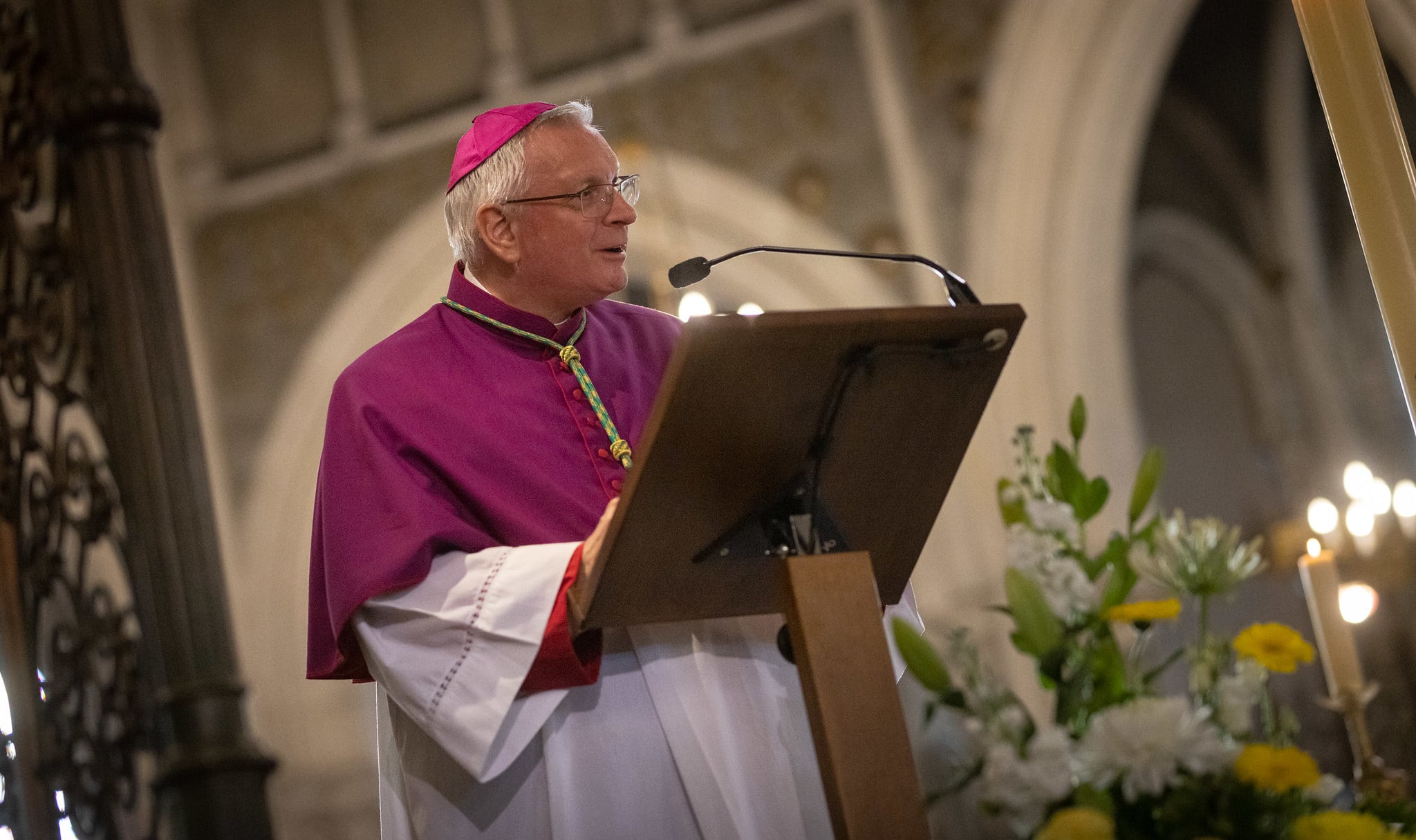
Bishop Werner Freistetter welcomed the agreement on Tuesday, describing it as an important signal for soldiers’ safety and as recognition of the service they perform. Drawing on the history of armed conflict, which shows that inadequately trained soldiers face the greatest risks in an emergency, he stressed the duty to provide proper training to those called upon to defend the country, ensuring that they are protected as far as possible and equipped to act effectively.
Freistetter also welcomed the increase in pay and the introduction of leave, describing them as a long-overdue form of social recognition for the commitment shown by young conscripts. He also reaffirmed the role of military pastoral care as an independent and confidential source of support throughout their period of service, with chaplains serving as points of reference at times of uncertainty or under the pressures of day-to-day military life.
Not all sections of the Catholic community share this favourable assessment. Katholische Jugend Österreich, the Austrian Church’s Catholic youth organisation, responded far more cautiously to the reform. Its president, Klemens Lesigang, called for full equality between military service and alternative civilian service and expressed concern about the direction of the Zivildienst proposals, while acknowledging that the increase in pay and the introduction of leave for conscripts were steps in the right direction.
Calls for equal treatment are not new within the Austrian Church. As early as April, Catholic Action in Upper Austria had called for military and civilian service to be equal in both duration and remuneration, arguing that there was no justification for civilian service to last longer.
Its president, Gabriele Hofer-Stelzhammer, said such a disparity conveyed the impression that social commitment was valued less highly than military service. Vice-president Christa Steinbüchler had also criticised a proposal, ultimately excluded from the final agreement, to scale back civilian service placements abroad, which she regarded as a particularly valuable formative experience for the young people involved