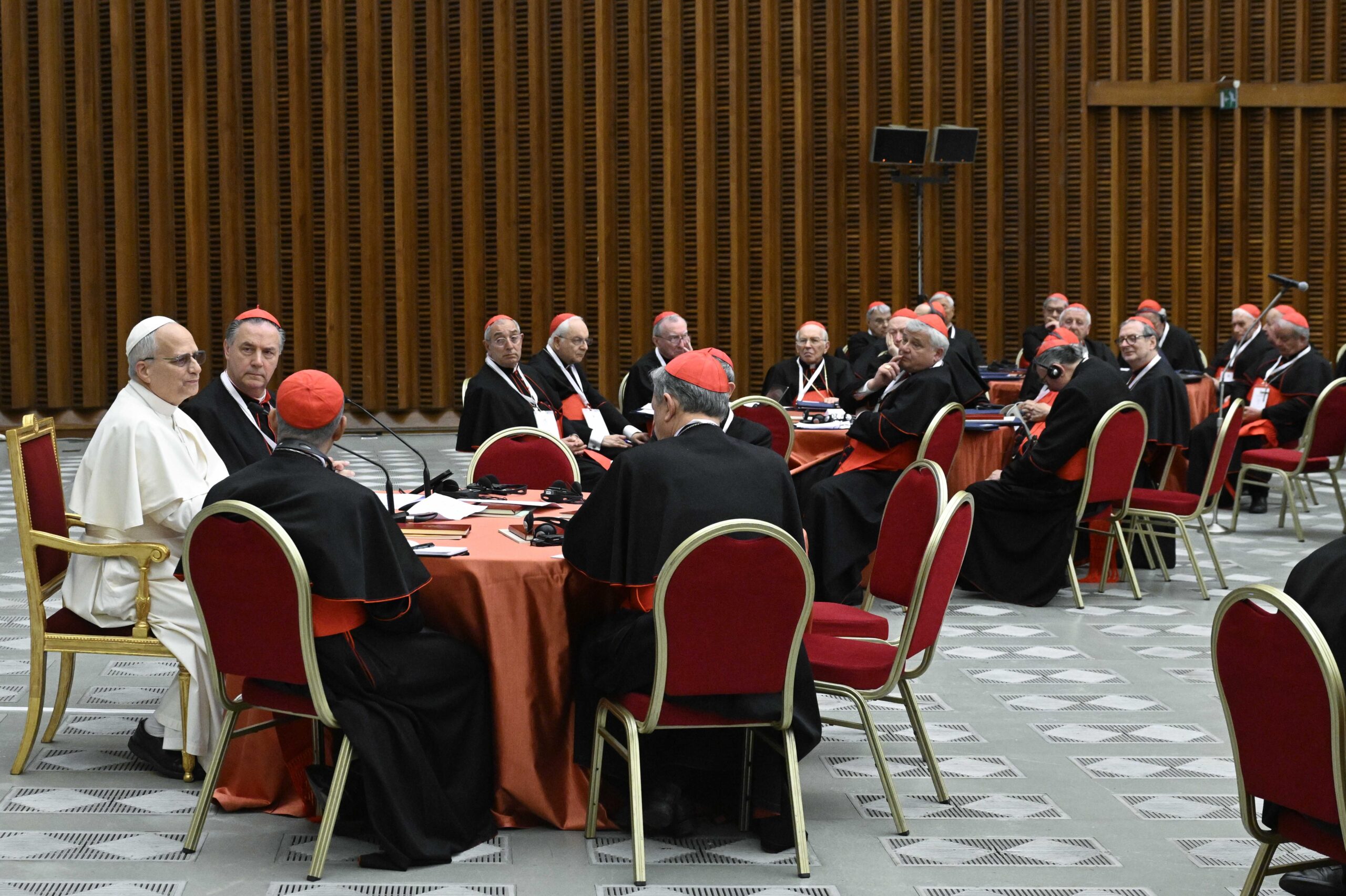
Vatican City - The extraordinary Consistory convened by Leo XIV for 26 and 27 June will see the cardinals meet in working groups, following a tightly structured process of brief individual interventions, shared discussion and the drafting of a final report.
Participants will be divided into twenty groups. Nine will be made up of cardinal electors who are ordinaries, including nuncios and those who have completed their service as ordinaries; the other eleven will bring together cardinal electors of the Roman Curia and non-electors. Each group will have a chairman, responsible for moderating the discussion, and a secretary, who will collect contributions and prepare the final report.
After a brief introduction, each cardinal will be allowed to speak for no more than three minutes. This will be followed by a second stage of shared listening, in which interventions will be limited to two minutes and must build on points already raised, without introducing fresh proposals. The secretary will then draw together the results of the group’s work. Reports from the groups of ordinaries will be presented in the hall within three minutes; the other groups will likewise be allowed one intervention, subject to the same time limit. Cardinals will still be able to submit individual written contributions.
The programme
The programme consists of four sessions. On Friday morning, after the Eucharist celebrated by the Pope in St Peter’s Basilica, the Consistory will consider the proclamation of the Gospel in the contemporary world, with a biblical meditation by Cardinal Grzegorz Ryś, Archbishop of Kraków. The afternoon session will address the “culture of power and the civilisation of love”, beginning with an introduction by Cardinal Víctor Manuel Fernández on the fifth chapter of the encyclical Magnifica humanitas.
On Saturday, the third session will focus on the “challenges of our time” and the building of the common good, with an address by Cardinal Stephen Brislin, Archbishop of Johannesburg. The final session, to be held in the New Synod Hall, will be devoted to the implementation of the synodal process ahead of the assemblies in 2027 and 2028. After an introduction by Cardinal Mario Grech, the cardinals will be able to speak directly with Leo XIV. Open interventions must not exceed three minutes. The Pope will then deliver his concluding address.
The Holy See Press Office has stated that journalists will not be admitted to the hall during the proceedings. Cardinals have also been asked to observe confidentiality, as Silere non possum reported in recent hours, and urged not to speak to the press in order to protect an atmosphere of fraternal discussion.
Cardinals, crank blogs and the campaign against Leo XIV
It is serious that certain cardinals from the traditionalist camp continue to pass confidential material to crank blogs that have turned improper disclosure into a tool of pressure and propaganda. In recent hours, even the confidential notes distributed to the cardinals were published, with email addresses left visible: an obvious breach of the confidentiality that Leo XIV has asked the cardinals to observe in order to guarantee a free and fraternal exchange at the Consistory.
The publication of sensitive material has become standard practice for some of these crank blogs. On several occasions, lay people and priests have issued formal warnings over their publication of documents and information protected by data-protection law. The affair confirms what had already emerged during the previous Consistory, when the same circles circulated cardinals’ reports on liturgical matters. The Pope may choose a gentler, more conciliatory language, one open to listening. The fact remains that certain cardinals continue to fuel division, use internal documents as weapons in ecclesial conflict and supply material to networks on the Catholic far right. It is a familiar script. Benedict XVI was used by these cardinals to publish their own pamphlets. Francis was turned into the permanent target of ideological campaigns. The same mechanism is now being applied to Leo XIV. Pontificates change; the methods remain the same. For these circles, it is enough for someone not to repeat what they want to hear to become a target. Even Jesus Christ, were he here, would be no exception. Leo XIV’s great offence is that he is not obsessed with lace and frills.
The Holy Father Leo XIV’s address will be broadcast live, as will the conclusion of the proceedings. At the end of each session, journalists will be given the texts of the meditations and introductions. After the first three sessions, the Press Office will also publish a summary of the discussion.
fr.E.R.
Silere non possum