There is one sentence in Magnifica humanitas - Leo XIV’s first encyclical, presented today - that strikes more forcefully than any other, even in a document filled with memorable passages. It comes at paragraph 100, where the Pope addresses the question of artificial intelligence imitating the human voice: “When words are simulated, they do not build genuine relationships, but only their appearance. The danger is not so much that a person may believe they are communicating with another person, but rather that they may gradually lose the very desire to form genuine human connections.”
Leo is not speaking about deception, technological fraud, or naïve users falling into the trap of a chatbot. The Pontiff is speaking about something deeper and more terrible: the extinction of a faculty of the soul. The faculty the ancients called eros - not in the reduced sense we give it today, but in its Platonic and then Christian meaning: the drive that takes us out of ourselves, the movement by which a finite being reaches towards what is not itself. Benedict XVI, in Deus caritas est, recalled that “being Christian is not the result of an ethical choice or a lofty idea, but the encounter with an event, a Person, which gives life a new horizon”. The beginning is always another. Without the other, nothing begins.
Here, then, is Leo XIV’s incisive diagnosis: the great seduction of our time is not the machine pretending to be human. It is our loss of the habit of making the effort required for the truly human. A machine is always available, does not contradict us, does not slam the door, does not take offence, does not die, asks nothing in return for its simulated listening. The other, the person of flesh and blood, is the most uncomfortable of realities: unpredictable, slow, wounded, capable of loving us and betraying us on the same day. Saint Augustine, in the Confessions, described friendship as “the flame that fuses souls together and makes one out of many”. None of this can be simulated. A semblance of speech can produce, at most, a semblance of a soul.
Leo XIV had said it in different words to the young Lebanese on 1 December last, on the esplanade of Bkerké, facing the Mediterranean: “A love with an expiry date is a poor love.” A remark which today, reread in the light of paragraph 100 of the encyclical, makes us imagine the Pope in the weeks before his journey to Turkey and Lebanon - that memorable journey, the first of his pontificate - bent over the drafts of Magnifica humanitas, with the text taking shape within him and even dictating the tone of his public addresses.
In short, the Pope reminds us that real love costs time, and the time of AI is anything but the time of love. AI replies in three seconds; the other sometimes replies after three years, or over an entire lifetime, or never. It is precisely this slowness, this opacity, this resistance of the other to our immediate need that makes the other real. And that makes us, in turn, real. The risk, then, is not deception. It is atrophy. It is the generation that learns to “speak” before it has learnt to seek. It is the pensioner who tells his sorrows to a voice assistant because no one comes to visit any more. It is the student who asks a language model for advice rather than the teacher who has forty years of reading and bereavement behind him. It is the wounded person who confides in a machine because the machine will never tire of them, though it will also never love. The machine will not betray us: we will be the ones who cease to feel the need for the voice of the other, and by then the betrayal will already have taken place.
There is, in the encyclical, a bitterness that recalls certain pages of Romano Guardini on “the end of the modern world”: man accumulating technical power while losing the capacity to inhabit it. Yet beneath it there is also a light that belongs wholly to the Gospel. For the Word became flesh: it did not become an algorithm, did not become a message, did not become an interface. It became flesh. It shed real tears at the tomb of Lazarus, ate real fish after the Resurrection, showed real wounds to Thomas. Christianity is the religion of a God who preferred to be touched rather than “analysed”. Perhaps this is, in the end, the most radical message of Magnifica humanitas: that safeguarding the human today does not mean first of all legislating on AI - though that is absolutely urgent and necessary - but rekindling within ourselves that ancient, demanding and beautiful desire to go in search of the other. To get up from the sofa. To write a letter. To phone someone we have not heard from in years. To endure the silence of someone who does not answer immediately. To love someone for ever, not with an expiry date. Everything else, Leo XIV tells us in this splendid text, is only appearance.
Marco Felipe Perfetti
Silere non possum Director
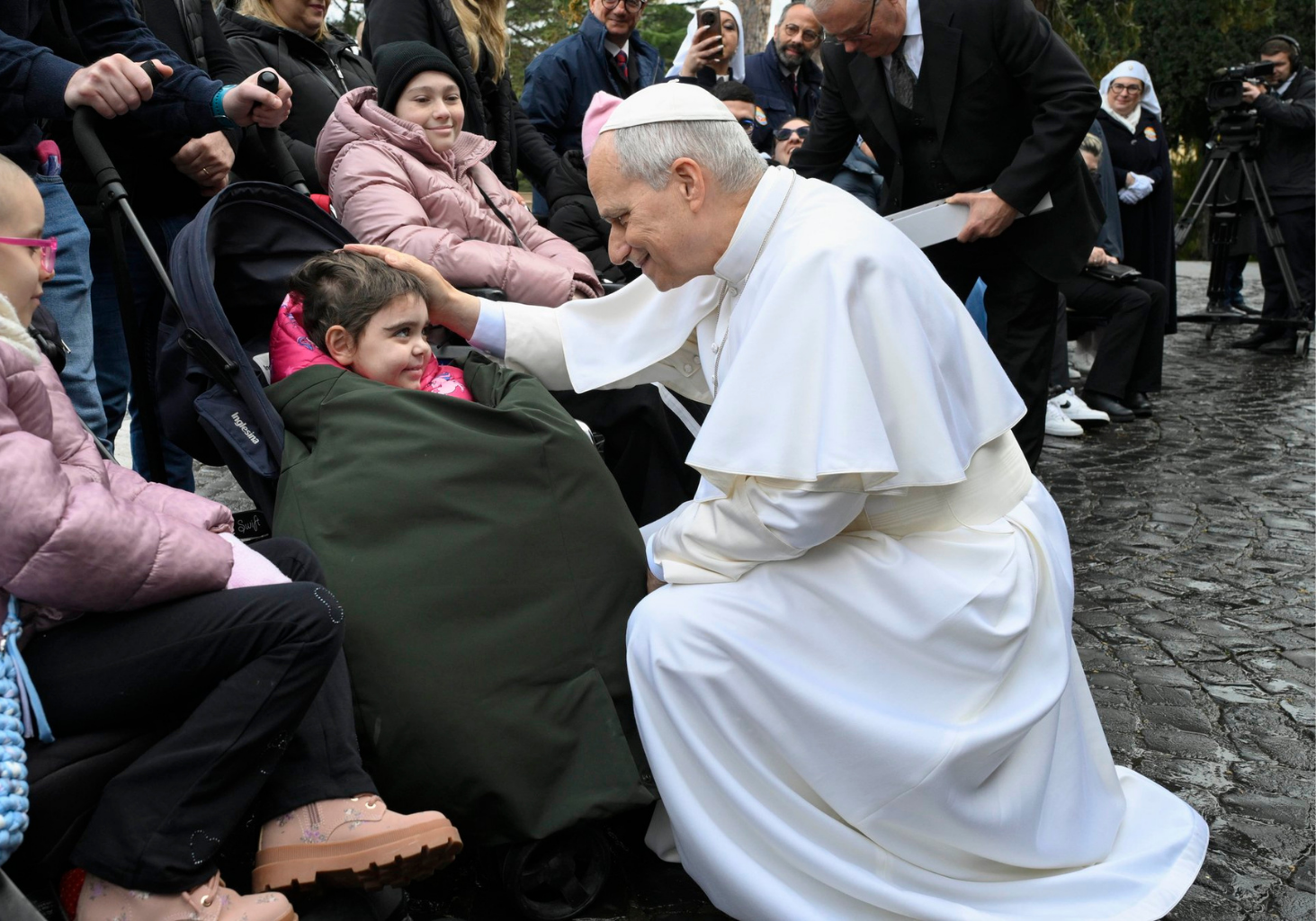
Magnifica Humanitas. The Desire to seek the other
In Director Marco Felipe Perfetti’s editorial, a reflection on Leo XIV’s first encyclical.
SUPPORT SILERE NON POSSUM
If this article is online, it is also thanks to your support.
Silere non possum chooses to make most of its investigations and content freely accessible, because independent journalism must be able to reach everyone.
Supporting our work means allowing us to continue verifying, reporting and publishing what others would prefer to keep hidden.