Moscow - Archbishop Paul Richard Gallagher returned to the Vatican overnight from Friday to Saturday after a journey from Moscow that took around twelve hours, including a stopover in Istanbul and a flight path skirting the Balkans, Ukraine’s borders and Belarusian airspace. Before direct air links between Russia and the European Union were suspended, the same journey took roughly four hours. Gallagher himself drew attention to the contrast when he spoke to Vatican media at the end of his mission. The longer route, he said, “takes on a symbolic dimension”, reflecting the dialogue the Holy See intends to keep open with Moscow despite the war in Ukraine.
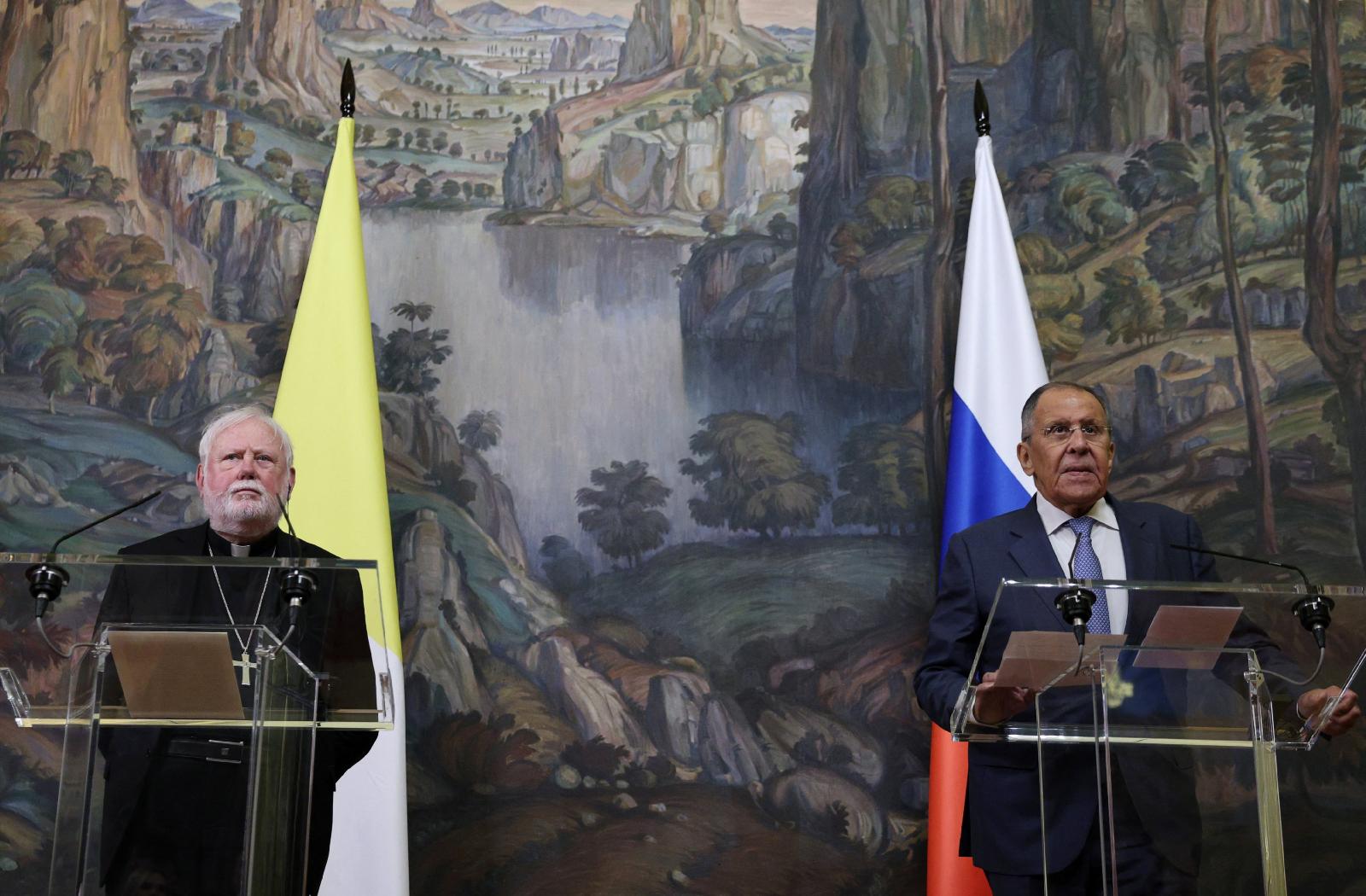
During his mission, from 25 to 28 August, Gallagher met Russian Foreign Minister Sergei Lavrov and Ushakov, the Russian president’s foreign-policy adviser. He also visited the Cathedral of Christ the Saviour, the seat of the Moscow Patriarchate, met Catholic clergy and religious working in the country, and celebrated Mass in the Cathedral of the Immaculate Conception before a packed congregation.
In a statement after their bilateral meeting, Lavrov said the archbishop had confined himself to a general appeal for the conflict to end as soon as possible. Gallagher does not dispute that description. He says it reflects the position the Holy See has maintained for some time. He does not enter into the technicalities of negotiations or put forward solutions, because those are matters for the parties to the conflict. Instead, the Holy See seeks to remind Moscow, Kyiv and the other countries involved of their responsibility to look, in good faith, for opportunities for dialogue. “Have courage, embrace the path of peace,” he told his Russian interlocutors, adding that every war eventually ends in negotiation.
The Holy See’s offer of good offices also remains on the table, although previous offers have never led to any concrete process. Moscow, Gallagher said, does not appear willing to involve Vatican diplomatic channels directly, though it appreciated both the gesture and the fact that the Holy See, in his words, “is not washing its hands of the matter”.
It is also difficult to imagine Russia accepting the Vatican as the venue for any eventual negotiations. The political and military conflict is accompanied by a delicate ecclesial question: relations between Rome and the Moscow Patriarchate, the role of the Russian Orthodox Church and the religious tensions surrounding the war all make the Holy See a distinctive interlocutor, but hardly a place Moscow would be likely to regard as neutral territory for direct talks. Gallagher nevertheless says the offer remains open, regardless of the resources - modest, as he himself acknowledges - that the Vatican is able to deploy. The parties need only ask.
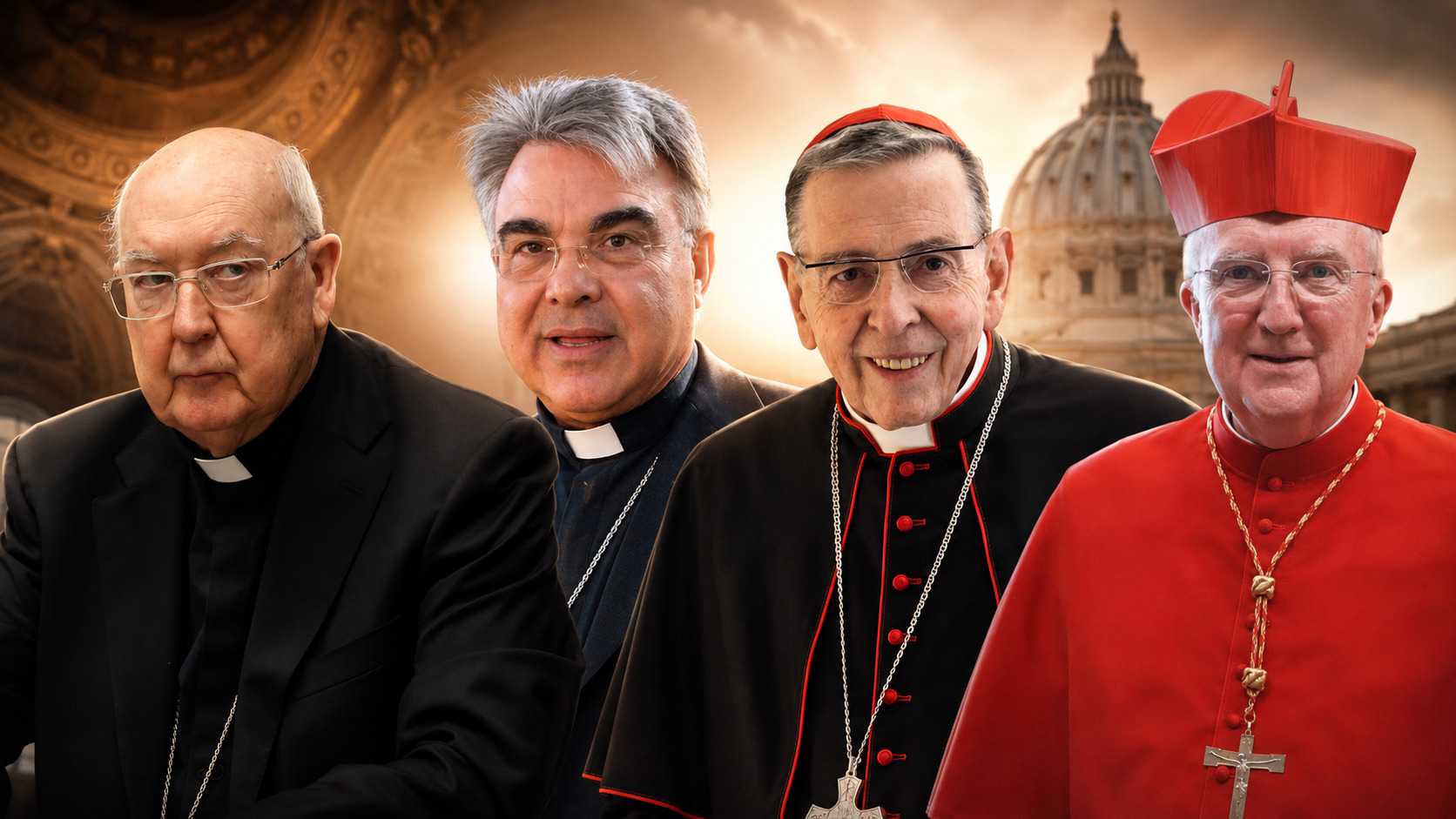
The humanitarian dimension is where the Holy See is pressing most firmly. This is also linked to Cardinal Matteo Maria Zuppi’s forthcoming trip to Moscow, part of the mission through which he has long supported the Holy See’s efforts over Ukraine. Before Gallagher left for Russia, he says, the Pope himself had urged him to place particular emphasis on this aspect. The Holy See hopes Zuppi’s mission will continue and that the cardinal will soon be able to return to Moscow, including to see for himself the work being carried out by the local Church on the ground.
Gallagher also discussed with Lavrov an issue less directly connected with the day-to-day course of the war: the situation facing Christians in different parts of the world. He does not use the term persecution in a technical sense, speaking instead of “insecurity”, “discrimination”, “prejudice” and “marginalisation”. He says this is also a concern shared by Moscow, given Russia’s Orthodox tradition.
His meeting with Metropolitan Anthony of Volokolamsk, chairman of the Moscow Patriarchate’s Department for External Church Relations, was of a different nature. Gallagher is keen to stress that it was not an ecumenical dialogue in the strict sense, which falls within the remit of the Dicastery for Promoting Christian Unity, but an exchange on current issues, held in an atmosphere he describes as cordial and fraternal, while acknowledging that the two sides continue to hold different views on certain questions.
Gallagher returned from Russia with an impression of the local Catholic community that he had not fully expected. It is numerically very small in a country of Russia’s size, but he found it remarkably lively. The men and women religious he met, he says, did not complain about their circumstances but spoke with joy about the work they were doing. The Mass at the Cathedral of the Immaculate Conception, attended largely by young people, some of whom also served at the altar, struck him as a sign of affection for the Pope and of a strong bond with Rome - something he described, in his own words, as a source of “immense satisfaction”.
Now back at the Vatican, Gallagher will report to the Pope and Cardinal Parolin on what he heard and observed during the mission. No negotiations have begun and no technical solution has been proposed. What remains is an offer of dialogue. At the end of the interview, Gallagher himself set out the limits of what the Holy See is seeking to offer at this stage: to accompany the desire for peace and justice with prayer, because peace, he says, “is a gift from God. It is for us to make ourselves ready to receive it.”