Thursday
20 August 2026
Year V
INDEPENDENT INTERNATIONAL DAILY
Thursday, 20 August 2026 · Anno V
Heiligenkreuz: Heim steps down as Rome bars monks from electing new abbot
Catholic Church20 August 2026

Heiligenkreuz: Heim steps down as Rome bars monks from electing new abbot

After two terms in office, Maximilian Heim will step down as abbot on 14 September. The Dicastery for Consecrated Life has blocked the elective chapter and ordered the appointment of an administrator for three years. In the background lies the growing influence of Abbot General Mauro Giuseppe Lepori and an Austrian Congregation unable to defend the autonomy of its own communities.
LISTEN TO THE ARTICLE
00:00 / 00:00

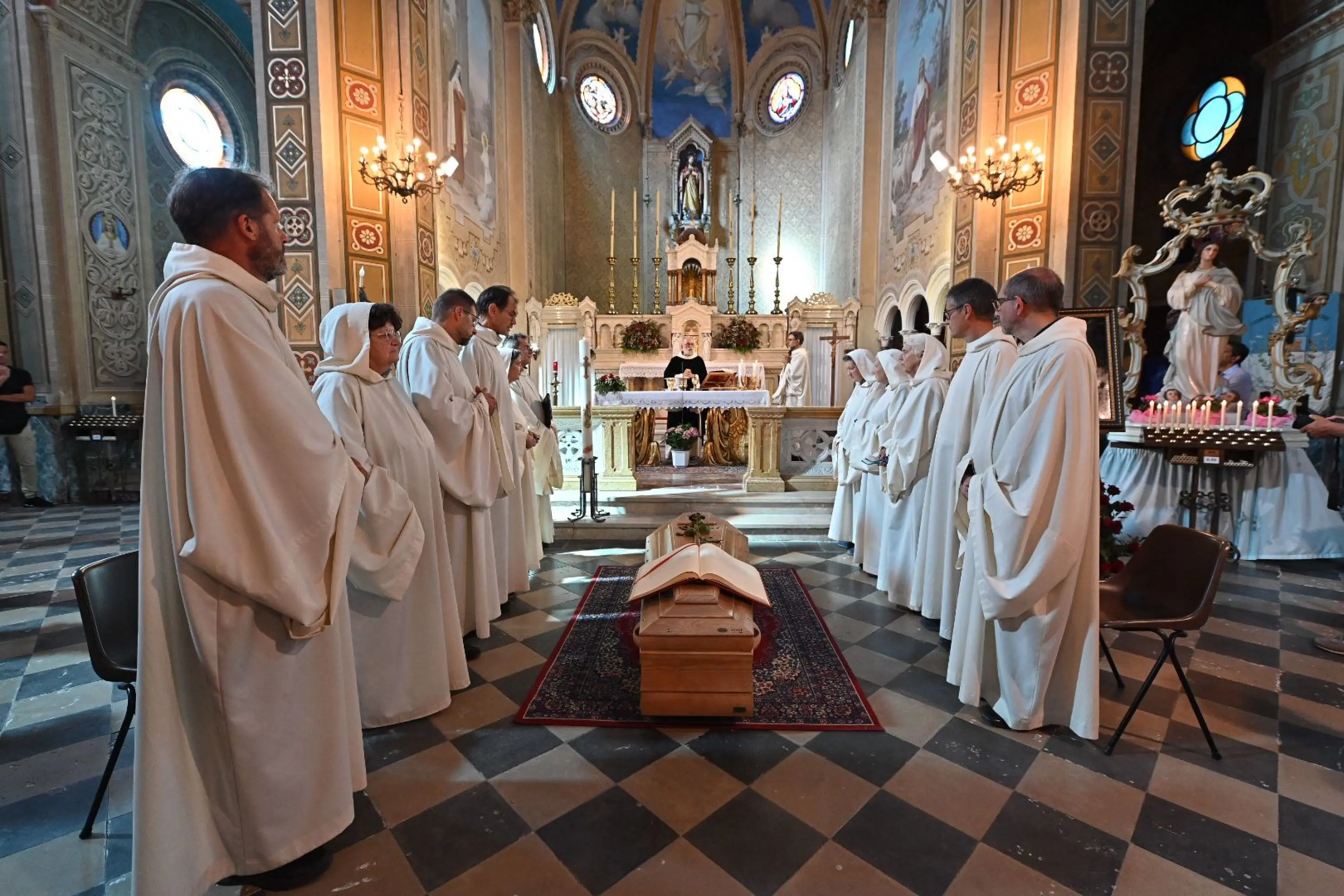
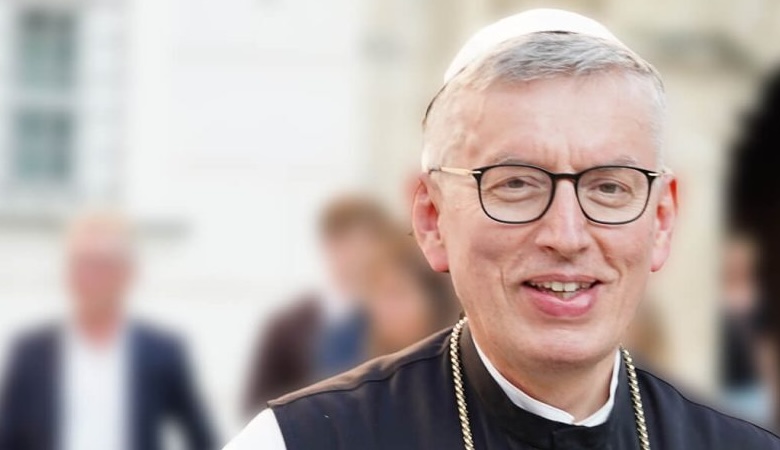
Heiligenkreuz – The abbot of the Cistercian Abbey of Heiligenkreuz in Lower Austria, Maximilian Heim, is to step down on 14 September. Heim, 65, has led the community since 2011 and will bring his second term as abbot to an end after a long period in which he held virtually every senior office of government within the monastery. The announcement came this morning, after weeks in which the monks had already come to regard his departure as a certainty.

A few points that need clarifying

Since the abbey was placed under external administration, pressure on Maximilian Heim has steadily intensified, not least because of the influence Abbot General Mauro Giuseppe Lepori exercises in his dealings with the Dicastery for Institutes of Consecrated Life and Societies of Apostolic Life.

A clarification is necessary here. Some time ago, a conservative German newspaper even had the nerve to claim that news of the apostolic visitation to Heiligenkreuz had been improperly made public by people who wanted to damage Maximilian. That reading confirms at least two things. The first is that a certain strand of traditionalism continues to show that it understands nothing about the real life of the Church and seems capable of concerning itself only with lace, embroidery and petty sacristy battles. The second is that some newspapers end up thinking exactly like the circles with which they identify: the very same circles in which there has been no shortage of people who, when called to work alongside the Pope in positions of the highest responsibility, just a few metres away from him, proved not merely incompetent but even managed to cause him harm.

If Heim is only submitting his resignation today, it is because at a certain point someone had the courage to make public information that, of course, we obtained when the Dicastery issued the diktat against Heiligenkreuz, imposed by Simona Brambilla at Mauro Giuseppe Lepori’s instigation. Had that information not been made public, these resignations would have come much earlier and the damage in Vienna would have been even greater.

The problem is that certain figures, used to churning out little articles for rags that nobody buys but which continue to survive thanks to wealthy backers prepared to fund print runs for no readership at all, have not the faintest idea how things work in the Vatican today. They continue to behave as though silence were a virtue and discretion a form of prudence. In reality, when power is exercised without any counterweight, silence becomes the best ally of those who throw their weight around, and priests, friars, monks and nuns are the ones who end up being crushed, often without any means of defending themselves.

Rome blocks the election

In the statement, Heim speaks of 16 “intense and demanding years” and recalls the thirty years he spent in positions of responsibility within the community as novice master, prior and abbot. From 2016 to 2025 he also served as abbot president of the Austrian Cistercian Congregation. In direct confirmation of what we have written above, the Dicastery for Institutes of Consecrated Life and Societies of Apostolic Life has decided to prevent the monks from electing their own abbot. We are talking about around one hundred religious who are being stripped of the right to choose their superior. One hundred monks. That figure deserves a moment’s attention, because on its own it gives the measure of the seriousness of what is happening.

The explanation offered by the abbot president of the Austrian Congregation, Pius Maurer, is this: “More than a third of those entitled to vote have never taken part in an abbatial election.” The argument is simply absurd. How many monasteries, throughout the history of the Church, have had monks taking part in an elective chapter for the first time? Since when has the fact that part of a community has no previous experience of an election been sufficient grounds for depriving the whole community of the right to elect its abbot? If this were to become the standard, an enormous number of monastic elections would have to be suspended.

Maurer’s problem is far more serious: he is not defending the Austrian Congregation and he is not protecting its abbeys from the abuses of power being carried out by Mauro Giuseppe Lepori with the complicity of the Dicastery. Lepori is being allowed an extraordinary degree of interference, wholly out of proportion to the role he is supposed to exercise, and the Dicastery continues to give him room to manoeuvre, allowing him to shape the life of communities far beyond anything that could reasonably be considered acceptable.

Maurer is afraid of Lepori and does not want a confrontation with him. That is the point. But when the man whose job is to govern and protect a Congregation is afraid to act, the consequences inevitably fall on the abbeys that same Congregation is supposed to defend. The monks pay the price, while those who ought to speak up choose instead to keep their heads down.

Perhaps less time might also be spent on “tailors” of questionable taste who are welcomed into abbeys and busy themselves playing at being social-media influencers, and rather more on the responsibilities of office, on protecting communities and defending their autonomy. Because while attention is being lavished on problematic characters within monastery walls, others are dismantling, piece by piece, the real freedom of Austria’s Cistercian abbeys.

From Stiepel to election as abbot

Maximilian Heim was born on 14 April 1961 in Kronach, Bavaria. He arrived at Heiligenkreuz in 1982 to study theology and made his first profession in 1984 into the hands of Abbot Gerhard Hradil. From 1987 he worked in pastoral ministry and teaching at Wiener Neustadt-Neukloster. The following year, shortly after his ordination to the priesthood, he was sent to the Ruhr to take part in the new Cistercian foundation at Bochum-Stiepel. He remained there until 1996, serving in pastoral ministry as a chaplain and helping to develop the monastery.

Recalled to Heiligenkreuz by Hradil, he became novice master and junior master in 1996. Following the election of Gregor Henckel Donnersmarck as abbot, Heim was appointed prior in March 1999. In the autumn of 2004 he returned to Bochum-Stiepel, this time as prior of the community.

On 10 February 2011, the conventual chapter elected him the 68th abbot of Heiligenkreuz. Five years later he also became president of the Austrian Cistercian Congregation, an office he held until 2025.

His academic work is closely linked to the theology of Joseph Ratzinger. In 2003 he completed his doctorate at the Catholic Faculty in Graz with a thesis on the ecclesiology of the future Benedict XVI. From that same year until his election as abbot, he taught Fundamental Theology at the Heiligenkreuz University College.

The abbey, together with its dependent communities, now has more than one hundred monks. More than 160 people are employed in economic activities connected with the monastery. From 14 September, that community will be governed by an administrator, while the election of the 69th abbot of Heiligenkreuz will remain postponed sine die.

Fr.J.C.

Silere non possum

SUPPORT SILERE NON POSSUM

If this article is online, it is also thanks to your support.

Silere non possum chooses to make most of its investigations and content freely accessible, because independent journalism must be able to reach everyone.

Supporting our work means allowing us to continue verifying, reporting and publishing what others would prefer to keep hidden.
SUPPORT USSUBSCRIBE
Related articles
Lafont and the Church beyond the ‘Gregorian model’: Petrine primacy need not govern everything
Catholic Church
Lafont and the Church beyond the ‘Gregorian model’: Petrine primacy need not govern everything
St Bernard and the bad teachers of monasticism: when authority tries to make communities conform
Catholic Church
St Bernard and the bad teachers of monasticism: when authority tries to make communities conform
Speyer: Another Catholic bishop steps down, saying ‘the burden of responsibility has had serious consequences for my mental health’
Catholic Church
Speyer: Another Catholic bishop steps down, saying ‘the burden of responsibility has had serious consequences for my mental health’