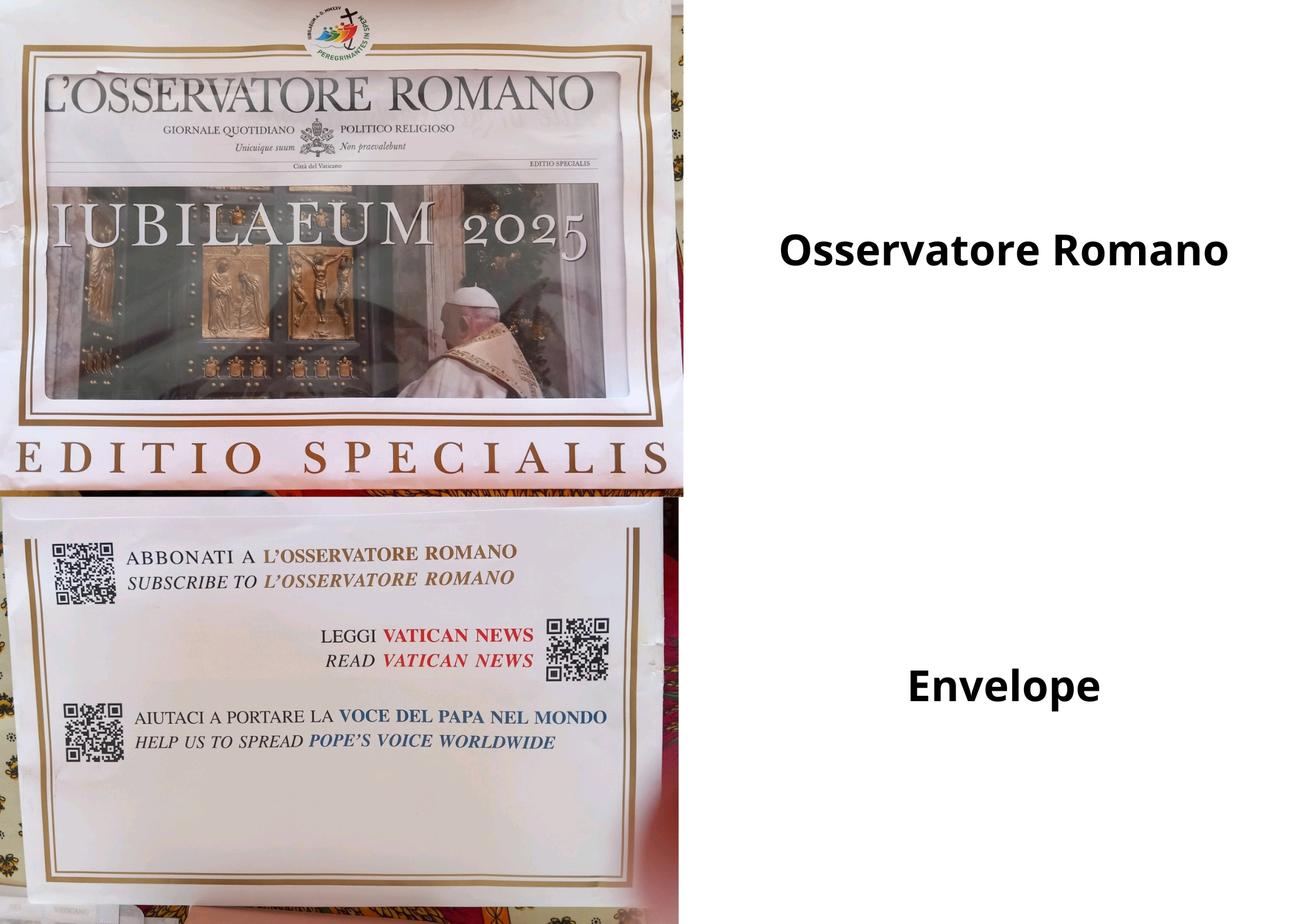
Vatican City – It all begins, as so often happens in this Di[sastr]ery, in an editorial meeting. It is November 2024 and Andrea Tornielli announces to his collaborators his plan for the 2025 Jubilee: to print one hundred thousand copies of a special edition of L’Osservatore Romano, to be published for the opening of the Holy Door. An enormous figure, thrown out as one speaks of a brilliant idea just brought into the world. Tornielli discusses it with Andrea Monda and Paolo Ruffini. And here, once again, we find ourselves facing the great problem that has guided all these years of the editorial direction of the little wizard from Chioggia: nobody in that room asked the most obvious question. One hundred thousand copies, fine. But where were they supposed to go?
One hundred thousand copies, no distribution
In the meetings, there was no discussion of how this mountain of paper would be distributed. There was no reflection on which points of sale, in which places, through which network, on which dates. No assessment was made as to whether the printing press was capable of handling such a load. No estimate of costs was made. Nothing. The “how many” was decided without anyone dealing with the “where”, the “when” and, above all, the “why”.
It is the working method of a structure, the Dicastery for Communication, where the ideas of the “little bosses” are never challenged, because the bill is paid by the Holy See. And when someone else is paying the bill, boomer ideas suddenly become irresistible.
The obsession with QR codes
Because, in the end, that is what this was about. Tornielli, sixty-two years old, goes into raptures at the sight of a QR code. It is a fixation, one of many, which the “Vatican-watcher writer” has and which is linked to those typical frenzies of older people with a rather complicated relationship with their mobile phone. We can see it even in these very hours, as he takes photos from the front row and publishes five or six of them, two or three with the Vatican Media logo placed rather randomly with Canva, in a hurry. Then he does not credit them, because he is “Vatican News” and he is firmly convinced of this. So much so that he accuses his enemies of using his images: the pity is that the images are not his, but the Dicastery’s, and Andrea has not yet understood this, nor digested it properly. Who knows whether, in a little while, very soon, when he is invited to pack his bags, he will accept it, or whether he will open a blog in which he will use against the Pope he does not like everything he has come to know over these years. Who knows.
Many have asked themselves, and are asking themselves even on this apostolic flight, what purpose is served by the presence of a figure who, between travel, salary, reimbursements, lunches, dinners and hotel, costs the Holy See no less than ten thousand euros. The answer is simple: none. Exactly like the presence of Andrea Monda or Massimiliano Menichetti. Everything begins and ends with the mobile-phone photograph from the front row and the post that follows. Nothing else. In the meantime, however, the catwalk continues.
A Dicastery that costs the Holy See millions sends all these people in the entourage: why? To what end? From Madrid they do not produce a single piece of content that they could not comfortably churn out from home, and as for photographs, there are official photographers - Andrea Tornielli with his iPhone is certainly not needed. Massimiliano Menichetti, meanwhile, is restless day and night to produce his video reports: he reads a prepared text from his phone and, in just over a minute, recounts the Pope’s day. The kind of thing that, when it goes well, gets three hundred views - and which he could perfectly well do from Palazzo Pio, without placing any further burden on the coffers of the Holy See. Three hundred views, to be clear.
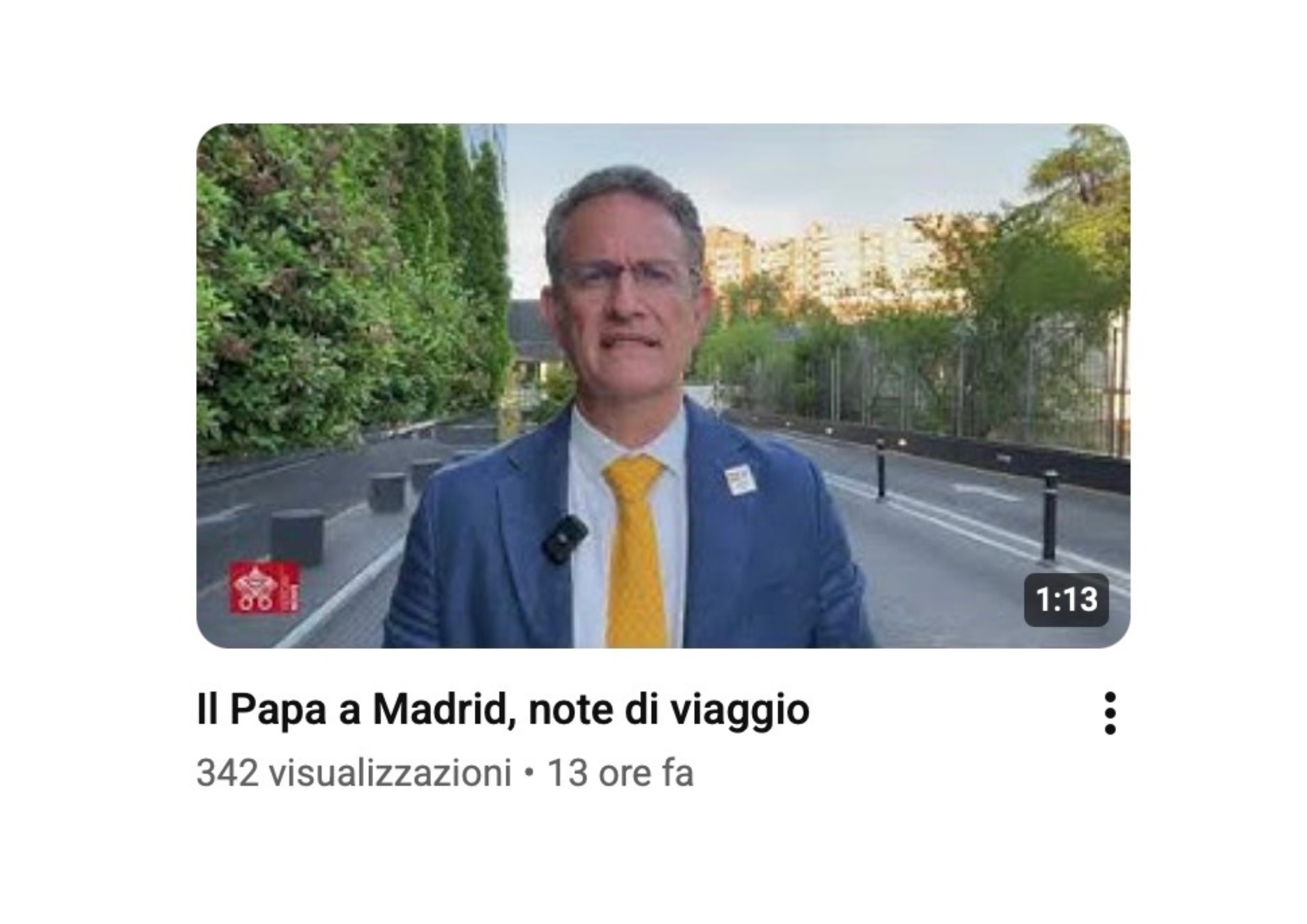
Returning to the QR-code rapture: in November 2024 Tornielli digs in. He wants the codes at all costs, clearly visible, and so he thinks it a good idea that every copy of the special edition of L’Osservatore Romano should be accompanied by an envelope with QR codes printed on the front. Imagine one hundred thousand copies, each with its own envelope, and on the front these codes thrown there at random, in a graphic composition which - it is enough simply to look at it - is quite literally repellent.
The printing press raises objections. It politely makes clear that this is an inelegant and wholly inappropriate solution. But Tornielli presses ahead: woe betide anyone who contradicts him, because when he gets worked up he raises his voice and turns red. After all, it is worth remembering that the money does not come out of his pocket. It is the same mechanism by which he grants, to whomever he decides, the use of Vatican News photographs: he takes the logo of the Dicastery for Communication and authorises the use of Vatican Media images - even in articles and 'magazines' that gravely offend the Pope - without the Holy See knowing anything about it, neither about the revenue never collected nor about anything else. He authorises, although he has no authority whatsoever. But we will speak about this in the coming days.
How L’Osservatore Romano is printed - and why it is worth knowing
Here it is necessary to take a step back, for the reader who enters Vatican City State at most to visit the new museum managed by Mauro Gambetti - “St Peter’s Basilica Ltd” - and who, over these thirteen years, has not noticed the slow decline of L’Osservatore Romano.
Before going down in history as a forger of papal letters, Monsignor Dario Edoardo Viganò had placed some of his most loyal people in what was then the Secretariat for Communication. Among them was Natasa Govekar - imposed on Viganò by his close friend Marko Ivan Rupnik and known in Palazzo Pio as “Natasa I of Yugoslavia”, because of the way she imposes herself on others. In these years Govekar has governed more than Paolo Ruffini ever has; Ruffini, for his part, understood that he had arrived after an earthquake and comfortably settled himself on the scaffolding left behind by Viganò. It was she, pushing Ruffini forward, who ensured that Leo XIV appointed Sister Nina Krapić in place of Cristiane Murray. And it is as well that the Pope should know that all these figures come out of the same well: not only are they not competent, but they pursue interests that do not coincide with his.
With Govekar, Viganò brought in Lucio Adrian Ruiz, Paolo Nusiner and Francesco Masci. And it was Masci himself - today head of the Dicastery’s Technological Directorate - who wanted to change the internal printing machine at the Vatican Printing Press, effectively setting aside the rotary press. The question, still unanswered, is: why?
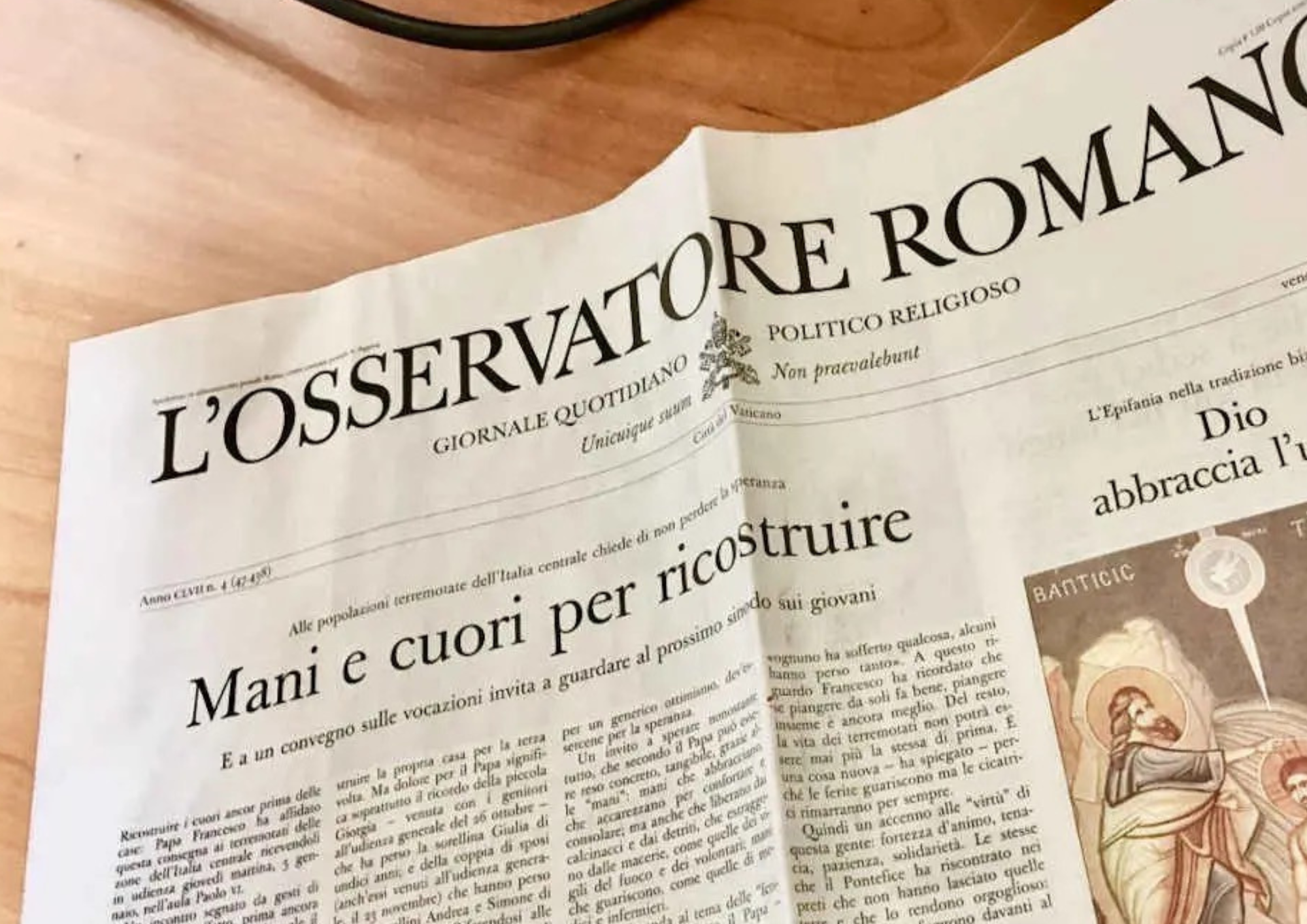
Because this is where the matter becomes interesting. Not everyone knows that L’Osservatore Romano is printed internally only for around three hundred copies: those which, on the very afternoon of publication, are delivered to the dicasteries, to the extraterritorial zones, and to the cardinals and archbishops living near the Vatican. The rest of the print run is entrusted to an external printing company, whose manager maintains friendly relations with members of the Dicastery for Communication.
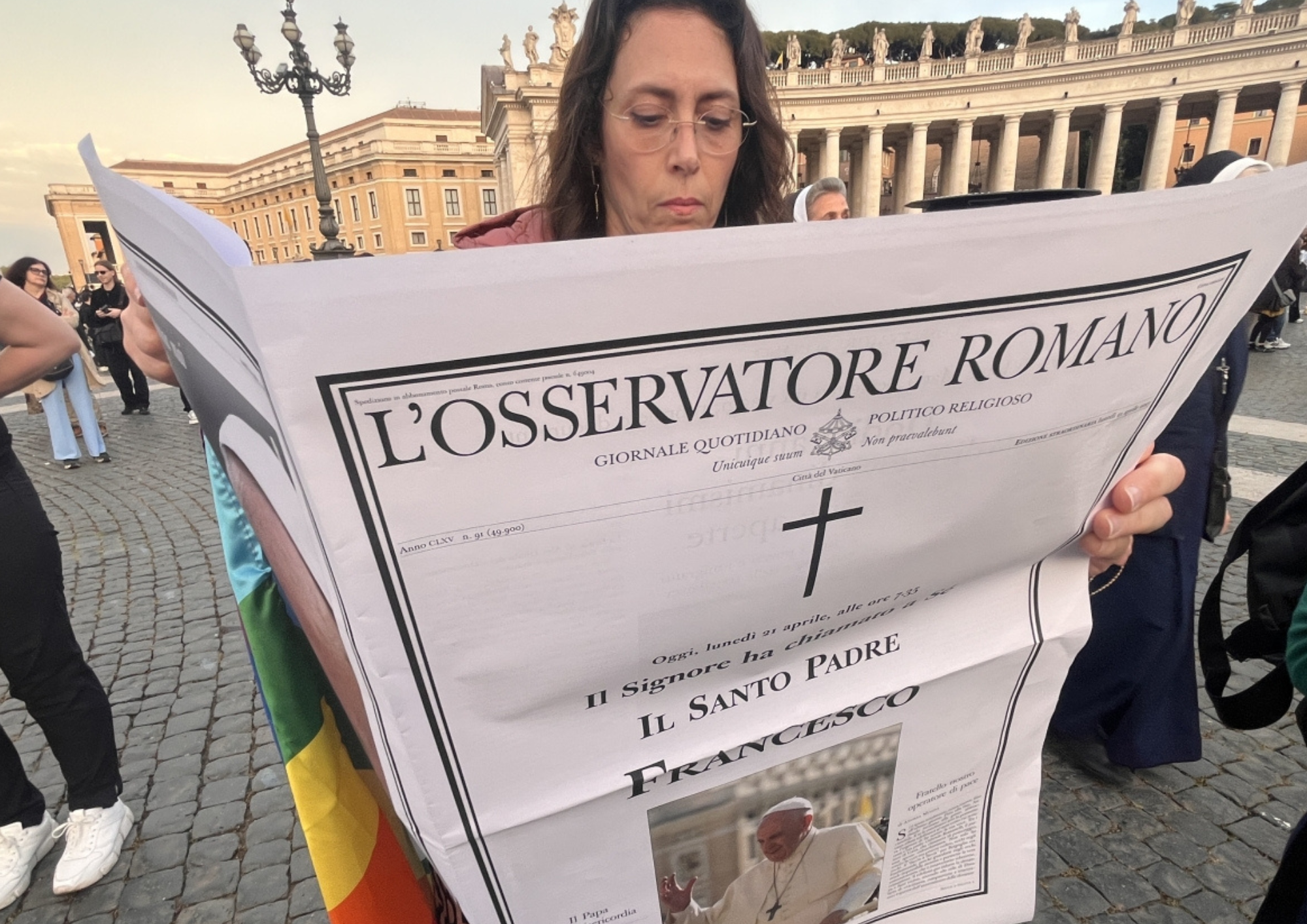
Three hundred copies a day, produced with this new inkjet printer, at a cost to the Dicastery of around two euros per copy. “They wanted this ‘glossy’ version for those before whom they need to appear efficient and impeccable, but outside the walls L’Osservatore is dead,” an important prelate reports. And that is exactly what happened: in these years, on the newsstands of the Urbe, L’Osservatore Romano has simply disappeared. As for those who print it externally, it is not even clear by what criteria they manage the distribution, destined mostly for “subscribers” - subscribers who, in most cases, are in reality free subscriptions, or dioceses and religious bodies effectively “obliged” to purchase it. There is no list of newsstands in Rome that sell L’Osservatore, and often those who would even like to buy it do not know where to go.
“We did not even have anyone to fold them”
Once the amount to be spent and the number of copies had been decided, Tornielli found himself facing a problem as physical as it was banal. One hundred thousand copies printed, and nobody able to fold them. “There was not even anyone to fold them”, says someone around Via della Tipografia. And it certainly could not be Tornielli who abandoned the mobile phone - which he handles compulsively - to start folding one hundred thousand copies by hand.
The solution, naturally, was found by the usual method. Someone had a company called in, “friendly with who knows whom”, one of those firms that does small jobs in homes around Rome, with a workforce largely made up of non-EU labourers. Because these Rolex-wearing Catholic communists live on contradictions and every morning scarcely know which way to turn. In short: an artisanal folding operation, done by hand, which lasted weeks.
And then? Then those copies were not sold. For a long time the Libreria Leonina kept a huge pile of newspapers stacked up, unsold. Most of them ended up in the basements of Palazzo Pio. We are talking, let us remember, about one hundred thousand copies.
The questions that remain
At this point the questions are many, and the person who should answer them - in full transparency - is Andrea Tornielli himself, the very man who has repeatedly invited his enemies to reply even to the insults and homophobic attacks coming from members of his clique:
How much did this little game, born to satisfy the vanity of someone who wanted to appear, cost in total? How much did the envelopes with the QR codes and the weeks of folding entrusted to the company cost? How many copies were actually sold? And how many, today, are still lying in the basement of Palazzo Pio gathering dust?
This is the Holy See’s money. It is the money of the faithful, sent to the Pope so that he may proclaim the Gospel. And yet, in these years, Andrea Tornielli, Andrea Monda, Matteo Bruni and Paolo Ruffini have done everything except give value to Vatican communication. Indeed, with the election of Leo XIV they have attempted - and are still attempting - to manipulate the narrative of this pontificate. Tornielli is even trying to silence those who tell the Truth about his work and, the more his pieces fall, the more obsessive and violent he becomes. But he can be certain of this: the more he insists, the more we will continue. And more forcefully than before.
Marco Felipe Perfetti
Silere non possum