The Society of Saint Pius X today released, in a statement from its General House, a document entitled Profession of Catholic Faith of the Society of Saint Pius X, intended “to enlighten souls in the face of modern errors”. It is a systematic text of one hundred and fifty-four paragraphs, divided into seventeen sections, which revisits the deposit of faith - from Revelation to the Trinity, from Christology to Mariology, through to the sacraments and the Four Last Things. Pointedly, it closes on the symbolic date of the Nativity of Saint John the Baptist, the Precursor who preached in the wilderness.
Taken on its own terms, the document is a compendium of pre-conciliar Roman theology, woven from an exceptionally dense network of references to Trent, the First Vatican Council, the Syllabus and Pascendi. In paragraphs 73–75, the Society recognises in the Roman Pontiff “the Vicar of Jesus Christ”, vested with a power of “truly proper, supreme, full, immediate, and universal jurisdiction”, and declares that pastors and faithful “owe him respect and filial obedience in all that concerns the legitimate exercise of his office”. In paragraphs 78–79, it condemns “collegialist” and “synodalist” conceptions which would turn the hierarchical Church into a “consultative, parliamentary, or democratic” structure.
What stands out in this unbroken series of utterly senseless acts, which began with the announcement of episcopal consecrations, is the persistent contradiction: a principle is solemnly proclaimed, only to be denied in practice. It brings to mind other areas in which these circles are rigid in words and conspicuously lax in reality. In short, the very body that signs a profession of obedience to the Vicar of Christ is the one which, in seven days’ time, on 1 July, has announced that it will consecrate new bishops at Ecône without a papal mandate.
On 2 February, the SSPX announced that it would consecrate new bishops on 1 July without authorisation from the Holy See, a decision that will in all likelihood result in the automatic excommunication of the bishops involved. This is not a polemical opinion. It is the legal characterisation provided by the law of the Church. Under canon 1387 of the Code, a bishop who consecrates someone a bishop without a pontifical mandate, and the person who receives consecration from him, incur latae sententiae excommunication reserved to the Apostolic See. It is the same act which Saint John Paul II, in the case of Lefebvre, described in his 1988 motu proprio Ecclesia Dei as “an act of a schismatic nature”.
Nor is there any shortage of those who point out that the heart of the problem is doctrinal. On 12 February, Fr Davide Pagliarani was received by Cardinal Víctor Manuel Fernández, Prefect of the Dicastery for the Doctrine of the Faith, with Leo XIV’s approval. The Prefect proposed a process of dialogue focused specifically on theology, on condition that the announced episcopal consecrations were suspended. The Society refused. In a letter to Cardinal Fernández published on 19 February, Pagliarani reiterated that the consecrations would go ahead on 1 July, without delay and without a papal mandate. Menzingen also circulated a thesis in its own defence, designed to defuse the accusation of schism: an unauthorised episcopal consecration, where there is neither schismatic intent nor the conferral of jurisdiction, would not amount to a rupture of communion because - the Society argues - the premise of Vatican II (Lumen gentium 21), according to which consecration confers both the power of orders and that of jurisdiction, is false.
It is a sophism already dismantled by genuine traditionalists: those fully in communion with Rome and unconnected to the “psychoblogs” that trade in division. On 11 April, a group of theologians from the Priestly Fraternity of Saint Peter published an analysis setting out the unlawfulness of these consecrations. The text was subsequently welcomed in appreciative terms by Cardinal Robert Sarah. Anyone familiar with canon law knows that the penalty does not depend on declarations of intent: latae sententiae excommunication is incurred by the commission of the offence itself. Leo XIV himself confirmed at Castel Gandolfo that Rome has no intention of turning a blind eye.
In practical terms, Leo XIV appears to have chosen to follow the “jurisprudence of 1988”. He has spoken to his collaborators of a decree intended to declare the latae sententiae excommunication, incurred ipso facto, of the consecrating bishops and of those newly consecrated, classifying the consecrations as a “schismatic act”.
The contradiction, then, remains the defining feature of this self-enclosed world, which holds a certain fascination even for some self-styled traditional Catholics: the same people who populate psychoblogs and move through parishes stirring up division. With one hand, they sign a Profession of Catholic Faith proclaiming filial obedience to Peter, the monarchical constitution of the Church and the indefectibility of the primacy; with the other, they prepare, against the explicit will of that same Peter, an act which the Church classifies as schismatic and which carries excommunication. Cardinal Fernández’s statement made the point without ambiguity. He is often the target of abuse from these online haters, who seem to forget that Cardinal Ratzinger would not only have taken the same position, but would in all likelihood have acted with greater severity.
Fernández recalled an essential point: formal adherence to schism constitutes a grave offence against God and entails the excommunication provided for by the law of the Church. A profession of faith is not measured by the elegance of its patristic quotations, but by the consistency between what is confessed with the mouth and what is done with the hands. It is precisely here that the Society contradicts itself: while professing obedience to Rome, it is preparing to break communion with her.
fr.L.V.
Silere non possum
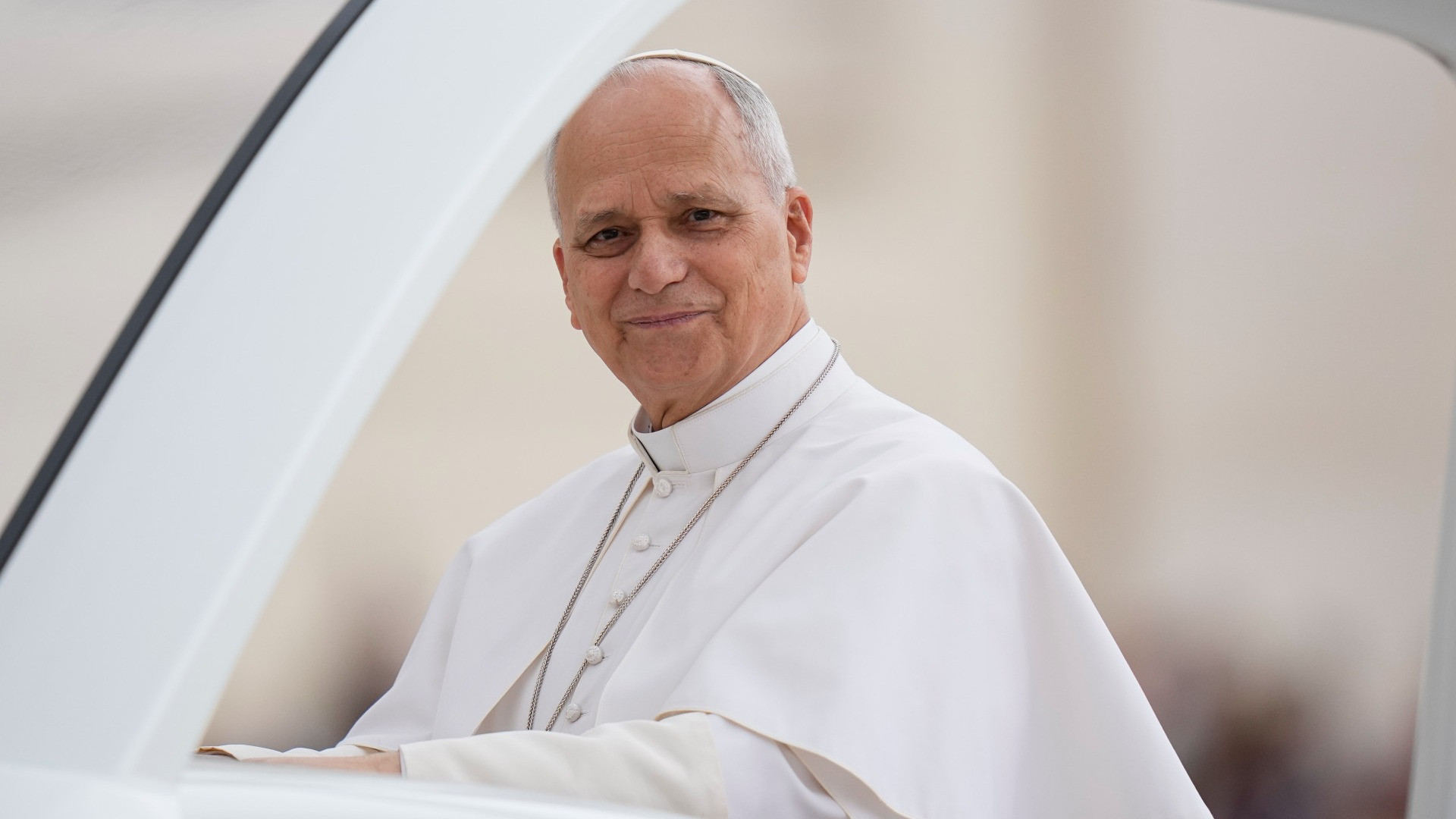
The traditionalist contradiction: they profess obedience, then consecrate bishops without a papal mandate
Menzingen publishes a 154-paragraph creed proclaiming filial obedience to the Roman Pontiff. Seven days later, at Ecône, it will consecrate bishops without a papal mandate - the act which, under Church law, incurs latae sententiae excommunication.
PDF
Attached document
Attached document 1
SUPPORT SILERE NON POSSUM
If this article is online, it is also thanks to your support.
Silere non possum chooses to make most of its investigations and content freely accessible, because independent journalism must be able to reach everyone.
Supporting our work means allowing us to continue verifying, reporting and publishing what others would prefer to keep hidden.