Speaking with Elise Ann Allen last summer, Pope Leo XIV addressed with clarity one of the questions that has most unsettled ecclesial life over recent decades: the relationship with the liturgy and the divisions that have arisen around its celebration. His words were marked by restraint, balance and depth. The Pontiff firmly recalled the danger, now plain for all to see, of reducing the liturgy to an arena of ideological conflict, both in disputes surrounding the traditional Mass and in the controversies that accompany the ordinary form of the Roman Rite. Yet the liturgy belongs to a far higher order: it is the sacred place in which the People of God are led to an encounter with the living Lord.
One particularly significant element in the Pope’s remarks lies precisely in his refusal to fuel an artificial opposition between the different forms of celebration. Leo XIV recalled a truth too often forgotten: the ordinary form of the Mass can also be celebrated in Latin, with full dignity, rigorous fidelity and an authentic sense of the sacred. He himself offers a splendid witness to this every time he celebrates, both privately and publicly. At the same time, he honestly acknowledged a real wound in the life of the Church: when the ordinary form is diminished by carelessness, arbitrariness or disregard for the rubrics, many of the faithful end up looking elsewhere for that contemplative depth and that sense of mystery for which they feel a genuine need. Pope Leo, however, does not stop at identifying the conflict. He points instead to a path of reconciliation and renewal: if the Mass of Paul VI is celebrated with fidelity, recollection and a true awareness of the mystery, the spiritual distance between the forms appears far less irreparable than some would have people believe.
This perspective does not stand in discontinuity with the magisterium of Pope Francis. In Traditionis custodes, Francis reaffirmed that fidelity to the Second Vatican Council is an essential element of ecclesial communion. He himself, moreover, did not fail to denounce the “unbearable distortions” that have marked not a few liturgical celebrations. Pope Leo XIV stands within this awareness and carries it towards a broader outcome: not the sharpening of fractures, but a work of authentic renewal. The path he indicates is clear: to restore to the liturgy that beauty, that gravity and that sense of the sacred which the Council never intended to erase and which the faithful, even now, continue to desire deeply. The matter, moreover, is anything but marginal. The liturgy touches the very heart of the Church’s life. The Holy Mass is the source and summit of her existence, the vital principle from which everything flows and the height towards which everything tends. When it is celebrated in a poor, hurried or self-referential manner, faith grows weak, the ecclesial sense is fractured and many hearts are left disoriented. When, instead, it is celebrated with truth, dignity and beauty, it leads men and women to Christ, strengthens the ecclesial body and restores unity to a wounded community. A Church inwardly torn struggles to speak to the world with a credible voice; a Church that knows how to pray well rediscovers a common language and can bear clearer witness to the Gospel in a fragmented and troubled age.
For us priests, all this carries the weight of a direct and inescapable responsibility. The renewal of the Church does not begin with strategies, structures or organisational formulas, but with the renewal of her liturgical life. It is from this perspective that one also understands the value of regularly offering liturgical notes, not in order to burden brother priests with technical precisions, but to preserve a vigilant attentiveness to what is sacred, to refine celebratory practice and to safeguard within ecclesial gestures that spiritual density which can never be taken for granted. Lex orandi, lex credendi: the law of prayer shapes the law of faith. If the Christian people are to be led to an encounter with Christ, this happens first and foremost at the altar, where the Church lives from the gift she has received.
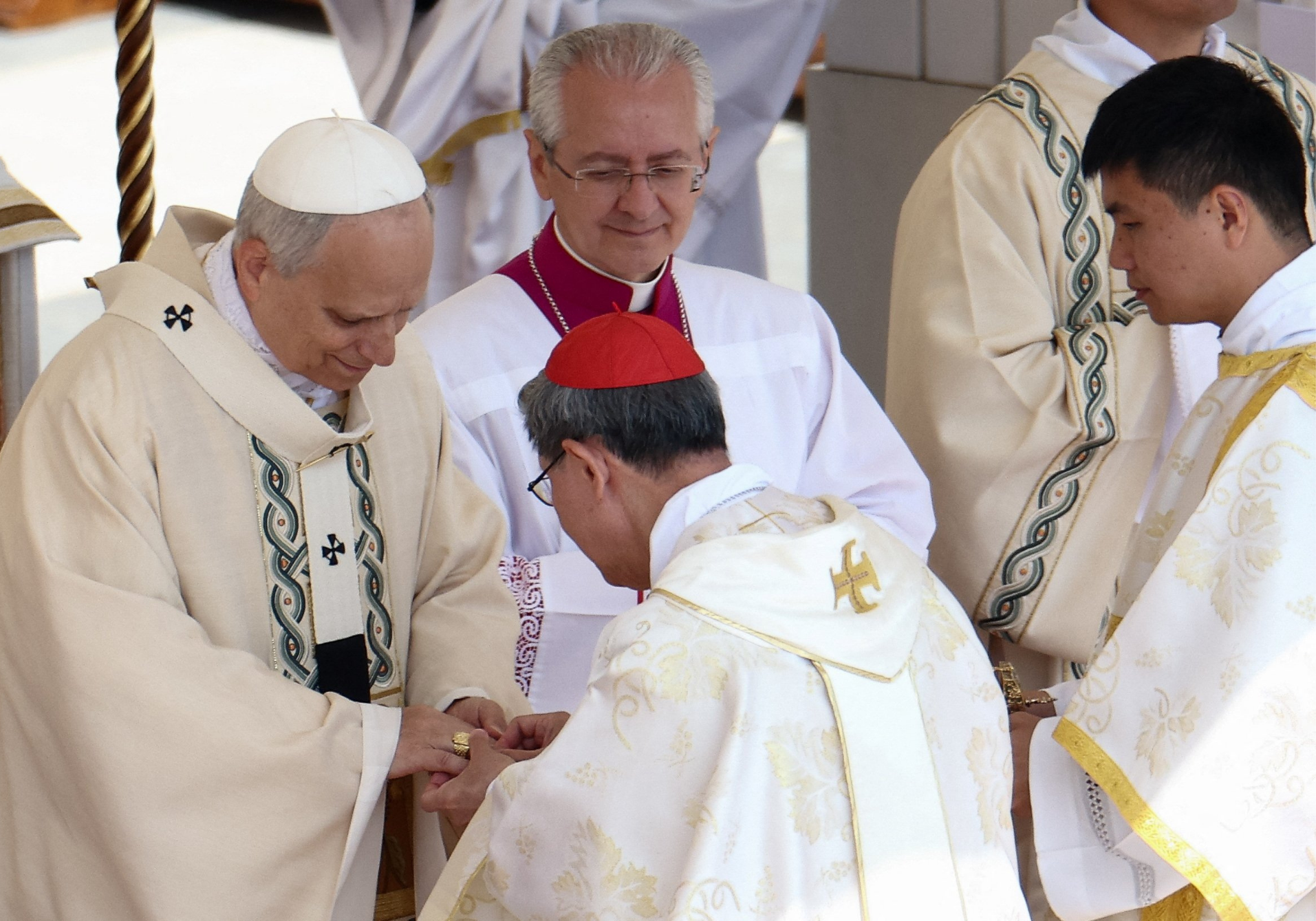
The appeal of Pope Leo XIV thus appears in its properly pastoral nature. It is not a matter of provoking fresh disputes, nor of encouraging alignments around sensibilities or preferences. What the Pope is asking for is a return to what is essential: that the Mass, in whatever form it is celebrated, may truly be a place of encounter with Christ. This implies fidelity to the rites of the Church, reverence in gesture, the keeping of silence, inward discipline and humility before the Eucharistic mystery. Where these elements are absent, the celebration loses its spiritual transparency; where they are preserved, the liturgy once again reveals itself for what it truly is. For the great majority of the faithful, in fact, the decisive point does not lie primarily in the language of the celebration, whether Latin or the vernacular, nor in the technical distinction between the ordinary and extraordinary forms. The deeper question concerns the liturgy’s capacity to awaken in the soul a sense of wonder before the living God. When the priest approaches the altar with the awareness that nothing is higher, more serious or more holy than what is about to take place, the people too perceive that a different threshold is opening there, that one truly enters into the mystery. Then the Mass, offered with devotion and truth, reveals itself anew as the source of Christian life and the fulfilment of all ecclesial action.
The words of Pope Leo XIV, read in this light, go beyond the bounds of a simple position taken within a liturgical debate. They take on the tone of a call to conversion and renewal. Programmes, initiatives and strategies may perhaps assist the Church at certain moments in her historical life; but what truly renews her is Christ himself, present in the Eucharist, adored, celebrated and received with fidelity and love. For this reason, it is necessary to speak once more of the beauty of the liturgy, rescuing it from the internal oppositions of problematic groups that too often distort its meaning. The Pope’s words on this point deserve to be heard with particular attention, within the broader horizon of the Church’s life and, in a wholly special way, by us priests. The renewal of the liturgy is intimately bound up with ecclesial renewal, and it finds its beginning in an act at once humble and vertiginous: the way in which we celebrate the Holy Sacrifice of the Mass.
fr.V.P.
Silere non possum