Vatican City – Today, 2 June 2026, Pope Leo XIV brought Paolo Ruffini’s mandate at the head of the Dicastery for Communication to an end, entrusting its leadership to Maria Montserrat “Montse” Alvarado.
It is an act that comes just over a month before the Palermo-born layman would have completed eight years at Palazzo Pio, and one that confirms, with the Pope’s own signature, what Silere non possum has been documenting on these pages for years: the management of this Dicastery has been a disaster.
Last February we had reported in advance that, in Piazza Pia, the atmosphere was by then that of people waiting for the inevitable. In the weeks that followed, Paolo Ruffini busied himself spreading among employees the rumour that he would be confirmed, assuring them that Leo XIV would renew his full confidence in him. Those who turned to Silere non possum, however, received a clear denial. “It is only a matter of time,” we said. Today that time has run out. In 390 days, the new Pontiff has never wanted to receive the leadership of Vatican communication in audience, with the sole exception of a lightning meeting granted to Ruffini himself on 21 June 2025.
Where we began
It is worth going back to the beginning. On 5 July 2018, Francis appointed Paolo Ruffini as prefect of the Dicastery for Communication, the first layman to head a dicastery of the Roman Curia. He succeeded Monsignor Dario Edoardo Viganò, who left after manipulating a letter from Pope Benedict XVI. The history of this Dicastery, then, began under poor auspices. Ruffini arrived across the Tiber following the script of so many controversial lay figures who have come to work in the Vatican before him: behind him lay a career at Giornale Radio Rai, Rai3, La7 and finally TV2000, the network of the Italian bishops. As usual, the choice did not reward competence and professionalism: what counted were contacts, networks of relationships and recommendations.
What was handed to him was no ordinary newsroom: it was an extraordinarily ambitious project, tasked with sustaining the Pope’s voice throughout the world. It was, however, a project badly conceived and administered even worse. Established as the Secretariat for Communication by the motu proprio L’attuale contesto comunicativo of 27 June 2015, and made a Dicastery on 23 June 2018, it had absorbed the Pontifical Council for Social Communications, the Press Office, the Vatican Printing Press, the Vatican Publishing House, L’Osservatore Romano, the Photographic Service, Vatican Radio and the television media, giving rise to the Vatican News website.
Hundreds of employees, five directorates and a single voice: that of the Successor of Peter. The most delicate responsibility imaginable. Alongside Ruffini, from December 2018, editorial leadership was entrusted to Andrea Tornielli, another figure who had grown up in the shadow of gossip and newsroom whispering, accustomed to operating in the dark and bending his pen to strike now one person, now another, according to the convenience of the moment.
What we documented
Since its birth in 2021, Silere non possum began bringing to light the blunders of these people and, with them, the clique of power and intrigue governing the Dicastery and, more broadly, the entire world of Vatican communication. While many chose silence, at times intimidated by their threats, Silere non possum was never afraid to denounce what was happening inside this extremely costly dicastery.
Most recently, there was the affair involving an employee of the Holy See Press Office and the director Matteo Bruni. After our article, the employee was summoned by Ruffini himself and was offered a transfer to another office; she then chose to take a break. Today she is out of the Press Office, while Matteo Bruni, a married man, remains in place. That alone is enough to give an idea of how Paolo Ruffini governed the Dicastery. Already in 2022 we had documented the system of clientelism weighing on that Dicastery: the recruitment of journalists from La Stampa, in Andrea Tornielli’s wake, and the downgrading of internal professionals, many of whom requested early retirement or left. A self-sustaining bureaucratic system that generated disappointment, demotivation and distrust, while expenditure charged to the coffers of the Holy See continued to rise.
We documented the fake news produced on Vatican News: the square for the Meeting on Human Fraternity, promoted by Mauro Gambetti, described as packed when it was desolately empty, under the mocking motto “we are not alone”. We pointed out the gross errors and embarrassing geographical gaffes, even to the point of placing Bethlehem in Israel at the hands of Andrea Monda, as well as the days when the official website of the Holy See remained unreachable for millions of faithful.
As if that were not enough, there was the enormous expenditure poured into work on the portal: Holy See funds used for a result entirely useless both to the faithful and to information professionals. It is a site old in structure, difficult to consult, never updated as it should be, with texts drafted in an approximate manner. We described the communicative chaos of the Synod, with press conferences in which Prefect Ruffini limited himself to reading, here and there, notes written by others. And, after bringing the Rupnik case to light, we denounced the obstinacy with which the Dicastery continued to display the works of the former Slovenian Jesuit on its media, heedless of the grave accusations hanging over him. The lowest point came in Atlanta, in June 2024: before journalists gathered at the Catholic Media Conference, Ruffini openly defended that use, going so far as to ask whether removing one of those images from the portal would make him closer to the victims, and to maintain that taking it down would not be a Christian response. Behind it, as we know, there were economic interests.
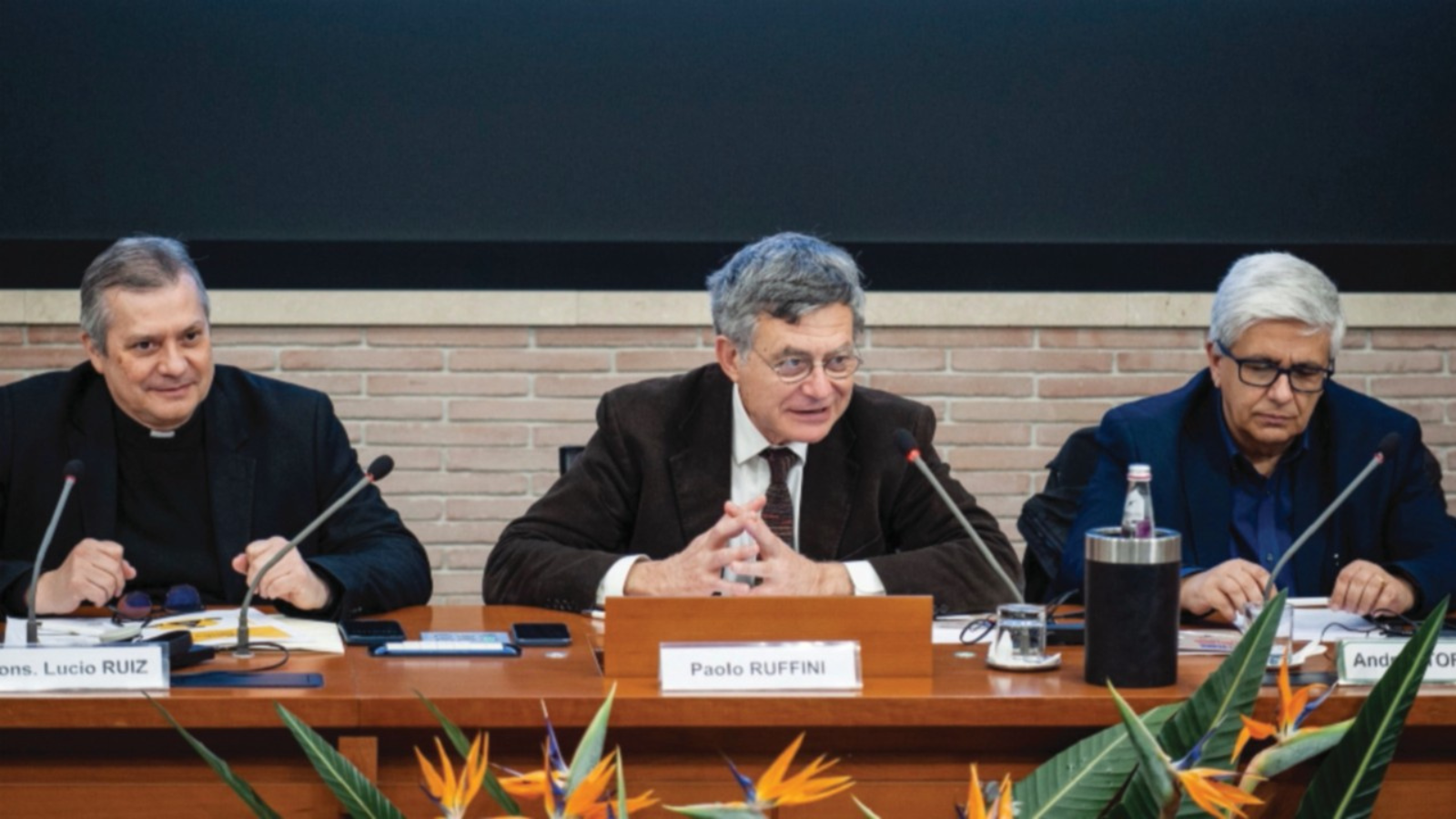
The election of Leo XIV
Then came the 2025 conclave, and with it the definitive débâcle. On 8 May, while the cardinals elected Leo XIV in less than twenty-four hours, the Dicastery announced at 11.59 a white smoke that did not exist, mistaking the tail end of black smoke for the election of the Pope. Shortly afterwards, the name of a pontiff who had never been elected was circulated: Pius XIV. For several hours the @Pontifex account continued to display the wording “Sede vacante”, whereas in 2013 the same profile had announced Francis within minutes. The third ballot was described as the second, Monsignor Leonardo Sapienza suddenly became an “archbishop”, and the New Synod Hall was confused with the Clementine Hall. A catalogue worthy of a parish bulletin, not of a newsroom speaking to the whole world.
We documented the flop of the Jubilee of Influencers, and the now famous language of “mystifying” by which inconvenient news is made unrecognisable. And in the most recent months we revealed how the Holy See has been transformed into a “brand”: the most expensive Dicastery in the Vatican budget, with its million-euro platforms, endless meetings in which Ruffini, Tornielli, Bruni, Monda, Menichetti and Govekar turn every decision into a permanent negotiation, the uselessness of a Theological-Pastoral Directorate without leadership, and the prefect’s attempt to multiply structures in order to secure positions. All the way to the Bruni-Armenti case and the violated embargo on the encyclical, in blatant contradiction with a Pontiff who preaches free and truthful communication.
The network and the end
These were never isolated errors. They were the reflection of a structure that had become self-referential, ideological, more interested in cultural approval than in evangelical clarity. A network, we wrote, that intertwines well-known names: Stefania Falasca and her husband Gianni Valente, Andrea Tornielli, Andrea Monda, Ruffini himself, with Pietro Parolin as the pivot. These are not figures from the para-Vatican landscape, but an organised media lobby whose purpose is to control and direct communication to its own advantage. It is no minor detail that Paolo Ruffini also sits on the Board of Directors of the Fratelli Tutti Foundation.
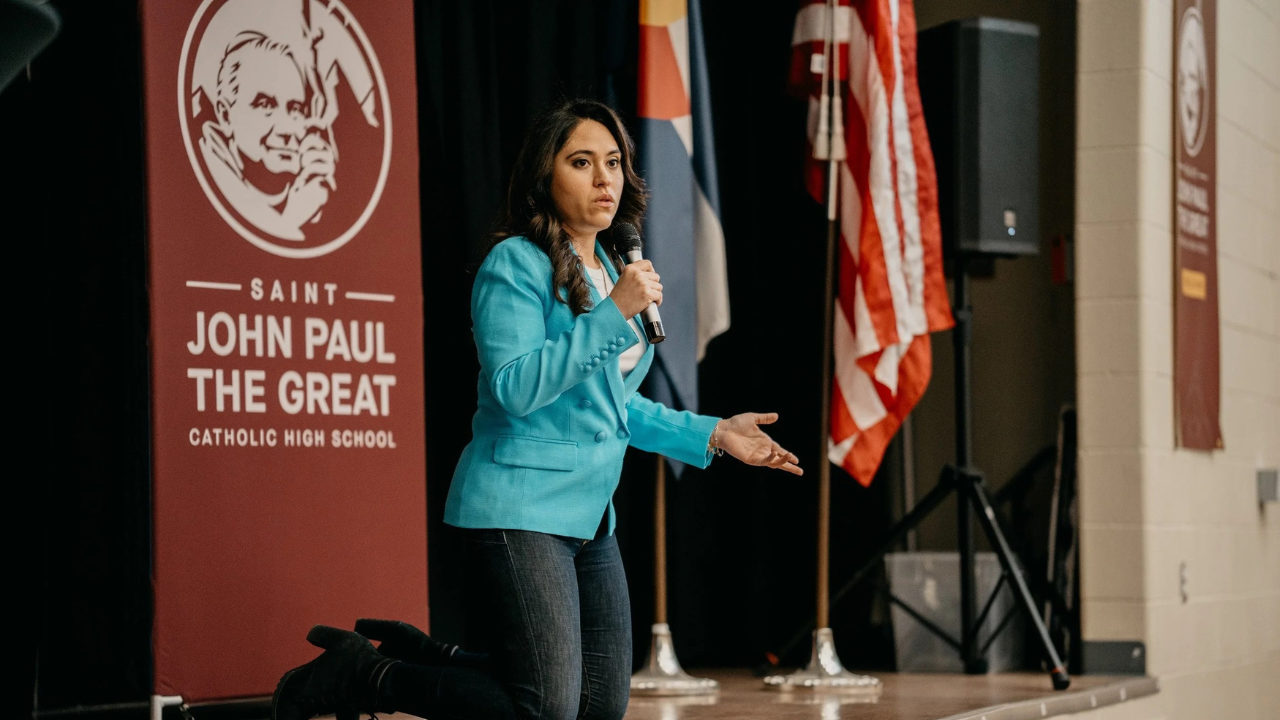
Leo XIV’s appointment
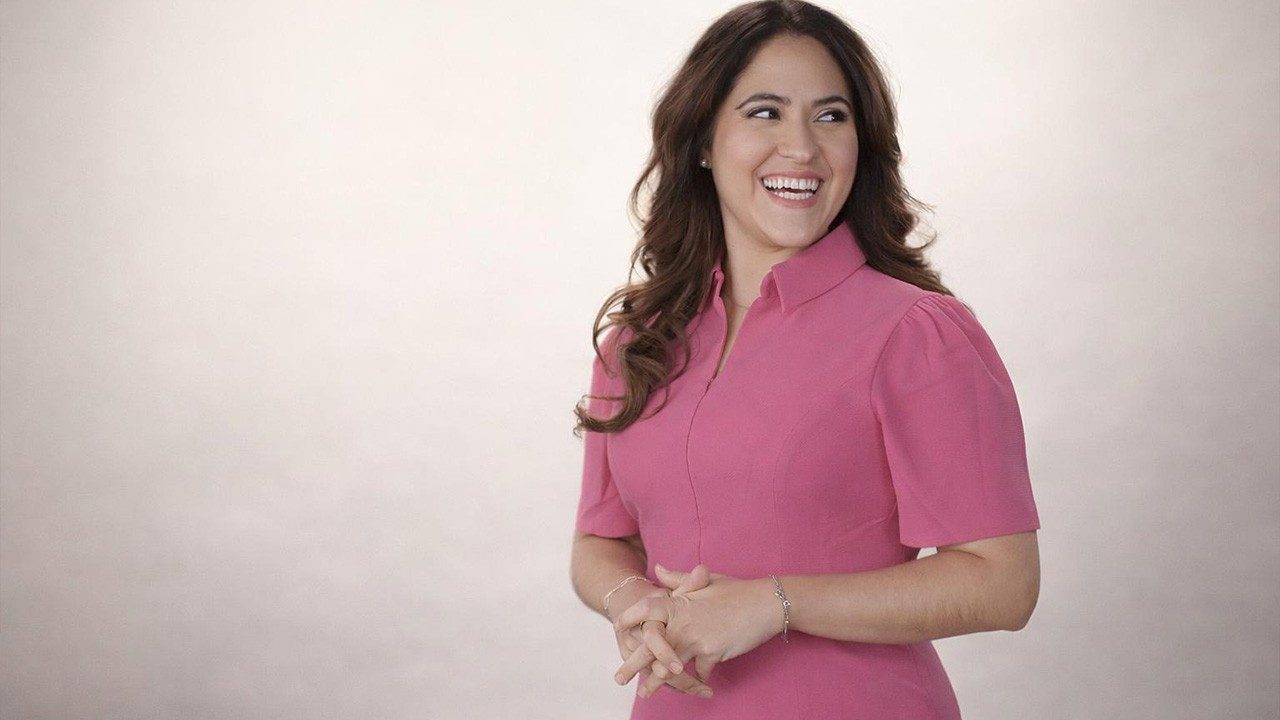
Today that season comes to an end. Leo XIV chose not to wait until 5 July, the date on which Ruffini would have completed eight years as prefect, and relieved the Palermo-born layman of his post, entrusting the leadership of the Dicastery for Communication to Maria Montserrat “Montse” Alvarado, president and chief operating officer of EWTN News. She will begin her mandate on 1 November 2026.
The Pope’s choice brings to Palazzo Pio a figure from outside the balances of the Italian Curia and the system that has governed Vatican communication for years. Alvarado, born in Mexico City and later a United States citizen, has built her profile across three fields: advocacy for religious freedom, the strategic management of Catholic organisations and television journalism. Her formation is political: she obtained a Bachelor of Arts from Florida International University and a Master’s degree from George Washington University, with a path linked to political management and political science. Her name is tied above all to the Becket Fund for Religious Liberty, an American organisation engaged in the defence of religious freedom. She joined it in 2009 and, in February 2017, was appointed vice president and executive director. Although she is not a lawyer, she played a public and strategic role in the communication and management of legal campaigns concerning some of the most sensitive dossiers in American Catholicism: the contraceptive mandate, the freedom of religious institutions to choose their own leaders, freedom of expression for religious groups and the protection of pro-life centres.
During her fourteen years of service at the Becket Fund, the team obtained twelve victories before the Supreme Court of the United States. Among the cases cited are those of the Little Sisters of the Poor, Muslim prisoners on death row, and charitable organisations such as Philadelphia Catholic Social Services.
In 2023, Alvarado was appointed president and chief operating officer of EWTN News, taking charge of the news division of the Catholic network founded by Mother Angelica. Under her responsibility fall global platforms and publications such as Catholic News Agency, National Catholic Register, ACI Group and ChurchPop, as well as television and radio programmes broadcast in several languages. Previously, she had also been the founding host of EWTN News In Depth, a weekly analysis programme on the Church, politics and culture from a Catholic perspective.
Her profile is also recognised in American ecclesial circles. The United States Conference of Catholic Bishops lists her among the consultants of the Committee for Religious Liberty. In 2024, the University of Mary chose her as the first recipient of the Lumen Gentium Medal.
With this appointment, Leo XIV entrusts the communication of the Holy See to a laywoman with managerial experience, an international media culture and a strong imprint within American Catholicism. It is a choice that marks an evident discontinuity from the Ruffini era: Palazzo Pio moves from a management formed within the Italian circuit of institutional information to a figure shaped in the Anglo-American world, accustomed to media competition, multiplatform communication and public battles over the sensitive issues of religious freedom.
Fr G.B.
Silere non possum