Vatican City - Before long, the Prelature of Pompeii may find itself shedding its last bitter tears. In the Vatican, by contrast, someone may finally be able to breathe a sigh of relief.
In recent years, the Dicastery for the Causes of Saints has gone through one of the murkiest periods in its history. Not coincidentally, much of what has happened bears the mark of Francis’s pontificate. It is a complex and exceptionally sensitive institution: not only because of the matters with which it deals, but also because of the interests, connections and pressures that inevitably surround one of the Holy See’s most delicate bodies.
The Dicastery oversees a substantial flow of financial resources connected with the handling of causes for sainthood. This money is used to gather documentation, obtain medical and historical expert assessments, commission specialist advice and analysis, and meet every requirement necessary to support a beatification or canonisation process. This is an area in which seriousness, competence and transparency should be non-negotiable.
Pope Francis, however, came to treat the Dicastery as a kind of holding pen. He placed Cardinal Giovanni Angelo Becciu there after removing him from the Secretariat of State. Then, when he decided to show him no mercy either, he entrusted the office to a man whom he trusted absolutely: Marcello Semeraro.
A prefect with no relevant expertise
The problem with Semeraro, who comes from Monteroni di Lecce, is that throughout his ecclesiastical career he has done little more than look for networks on which to cling. The very same “social climbers” of whom Bergoglio often spoke, only to surround himself with them with an almost methodical regularity. Semeraro secured his appointment as a bishop during the pontificate of John Paul II. He had already established ties with Jorge Mario Bergoglio before the latter’s election to the See of Peter. When the Jesuit became Pope, he immediately appointed him secretary of the Council of Cardinals, placing him in a sensitive and highly significant position.
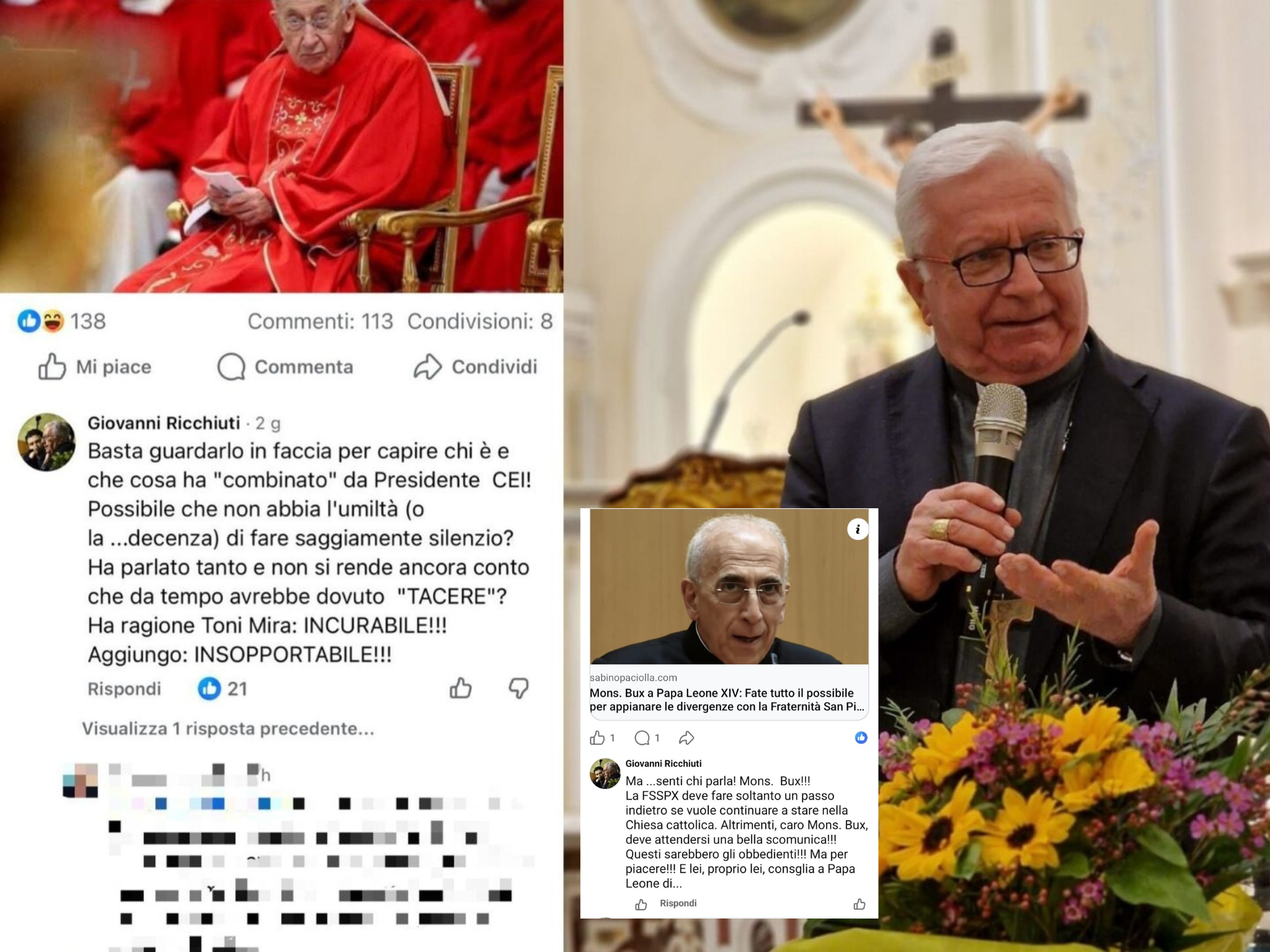
Semeraro is also closely associated with Giovanni Ricchiuti, the archbishop who leads Pax Christi Italia, an organisation that openly takes political positions. Yet there appears to be very little that is peaceful about Ricchiuti. He is a man given to resentment and a level of malice that defies description. Silere non possum has documented his conduct on several occasions, showing that he has no hesitation in turning himself into a vicious gossip on social media, even late at night, insulting and attacking fellow clergy and priests.
The problem is that these networks of acquaintances, combined with evident shortcomings of character, inevitably emerge in the governance of the institutions entrusted to such men. At the Dicastery for the Causes of Saints, for example, Semeraro has done little other than favour friends and acquaintances, while neglecting everything this body is required to do for the good of the Church. When it comes to gossip and backbiting, however, these prelates are always at the front of the queue. Ever ready.
An institution that does not work
In recent years, Marcello Semeraro and Fabio Fabene have caused no small number of problems for a Dicastery that was already exceptionally delicate. The result is plain for all to see: there will be no new saints during the remainder of this year. The entire canonisation process has been slowed almost to a standstill, not least because key positions have been given to individuals who either fail to do their work or carry it out in wholly inappropriate ways.
Fabio Fabene, in particular, has put personal interests before transparency and proper functioning. According to several internal sources, this has had serious consequences for the entire office.
The Relator General of the Dicastery for the Causes of Saints also deserves attention. Fr Angelo Romano was brought to the Dicastery by Andrea Riccardi and comes from the Community of Sant’Egidio. His work, however, appears extremely limited: not only does he fail to deal with his own Positiones, but he does not progress those entrusted to others either. In the coming days, we shall discuss several concrete examples.
Meanwhile, some of the Dicastery’s theologians and historians submit vota that not only appear questionable, but may even be blasphemous and offensive. For those unfamiliar with the subject, vota are opinions issued by experts. They may be consultative or deliberative in nature and are used to assess whether a candidate has practised the Christian virtues to a heroic degree, or whether an event may be considered scientifically inexplicable. In this case, they are consultative opinions. Yet faced with texts that raise serious questions about the theological and historical competence of these individuals, no one has intervened. No one has addressed the matter. Not even the Promoter of the Faith, whose task should be precisely to oversee these issues and ensure that the process is not reduced to a bureaucratic formality. If this is the atmosphere within the Dicastery, where the Prefect advances canonisation causes also because of pressure exerted by bishop friends of his - a matter to which we shall return in depth shortly - then a further problem emerges, and it is far from marginal.
The gridlock over causes and the Fabene issue
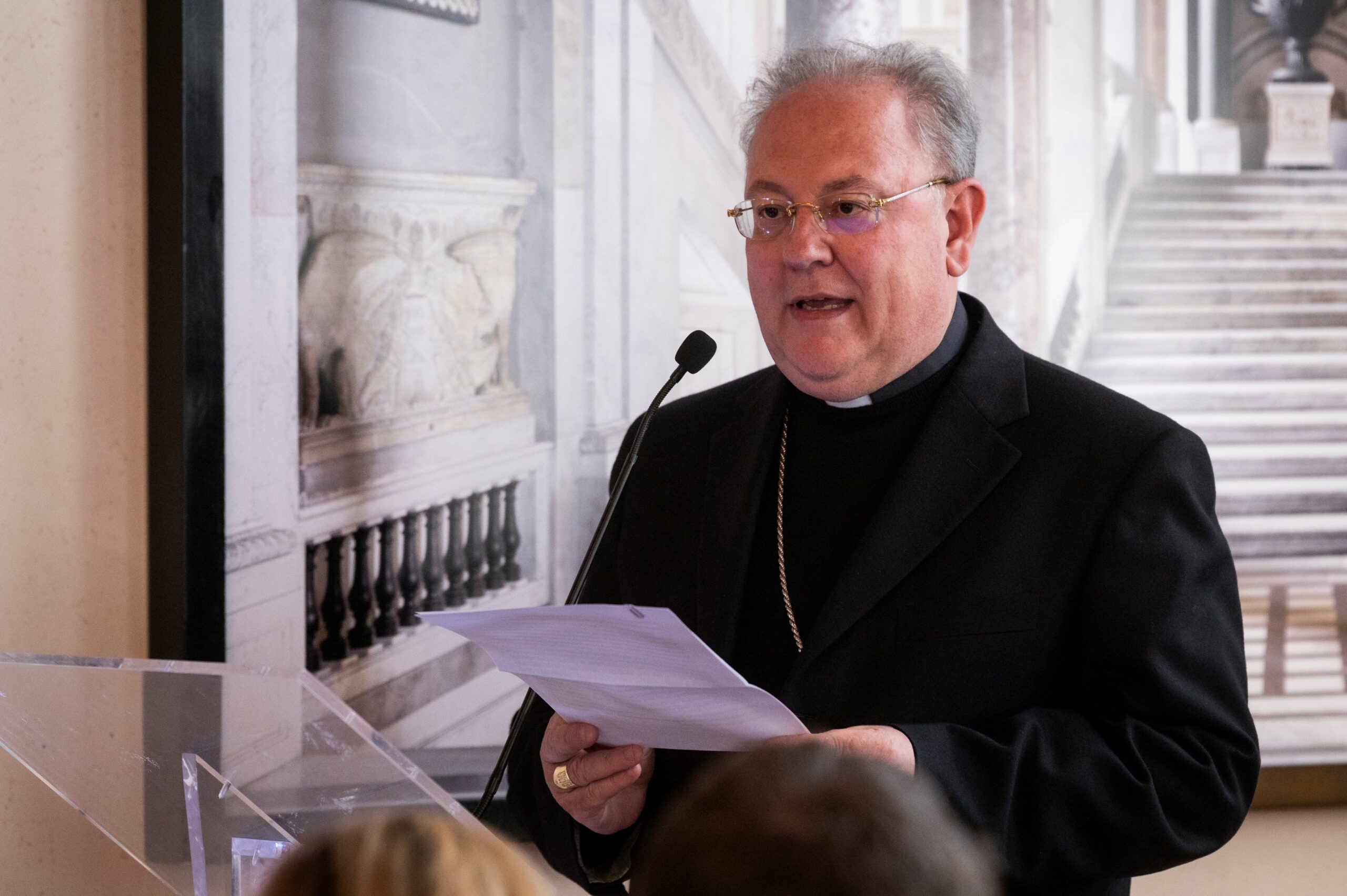
There will be no new saints proclaimed in 2026 because the Dicastery has become trapped in a bureaucratic bottleneck. According to information received by Silere non possum, that bottleneck originates precisely in the activities of Archbishop Fabio Fabene.
Fabene is an archbishop who has always pursued his own interests and has always operated “with real flair”, someone within the Dicastery remarks sarcastically. He is the classic type of prelate who, whenever complaints are raised or something that is not working is discussed, dismisses the lot as false, fabricated or mere gossip. He did so in relation to several matters involving serious abuse against a Benedictine abbot. He does so constantly in relation to what takes place within the Dicastery for the Causes of Saints.
When it comes to looking after friends and acquaintances, however, Fabene moves with far greater ease. In recent years, he is said effectively to have entrusted the renovation work at the Dicastery to a company from Montefiascone, where he had served as parish priest. According to what has emerged, the work was awarded under arrangements that were anything but transparent. It was not by chance that the auditor appeared in Piazza Pio XII, reportedly identifying elements that simply did not add up.
Since the auditor came into the Dicastery, a series of safeguards and checks have been imposed which now slow the office’s work to an extraordinary degree. Once again, the price for choices made by a few is being paid by everyone: by stalled causes, by postulators forced to wait, and by figures of sanctity left standing still for years within a system incapable of functioning.
The chaos surrounding the Positiones
As is well known, the Dicastery has over time identified three firms authorised to print the Positiones. For those unfamiliar with the subject, a Positio - more precisely a Positio super virtutibus or a Positio super martyrio - is the substantial documentary dossier at the heart of the canonisation process. It gathers and synthesises the historical and testimonial evidence intended to demonstrate a candidate’s holiness of life or martyrdom.
Until recently, postulators could freely approach any of the three authorised printing houses. That is no longer the case. Following what emerged during the auditor’s visit, the supervisory bodies imposed a procedure described as “more transparent” and “random” in order to decide which printer should be awarded the work.
The practical outcome, however, has been the addition of new stages, checks and requirements before it is even possible to establish where and when a Positio may be printed. These steps have dramatically slowed a process that was already complex, costly and cumbersome in itself. All this because Fabio Fabene is said to have looked after his own interests rather than those of the Dicastery. That is what happened during Francis’s pontificate: years in which there was endless talk of transparency, tenders and reforms, while in practice one rule applied to the favoured and another to everyone else.
As those of you who follow Silere non possum know well, this mechanism does not concern only the Dicastery for the Causes of Saints. At Santa Maria Maggiore, for example, the Lithuanian prelate had entrusted Gelateria del Corso with the ice-cream trolley service in the Basilica without any tendering procedure. Silere non possum brought this scandal to light, but Bergoglio preferred to enjoy his scoops of ice cream for the cameras. Even today, many procedures in the Vatican are presented as tenders, but every effort is then made to ensure that only those whom the organisers want to see win take part in particular calls. In this way, the rules are circumvented without even having to breach them formally.
It is the usual Italian system, faithfully reproduced within the Leonine Walls. Bureaucracy, controls and formal stages proliferate; then, within precisely those gaps, it becomes possible to insert and push through whatever is wanted. It is no coincidence that Italy is one of the countries most suffocated by bureaucracy and, at the same time, one of the most corrupt, while there are states that are far leaner, more digitalised and less bureaucratic, where corruption is minimal or virtually non-existent.
Hot potatoes on Leo’s desk
This system risks paralysing an entire institution simply because unsuitable people have been placed in charge of it. Nor should the spiritual dimension of the matter be forgotten, which for some of these individuals seems to have been reduced to a marginal technicality: they work on causes concerning men and women proposed to the faithful for veneration as saints. Handling such matters with superficiality, personal interests and power games is not merely an administrative problem; it is a scandal.
For Leo XIV, this is by no means a secondary issue. It is a problem repeated across many offices and dioceses, both within and beyond the Leonine Walls. The indelible character of episcopal ordination, combined with the fact that many of these men were appointed bishops or cardinals at a relatively young age, makes it extremely difficult to remove them from their posts without then having to identify another position for them. And that is often precisely the problem: no one knows where to place them without risking their continuing to cause damage.
This is what is happening with Mauro Gambetti, whom the Pope intends to remove from St Peter’s, but for whom it is not easy to find another destination, not least because he is a cardinal. It is happening with Michele Di Tolve, who has no intention of leaving Rome and about whom several letters have already reached Archbishop Edgar Peña Parra from dioceses urging that he not be appointed there and promising a fight should he be sent there as bishop. It is happening with Renato Tarantelli and with many other prelates appointed by Francis, often while they were still very young, and for whom no one now knows where to find a place without exposing other ecclesial communities to serious consequences.
Fabio Fabene now risks being transferred to a posting with particular sensitivities, such as Pompeii. And that is precisely the danger: that instead of resolving a problem, it is simply moved elsewhere, allowing it to fall upon a local Church that deserves far greater care.
fr.B.T.
Silere non possum