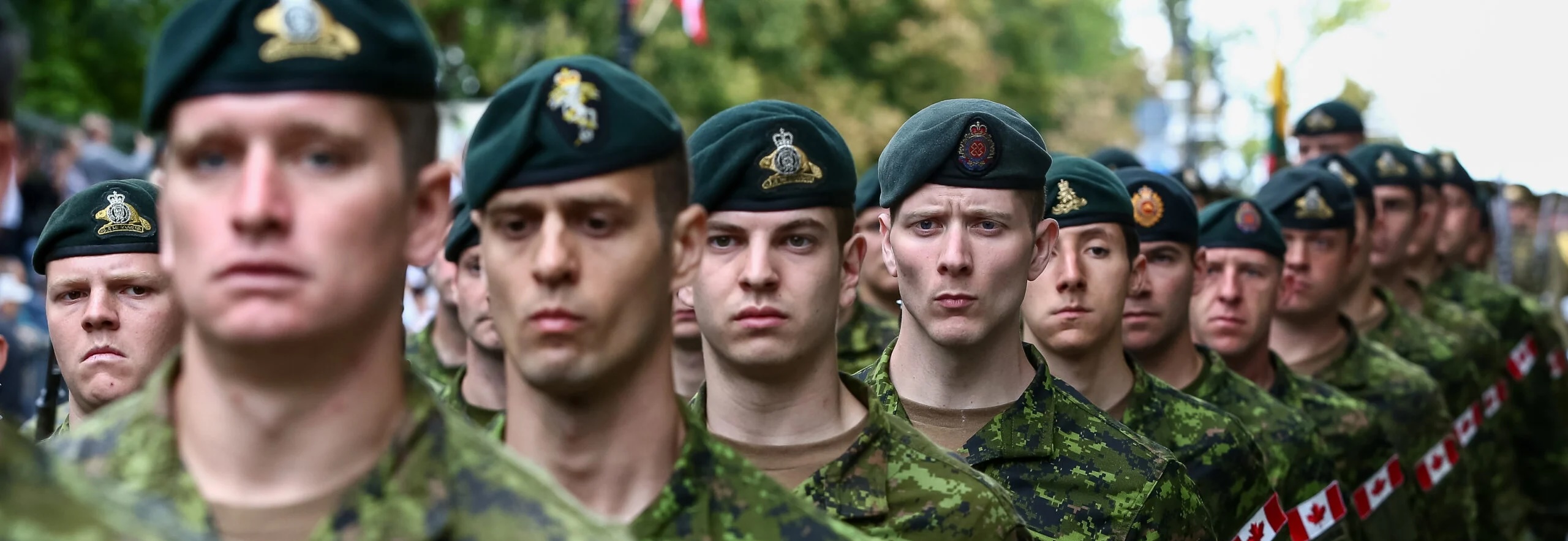
Ottawa - Bishop Scott McCaig, C.C., Military Ordinary of Canada, has issued a statement in response to the new Canadian Armed Forces Military Personnel Instruction – Spiritual Reflections in Military Settings, which took effect on 29 July. The bishop objects to a policy requiring chaplains, and anyone else delivering such remarks on behalf of the Canadian Armed Forces, to refrain from using words, gestures or symbols associated with a particular religious or spiritual tradition, including references to God.
The instruction defines spiritual reflections as public addresses to groups of military personnel intended to strengthen their sense of meaning and purpose and their spiritual well-being. It also requires those delivering them to uphold the religious neutrality of the state by avoiding language specific to any particular faith. Ottawa says the measure is intended to ensure inclusivity and uphold the secular character of public institutions.
This is where McCaig’s central objection lies. In his view, the policy is based on a fundamental misunderstanding that ultimately undermines the very aim it is meant to serve. Reflection on the meaning and purpose of life, he argues, inevitably rests on philosophical and spiritual assumptions. For many believers - Christians, Muslims, Jews, Hindus and Sikhs - separating those questions from any reference to a transcendent source effectively empties the reflection of its substance. Requiring chaplains to make that separation in the name of neutrality, he argues, amounts to asking them to act against their conscience.
McCaig also raises a legal objection. He points to the Supreme Court of Canada’s 2015 ruling in Mouvement laïque québécois v. Saguenay (City), which held that the state must neither favour nor hinder a belief, and that the same principle applies to non-belief.
The bishop further argues that atheist and humanist systems of thought also require an assent of intellect and will comparable to faith, and take definite positions on the existence or non-existence of God and on the value and meaning of human experience. The Canadian Armed Forces themselves, he notes, have long recognised secular humanist chaplains as representatives of one of the spiritual traditions included within their interfaith chaplaincy service. A ban on religious references therefore risks becoming an implicit preference for a particular worldview - a secular one - which is given privileged treatment precisely in the name of neutrality.
The bishop also criticises the lack of any genuine engagement with political and military authorities. Requests for meetings made by chaplains over the years while the policy was being reviewed, he says, were systematically rejected. Genuine dialogue with religious leaders, McCaig argues, would probably have led to a more balanced outcome, one that genuinely respected the range of beliefs held by military personnel. While the Ordinariate continues to study the measure and prepares an official position - meetings are under way with the Canadian Conference of Catholic Bishops and with ecumenical and interfaith partners in the chaplaincy service - the bishop has asked the faithful to pray for a reasonable review of the policy and for an openness to genuinely inclusive dialogue.
The Canadian Conference of Catholic Bishops has expressed its solidarity with McCaig, confirming that it is closely following the implementation of the instruction and its implications for freedom of conscience and religion within the Canadian Armed Forces. At this preliminary stage, the bishops have simply encouraged the faithful to keep themselves informed about the issue and to pray for military personnel, their families and their chaplains, as well as for McCaig himself as he carries out his pastoral ministry among Canada’s Catholic military community.
The Canadian Military Ordinariate, like similar ordinariates established in other countries, operates according to a distinctive juridical model based on persons rather than territorial boundaries, accompanying military personnel wherever they are stationed in accordance with the framework established by St John Paul II’s 1986 apostolic constitution Spirituali Militum Curae. It is a structure designed to provide pastoral care for those serving far from their home dioceses. For that reason, the Canadian controversy also has implications beyond the country itself: the tension between state neutrality and religious freedom within the armed forces is not confined to Ottawa, and the case could become a precedent watched closely by military ordinariates in other allied countries.