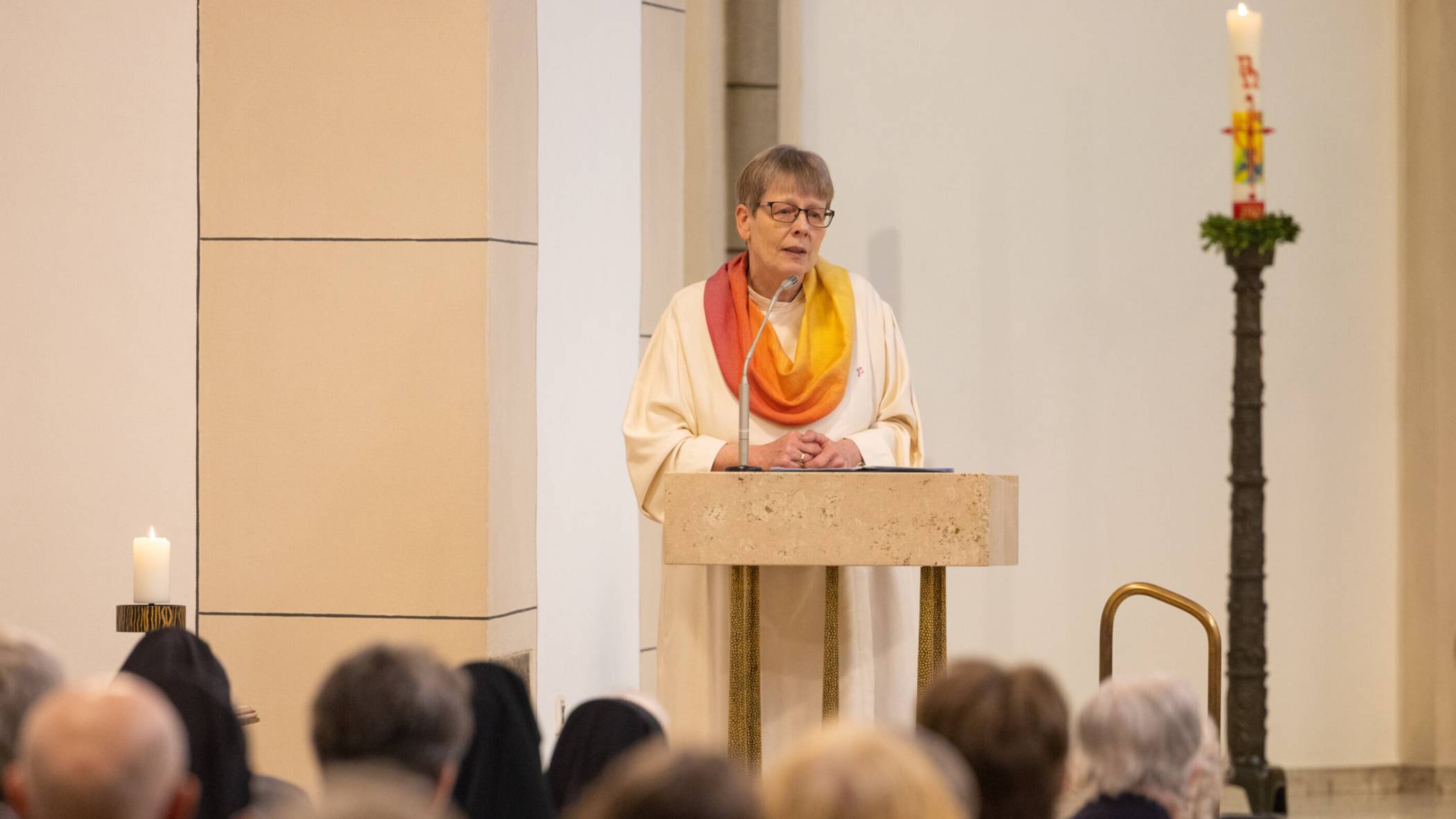
Vatican City - In a press release issued today, 23 June 2026, the Dicastery for Divine Worship and the Discipline of the Sacraments announced that it had rejected a request from the German Bishops’ Conference for an indult allowing, “in exceptional circumstances”, a duly commissioned lay member of the faithful to preach in place of the homily during the celebration of the Eucharist.
The decision is set out in a letter dated 17 June 2026 and addressed to the President of the German Bishops’ Conference, the Dehonian bishop Heiner Wilmer SCJ. The request for the indult, the Dicastery itself specifies, had been made on 30 March 2026. Keep that date in mind.
Rome’s refusal and the reasons behind it
The Dicastery reiterates that no dispensation from the provision laid down in Canon 767 §1 can be granted by means of an indult, because the reservation of the homily to a priest or deacon is not simply a disciplinary rule, but derives from “the very nature of the liturgy”.
As the letter explains, the homily forms an integral part of the Liturgy of the Word, is intrinsically linked to the proclamation of the Gospel, and constitutes a specific exercise of the munus docendi entrusted to ordained ministers through the Sacrament of Holy Orders. The proclamation of the Word within the liturgical celebration is inseparable from the mission sacramentally received in the Church and from the unity that binds Word and Sacrament together in the Eucharist.
The Dicastery also recalls the importance of the initial and ongoing formation of ordained ministers, so that the homily may fully express its “quasi-sacramental character”. It further notes, with some firmness, that the present discipline already provides for numerous forms of proclaiming the Word and preaching which may be entrusted to lay people outside the homily and outside the Eucharistic celebration, in accordance with canon law and the proper nature of each of those forms. Put simply: lay people can and must proclaim the Word, but not there, not at that moment, and not in place of the person presiding.
Woelki and the concern voiced that very day
This is where the date of 30 March becomes relevant again. While the request to be sent to Rome was being prepared in Würzburg - and while all the bishops of the German Bishops’ Conference had been duly informed - Cardinal Rainer Maria Woelki voiced his opposition. During the Chrism Mass in Cologne Cathedral, without making any reference to the letter sent to the Holy See, he addressed the priests of the diocese and urged them not to adopt this practice.
When the letter arrived in Rome, the issue was far from new and did not take the Dicastery’s leadership by surprise. On 1 April, Silere non possum had reported on the words spoken by the Archbishop of Cologne during the Chrism Mass, setting out both their substance and their context. The Cardinal framed his entire address around the relationship between the priestly ministry and the Eucharist, warning against “today’s attempts to separate the proclamation of the Word of God in the homily from presiding over the Eucharistic celebration”. Woelki urged priests to safeguard “this important theological link” and not to yield to a “purely functional understanding”.
That was precisely the point Rome has now set down in black and white: preaching at Mass belongs to the very structure of the liturgical action and of the ordained ministry, and cannot lightly be delegated to someone who does not preside over the Eucharist.
In the same homily, the Cardinal went further, denouncing the existence of circles in which “it is openly said that everything possible must be done to make themselves independent of the priest and his ministry”. Woelki’s conclusion left no room for doubt: “This, dear brother priests, is no longer Catholic, and I urge you to oppose all this from the outset.” Almost three months later, the Dicastery for Divine Worship has vindicated the Cardinal of Cologne on both doctrinal and disciplinary grounds.
In short, following the publication by the Cardinal Prefect of the Dicastery for the Doctrine of the Faith of the letter reining in interpretations of Fiducia Supplicans, this is the second firm and unmistakable signal Rome has sent to revolutionary Germany: the wind has shifted.
fr.F.V.
Silere non possum