For the Cistercian family, 20 August - the memorial of St Bernard of Clairvaux in the Roman Calendar - is a solemnity. It is also an opportunity to recall something that, at times, seems to be overlooked precisely within monastic circles: throughout the history of monasticism there has never been a single monastic temperament, nor only one concrete way of living out a monastic vocation.
It is worth remembering this, especially when an abbot starts making the rounds of monasteries, chapters, meetings and communities convinced that he possesses some sort of universal handbook for the good monk, dispensing instructions to abbesses and abbots on how they should govern, form, pray, work, receive vocations and organise their communities.
It is, unfortunately, a recurring problem precisely in environments where psychological abuse and abuse of conscience can most readily take root: the conviction of belonging to a spiritual elite, of preserving a purer form of Christian life and, consequently, of being entitled to tell others how they should live their vocation. It is the “we alone have understood” mentality, which ends up turning charism into ideology and authority into control.
In some figures, moreover, different ecclesial experiences seem to converge around precisely this approach. One such figure is Mauro Giuseppe Lepori. The problem concerns more than the way he exercises his influence within the Cistercian world. One need only look at Communion and Liberation and, in particular, at the Memores Domini, where Lepori has taken on an increasingly influential role in recent years. The settings change, but the method looks remarkably similar: intervention from above, correction, bringing people back within a model regarded as more authentic, to the point of constraining the autonomy and the particular history of the communities involved.
And today came confirmation of news that had already been regarded as certain in recent weeks: the Abbot of Heiligenkreuz has resigned. After a long-running affair and the pressure brought to bear in Rome over his position, Lepori has finally succeeded in obtaining what he had been seeking: the abbot’s resignation. Here too, it would be far too convenient to explain everything away with Maximilian’s health problems. When the same pattern recurs in different settings, with the same claim to re-educate communities and individuals according to a particular idea of religious life, the issue ceases to concern a single monastery and becomes a question of method.
Monastic authority certainly entails safeguarding a tradition. There is a Rule, there are constitutions, liturgical norms, proper law and ecclesiastical discipline. Monastic life is not a space in which everyone simply invents whatever suits them. But there is a considerable distance between that and turning the experience of one monastery, or even the temperament of its abbot, into a paradigm to be applied elsewhere.
St Benedict understood this long before our theories of personalised formation. In the second chapter of the Rule, precisely when describing the abbot, he writes that the latter has undertaken a “difficult and arduous” task: regere animas et multorum servire moribus, to govern souls and serve many different temperaments. One person will need gentleness, another rebuke, another persuasion. The conclusion is even more interesting: secundum uniuscuiusque qualitatem vel intellegentiam, ita se omnibus conformet et aptet. The abbot must adapt and accommodate himself to each person according to his character and understanding.
The Rule, then, recognises a diversity of temperaments even within a single monastery. The abbot is not entrusted with producing copies of himself. He must know the men entrusted to him well enough to understand that what helps one may crush another, and that the same rebuke may be necessary for one monk and pointless for the man living in the next cell.
If this is true of brothers living in the same monastery, it is harder still to imagine that a superior can travel from country to country and community to community expecting to impose the same idea of monastic life everywhere.
The Second Vatican Council, too, when addressing the renewal of religious life in Perfectae caritatis, begins with the following of Christ as the supreme rule, but immediately afterwards requires that the “founders’ spirit and special aims” be faithfully preserved, together with their “sound traditions”, all of which make up the patrimony of each institute. The Church therefore recognises a genuine plurality of forms, histories and spiritual sensibilities.
For women’s monasteries, this principle even has a juridical form. Cor Orans states that a monastery sui iuris has its own autonomy of life and government precisely so that it may “preserve its character and protect its identity”. Autonomy does not mean isolation: federations exist for communion, formation and mutual assistance. Communion and uniformity, however, are two different things. The former allows communities to support one another; the latter risks erasing precisely the particular history that the Church says it wishes to preserve.
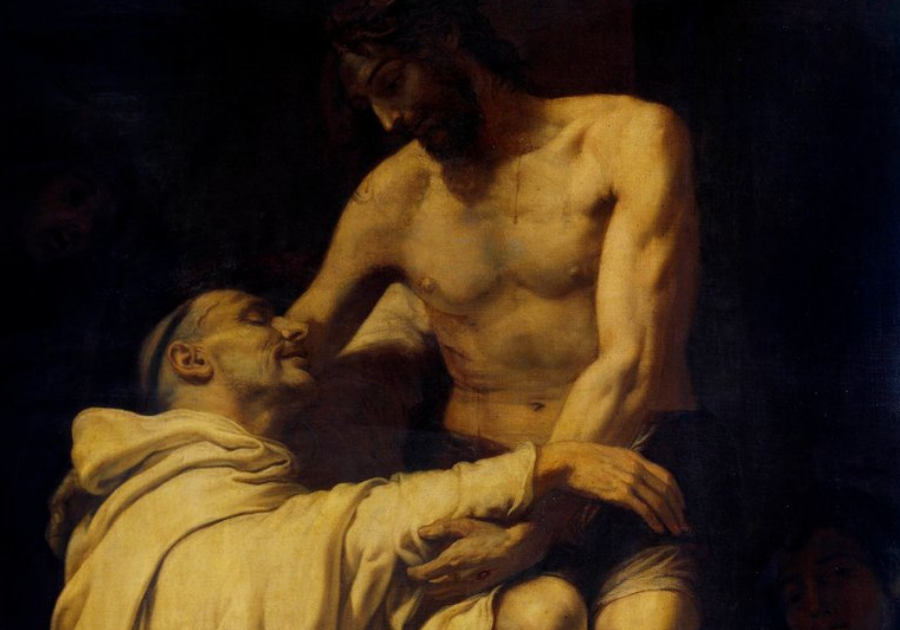
And then there is Bernard.
Few figures could be less suited to supporting the idea that there is an easily reproducible model of monastic life.
Barely into his twenties, he arrived at Cîteaux between 1112 and 1113 with a large group of relatives and friends. In 1115 Stephen Harding sent him to found Clairvaux. Bernard was only twenty-five. Recalling him in 2009, Benedict XVI described Cîteaux as a foundation “more flexible in comparison with the ancient and venerable monasteries of the period while at the same time stricter in the practice of the evangelical counsels”. At Clairvaux, he added, Bernard was able to “define his conception of monastic life and set about putting it into practice”.
Those words are worth pondering. Bernard receives a tradition and interprets it. He does not follow the Cluniac model of monastic life; indeed, he would later attack it fiercely. Sobriety at table, in clothing and in monastic buildings becomes one of the hallmarks of his approach. Clairvaux grows, and new foundations emerge from that community. Trois-Fontaines is founded as early as 1118; in the years that follow, the network linked to Clairvaux expands rapidly.
Bernard could even be ferocious when he believed that monastic life had lost its proper measure. In the Apologia ad Guillelmum, addressed to William of Saint-Thierry, he asks what those carved figures are doing in the cloisters, in front of brothers intent on reading, describing them as a ridicula monstruositas, a “ridiculous monstrosity”. Monkeys, fantastic animals, centaurs, scenes that draw the monk’s eye. His polemic against the figurative decoration of Cluniac monasteries left a lasting mark on Cistercian aesthetics.
A severe man, then. Yet it would be difficult to use his example to construct the image of an abbot who spends his entire life behind the walls of his monastery. From 1130 onwards Bernard became increasingly involved in matters concerning the Holy See and the Church. Benedict XVI notes that for this reason he was obliged to “leave his monastery ever more frequently” and sometimes travelled “outside France”. He wrote to popes, cardinals, bishops, abbots, rulers and ordinary people. He took sides in the schism that followed the death of Honorius II, supporting Innocent II against Anacletus II. He intervened in the theological controversies of his time, confronted Abelard, opposed the Cathars and defended Jews against antisemitic violence.
In 1146 he preached the Second Crusade at Vézelay. Its military outcome would be disastrous. It is difficult to find a twelfth-century monk more deeply involved in the ecclesiastical and political affairs of his time.
Pius XII described him particularly effectively in Doctor Mellifluus, published in 1953 for the eighth centenary of Bernard’s death. Bernard longs for contemplation, the Pope writes, yet he does “not remain enclosed within the walls of his cell” when “the interests of God and Church are at stake”. Bernard himself explained his conduct in stark terms: “I do not regard any of the affairs of God […] as things with which I have no concern.”
When, in 1145, one of his former monks and disciples, Bernardo Paganelli di Montemagno, became Pope Eugene III, the Abbot of Clairvaux dedicated the De consideratione to him. The relationship between the two says much about Bernard’s character. Pius XII quotes one of the most striking passages in the work: parental love continues to recognise the child even beneath the tiara; and so Bernard tells the Pope that he will admonish him “as a mother”.
If we were to apply certain contemporary monastic categories to Bernard with the same rigidity with which they are sometimes applied to others, we would probably run into some difficulty. An abbot constantly on the move, involved in papal elections, in the affairs of rulers, in theological disputes, in preaching a crusade, and in contact with cardinals and pontiffs. At the same time, the author of eighty-six sermons on the Song of Songs, a man of contemplation, lectio, prayer and the search for God.
This complexity did not give Bernard licence to do whatever he pleased. His life remained subject to the vocation he had received and to monastic discipline. It does, however, show how dangerous it is to identify the authenticity of a vocation with one particular outward expression of it.
Bernard himself was not even the placid-tempered monk that certain portrayals might lead us to imagine. On 20 August 2006, Benedict XVI recalled the saint’s commitment to “battle against his impetuous temperament” and the humility with which he recognised “his own limitations and shortcomings”.
There is perhaps a lesson here that is more genuinely monastic than many conferences on monasticism. Temperament is not erased when someone enters a monastery. It is formed, corrected and purified. Bernard remains Bernard. Grace does not turn him into a standard personality to be replicated in every Cistercian who comes after him.
And it is precisely a man as combative as this, capable of involving himself in the fiercest controversies of his century, who writes in the De consideratione that God “may be easier to search for […] and find […] in prayer rather than in discussion”.
The question, then, also concerns the way authority is exercised between monasteries. An abbot can visit other communities, offer his experience, teach, listen and help. The Cistercian tradition has always known relationships between houses, visitations and structures of communion. The problem begins when personal experience becomes the standard by which other people’s lives are judged, and when one particular monastic sensibility is presented as the only mature, serious or authentic form of monasticism.
There is also a fairly simple point that should not be overlooked: those who claim the right constantly to judge other people’s lives often turn out to be very poor teachers. In the coming hours, Mauro Giuseppe Lepori will be at the Rimini Meeting, appearing before tens of thousands of people, while for years he has travelled the world with financial support from the Order. Every Cistercian monastery, in fact, pays contributions to the General House, including to enable the Abbot General to carry out his duties and his travels; in the same way, the Memores Domini contribute financially towards their assistant.
That is what makes the claim even more jarring. Lepori has access to a network, resources, visibility and freedom of movement that allow him to be present everywhere, to intervene in different settings, to speak, influence and judge. And yet he continues to present himself as the person who must tell other monasteries how authentic monastic life should be lived.
Even St Benedict requires the abbot to adapt himself to the different men he encounters. Even Bernard had to learn to govern his own temperament. Even Clairvaux, which became one of the most influential abbeys in Europe, was itself a particular expression of the Benedictine and Cistercian tradition within a specific history.
A monastery lives by the Rule and the Gospel, by the patrimony it has received, by its actual community and by men or women who are not interchangeable. Those who exercise authority should know them before presuming to mould them.
Perhaps St Bernard, precisely because he taught others so much, can remind today’s abbots of this as well: before telling another community how it ought to live as a monastic community, one must first have learnt the task St Benedict assigns to those who govern their own: multorum servire moribus, to serve different temperaments.
Fr.P.M.
Silere non possum