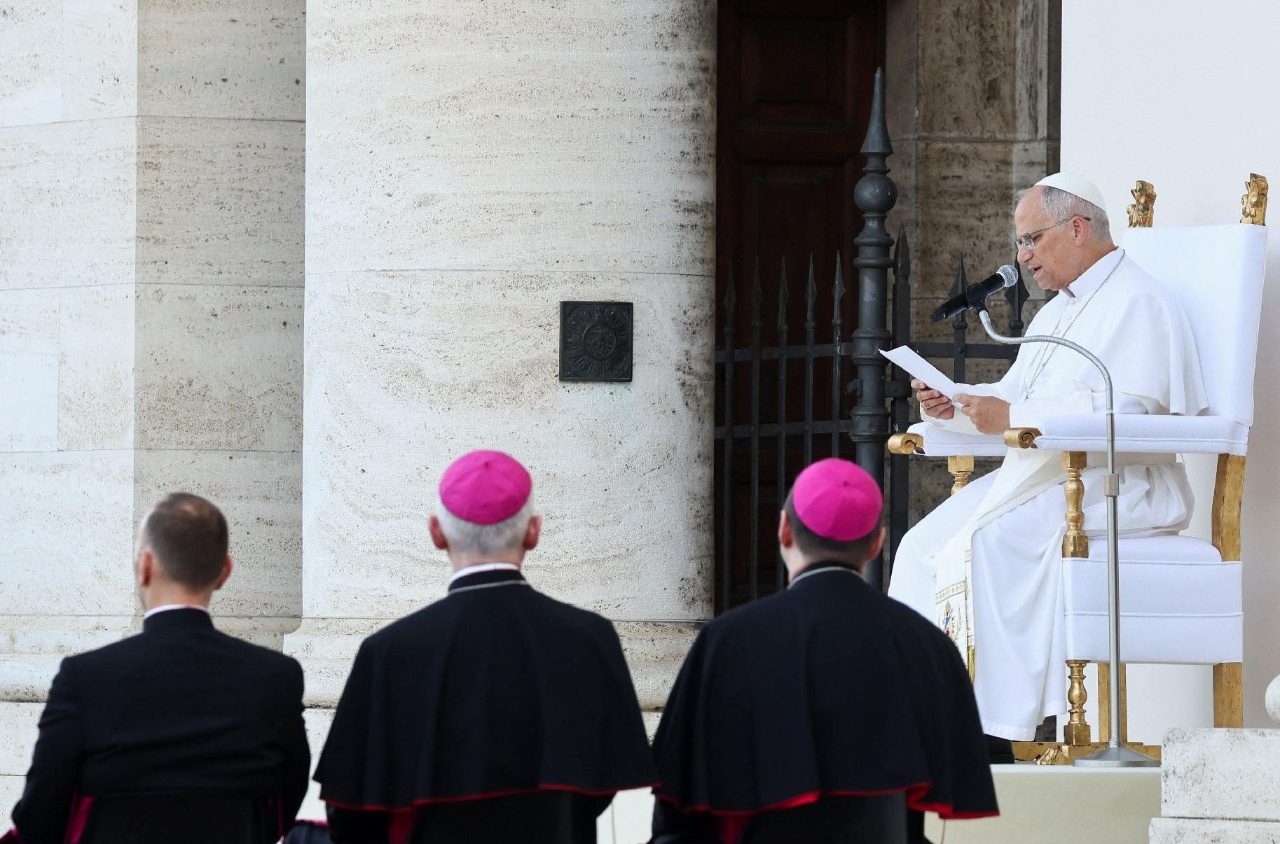
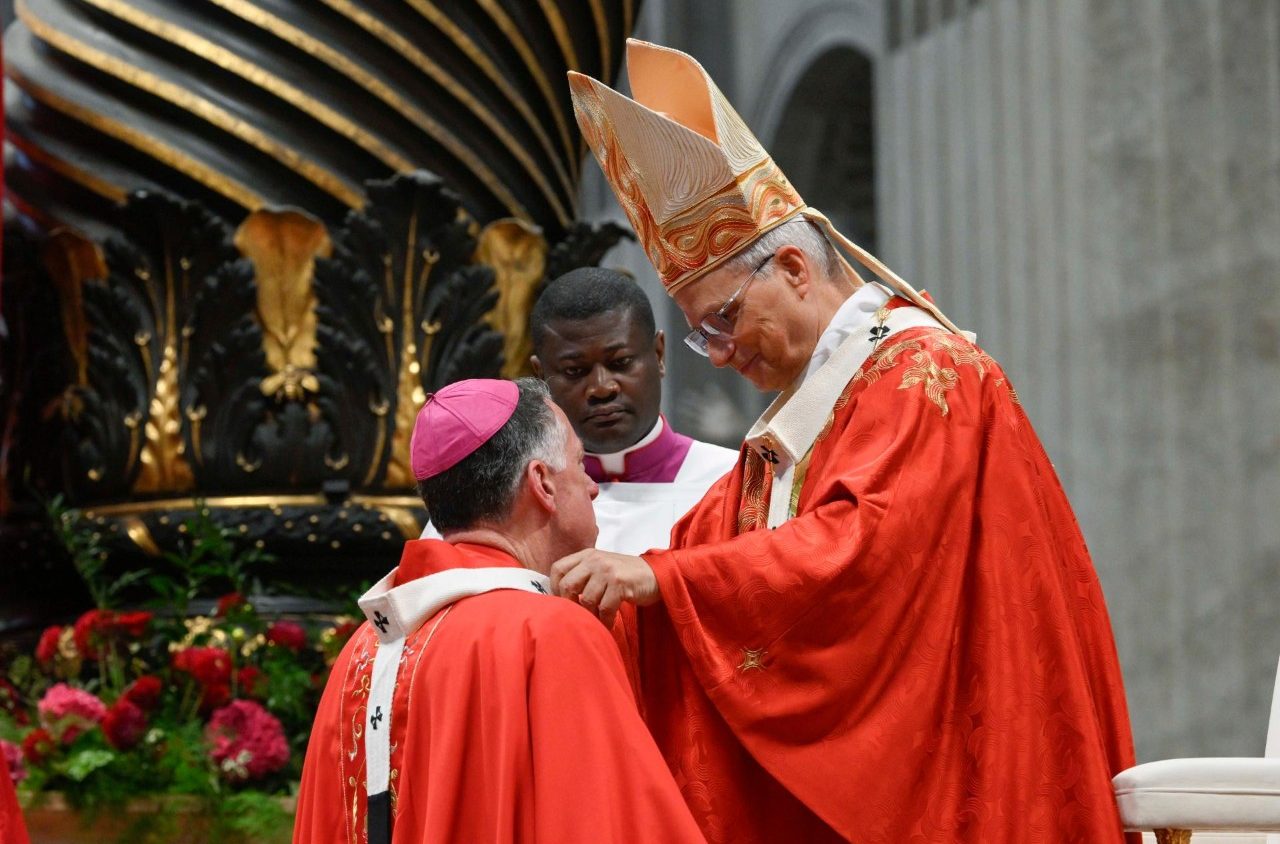
Vatican City - On the Solemnity of Saints Peter and Paul, Pope Leo XIV presided over Mass in St Peter’s Basilica this morning, during which he blessed and imposed the pallia on metropolitan archbishops appointed over the past year.
Thirty-five prelates received the white woollen bands from the Pope in a rite which, every 29 June, brings the pastors of metropolitan Churches from every continent to the tomb of the Apostle.
Those who received the pallium
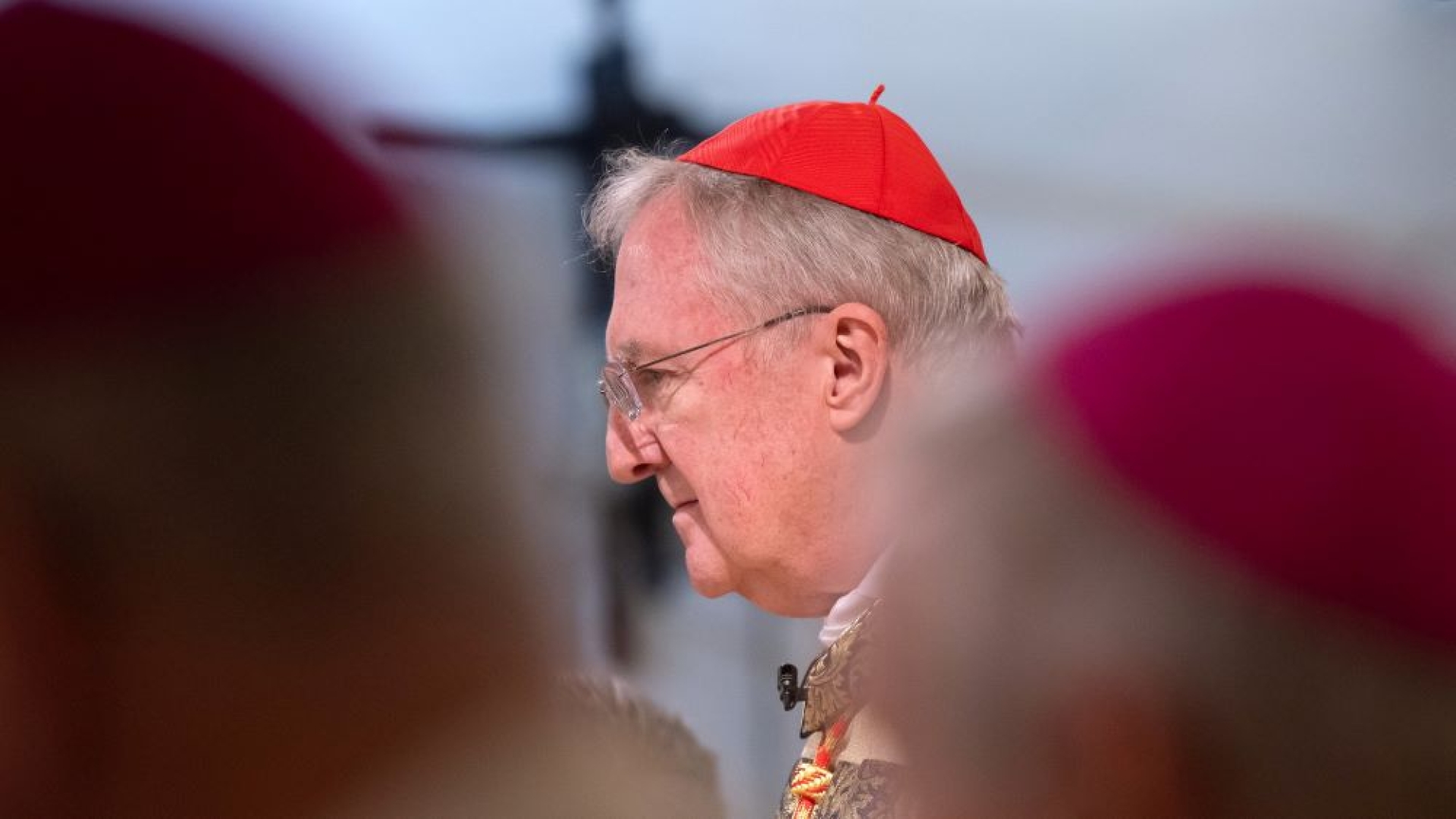
The roll of names read in the Basilica reflected the global reach of the Church. It included Archbishop Ronald A. Hicks of New York and Archbishop Charles Phillip Richard Moth of Westminster. Also receiving the pallium were three Italian archbishops, together with two Polish cardinals - Cardinal Grzegorz Ryś, Archbishop of Kraków, and Cardinal Konrad Krajewski, Archbishop of Łódź - as well as metropolitan archbishops from Brisbane, Madurai, Cebu, Belém do Pará, Edmonton, Prague, Vienna, Cape Town, Lahore, Lomé, Denver, New Orleans, Morelia, Bucaramanga and Conakry, among many others.
The list spanned Europe, the Americas, Africa, Asia and Oceania, offering a tangible expression of the “one family of Christ” evoked in the Preface of the Mass.
What the pallium is and how the rite is performed
The pallium is a narrow band of white wool, decorated with crosses, which a metropolitan archbishop wears over his shoulders. It is made from the wool of lambs blessed each year on the Memorial of Saint Agnes and kept, until the day of its conferral, in the Confessio of St Peter, beside the Apostle’s tomb.
At the beginning of the rite, the deacons brought the pallia before the Pope. The Cardinal Protodeacon presented the archbishops to the Holy Father, humbly asking that they be granted the pallium, “taken from the Confessio of blessed Peter, as a sign of the authority with which the Metropolitan, in communion with the Roman Church, is legitimately invested within his own jurisdiction”. The metropolitans then pronounced the formula of the oath, undertaking to remain “ever faithful and obedient to blessed Peter the Apostle, to the Holy, Apostolic Roman Church” and to the Supreme Pontiff and his lawful successors. The Pope then blessed and imposed the pallium on the shoulders of each archbishop, exchanging with him a sign of peace. The words of the conferral set out its meaning: “May this pallium be for you a symbol of unity and a sign of communion with the Apostolic See; may it be a bond of charity and an encouragement to fortitude.” The pallium does not confer new authority. Rather, it gives visible expression to the metropolitan’s bond with the Successor of Peter and to his responsibility as a shepherd, following the example of the Good Shepherd who carries the sheep upon his shoulders.
Leo XIV’s homily
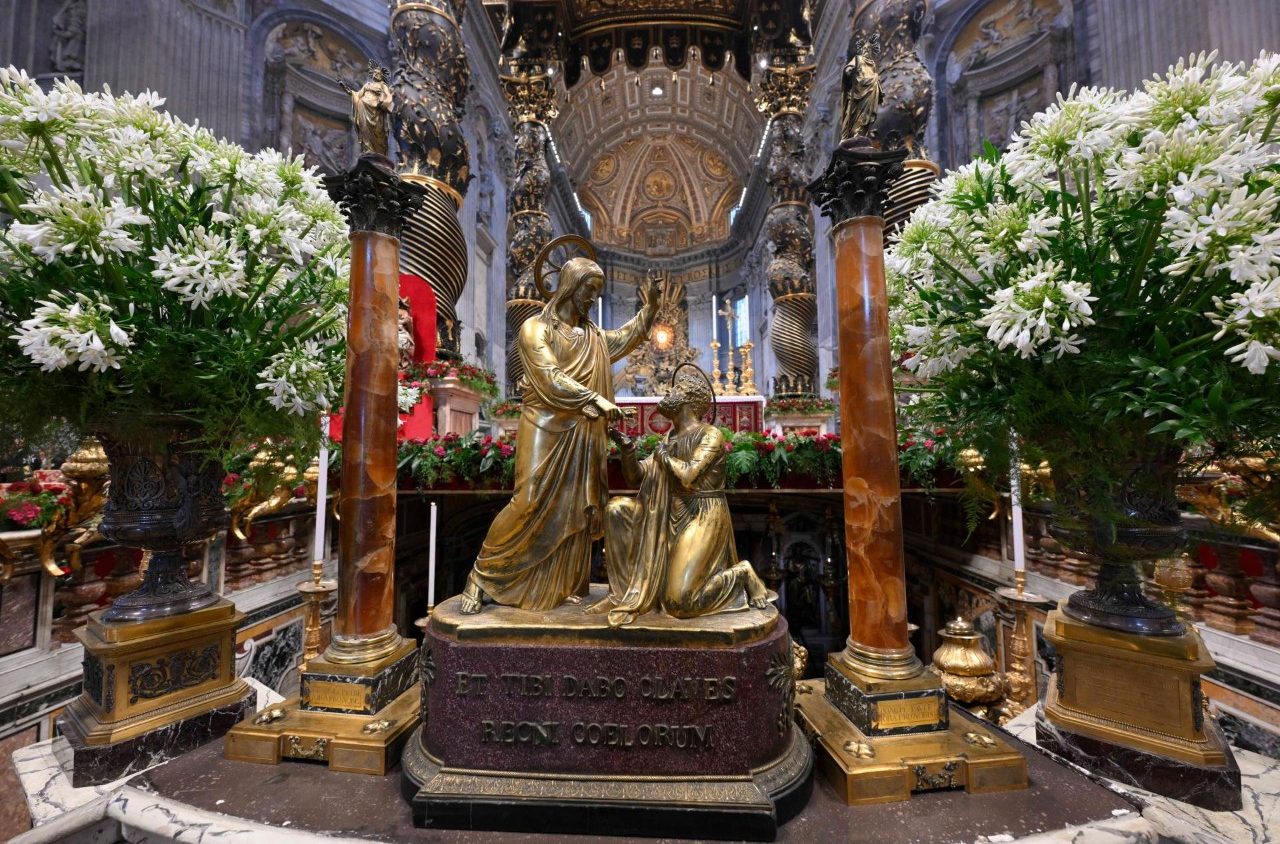
In his homily, Leo XIV placed at the centre the two saints being celebrated: “One was chosen by Jesus as shepherd of his flock, and the other as apostle to the Gentiles. In them, we venerate two pillars of the Church.” Speaking of Peter, the Pope focused particularly on his vocation to unity, while stressing that “this magnanimity does not mean that Peter is perfect”. The Apostle denied the Master during the Passion and was rebuked by Paul for the inconsistency of some of his actions. Yet he “knows how to acknowledge his mistakes and repent, without becoming discouraged and without failing in his mission”. The Pope devoted particular attention to the image of the keys, traditionally associated with Peter. “A key does not break down doors; rather, it opens and closes them,” he observed, “thereby joining rooms together and transforming many isolated spaces into one welcoming home”. From this came the passage which most clearly captured his teaching on unity: “Communion within the Church is not built by clinging rigidly to one’s own position, but by seeking, in all hearts, points of encounter in the Truth.” The mission entrusted to Peter and his successors, he added, is “to listen, with his help, to the voice of each person; to discern inspirations; to guide the way; to correct errors; to instruct, encourage, exhort and accompany our brothers and sisters”. Turning to Paul, Leo XIV recalled the Apostle’s symbols of the book and the sword, both linked to the power of the Word of God, “living and active, sharper than any two-edged sword”. Citing Saint Augustine, he described Paul’s conversion: “God took the persecutor of the Church and made him a messenger of peace.”
It was in this context that the Pope explained the meaning of the rite celebrated on this solemn day. The white woollen bands, he said, “express the commitment of every Shepherd - and also of every Christian - to take upon their shoulders the brothers and sisters entrusted to them, like so many lambs of the Lord’s flock, and to sacrifice their energy, time, effort and even their lives for them”.
The ecumenical dimension
As is customary on the Solemnity of Saints Peter and Paul, the celebration was attended by a delegation from the Ecumenical Patriarchate of Constantinople, sent by Patriarch Bartholomew and led by Emmanuel, Metropolitan of Chalcedon. Leo XIV extended cordial greetings to the delegation. The exchange of delegations between Rome and Constantinople - with the Holy See sending its own delegation to Istanbul for the feast of Saint Andrew on 30 November - remains one of the most enduring signs of the journey towards communion between the two Churches. Peter and Paul, the Pope concluded, point the way: the way of communion “in the footsteps of the Saviour”.
fr.R.W.
Silere non possum