Vatican City - For months, Andrea Tornielli has been waging his own private war over copyright, using it above all to make life difficult for those who report on what goes on inside the Dicastery for Communication. Yet while he was busy keeping a close watch on other people’s photographs, video stills and publications, someone in his offices appears to have overlooked the rights attached to material used in the documentary Leo in Rome.
The result is farcical. YouTube has blocked the film following a copyright claim by Rai. The Vatican News page now carries the message: “Video unavailable. This video contains content claimed by Rai.”
The documentary, released on 1 July 2026, was produced by the Editorial Directorate of the Dicastery for Communication. One of its authors is Salvatore Cernuzio, once Tornielli’s protégé at La Stampa’s Vatican Insider, who later joined the Vatican media under his leadership.
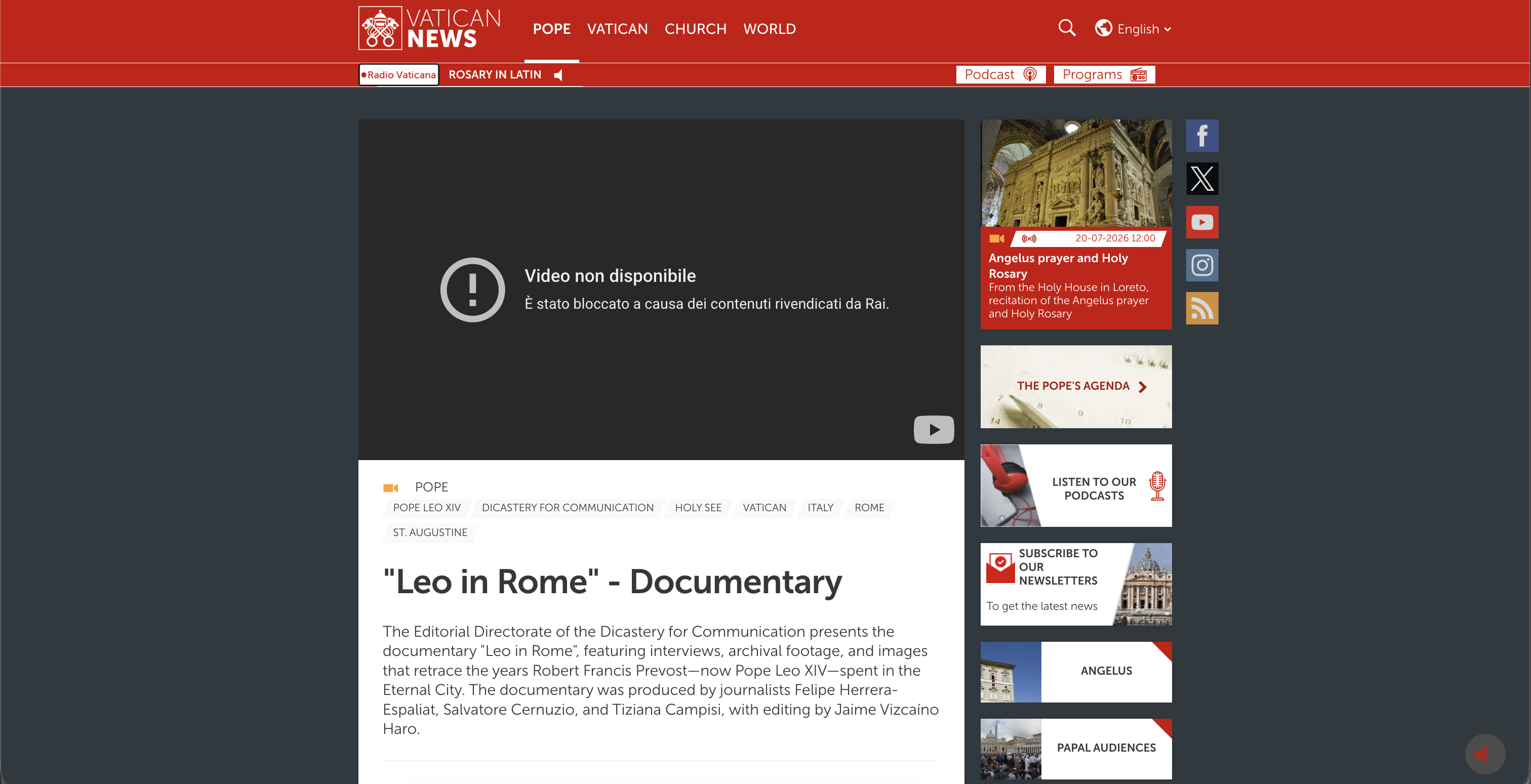
The spectacle is worth considering. An outlet that describes itself as “the Pope’s news organisation”, serves as the media voice of an entire state and receives substantial funding publishes material about the Pontiff, only to have it blocked because Italy’s public broadcaster claims rights over the content. At Palazzo Pio, copyright appears to obey a theology of its own: it becomes an inflexible dogma when it can be used against anyone who is not aligned, allied or obedient, but an optional rule when loyalists are involved. And when they themselves are expected to observe it, it is quietly absorbed into the boundless realms of mercy.
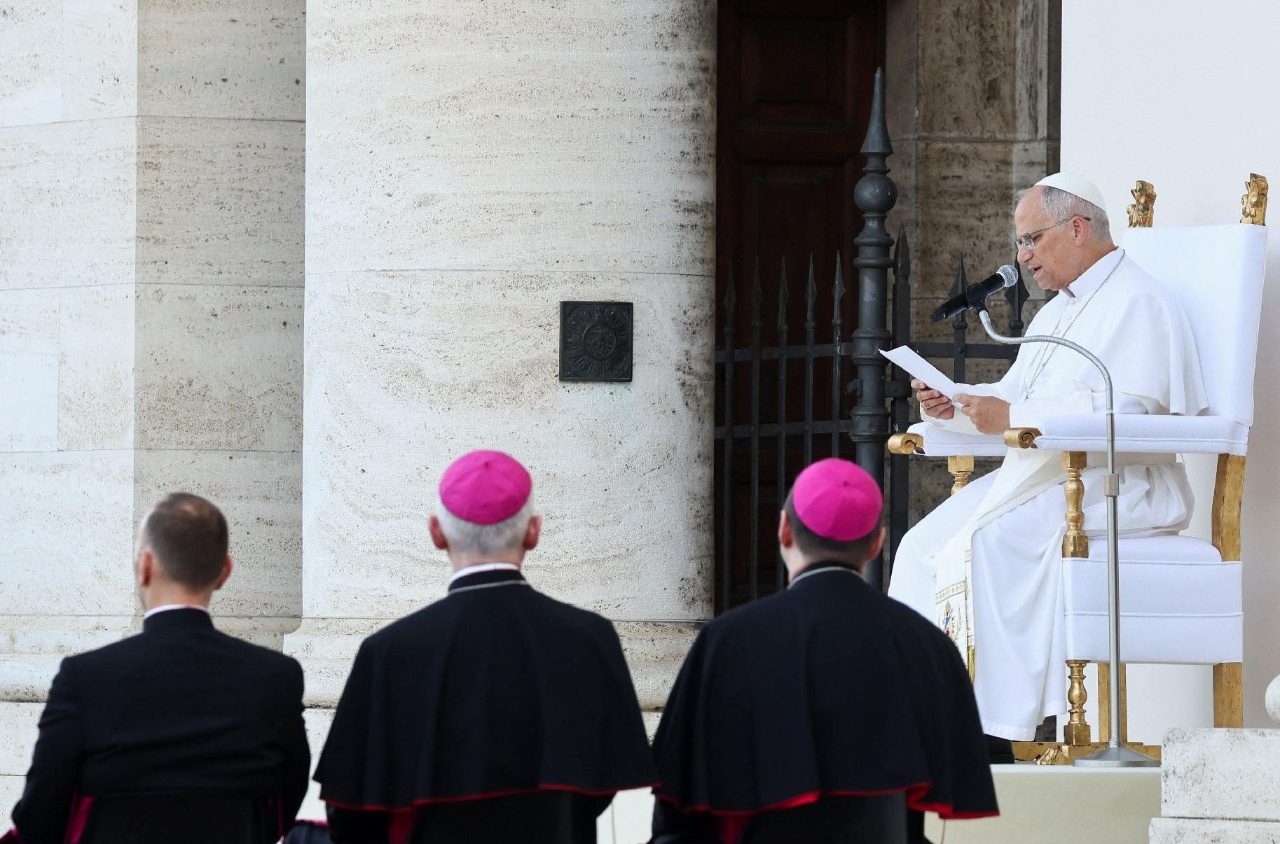
Leo in Rome looks back at the years Robert Francis Prevost spent in the Italian capital before his election on 8 May 2025. It is the third documentary produced by the Vatican media about the new Pontiff, after those devoted to Peru and Chicago. The project was a hurried attempt to recover lost ground after Leo XIV’s election caught the media system built around Francis unprepared. This prompted a race to collect testimonies, photographs, memories and anecdotes about the new Pope, presented as journalism but packaged with an unmistakably celebratory purpose.
Tornielli was appointed editorial director of the Dicastery by Pope Francis in December 2018, leaving La Stampa, where he had overseen Vatican Insider. Under Francis, the system could rely on well-established access, contacts and personal relationships. Under Leo XIV, the door of the Apostolic Palace has evidently become rather less familiar. The documentary therefore seemed the quickest way to establish credibility with the new Pontiff and recover the closeness that had been lost.
The project, however, ran up against Prevost’s evident lack of interest in such manoeuvres. Now Rai’s copyright claim has been added to the list. It is a humiliating episode for the Dicastery and its editorial leadership and, inevitably, it damages the image of the Pope, whose name is being used for productions that should at least be prepared with a basic degree of professionalism.
The lesson is simple: before declaring war on others in the name of copyright, it would be wise to check that the necessary permissions have been secured for one’s own documentaries. Otherwise, pontifical communications risk turning into a parody. And this time no independent newspaper was needed to expose it. YouTube was enough.
V.L.
Silere non possum