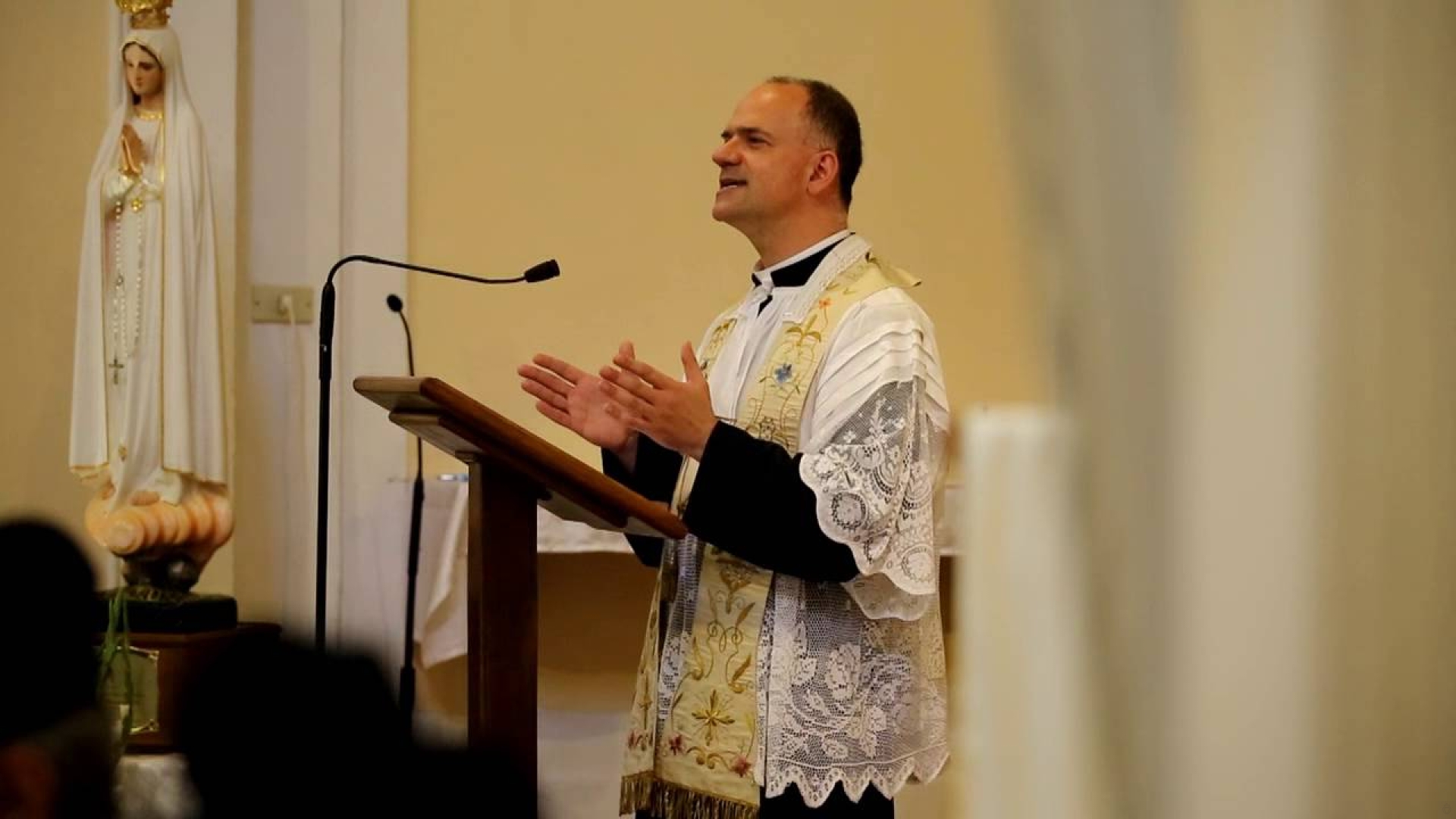
Vatican City - Less than twenty-four hours after the exceptionally severe statement issued by the Dicastery for the Doctrine of the Faith, the Priestly Society of Saint Pius X has broken its silence. Fr Davide Pagliarani, Superior General of the institution founded by Archbishop Marcel Lefebvre, today - the Feast of the Ascension - addressed a Declaration of Catholic Faith to Pope Leo XIV, signed in Menzingen, the Society’s Swiss headquarters. The text comes as an indirect, but unmistakable, response to the communiqué in which Cardinal Víctor Manuel Fernández, Prefect of the Dicastery for the Doctrine of the Faith, warned yesterday that the episcopal consecrations announced by the SSPX for 1 July would constitute “a schismatic act” entailing latae sententiae excommunication.
Fernández’s warning of 13 May
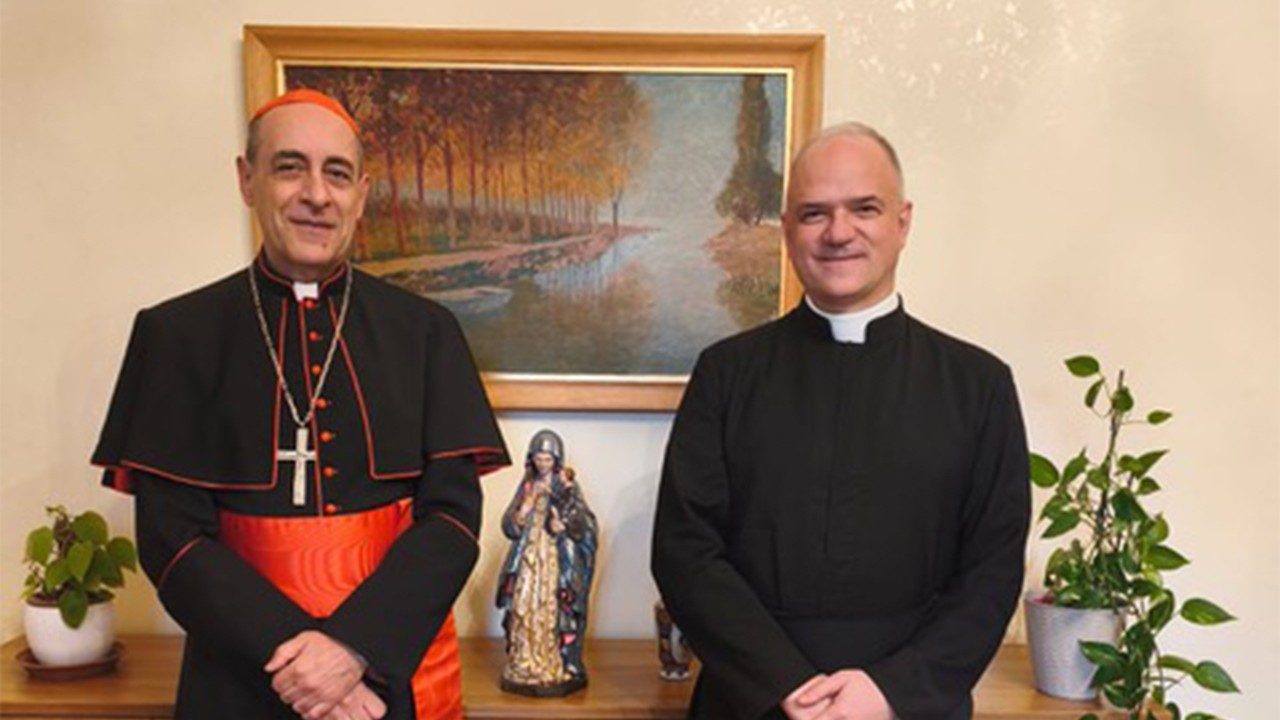
In the note released on Wednesday by the Holy See Press Office, the DDF Prefect was blunt: “The episcopal ordinations announced by the Priestly Fraternity of Saint Pius X do not have the requisite papal mandate. This act will constitute ‘a schismatic act’ (John Paul II, Ecclesia Dei, no. 3) and ‘formal adherence to the schism constitutes a grave offence against God and entails the excommunication established under Church law’ (ibid., 5c; cf. Pontifical Council for Legislative Texts, Explanatory Note, 24 August 1996).” The Argentine cardinal added that “the Holy Father continues in his prayers to ask the Holy Spirit to enlighten those responsible for the Priestly Fraternity of Saint Pius X so that they may reconsider the extremely grave decision they have taken.”
The statement follows the SSPX’s refusal to suspend the ordinations as a preliminary condition for resuming doctrinal talks, after the Society’s General Council had made it known that it saw “no possibility of reaching an agreement with the Holy See to restore communion with Rome”.
Pagliarani’s response: a profession of faith, not an act of submission
The document signed today by Fr Pagliarani does not yield an inch on the juridical point - the consecrations planned for 1 July - and instead chooses the doctrinal terrain. From its opening lines, the tone is one of filial but unyielding grievance: “For more than fifty years, the Society of Saint Pius X has endeavoured to set before the Holy See a matter of conscience in the face of the errors that are destroying Catholic faith and morals. Regrettably, all the discussions entered into have remained without result, and none of the concerns expressed have received any truly satisfactory response.”
It continues, with a direct accusation - though without naming it - against the Dicastery’s modus operandi: “For more than fifty years, the only solution truly considered by the Holy See has appeared to be that of canonical sanctions. To our great regret, it seems to us that canon law is thus being used, not to confirm in the faith, but to lead away from it.” The Society presents its text as “the minimum indispensable to be in communion with the Church, and to truly call ourselves Catholics and, consequently, your sons”.
The contents of the Declaration
The body of the document is a survey of theses reflecting the Society’s traditional anti-conciliar framework. It states that “there is only one Faith and one Church by which we may be saved. Outside the Roman Catholic Church, and without the profession of Faith that she has always taught, there is neither salvation nor remission of sins”, and that “the Catholic Church can in no way be regarded or treated on an equal footing with a false form of worship or a false church” - an evident attack on the conciliar hermeneutic concerning ecumenism and religious freedom.
Particularly significant is the passage on Petrine primacy, cited precisely from the First Vatican Council: “The Holy Ghost was not promised to the successors of Peter that they might make known, by His revelation, a new doctrine, but that, by His assistance, they might inviolably keep and faithfully expound the revelation transmitted by the Apostles, that is, the Deposit of the Faith.” It is a quotation from Pastor Aeternus which, in the logic of the text, would bind the reigning Pontiff himself. As for the liturgy, the Declaration reaffirms the “Tridentine” reading of the Sacrifice of the Mass, ruling out any reduction of it “to a mere commemoration, to a spiritual meal, to a sacred assembly celebrated by the people, to the celebration of the Paschal mystery without sacrifice, without satisfaction of divine justice, without expiation of sins, without propitiation, and without the Cross”. Nor are there any shortage of attacks on the hot-button issues of the previous pontificate: against Fiducia supplicans and any blessing of homosexual couples, against the secularism of institutions, and against any ethic founded “on respect for creation or on the rights of the human person”, deemed “radically insufficient”. The conclusion is unequivocal: “With the help of Our Lord, we would rather die than renounce them.”
The real issue: obedience, not doctrine
This is the point that the theologically polished pages of the Declaration do not touch. However elaborate it may be, however faithful to the language of pre-conciliar catechisms, Fr Pagliarani’s profession of faith does not resolve - indeed, it sidesteps -the concrete problem raised by Cardinal Fernández. That problem is not doctrinal; it is canonical and disciplinary: can four bishops be consecrated without a pontifical mandate? The Church’s answer, since 1988, has been no. Canon law is clear: canon 1382, now renumbered as canon 1387 in the reformed Code, provides that “a bishop who consecrates someone a bishop without a pontifical mandate, and likewise the person who receives the consecration from him, incurs a latae sententiae excommunication reserved to the Apostolic See”. Latae sententiae means automatic, ipso facto, without the need for a declaratory decree, even though such a decree - as happened on 1 July 1988 with Cardinal Gantin against Lefebvre - may still be promulgated for the public good.
The issue, then, is simple and dramatic: the SSPX may write all the declarations of faith it wishes, may cite Pastor Aeternus, Saint Paul, the Roman Pontifical and Saint John the Baptist. It may proclaim itself “Roman Catholic” as many times as it deems necessary. But the objective criterion of communion with the Catholic Church does not pass through self-proclamation: it passes through obedience to the Roman Pontiff. The Society itself, moreover, recalls this in its Declaration: “The Roman Pontiff, the Vicar of Christ, is the sole possessor of supreme authority over the whole Church. He alone directly confers on the other members of the Catholic hierarchy jurisdiction over souls.” A perfectly orthodox statement. Yet it collides head-on with the material act the Society is preparing to carry out on 1 July: ordaining bishops without, and against, the will of that same Roman Pontiff whose supreme authority it recognises - in words.
The Council is not the problem: its application is
The substantial rejection of the Second Vatican Council that emerges line after line from the Declaration of Menzingen is, in itself, extremely grave. An ecumenical council, convened by the Pope and with the Pope, is an act of the Church’s magisterium, not one opinion among many which a Catholic may accept or reject according to conscience. Yet this is precisely where the Society of Saint Pius X reveals the fundamental flaw in its position: it confuses the Council with its application, indeed with its distorted applications.
On these pages too, on many occasions, we have expressed precise concerns and criticisms regarding choices made during the pontificate of Pope Francis - from Fiducia supplicans to the ambiguities of Amoris laetitia, and this synodal process - as well as the conduct of bishops and episcopal conferences which, even today, seem to interpret pastorality as a dispensation from doctrine. But these, it must be said just as clearly, are not the Council. They are - to use the clear formulation Joseph Ratzinger gave to the Curia in his celebrated address of 22 December 2005 - the poisoned fruits of a “hermeneutic of discontinuity and rupture”, set against that “hermeneutic of reform in continuity” which is the only Catholic key for reading Vatican II.
Ratzinger said it without circumlocution: the damage of the post-conciliar period does not come from the conciliar texts, but from an ideological reading of them, from a “spirit of the Council” manufactured at a desk against the letter of the documents. Lefebvre responded to one deviation with another deviation, equal and opposite: instead of calling for the correct interpretation of the texts, he challenged their legitimacy at the root. Instead of fighting those who apply them badly, he fought what - if applied properly - belongs to the binding patrimony of the whole Church. It is a shortcut that solves nothing and, indeed, provides an alibi for precisely those abuses denounced by the Society: because as long as someone rejects the Council in toto, it will always be easier for those who betray it from within to present themselves as the only “moderate” alternative. The Catholic wounded by the confusion of recent years does not need to choose between two ruptures. He needs Peter, the conciliar texts read in continuity with Tradition, and pastors who apply them as they are - not as someone has rewritten them, and not as someone else has rejected them.
What will happen on 1 July
Leo XIV intends to follow what happened in 1988, and a decree analogous in tone and content to the one promulgated by Saint John Paul II through Cardinal Gantin is already ready. Fernández’s note yesterday is, in effect, its formal announcement. If the consecrations take place as planned, therefore, the consecrating prelate and the four men consecrated will automatically incur latae sententiae excommunication. Under the explicit provisions of Ecclesia Dei and the 1996 Explanatory Note of the Pontifical Council for Legislative Texts, “formal adherence” to the schism will entail the same penalty also for priests and faithful who knowingly adhere to it.
The Declaration of Menzingen, in this context, looks very much like an identity platform prepared in view of the rupture: a document to be brandished as a banner after 1 July, in order to say to the traditional Catholic world: “You see, we are the true Catholics; Rome is the one that has erred.” But the judgement on the catholicity of a community is not issued by that community about itself. It is issued by Peter. And Peter - who today is called Leo XIV - has already spoken through the mouth of his Prefect. There remains the time for prayer, as the Holy Father asks, that those responsible for the Society may “reconsider”. But there also remains, firm and non-negotiable, the rule that the SSPX itself recognises in its own documents: without obedience to the Vicar of Christ, no profession of faith, however solemn, is sufficient to preserve communion with the Church of Christ.
fr.N.M.
Silere non possum