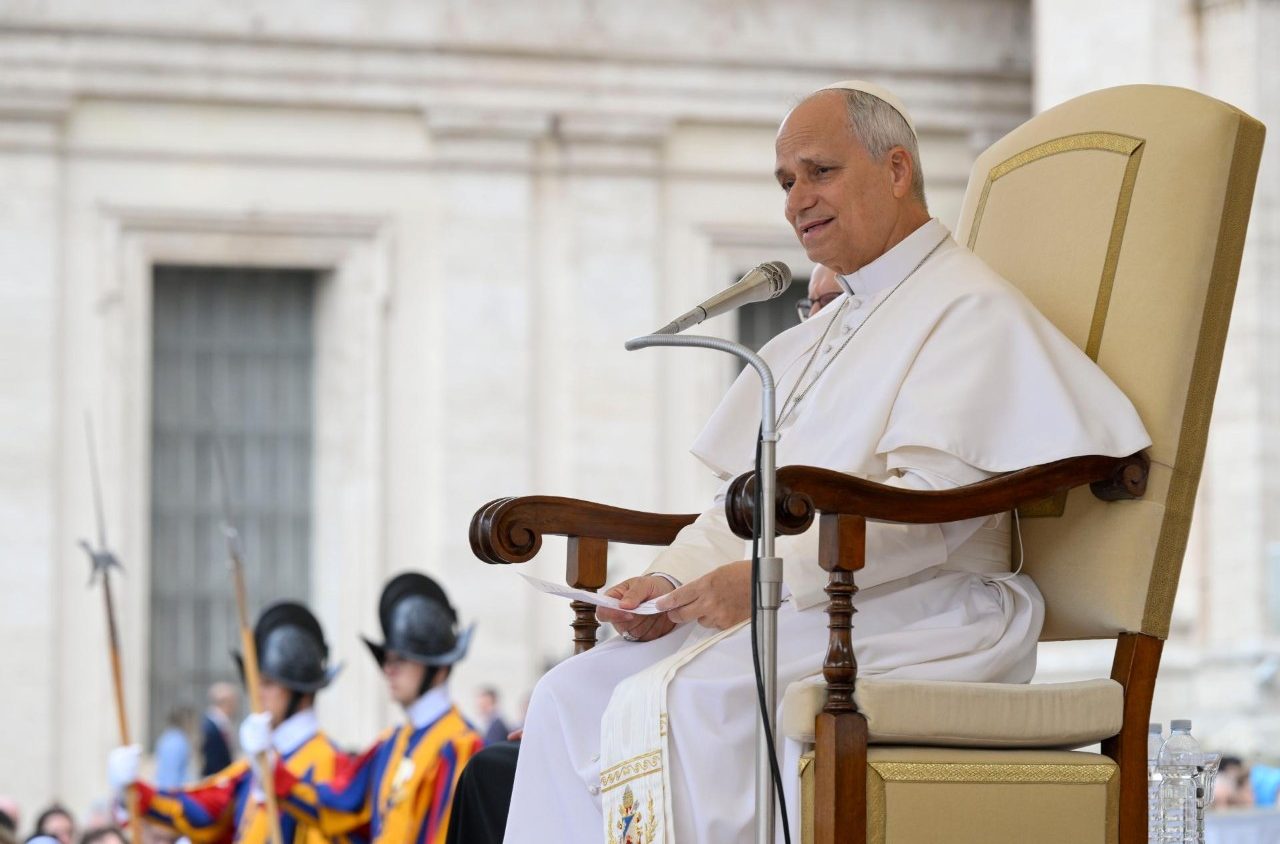
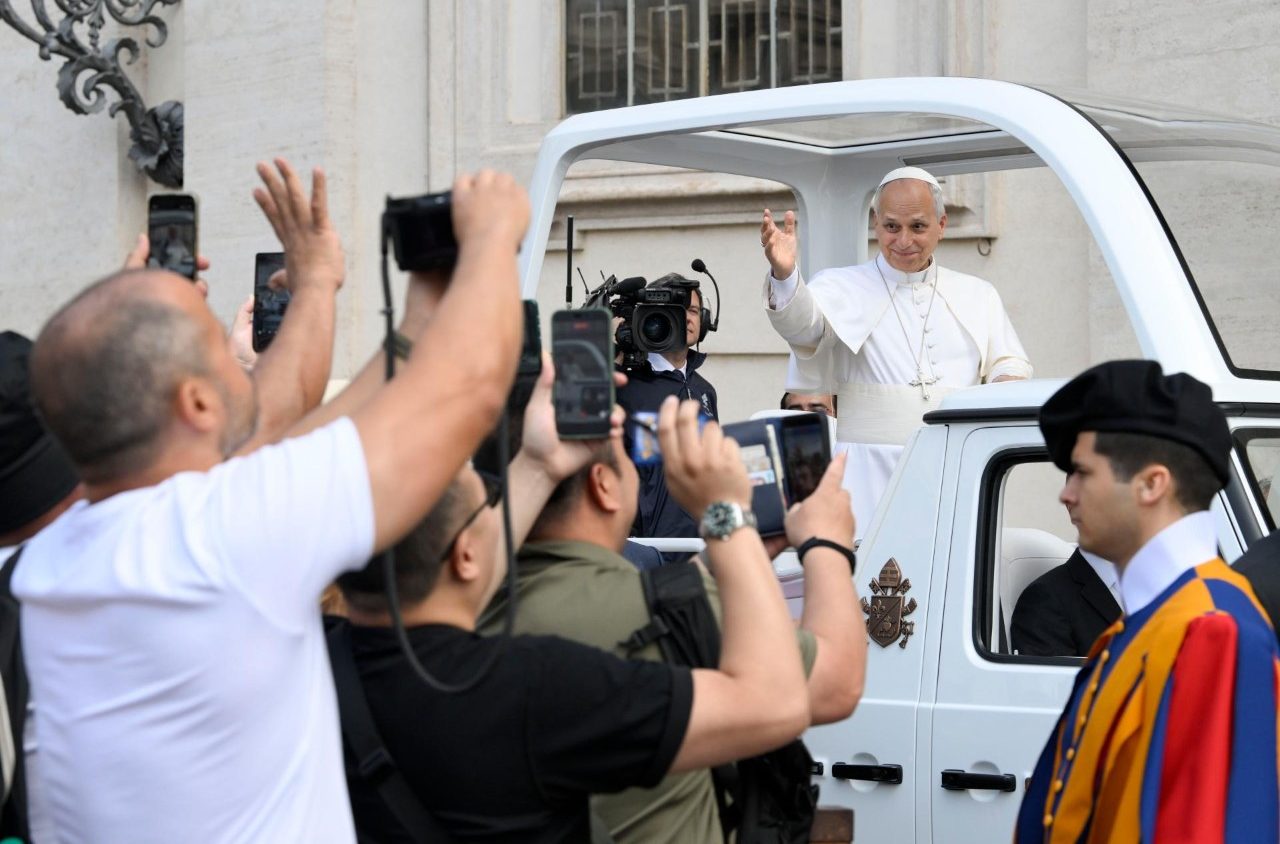
Vatican City - The General Audience was held this morning at 10.00 a.m. in Saint Peter’s Square, during which the Pontiff continued the cycle of catecheses dedicated to the Documents of the Second Vatican Council, and in particular the second series, begun in recent weeks, concerning the Constitution on the Sacred Liturgy, Sacrosanctum Concilium.
It was Leo XIV himself who opened this theme on 20 May, with an initial meditation on the liturgy in the mystery of the Church, recalling that in the celebration “the work of our redemption is accomplished” and that it is both “the summit toward which the activity of the Church is directed and the font from which all her power flows”. On 27 May there followed a reflection on liturgical reform understood as tradition and development, summed up in the conciliar formula of preserving sound tradition while opening the way to legitimate progress, with a very clear exhortation to priests to safeguard respect for liturgical texts and norms, avoiding adding, removing or changing anything on their own initiative.
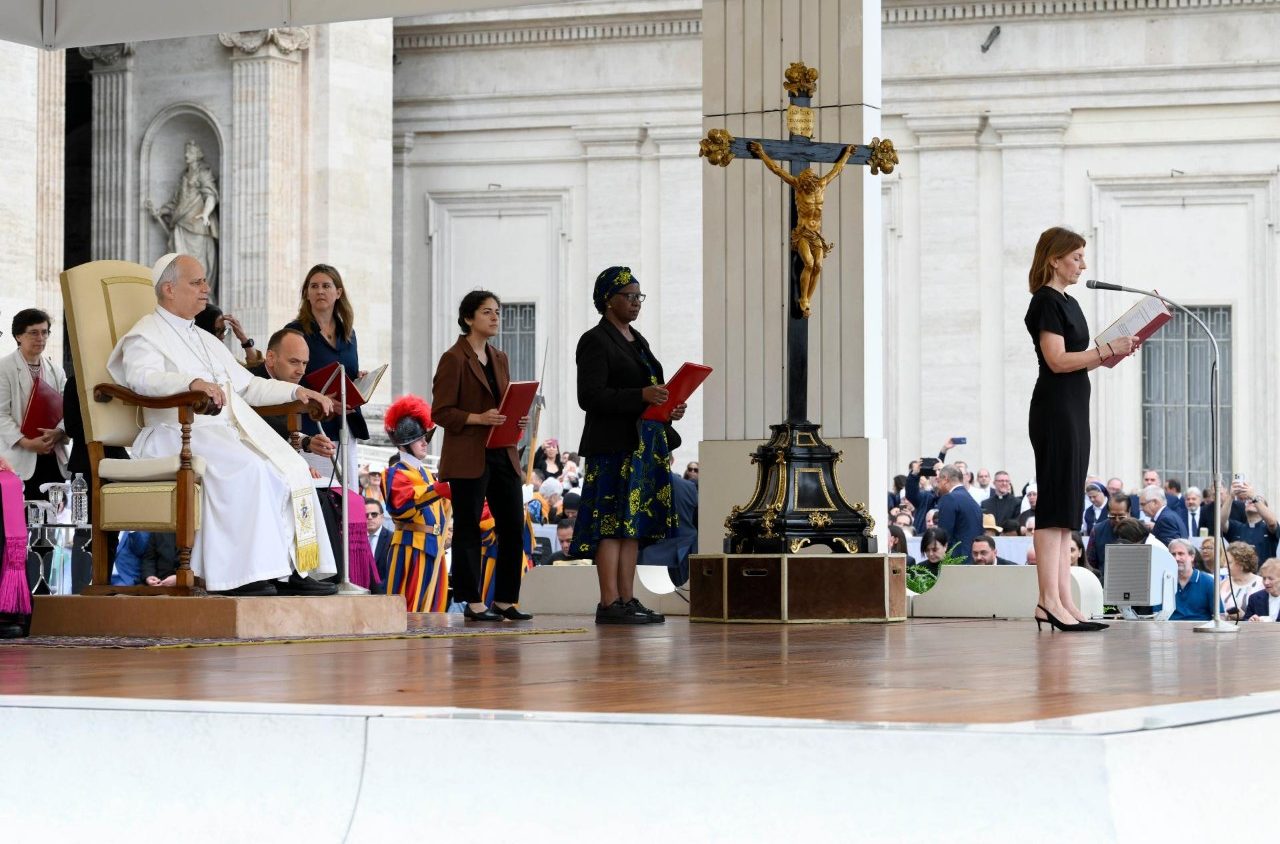
Today’s catechesis added a third element, entitled “Rite, sign and symbol”, introduced by the reading of the passage of Emmaus (Lk 24:28-31). The Pope invited those present to dwell on several constitutive elements of the sacred liturgy, recovering a truth which the Council, drawing on the work of the Liturgical Movement, helped the Church to rediscover: Christian rites are not an external covering of the sacramental mystery, nor a set of arbitrary ceremonies, but the ecclesial mediation through which the divine gift reaches man. The rite, he explained, gives shape to liturgical action and, through it, to the very life of the believer, provided that he does not remain a mute and detached spectator, but participates in it with his whole self: body, mind and heart.
Particularly effective was the passage in which Leo XIV contrasted the logic of the rite with our individual inclination towards spontaneity. Far from confining freedom within rigid patterns, he observed, the solemn sobriety of its rhythms interrupts frenetic activity and leads us back to what is essential: in the rite one experiences “a logic of gratuitousness”, a pause which regenerates the heart and teaches us to live in a time inhabited by the Holy Spirit, freed from calculations of productivity.
The Pontiff then distinguished, with precision, between sign and symbol — terms often used as synonyms. A sign, he explained, becomes symbolic when it points not simply to an idea, but to an entire system of meanings and values: thus the sprinkling with holy water rekindles awareness of the baptismal gift and of adherence to new life in Christ. Emblematic in this sense is the sign of water, traced from the origins of creation to the pierced side of the Crucified One. Symbols, he added, are eminently practical in character, since they are first and foremost actions — from kneeling to exchanging the sign of peace, through to the constitutive acts of the Sacraments — and possess a singular performative and transformative dimension, capable of generating belonging and authentic ecclesial relationships.
At the close of his meditation, taking up Pope Francis’ Desiderio desideravi and, with it, an intuition of Romano Guardini, Leo XIV identified as the first task of liturgical formation the need to make man “once again capable of symbols”. Hence the appeal to care for the beauty of celebrations with a delicate touch and without arbitrariness, and to commit oneself to an authentic mystagogy: the experience of a living and devout liturgy remains the best resource for reawakening that openness to the encounter with God which, in the logic of the Incarnation, involves the whole person: spirit, soul and body.
After the summary in the various languages, the Holy Father greeted the different groups present. Addressing the English-speaking pilgrims and visitors, he mentioned in particular those from England, Sweden, Australia, Indonesia, Myanmar, the Philippines, South Korea, Canada and the United States of America. He also greeted the scholars and participants in the conference “Revising the World Medical Association Declaration of Taipei”, together with the organising partners of the Global Summit “Fostering Hope for Children”. As the Church prepares for the Solemnity of the Most Holy Body and Blood of Christ, the Pope invited them to be strengthened by this divine gift and to become witnesses of Christ’s love to all those they encounter.
The Holy Father then addressed the Italian faithful, the young, the sick and newlyweds, recalling the forthcoming Solemnity of the Most Holy Body and Blood of Christ, which here in the Vatican will be celebrated tomorrow. In the Eucharist, he said, we contemplate Jesus, bread broken and given for each person; and he encouraged them to keep alive the public witness of faith expressed by processions with the Blessed Sacrament, which in these days animate the streets of many towns.
s.R.V.
Silere non possum