Riga - It took just four days for Latvia to move from a security incident on its eastern border to a full-blown government crisis. On Thursday 14 May 2026, Prime Minister Evika Siliņa announced her resignation and that of the entire Council of Ministers, bringing an end to a three-party coalition which had already effectively fallen apart the day before. For a country bordering both Russia and Belarus, the timing could hardly have been more delicate.
The trigger came from the sky
In the preceding days, several Ukrainian drones - apparently diverted by Russian electronic warfare while heading towards targets on Russian territory - entered Latvian airspace. Two of them crashed into an oil depot in Rēzekne, in the eastern region of Latgale, damaging an empty tank. What mattered was not the material damage, which was almost symbolic, but the failure to respond: there was no attempt to shoot down the aircraft, and the air-raid sirens sounded only after the impact. According to a NATO centre, the drones were probably guided by artificial intelligence and may have selected the target autonomously after their navigation systems were disrupted. It would be one of the first documented cases of an autonomous weapon deciding where to strike.
The dismissal that brought everything down
The real crisis was triggered by the domestic reaction. On 10 May, Siliņa dismissed Defence Minister Andris Sprūds, of The Progressives party, arguing that the incidents showed a failure to ensure “safe skies”. The move came almost at the same time as the minister’s own resignation: behind the scenes, it became a race over who would make the announcement first. The Progressives regarded it as a rupture, not least because Siliņa intended to replace Sprūds not with one of their representatives but with a non-party professional soldier, Colonel Raivis Melnis. The withdrawal of support on Wednesday 13 May left the Prime Minister’s party, New Unity, and the remaining coalition partner - the Union of Greens and Farmers - without a majority.
The race against procedure
The final act also had a procedural dimension. The opposition sought to bring down Siliņa by circumventing the rule requiring a five-day waiting period between a motion and a vote. On Thursday morning, at the Prime Minister’s request, the sitting of the Saeima was suspended for an hour without any official explanation. It was during that window that Siliņa resigned, pre-empting parliament. “I am resigning, but I am not giving up,” she said, accusing “political jealousy and narrow party interests” of having prevailed over responsibility.
What happens now
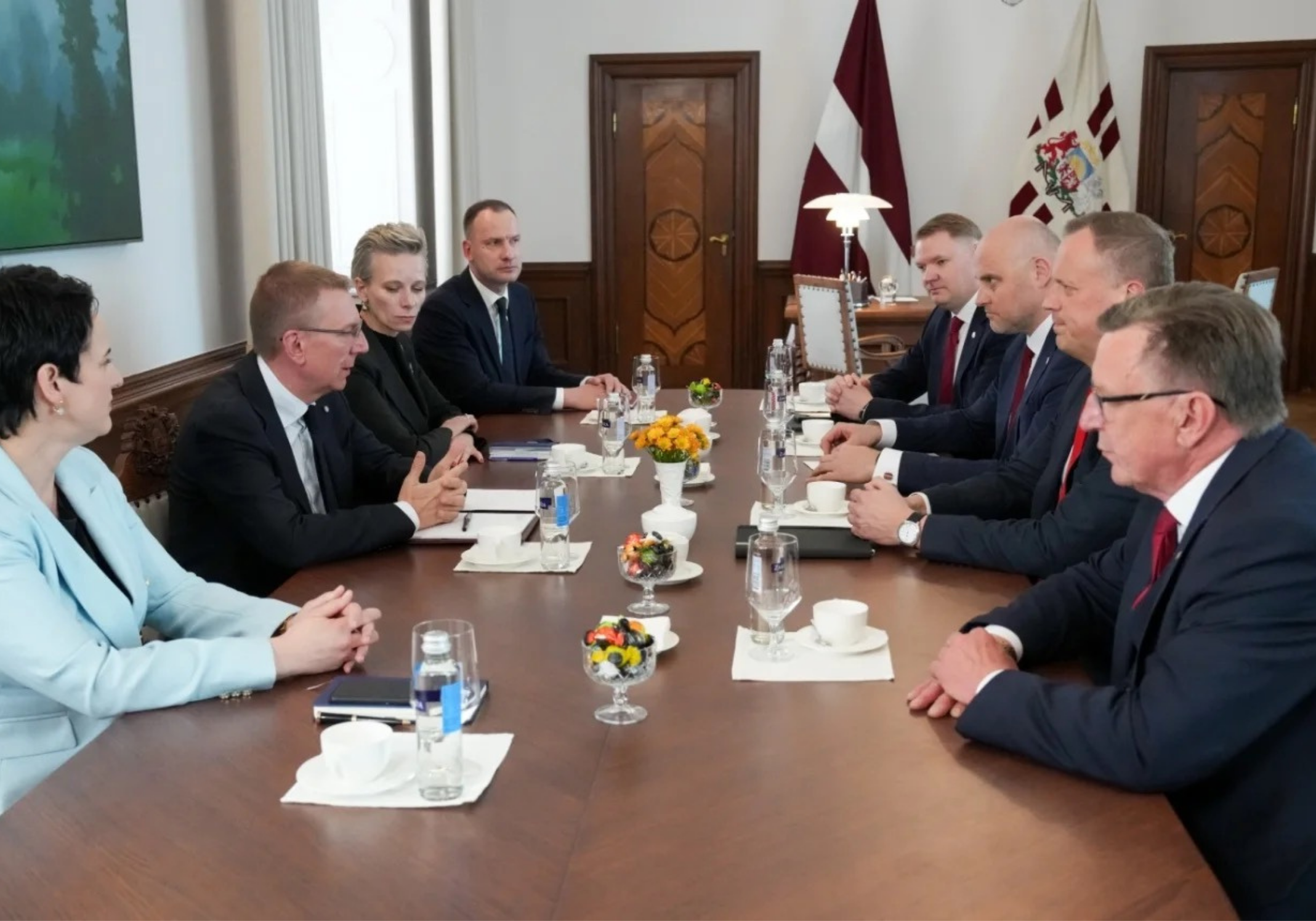
The country is not left without leadership: the cabinet will continue as a caretaker government handling current affairs until a new executive is formed. President Edgars Rinkēvičs has already consulted the parties and, on Saturday at Riga Castle, Andris Kulbergs of the United List was nominated as candidate for Prime Minister. The backdrop, however, is already electoral: the vote was scheduled for October, and the collapse has effectively brought the campaign forward. Polls put the right-wing populist party “Latvia First” in first place on 14-15% - enough, in such a fragmented system, to shape any future negotiations. The paradox remains: one of Europe’s most exposed democracies is without a fully operational government, just as the war beyond its border continues to redraw the continent’s security map.
D.V.
Silere non possum