Rome – “Civilly remarried divorced couples in a second union may receive Communion in church only if they do not engage in sexual relations.” With this clear and unambiguous statement, Cardinal Willem Jacobus Eijk,Metropolitan Archbishop of Utrecht, answered journalists’ questions during the presentation of his book El vínculo del amor. Matrimonio y ética sexual, held this afternoon at the Pontifical Athenaeum Regina Apostolorum.
The prelate addressed with precision what he called “a difficulty often debated today”: the issue of divorced and remarried persons and their possibility of accessing the Eucharist. “In paragraph 84 of Familiaris Consortio by Saint John Paul II, it is said that in such cases one should live without sexual relations,” Eijk recalled.
“Why? Because a civil marriage is not a regular bond, it is not a valid marriage if the bond of the first sacramental marriage is still valid. That is the issue,” he explained, referring to the Magisterium of John Paul II and to the Catholic doctrine on the indissoluble sacramental bond.
The cardinal then highlighted the theological dimension of the topic, which cannot be reduced to a merely disciplinary or pastoral matter. “There are people who live in this situation but go to church and also want to receive the sacraments. This, of course, is difficult. Christ gives Himself totally to us in the sacrament of the Eucharist, and on our part, there must also be a total self-giving to Him. And if this is lacking in marriage, Communion cannot be received,” he stated, reaffirming the profound link between the Eucharist and the sacrament of marriage.
While reaffirming the need for sacramental coherence, the cardinal made it clear that the Church does not exclude those who find themselves in such situations.
“Of course, people living in such relationships are very welcome in the Church, absolutely. They can take part in our liturgies and also in our charitable activities. But they cannot receive Communion for the reason I have explained,” he declared, emphasizing that welcome does not mean an absolute right to receive a sacrament.
Eijk also described the pastoral practice adopted in his particular Church: “In the Netherlands, we do this: these people may also come to the priest during the Eucharistic celebration, but with their arms crossed over their chest, and they may receive a blessing. I must say that, in many cases, this works. It helps soothe the sense of exclusion; it seems to be a satisfying solution: we too can approach the priest, we can come forward during the Eucharist like the others, we don’t have to remain seated, but we can come and receive a blessing.”
The cardinal stressed that this practice is not new, but is rooted in the tradition of the Church: “We have always blessed sinners in the Church. This would be my solution,” concluded the Archbishop of Utrecht, revealing a balance between doctrinal rigor and pastoral sensitivity.
With this intervention, Cardinal Eijk reaffirmed a line of theological clarity which—while avoiding any form of sterile rigidity—seeks to remain faithful to the sacramental coherence indicated by the Popes and by the constant Magisterium of the Church.
d.G.T.
Silere non possum
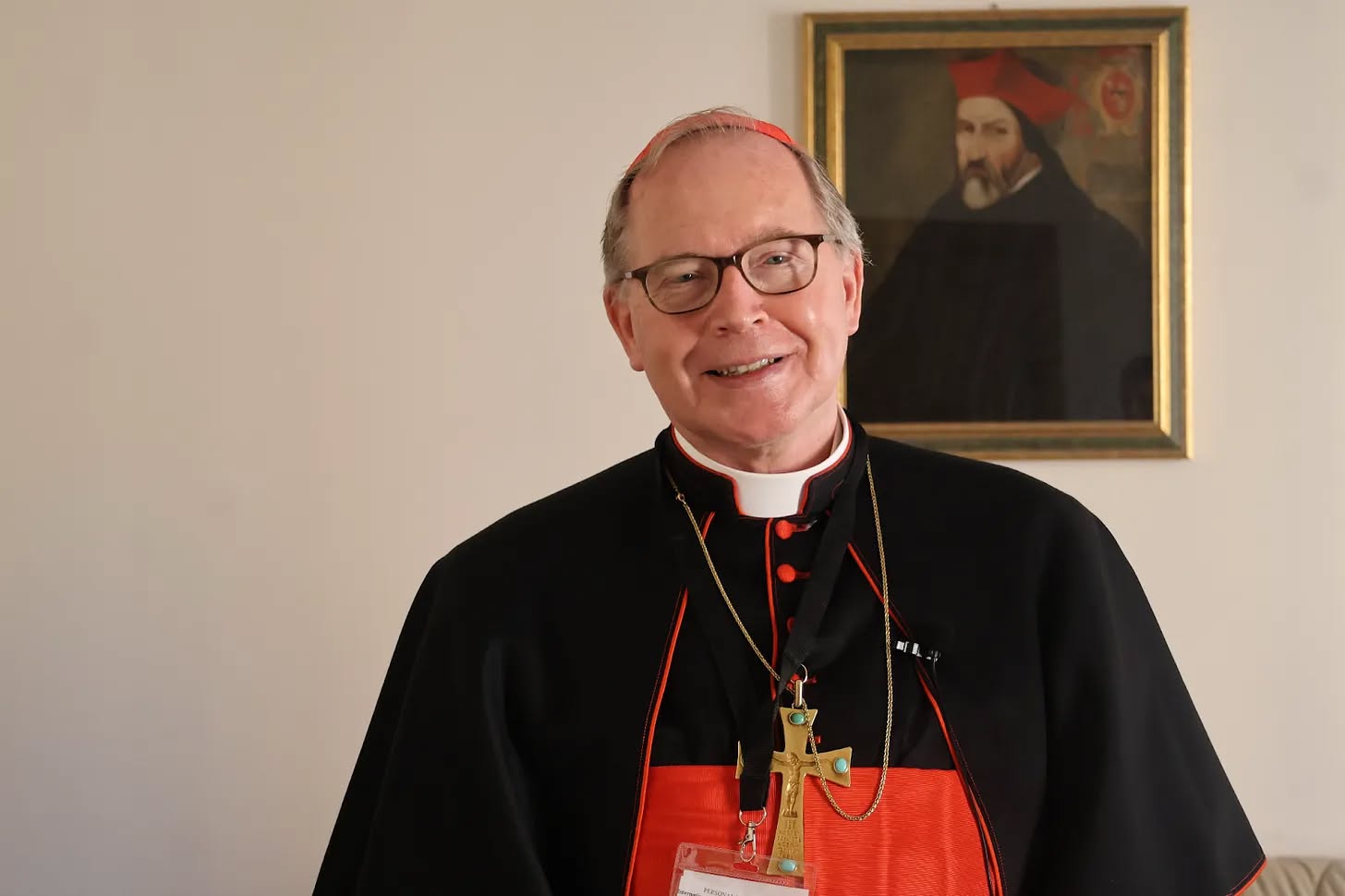
Cardinal Eijk: “Divorced and remarried persons may receive Communion only if they live in chastity.”
At the Pontifical Athenaeum Regina Apostolorum, the Archbishop of Utrecht reaffirmed the teaching of John Paul II’s Familiaris Consortio: “A civil marriage is not a valid bond if the first union remains in force. The Church welcomes everyone, but sacramental coherence cannot be ignored.”
SUPPORT SILERE NON POSSUM
If this article is online, it is also thanks to your support.
Silere non possum chooses to make most of its investigations and content freely accessible, because independent journalism must be able to reach everyone.
Supporting our work means allowing us to continue verifying, reporting and publishing what others would prefer to keep hidden.