

King Harald V of Norway, 89, has been in Oslo’s Rikshospitalet since the afternoon of Monday 17 August. Over the weekend, the Royal House said his condition had deteriorated: the King was given antibiotics after doctors diagnosed a bacterial infection in his bloodstream and, according to a statement released on Sunday evening, was responding to treatment. His initial two-week period of sick leave had already been extended on Friday 21 August, when the Palace announced that he would need to remain in hospital for longer than expected.
The hospital admission follows several weeks of corticosteroid treatment for haemolytic anaemia, a blood disorder. According to the Royal House, the treatment caused fluid to build up in his body, requiring hospital care. On 7 August, before being admitted, the King underwent a routine check-up at the Rikshospitalet, where he usually receives treatment.
What is haemolytic anaemia?
Haemolytic anaemia is a condition in which red blood cells have a shorter lifespan than normal and can result from a number of different underlying causes. The most common, Norwegian doctors explain, is an autoimmune reaction: the immune system produces antibodies that attach themselves to red blood cells and mark them for removal, taking them out of circulation prematurely. Symptoms include fatigue, drowsiness, heart palpitations, shortness of breath and dizziness.
Sigbjørn Berentsen, a retired haematologist who devoted his career to the study of blood disorders, said he considered himself a realist. The condition is serious, he explained, but based on the information currently available it remains treatable. Bjørn Tore Gjertsen, professor of blood diseases at Haukeland University Hospital in Bergen, said some patients recover after a single course of steroids, while others require repeated courses or alternative treatments. Geir Erland Tjønnfjord, professor emeritus and former head of department at the Rikshospitalet, said that the combination of haemolytic anaemia and fluid retention does not normally put a patient’s life at risk.
Finn Georg Wisløff, professor of haematology at the University of Oslo, was more cautious. Speaking to TV2, he described the King’s current condition as probably stable but serious, noting that he was responding to treatment but that doctors had not yet managed to reverse the course of the illness. According to Wisløff, the key question will be whether the bacterial infection has caused any organ damage.
His condition worsens over the weekend
Until Friday, the situation appeared to be under control, to the point that the Royal House had suggested the King might soon be discharged. The extension of his hospital stay, announced that day, led to the cancellation of his stop on the royal county tour: the visit to Rindal and Høylandet, in Trøndelag, scheduled for early September, will now be carried out by Queen Sonja alone. On Sunday evening came the news that his condition had worsened and that he had developed a bacterial infection in his bloodstream. On Monday afternoon, the Palace said there had been no substantial change in the King’s condition and that he remained stable.
Family members have visited him throughout his hospital stay. On Tuesday, Princess Astrid, the King’s 94-year-old elder sister, arrived at the hospital, followed shortly afterwards by his granddaughter Maud Angelica, the eldest daughter of Princess Märtha Louise. On Wednesday it was the turn of Crown Prince Haakon and his wife Mette-Marit. On Sunday, the King received visits from the Crown Prince and Crown Princess, Queen Sonja, Princess Ingrid Alexandra and Princess Astrid; on Monday, the Queen returned first, followed later by the Crown Prince.
A medical history spanning twenty years
The King has faced a series of health problems over the past two decades. In December 2003, Harald underwent surgery for bladder cancer. In April 2005, he had an operation on the valve between his heart and aorta, during which an artificial prosthetic valve was implanted; in October 2020, after a period of dizziness, the valve was replaced with a biological one. In August 2022, he was admitted to the Rikshospitalet with a fever and was discharged four days later after receiving intravenous antibiotics. In February 2024, while on a private holiday in Malaysia, an infection led to another hospital admission: he was fitted with a temporary pacemaker, which was replaced with a permanent one after he returned to Norway aboard an SAS medical evacuation aircraft. Last February, while on holiday in Tenerife with Queen Sonja, he was admitted to hospital with an infection and dehydration.
In April 2024, the Royal House had already announced a permanent reduction in the King’s public duties for age-related reasons. Harald, who came to the throne on 17 January 1991 following the death of his father Olav V, has never considered abdicating in the manner of his cousin Margrethe II of Denmark, who handed the throne to her son Frederik X in January 2024.
The regency and disrupted royal schedule
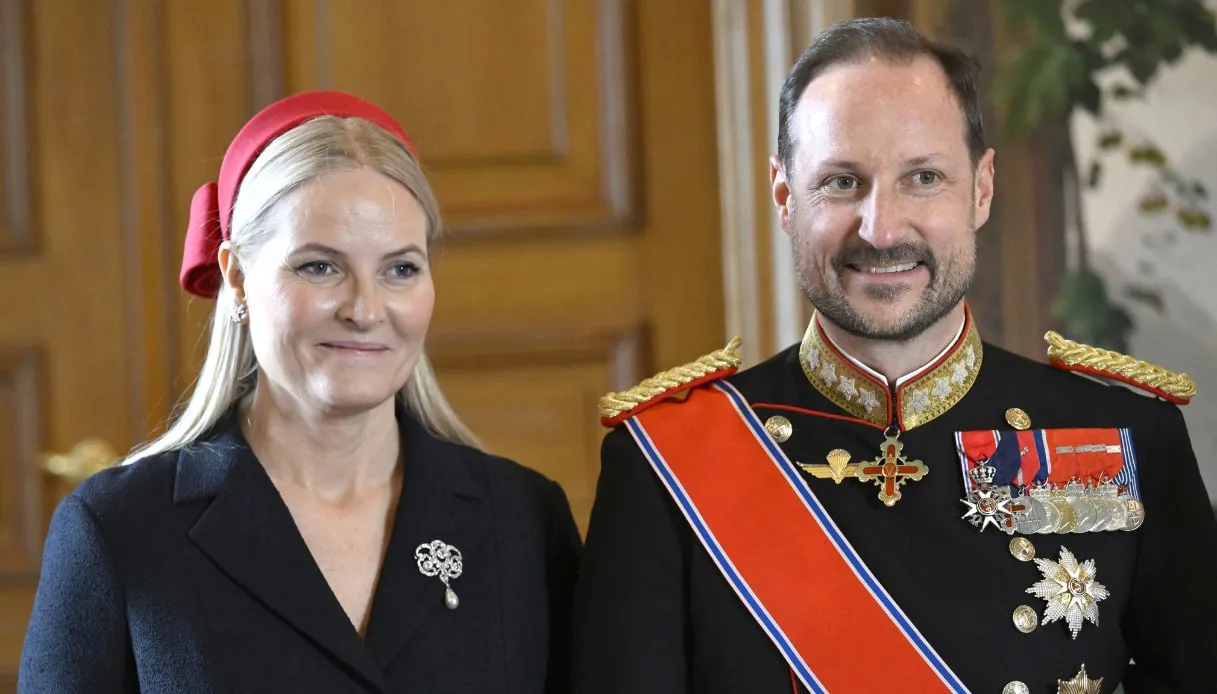
While the King is on sick leave, his constitutional duties pass, as provided for under the Norwegian Constitution, to Crown Prince Haakon, 53. The hospital admission has already affected the official programme: in addition to the Trøndelag stop, the planned October visit to Siljan and Nissedal, in Telemark, is now uncertain. The visit was due to allow the royal couple to complete visits to every municipality in the country, a milestone announced only days before the King was admitted to hospital.
Prime Minister Jonas Gahr Støre wished the King a speedy recovery and said he was confident that he was receiving appropriate care from the Norwegian healthcare system. The Royal Family has had a year marked by several hospital admissions: on 17 June, Crown Princess Mette-Marit successfully underwent a lung transplant at the Rikshospitalet, from which she was discharged on 14 July; Queen Sonja was admitted to hospital with heart problems in January 2025 and again at the end of May this year.