Oslo - The funeral of Harald V, King of Norway, was held on Wednesday 9 September. He died on 28 August at Rikshospitalet, the capital’s main university hospital, aged 89. He had ascended the throne in January 1991 following the death of his father, Olav V, and had remained one of the country’s most popular heads of state ever since. The service took place at Oslo Cathedral, the same church where Harald married Sonja Haraldsen in 1968 and where, just over a month before his death, he had attended the commemoration of the 22 July attacks, walking down the nave on two crutches.
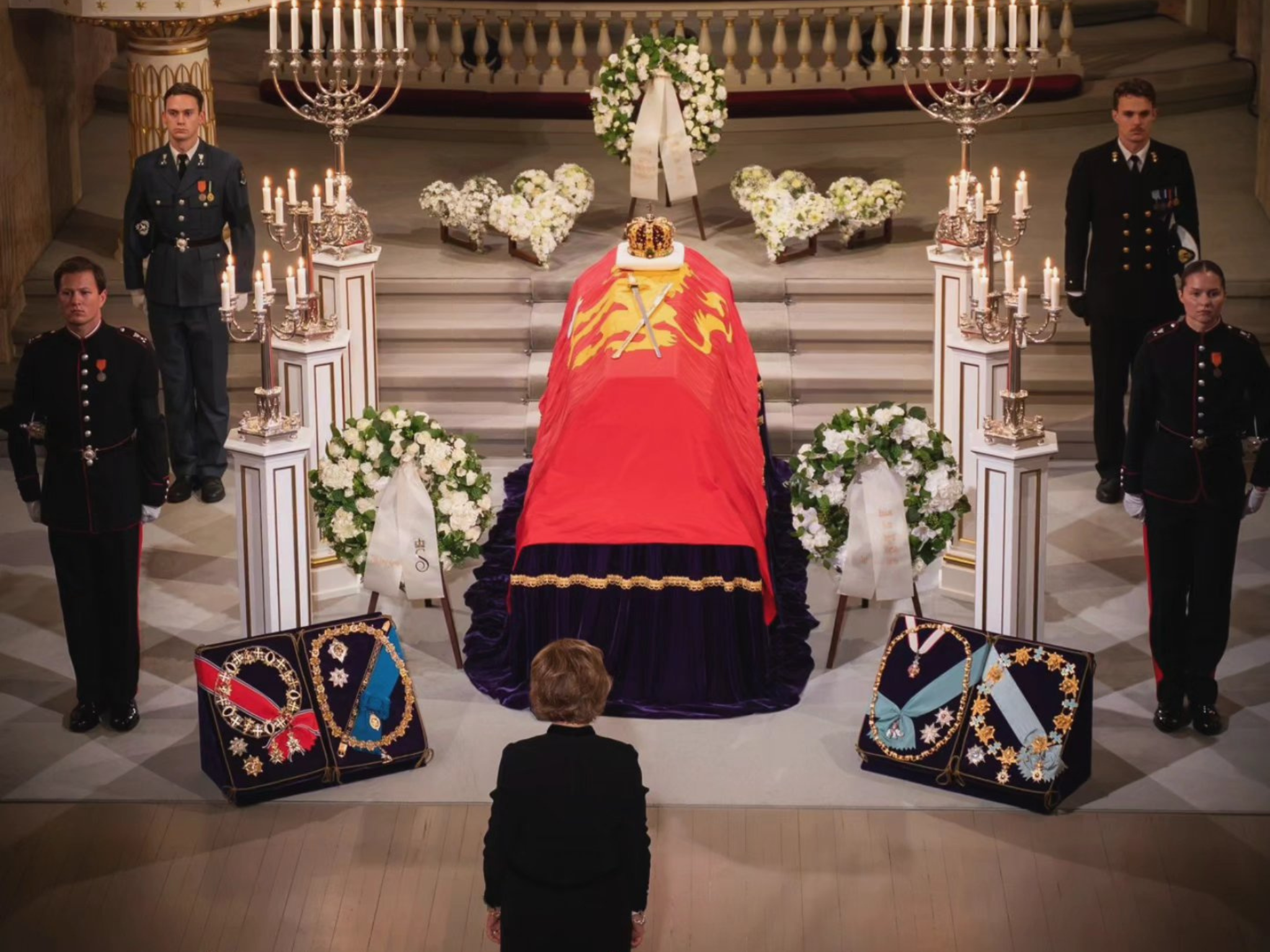
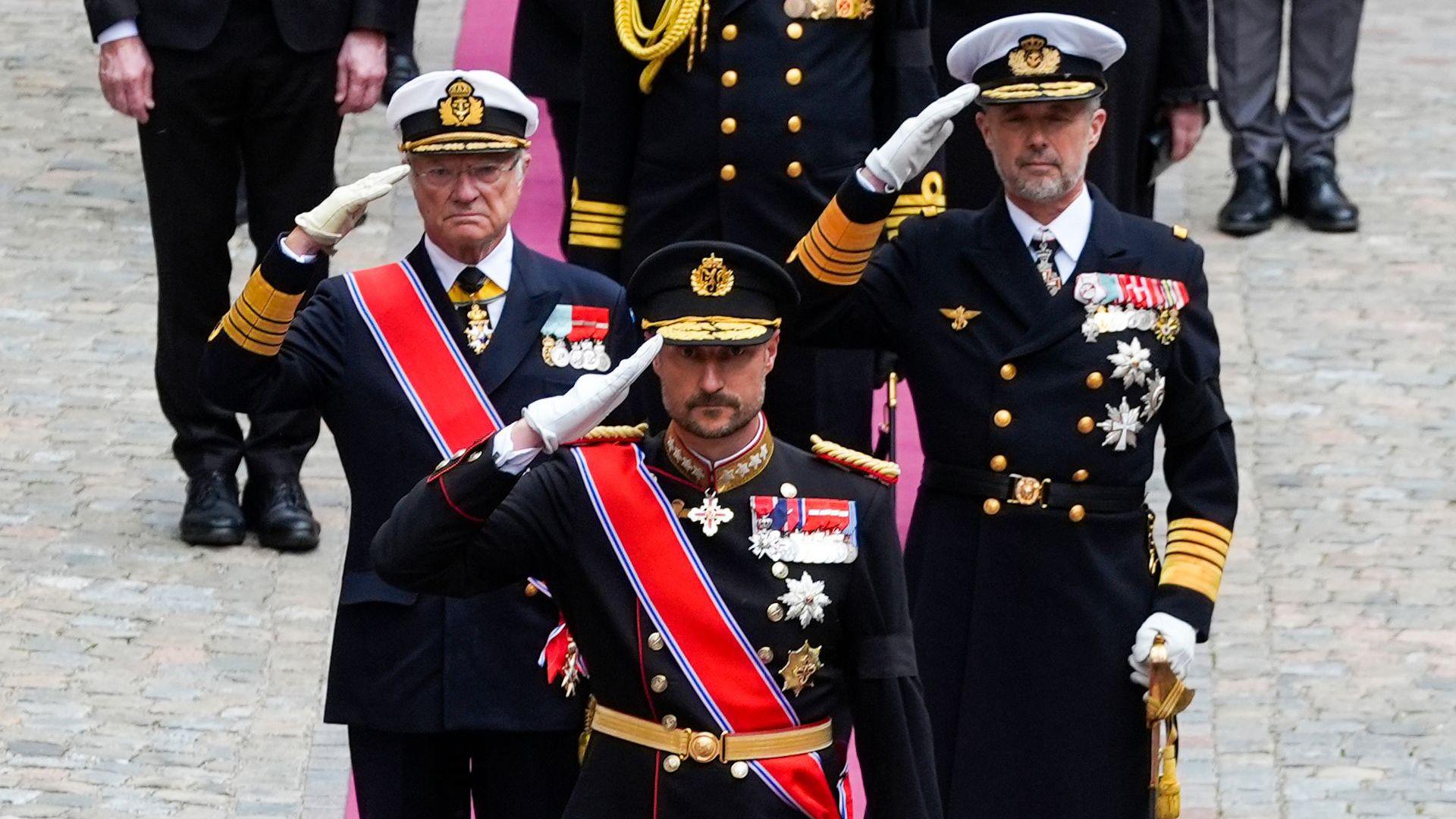
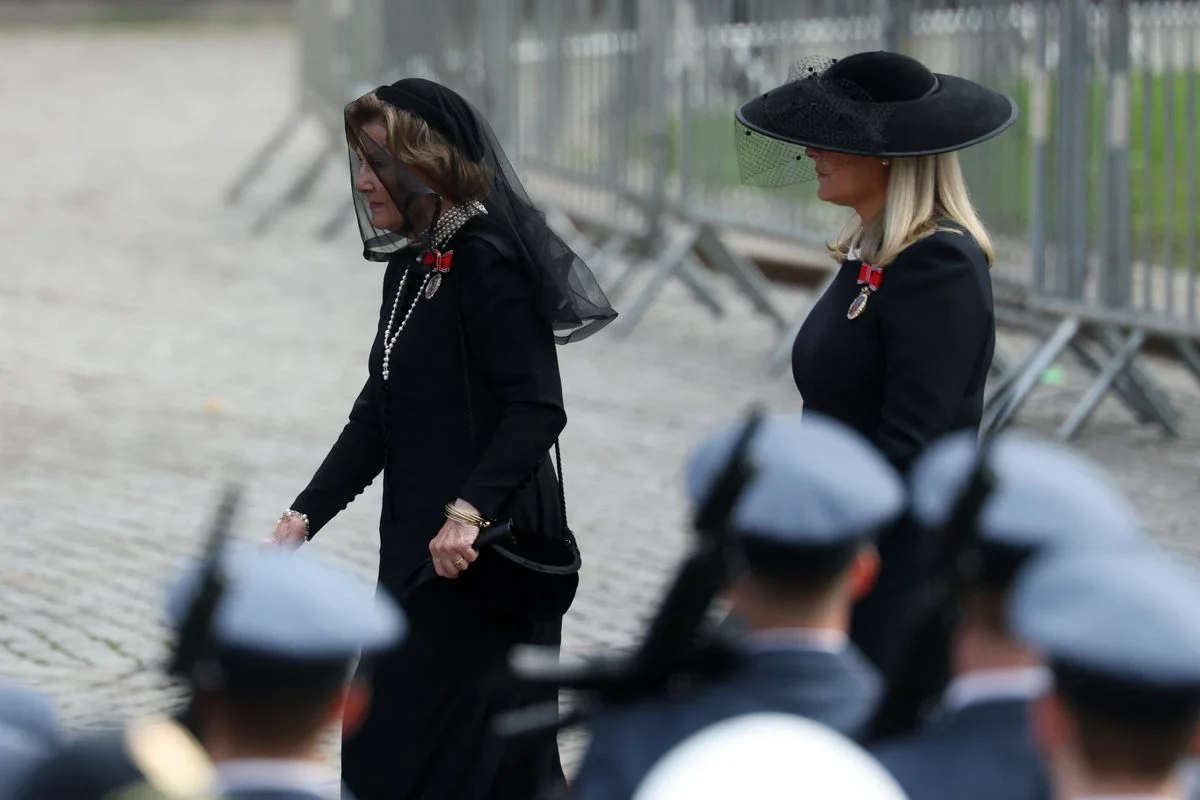
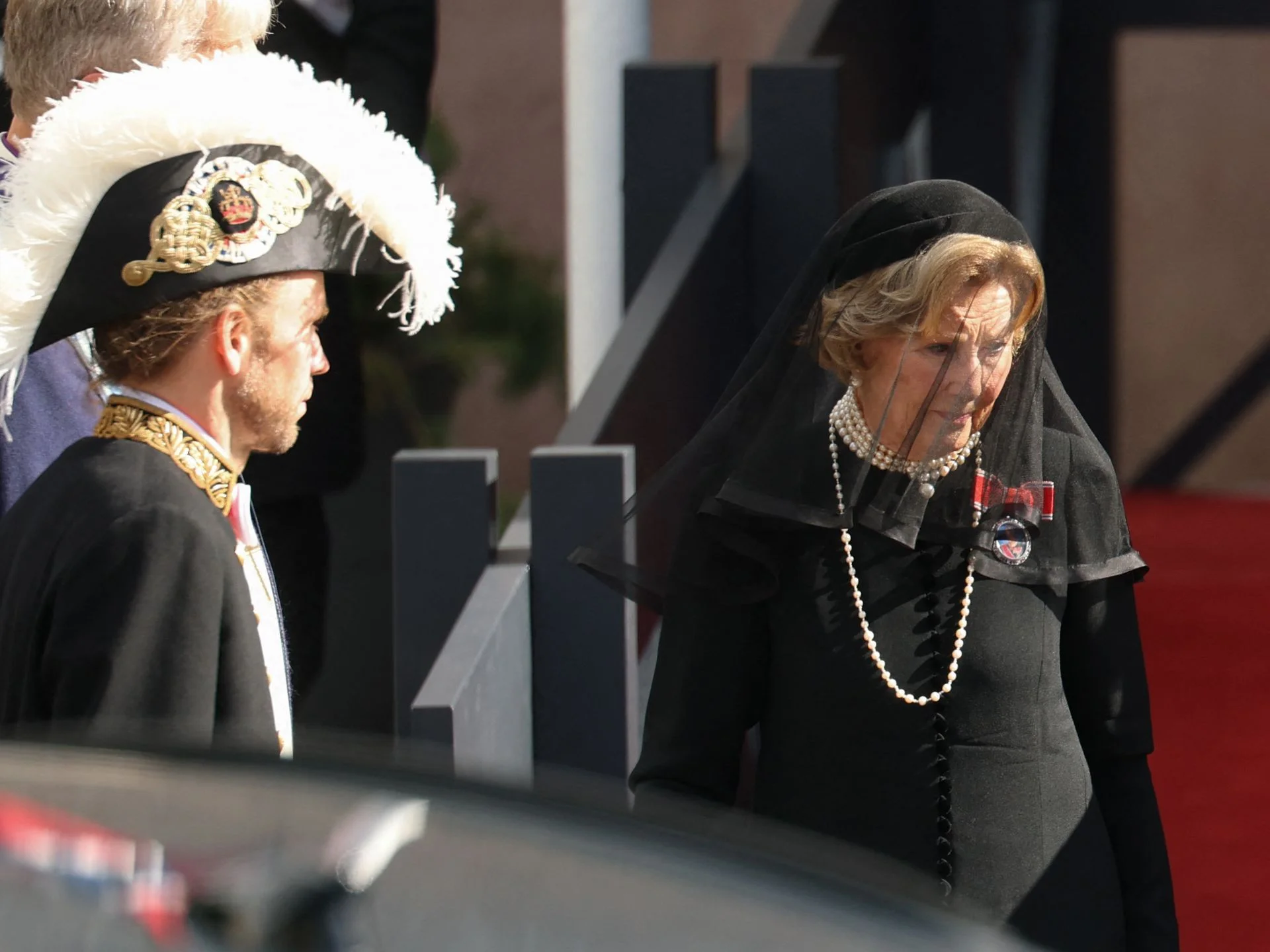
In the days beforehand, the King’s coffin had lain in the chapel of the Royal Palace, where more than 46,000 people had filed past to pay their respects. On Wednesday morning the family gathered there for a final private moment. At noon, the coffin, draped in the royal flag and bearing the Crown and Sword of the Realm, was placed on a gun carriage pulled by a military vehicle and taken in procession along Karl Johans gate, the avenue linking the Palace with Parliament and the cathedral. Walking behind were the new King Haakon VIII, Crown Princess Ingrid Alexandra, Prince Sverre Magnus and Princess Märtha Louise; Queen Sonja and Queen Mette-Marit followed by car. Then came the foreign royals, including Prince William, Princess Beatrix of the Netherlands and Crown Princess Victoria of Sweden with her husband Daniel, followed by heads of state, and finally the President of the Storting, Masud Gharahkhani, Prime Minister Jonas Gahr Støre and the Chief Justice of the Supreme Court, Toril Marie Øie. Around 1,900 soldiers lined the route. Police estimated that 181,000 people were in central Oslo, 53,000 of them along the procession route; the airspace over the region was closed, while umbrellas and bicycles were banned within the cordoned-off areas.
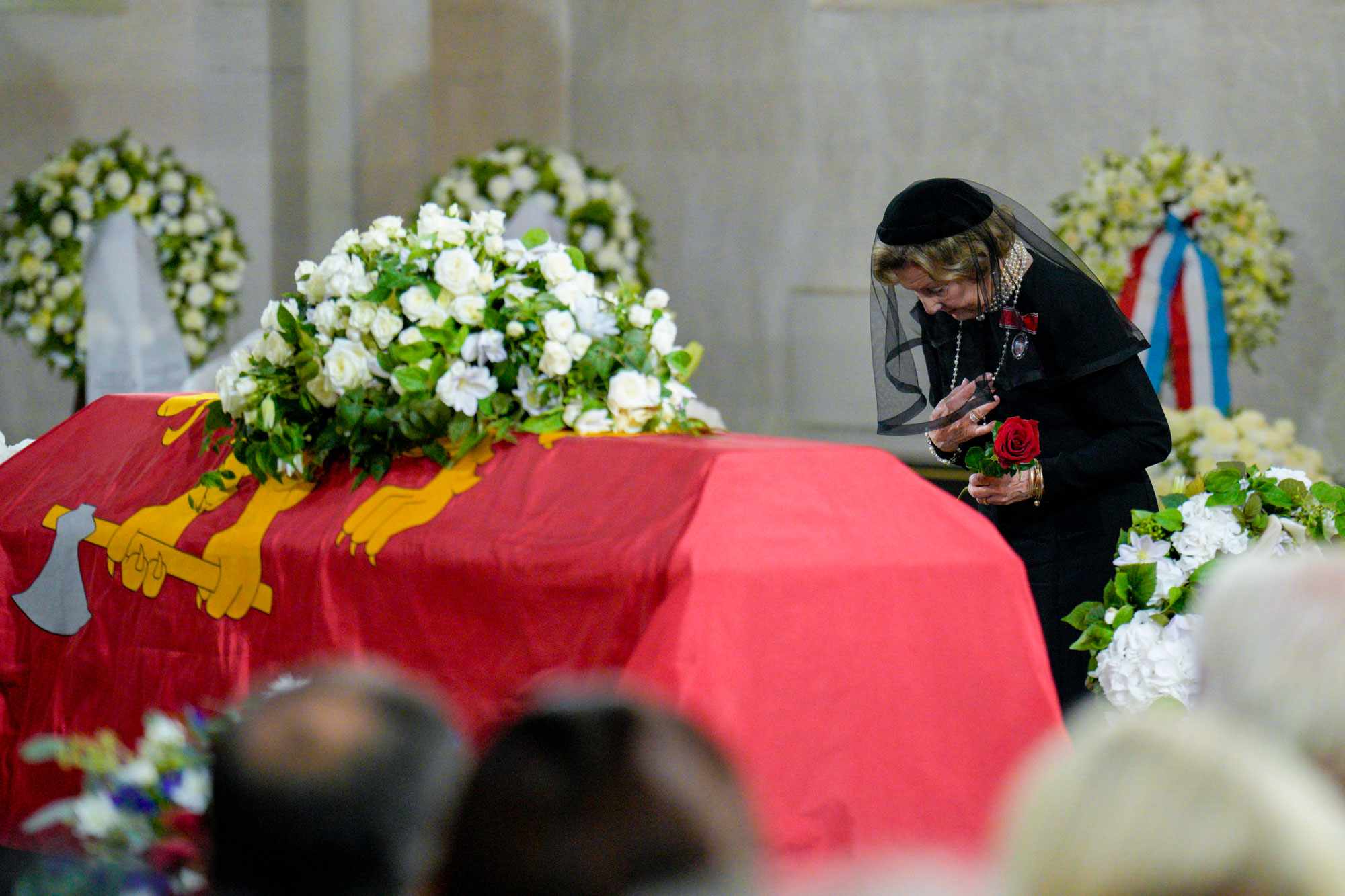
At exactly 1pm, with the coffin already before the altar, the whole country stopped for a minute’s silence, opened and closed by three strokes of the bells in churches across Norway. Public transport also came to a halt. It was arranged so that people hundreds of kilometres from Oslo could take part in the same moment, and many churches, universities and even pubs broadcast the service on large screens.
The service followed the Church of Norway’s ordinary funeral liturgy. The Lutheran church was Norway’s state church until 2017, and the Constitution still requires the King formally to be a member. It was led by Olav Fykse Tveit, the Presiding Bishop, who chairs the bishops and is the country’s senior bishop, alongside the Bishop of Oslo, Sunniva Gylver. Tveit delivered the sermon, while Gylver took part in the liturgy and accompanied Queen Sonja in the procession.
The service opened with a choral hymn written in 2007 for Harald and Sonja’s 70th birthdays, followed by «Eg veit i himmerik ei borg», which had also been sung at Olav V’s funeral in 1991. The President of the Storting and the Prime Minister then spoke, in the order laid down by protocol. It is a Norwegian tradition: in 1991 Prime Minister Gro Harlem Brundtland had done the same.
Gharahkhani, who ranks second in the state hierarchy after the King, spoke on behalf of the Storting and the Norwegian people. He described Harald as a king who was close to people and comfortable in his own skin, someone who «wasn’t afraid to meet people in his rubber boots». At the heart of his speech was the story of Christer Modin, a homeless man who became known in Norway through a television programme and was one of the first vendors of the street newspaper =Oslo. He was received by the King at the Palace in 2010 and died in 2018 at the age of 49. Gharahkhani recalled that Modin had promised the King that he would change his life and later said he had been unable to lie to him. He then quoted Harald’s 2008 New Year’s address, in which the King said: «I wish we would stop using the term ‘the weakest in society’. In reality, some of these people are among the strongest of us all.» He ended with the dynasty’s motto, «Alt for Norge», saying that the King had lived up to it to the very end: he gave his all for Norway.
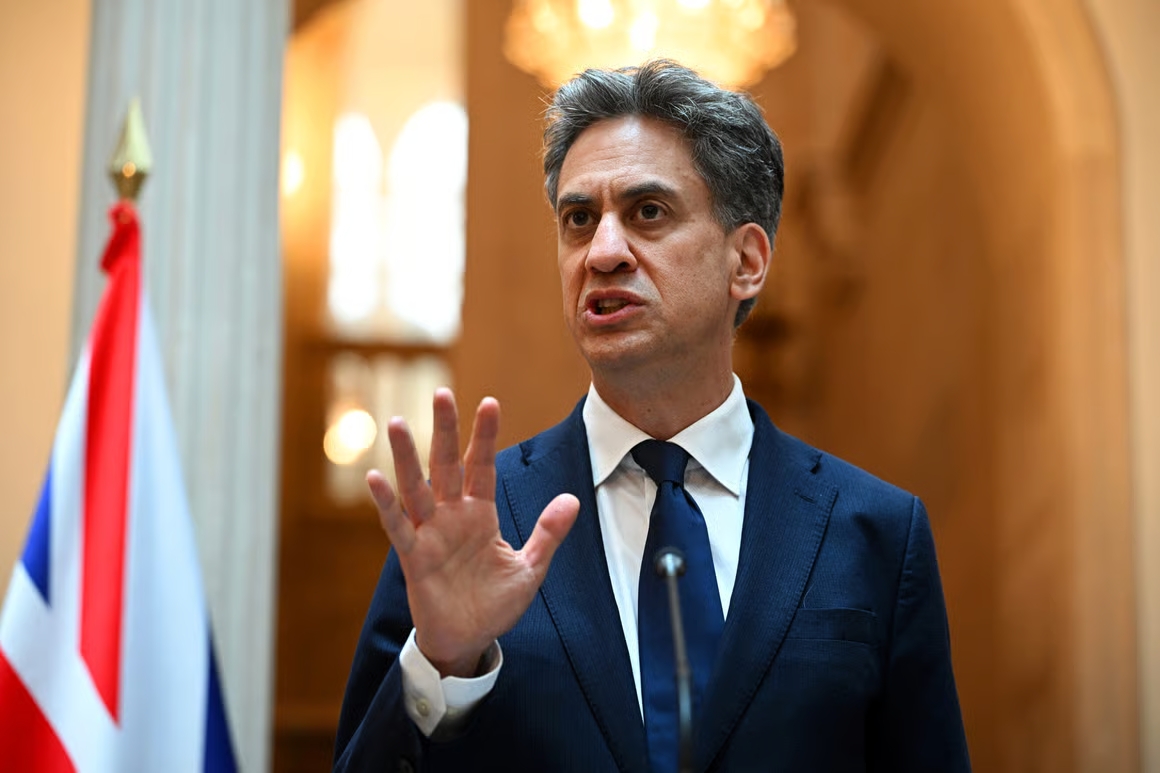
Støre’s speech was the one that attracted the most attention, including abroad, because its tone was unusually personal for a state occasion. The Prime Minister began with Harald’s final New Year’s address, in which the King had suggested that Norwegians ask themselves every day what they were grateful for. Støre said that in the days after his death the country had given its answer in the flowers, children’s drawings and poems left outside the Palace. He gave thanks for thirty-five years of Harald’s reign and, above all, for the way he had been King: a monarch who brought a human quality to the solemnity of his role, rejoicing with Norwegians when there was reason to rejoice and grieving with them after the attacks of 22 July 2011. He recalled that Harald had continued to preside over the Council of State every Friday, and that the final meeting he chaired had been on 7 August, a month earlier. For Støre and his predecessors, who were sitting in the cathedral, the King had been someone with whom they could talk about the world, but also about life.
The moment that moved the Royal Family came when Støre addressed Queen Sonja directly. He recalled her commitment to culture, nature and hiking, and a cairn on the summit of Stortinden in the Lofoten Islands, where her own words are inscribed: «For et land!» - «What a country!» And he added, on behalf of everyone: «For en dronning!» - «What a Queen!» His voice broke. Sonja, behind her veil, nodded and moved her lips to say thank you. Mette-Marit, Märtha Louise and Ingrid Alexandra also wiped away tears. Støre ended by addressing Haakon VIII with the traditional words «Leve Kongen!» - «Long live the King!» - and described the succession as the end of one era and the beginning of another, with the monarchy still firmly anchored in the Constitution and democracy.
After the two speeches, five people representing five different faiths and worldviews - a Christian, a humanist, a Buddhist, a Jew and a Muslim - each lit a candle. Then came what many Norwegians regarded as one of the most successful moments of the service: singer-songwriter Åge Aleksandersen, together with Tuva Syvertsen and guitarist Andreas Aase, performed «Jørgen Hattemaker», Alf Prøysen’s song about a poor hat-maker who compares his own life with that of King Solomon and concludes that the grass is green for everyone. Harald himself had quoted it in more than one speech, and Støre had referred to it only minutes earlier. At the end of the song, Tveit nodded to the Queen. She stood, placed a red rose on her husband’s coffin, put her hand to her heart and bowed. Her wreath carried the words: «Thank you for a beautiful life.»
The biblical readings were given in Northern Sami, by Mattis Eira of the Sami Church Council, and in Norwegian by the actress Ameli Isungset Agbota: Psalm 121 and chapter 13 of the First Letter to the Corinthians, the passage on love that «bears all things». Tveit built his sermon around that text. He began by saying that almost everything in life comes to an end, except love, and described the sea of flowers and drawings outside the Palace as a sign of what fills the heart to overflowing. He interpreted the motto «Alt for Norge», inherited from Haakon VII and Olav V and now also adopted by the new King, as a declaration of love addressed to all Norwegians, and particularly to those who had felt excluded. He did not avoid the difficulties: death separates people, while hatred and war can make us doubt whether love really has the final word. Yet love remains, he said, as an ideal towards which everyone can strive, because it is something greater than ourselves. He also referred to the story of Harald and Sonja, a love that had grown in secret for years before King Olav agreed to his son marrying a woman who was not of noble birth, and concluded that it had been a good life.
The choir sang the Nunc dimittis in Sami, Latin and Nynorsk. Princess Victoria, Harald’s goddaughter, read in Swedish the “Simple Prayer” attributed to Saint Francis.
The most emotional moment came when the singer Hillari performed «Abide with Me» in English with a group of choristers who had come from the United States, a choice that recalled the King’s ties with America, where he had lived as a child during the war, and with his mother’s English family. At that point Støre and Finance Minister Jens Stoltenberg were also visibly moved as they sang the refrain alongside Ingrid Alexandra. After the sprinkling of earth, the Lord’s Prayer and the blessing, the service ended with the royal anthem and «Deilig er jorden», the hymn sung in Norway both at funerals and at Christmas.
Among the roughly one thousand guests was Marius Borg Høiby, Mette-Marit’s eldest son. He was seated in the second row with Märtha Louise, her husband Durek Verrett and the Princess’s three daughters. On entering the cathedral, he greeted Tveit and Gylver. Also present were the mayors of the four Norwegian municipalities that Harald, despite thirty-five years of travelling around the country, had never managed to visit.
Eight soldiers from the Royal Guard carried the coffin out of the cathedral. Four F-35 fighter jets flew over central Oslo in a “missing man” formation, leaving one place empty. A second, shorter procession accompanied the coffin to Akershus Fortress, where a private ceremony was held in the castle chapel for the family, foreign royals, the country’s highest office-holders and the presidents of Iceland and Finland. There the coffin was lowered into the crypt of the Royal Mausoleum, into a new double sarcophagus designed by the architecture firm Snøhetta, which is intended one day to hold Sonja as well. It stands alongside the sarcophagi of Haakon VII and Queen Maud, and of Olav V and Princess Märtha. The sarcophagus had been funded with twenty million kroner from the 2024 state budget, and Harald, in a speech to members of Parliament, had thanked the government for its thoughtfulness and said he hoped it was well padded.
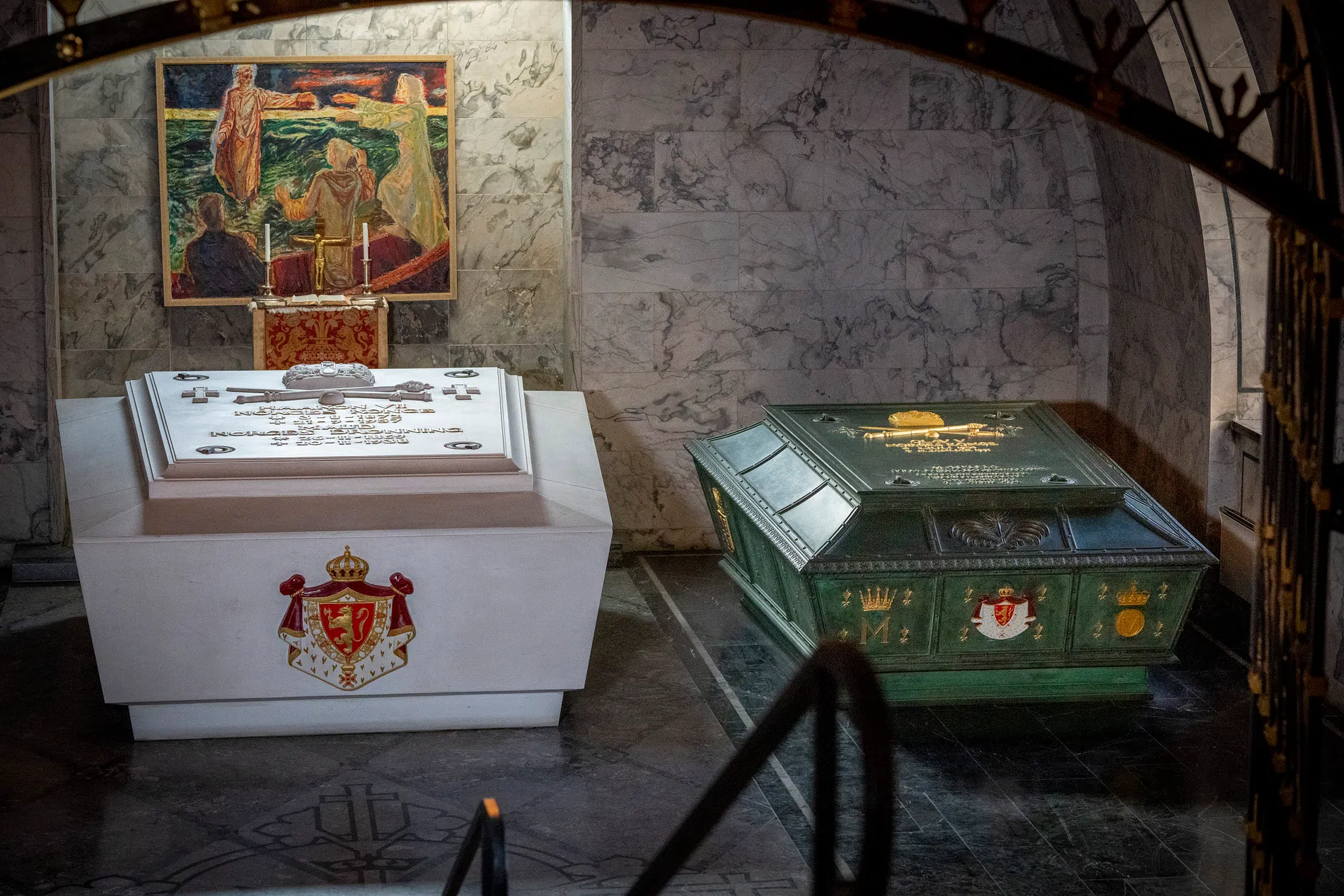
As the coffin was lowered into the crypt, the flags that had flown at half-mast across the country for twelve days were raised to full mast and a double royal salute was fired from the fortress, while church bells throughout Norway rang for an hour. In the late afternoon the Royal Family returned to the Palace along the same route taken by the procession and appeared on the balcony. The burial also marked the end of the period of national mourning, during which parliamentary business and most public events had been suspended. Haakon VIII, who had taken his oath before the Storting on 1 September, announced that he would retain his father’s motto.