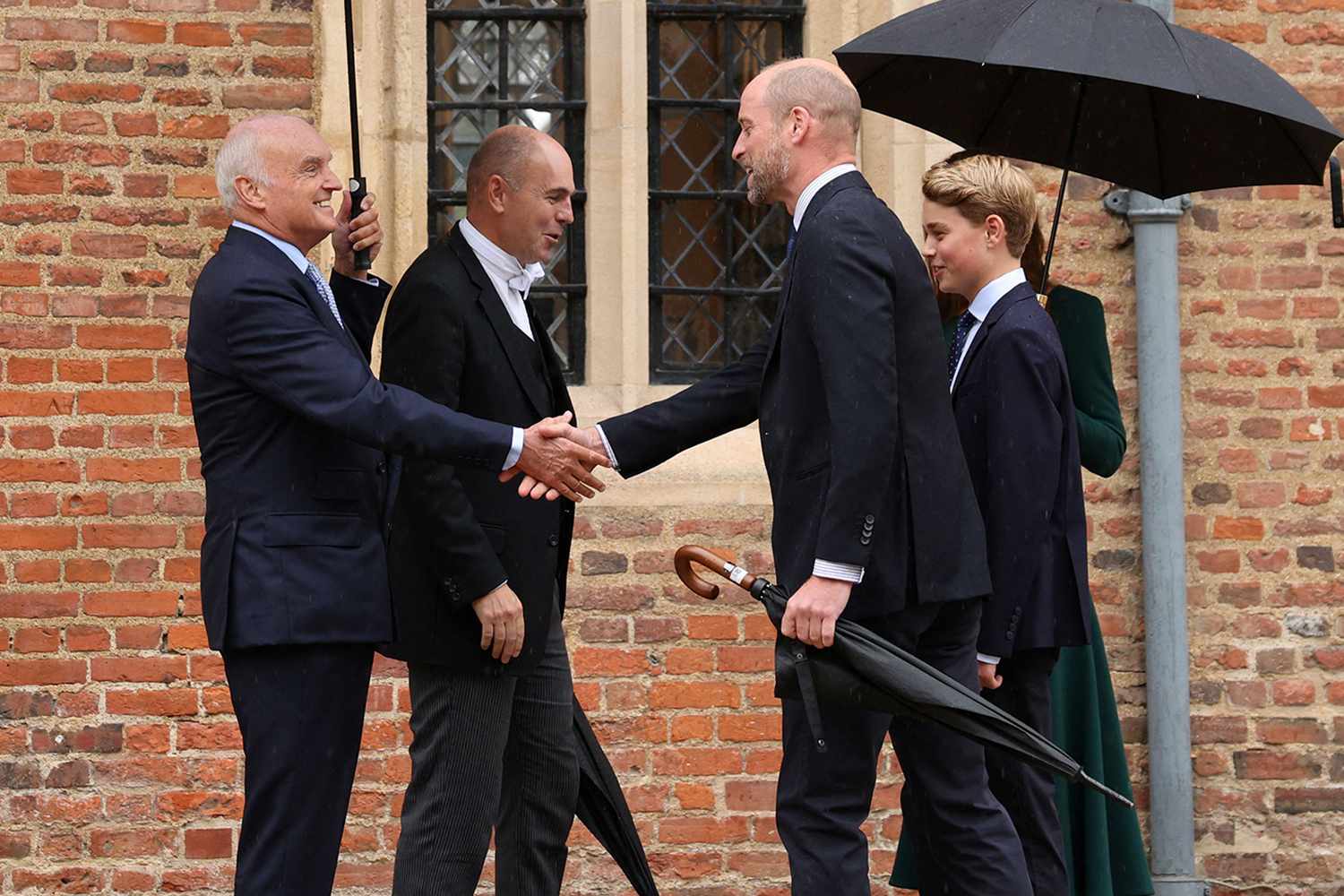
It was pouring with rain when Prince George crossed Eton’s School Yard with his parents on Tuesday morning. Catherine had an umbrella up; William carried his folded. In the middle of the courtyard stood the statue of Henry VI, who founded the school in 1440. Waiting for them were the Head Master, Simon Henderson, and the Provost, Sir Nicholas Coleridge. Henderson shook George’s hand and offered the sort of advice that could have been heard outside almost any school in Britain: “Welcome, good luck, enjoy it.” Catherine briefly placed a hand on her son’s back before the three of them disappeared through a doorway into the oldest part of the College.
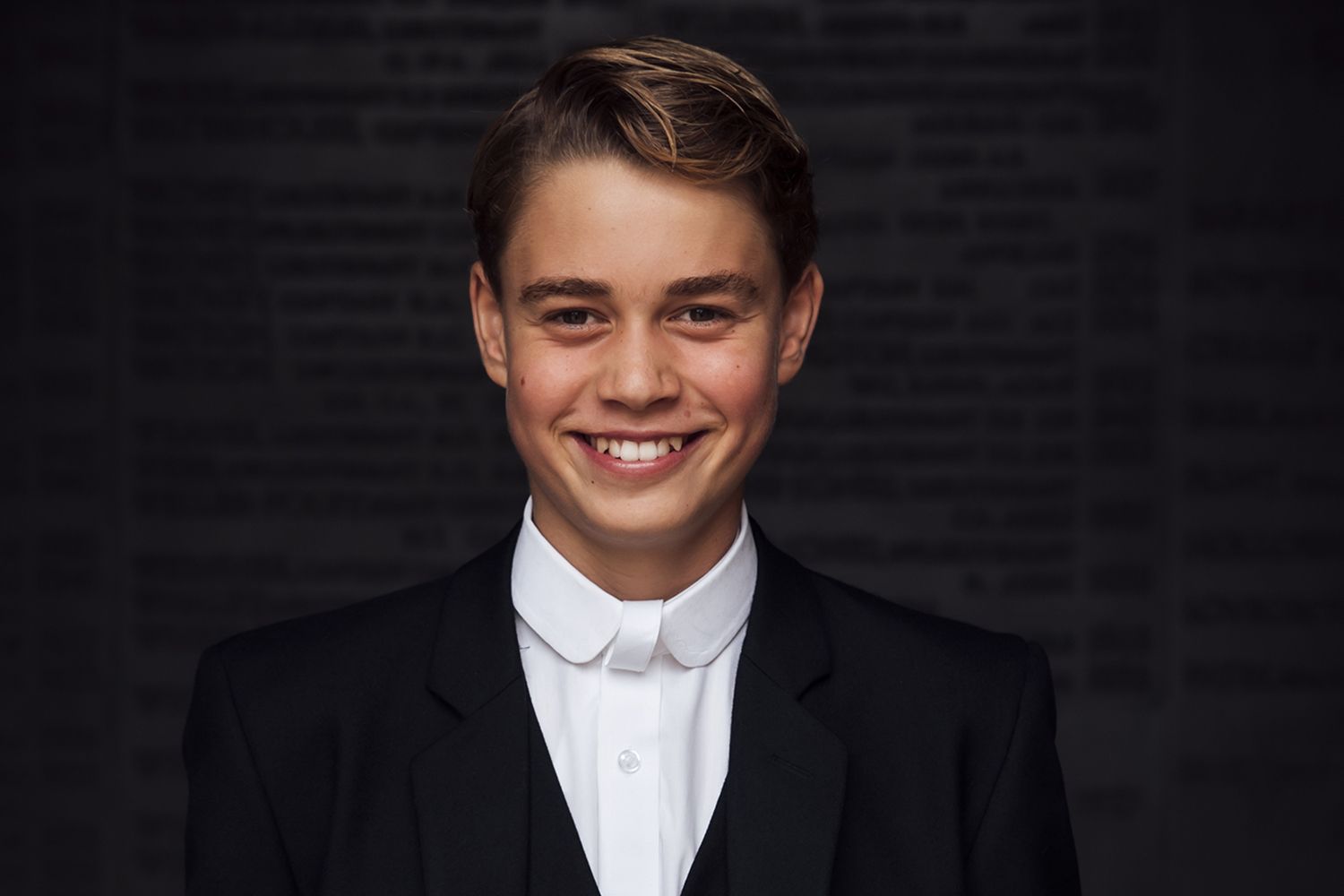
That was the public part of George’s first day. Deliberately brief. Kensington Palace allowed a small group of photographers and television crews to record his arrival and later released portraits taken by Matt Porteous showing George in Eton’s School Dress: black tailcoat, waistcoat, pinstriped trousers and stiff white collar. Much of what happens from now on is meant to belong to him rather than to the cameras.
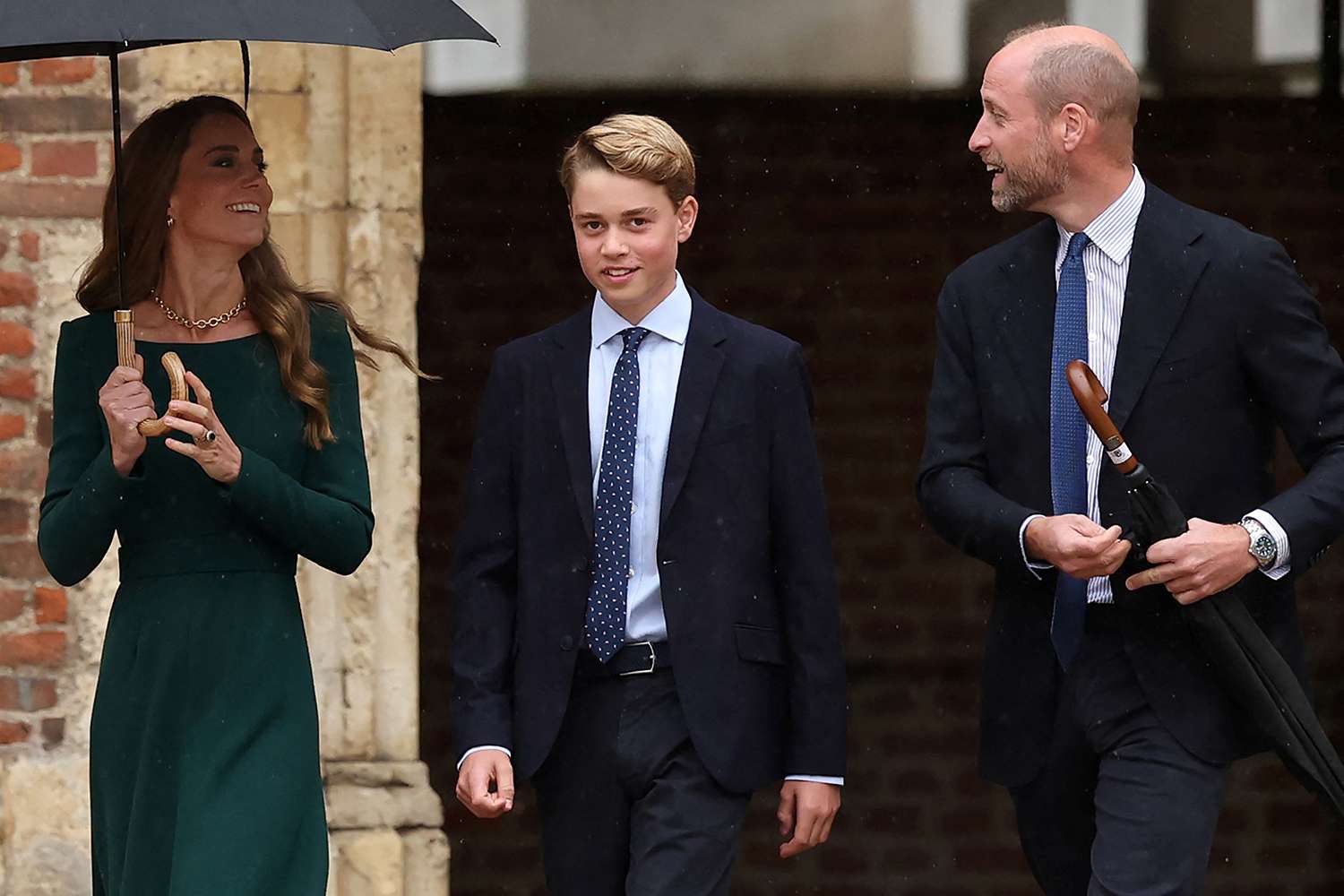
I have often wondered what it must feel like to be that young and subjected to that degree of media attention and obsession. The pictures inevitably invited comparisons with William’s arrival at Eton in September 1995, when he too was 13. The same school, the same age and now the same rather conspicuous uniform.
Behind the royal story, however, is a much more ordinary one. George has left the school he attended with his younger brother and sister and has begun living away from them. Princess Charlotte, 11, and Prince Louis, eight, remain at Lambrook. George is now at a school where boarding shapes the rhythm of the entire week.
Tuesday was mainly about settling in the youngest boys before the rest of the school returned. George has entered F Block, Eton’s name for Year 9 and the first of his five years at the school. Today, 9 September, the other pupils return for the Michaelmas Half, as Eton calls the autumn term. Over the next five years George will move through E, D, C and finally B Block. The College calendar already gives some idea of the rhythm ahead: an optional B Weekend on 19 and 20 September, the first Short Leave from 2 to 4 October and Long Leave from 23 October to 8 November.
Before any of that, though, he has to learn Eton itself. One of the small pleasures of the place is that perfectly ordinary parts of school life have acquired a vocabulary of their own. Teachers are “beaks”. Lessons can be “Divs”. Terms are “Halves”. Lunch is “Boys’ Dinner”. Homework is “EW”, short for Extra Work. The uniform is School Dress, or simply “tails”. A first-year pupil is an “F Blocker”. Eton even calls the document used to construct the timetable the “abracadabra”. This is not ceremonial language kept for special occasions. It is how the school describes its everyday life. The uniform George wore for the official portraits is also less ancient than it looks. Black tailcoats, waistcoats and pinstriped trousers have long been associated with Eton, but the present School Dress was only formally regulated in 1964. Before then, generations of Etonians wore different combinations of coats, collars and waistcoats, and eighteenth-century pupils could be considerably more colourful than their modern successors.
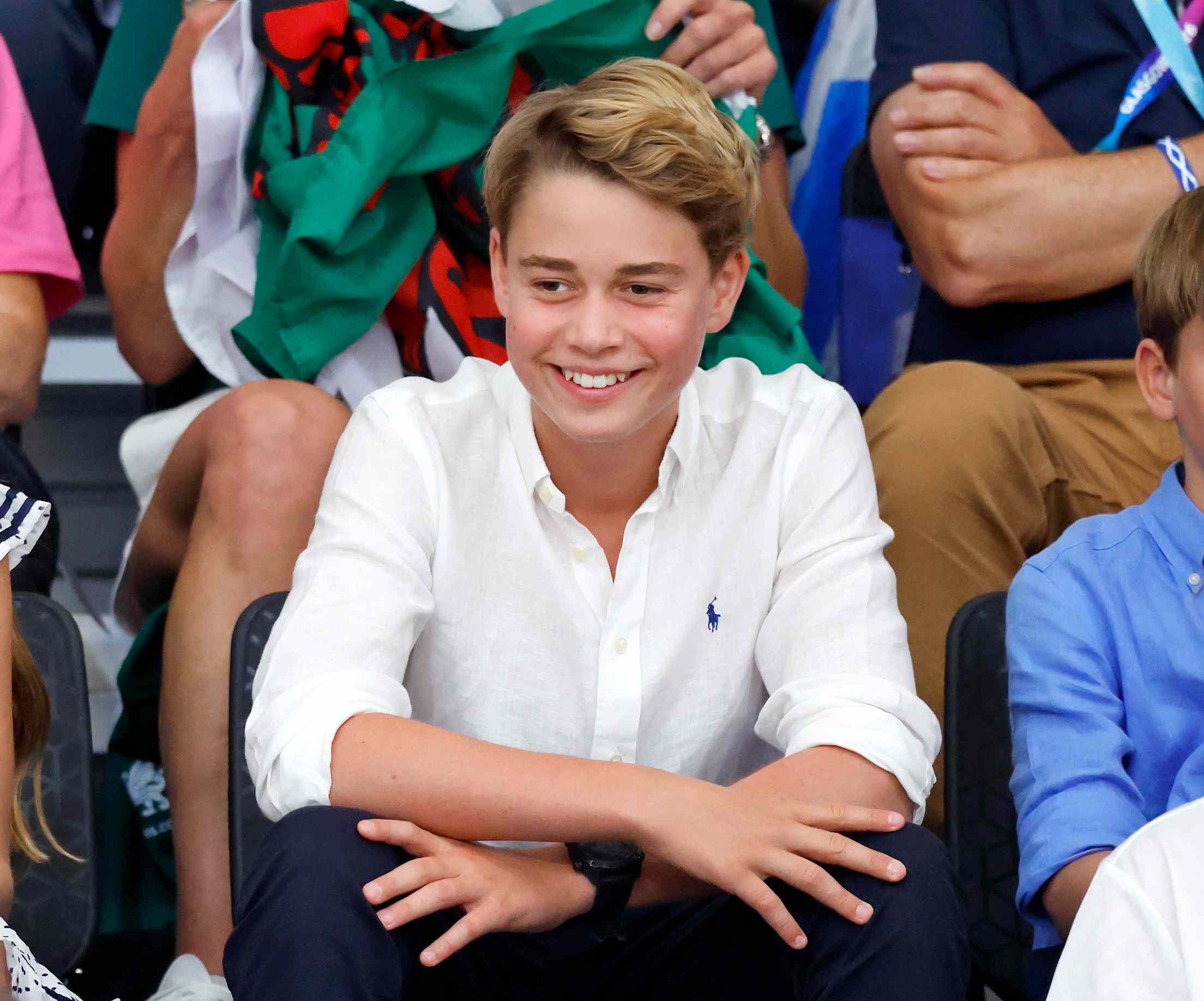
For George, everyday life will revolve first of all around his boarding house. Eton has 25 of them, each generally home to just over 50 boys from all five year groups. Every pupil has his own study-bedroom from the beginning rather than sharing a dormitory. The two central adults in each house are the House Master and the Dame, with assistants and other staff around them. Older boys are expected to help newcomers find their way around and become part of the life of the house. That arrangement also clears up something that has been reported rather loosely in some coverage of George’s move. He has sometimes been described as a “weekly boarder”, meaning a pupil who stays at school during the week and goes home at weekends. Eton explicitly describes itself as a full boarding school, with no day pupils or weekly boarders.
Boys normally return home every two or three weeks for Short Leave, Long Leave or other authorised weekends. Parents can also visit for sporting fixtures, concerts, plays and house events and, in some cases, take their sons out on Sunday afternoons. George’s home at Forest Lodge is very close by, but his school life will still be residential in exactly the same way as that of the other boys. That may be one of the bigger changes for him. Children in the Royal Family grow up surrounded by adults whose job is to organise things around them. At their best, boarding schools deliberately create spaces in which adults step back.
A room has to be kept tidy. Work has to be handed in. A timetable has to be understood. Clothes need to be in the right place at the right time. Boys have ten minutes to get from one lesson to the next. Eton’s study-skills programme for F Block begins with a session entitled “Becoming an independent learner” and goes on to cover organisation, punctuality, revision and confidence in exams. There is plenty to fill that timetable. Eton’s curriculum in the early years is traditionally broad before pupils begin narrowing their choices ahead of GCSEs, and its current F Block material includes English, history, sciences, languages, Latin and computer science.
The school also gives unusual weight to what happens outside lessons: music, drama, societies and a sporting programme broad enough to include everything from cricket, rowing and rugby to rackets, fives and Eton’s two famously eccentric forms of football, the Field Game and the Wall Game.
The induction programme reflects that. New boys are shown activities they may never have tried before and are encouraged to have a go before deciding whether they are any good at them. In Eton’s account of a recent F Block induction day, pupils moved between sport and drama while older boys showed them what to do. At one point, newcomers attempting rackets were reassuringly told: “Don’t laugh until you’ve done it yourselves. According to the Head of F Block, the aim of the first few days is to stop boys worrying too much about collars, timetables or getting lost, and to give them time to find their bearings. Then there is Chapel. For boys in F and E Block, mornings are divided between Lower Chapel, assembly and faith provision. More than 500 younger pupils meet in Lower Chapel for about 15 minutes on weekday mornings, while a longer service is held on Sundays.
Eton remains formally rooted in the Christian foundation established by Henry VI, although pupils of other faiths are given their own provision. Roman Catholic boys, for example, have a Catholic chaplain and regular Mass. Then there is the cost. For the 2026-27 academic year, Eton lists its fee at £21,891 per Half, including VAT: £65,673 over three terms, before extras such as music lessons, trips and other activities. Eton says it spent £10.06 million on financial aid in 2024-25.
Eton’s fame, of course, rests on far more than its fees. Twenty British prime ministers were educated there, along with writers, actors, diplomats and generations of the political and social establishment. George’s arrival renews a more recent royal connection. William started at Eton in 1995 and Harry followed in 1998. William was the first future king to attend the school: his father, King Charles III, had been educated at Gordonstoun in Scotland, as Prince Philip had before him.
William has spoken fondly of his years there. One advantage was geographical. Windsor Castle lies just across the Thames, and William has recalled dropping in to see Queen Elizabeth II for tea at weekends. George now finds himself in a curiously similar position: his parents live nearby and Windsor Castle is practically next door to the school. His first day also fell, by coincidence, on 8 September, exactly four years after Elizabeth II died at Balmoral and Charles became King. It is the sort of coincidence from which royal coverage can draw almost unlimited symbolism.
George probably had more immediate things on his mind: where his room was, whether his collar was sitting properly, the names of the dozens of boys he had just met and how to get to the next place without looking lost.
And that is also why the most important part of Tuesday may have been what happened after the photographers had gone. When William started at Eton, the British press largely agreed to leave him alone during his school years. There are relatively few photographs of him there apart from a handful of carefully arranged occasions. Similar protection is now being sought for George, whose adolescence comes with the additional complication of smartphones and social media. For the next five years he will remain second in line to the throne. At Eton, though, he will also be an F Blocker who can be late for a Div, get EW from a beak, learn a strange game played against a wall and wait for Short Leave like everyone else. For a boy whose adult life has been mapped out since the day he was born, there may be some value in entering a place large enough to contain things he has not chosen yet.