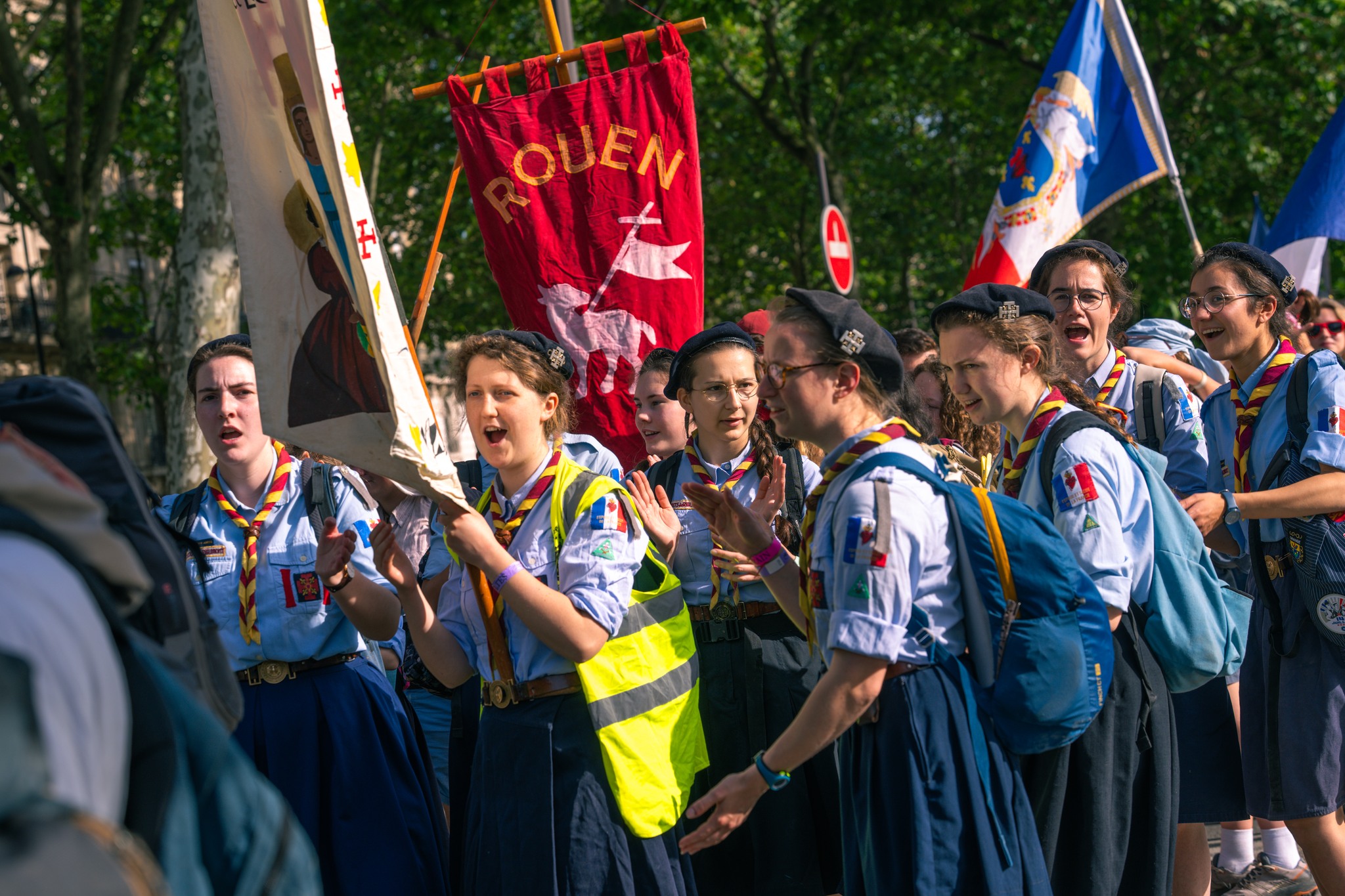
Chartres - Every year, on the eve of Pentecost, an endless line forms at first light outside the church of Saint-Sulpice in Paris. This year it was longer than usual: around twenty thousand pilgrims set off on Saturday 23 May for the 44th edition of the Notre-Dame de Chrétienté Pilgrimage, which links the French capital to the Gothic cathedral of Chartres over three days, covering around one hundred kilometres on foot.
What is the Notre-Dame de Chrétienté Pilgrimage?
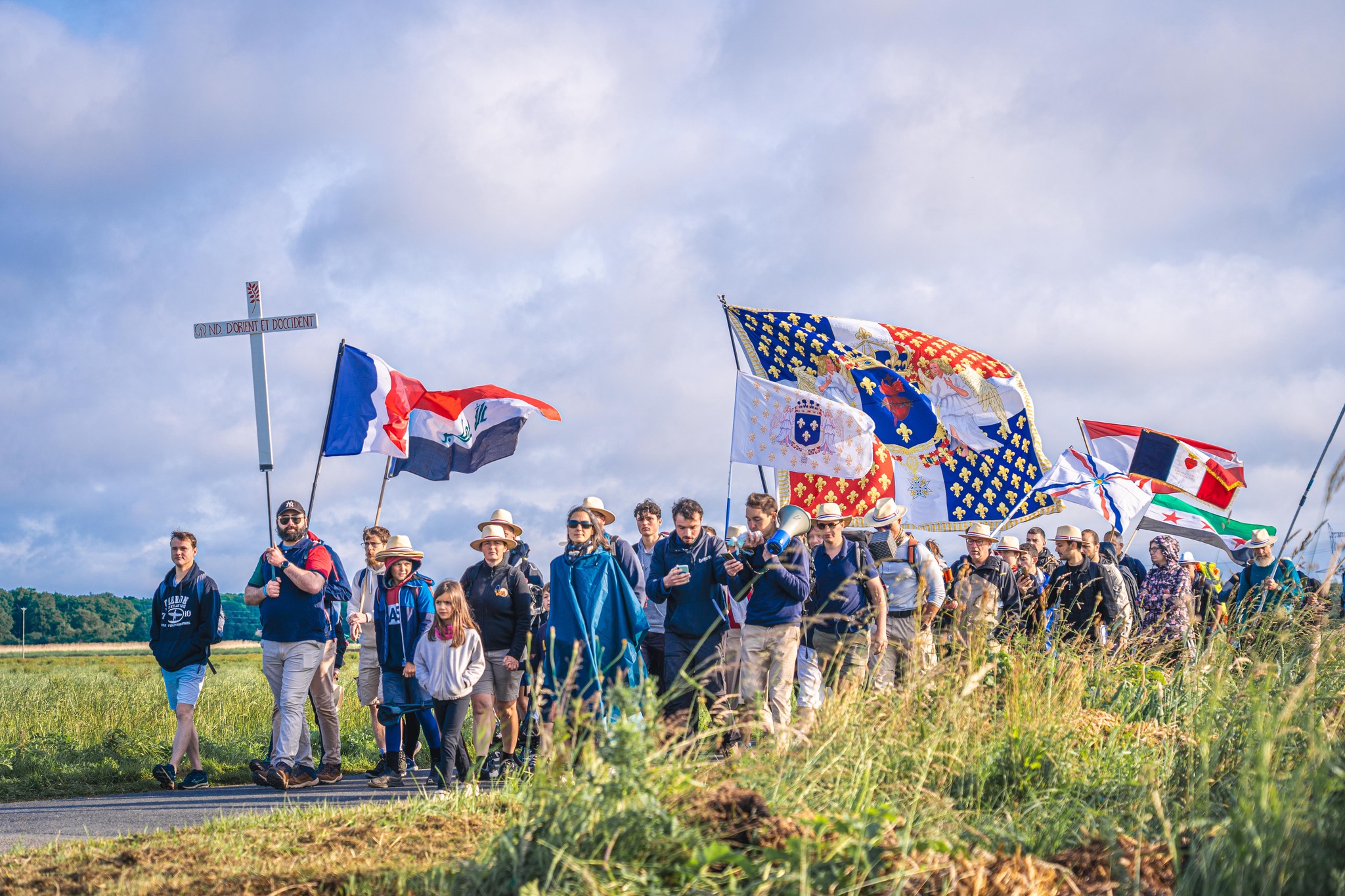
The Pentecost Pilgrimage also known as the “Christendom Pilgrimage” - is today the largest traditional Catholic pilgrimage in Europe. It began in 1983, inspired by the literary intuition of Charles Péguy, who in the early twentieth century had rediscovered Chartres as a destination of Christian fidelity. It is organised by the lay association Notre-Dame de Chrétienté, founded in 1991 and based in Versailles. Its three pillars are tradition, Christendom and mission. The liturgy is celebrated entirely according to the ancient Roman rite, using the 1962 Missal. The pilgrims walk in organised “chapters” of around forty people, each named after a saint or blessed and linked to a region. Every chapter has its own lay leaders, a chaplain, meditations, hymns and the rosary.
There are four “routes”, depending on age: adults walk the full one-hundred-kilometre route, while families, teenagers, children and pilgrims with disabilities follow adapted itineraries. This year also brought a new feature: the “Route de Jérusalem”, a shorter route of less than 70 kilometres, at a slower pace, intended for elderly or frail people, or for those wishing to discover the pilgrimage gradually.

The theme and programme for 2026
The theme chosen for this year is a phrase from the Acts of the Apostles: “Vous serez mes témoins jusqu’aux extrémités de la terre” - “You shall be my witnesses to the ends of the earth” (Acts 1:8). It is an explicit invitation to the missionary dimension, which the organisers have presented as an urgent call to proclaim the Gospel in a dechristianised Europe. The pilgrimage followed its traditional three-day structure, from Saturday 23 to Monday 25 May. On Saturday, the pilgrims departed from Paris and undertook the long stage to Choisel; today saw the great Pontifical Mass of Pentecost celebrated in the fields and the arrival at the bivouac in Gas; tomorrow will bring the final stage towards the cathedral and the solemn closing Mass.
The figures behind a record edition
The 2026 edition marks a new record. After around 16,000 participants in 2023, 18,000 in 2024 and 19,000 in 2025, this year the number reached 20,000 pilgrims. Another figure is also significant: on 3 April, during the first twenty-four hours after registrations opened, 14,000 bookings were recorded, compared with 6,000 the previous year. The face of the pilgrimage is above all young. The average age of participants is around 22, and 37% are between 18 and 25, with a broadly even balance between men and women. An internal survey carried out by Notre-Dame de Chrétienté among 4,610 pilgrims also found that more than 61% said they had come thanks to family or friends, and that almost two thirds regularly attend the Extraordinary Form of the Roman Rite, with 23% doing so exclusively.
“The majority of pilgrims are between 20 and 40 years old,” Christophe, a man in his sixties, told L’Écho Républicain, describing his amazement at walking among such a young crowd.
Saturday 23 May – The departure from Saint-Sulpice
The first day began in darkness. At 5.30 in the morning, the church of Saint-Sulpice - the second largest in Paris, chosen as the departure point since 2020 because of the fire at Notre-Dame - was already packed. The solemn opening Mass gathered the pilgrims before the walking itself began. At 6.50, the main celebration began. Immediately afterwards, the column set off on the longest stage of the triduum: thirty-five kilometres to Choisel, crossing the Yvelines region. At 7.30 in the evening, when the pilgrims reached the evening bivouac, another Holy Mass was celebrated. In the afternoon, the usual broadcast “Chartres t’appelle” was aired from the bivouac, a kind of evening news bulletin for the pilgrimage which, from 5.30 pm, showed live footage of the arrival of the chapters, the setting up of tents, and testimonies from priests and pilgrims.
Sunday 24 May - The solemn Mass of Pentecost
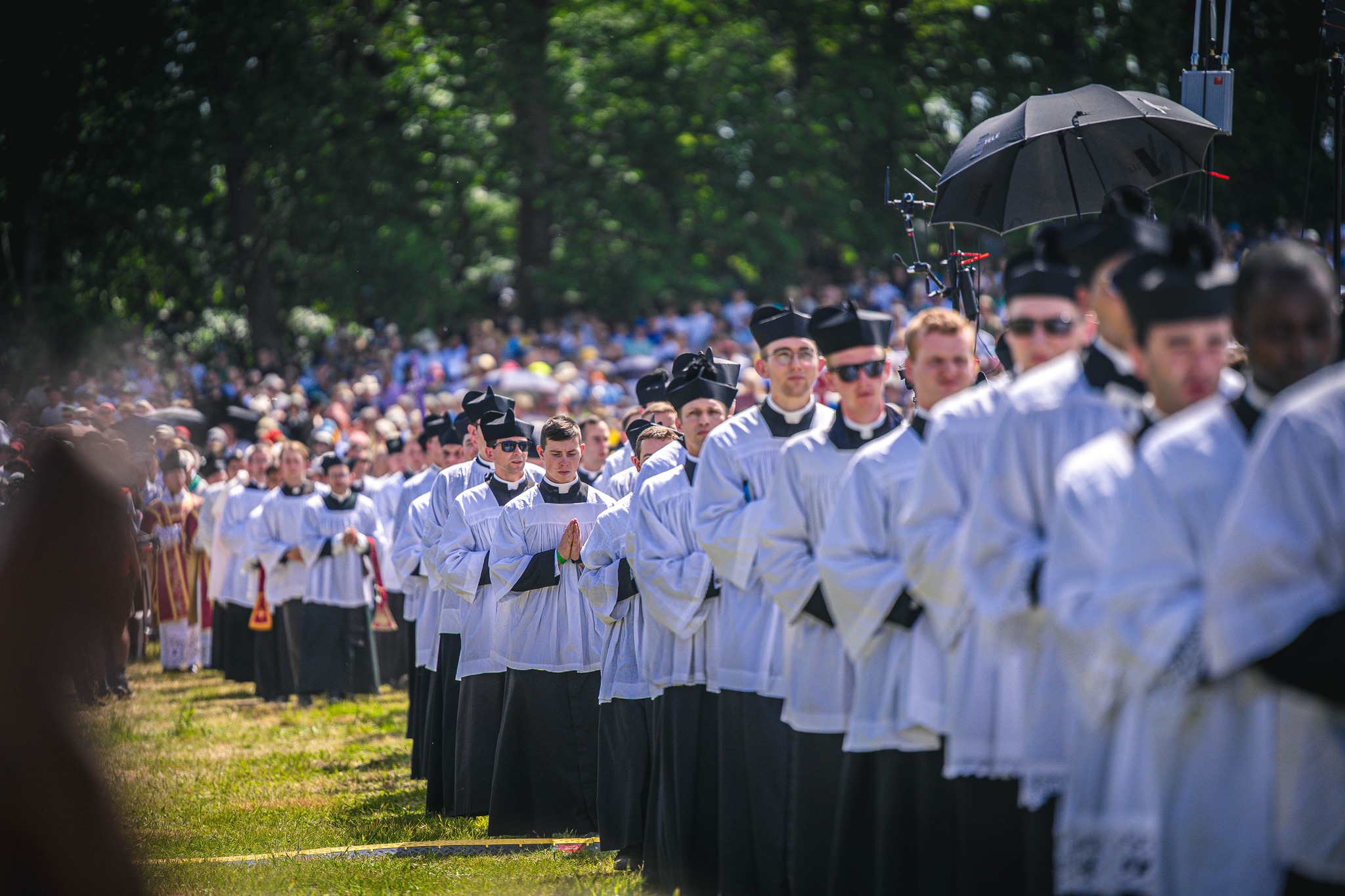
The second day, today, was the most intense liturgically. At midday, in Sonchamp, at Les Courlis, the Holy Mass of Pentecost was celebrated in a large open-air space, according to the Tridentine rite. This year the celebration was presided over by Father Antonius Maria Mamsery, Superior General of the Missionaries of the Holy Cross in Tanzania, with the sermon preached by Father Serge-Thomas Bonino, a Dominican friar.
After Mass, the pilgrims resumed their journey towards the bivouac in Gas, in Eure-et-Loir, the destination for the second night. There, in the evening, they gathered for one of the most striking moments of the entire triduum: Eucharistic Benediction and night adoration, with the consecration - or renewal of consecration - to the Virgin Mary before the Blessed Sacrament exposed in the middle of the field. It is a devotion rooted in the spirituality of Saint Louis-Marie Grignion de Montfort and remains one of the defining features of the pilgrimage.
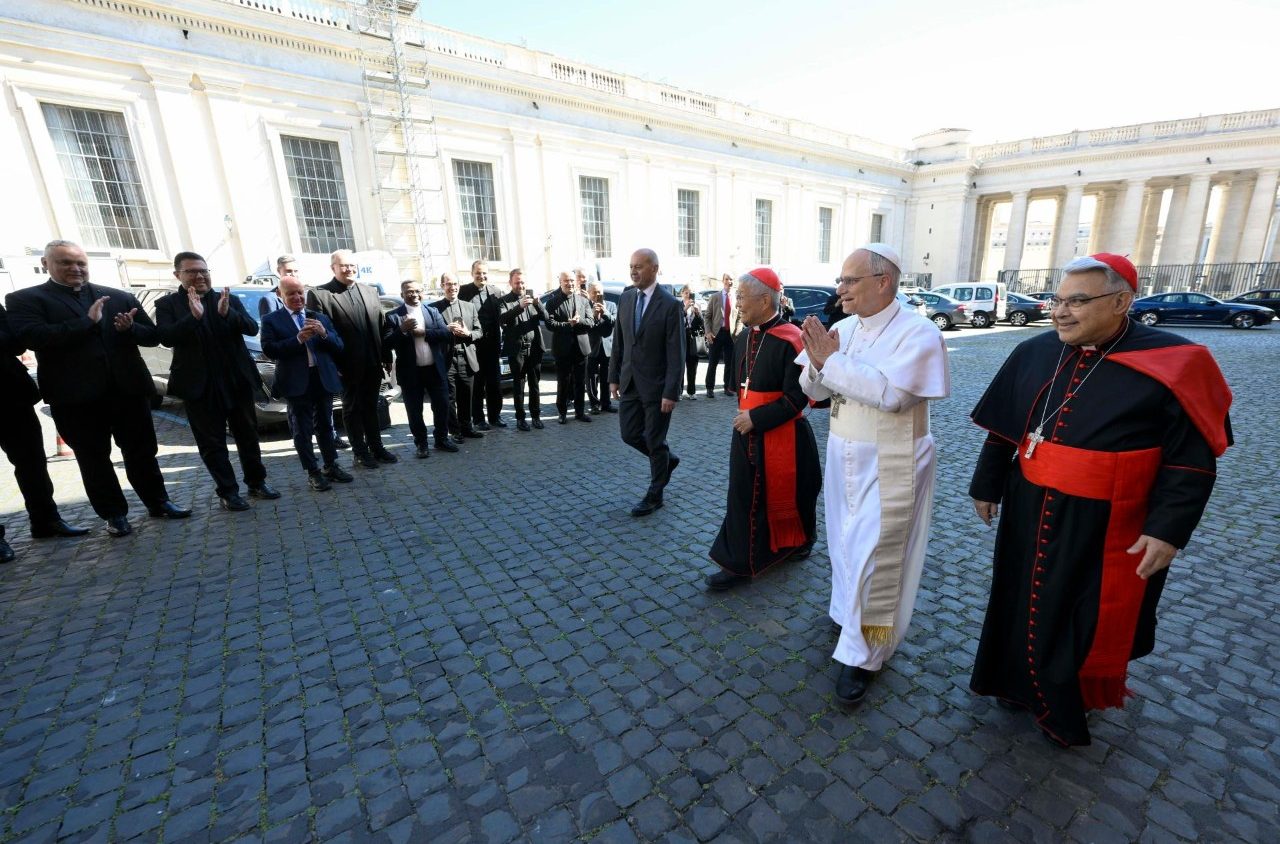
It was in Gas, in the evening, that Cardinal Raymond Leo Burke came to greet the pilgrims. The American cardinal is present for the three days of the pilgrimage. Having already come to Chartres for the 35th edition in 2017, he will celebrate the closing Pontifical Mass tomorrow in the cathedral.
What will happen tomorrow: the arrival in Chartres
The final day will begin with the morning wake-up at the bivouac in Gas and the last stage of the walk, which will bring the pilgrims to the cathedral. At 3 pm, in the Cathedral of Notre-Dame de Chartres, Cardinal Burke will celebrate the closing Pontifical Mass, once again according to the Tridentine rite. For the thousands of young people who have walked over these three days under the sun of the French countryside, the arrival in Chartres will not be the end of a march, but the starting point of a missionary mandate. “You shall be my witnesses” to the ends of the earth.
fr.E.V.
Silere non possum