Vatican City - The General Secretariat of the Synod of Bishops today published two reports on the relationship between Catholic bishops, religious orders, lay movements and Rome. The first is the Final Report of Study Group No. 6, which was tasked with revising the texts that have governed relations between bishops and consecrated life since 1978. The other is Part Two of the Final Report of Study Group No. 7, dealing with ad limina visits, the periodic trips to Rome made by bishops from around the world to meet the Pope and officials of the Roman Curia. Both texts were made public at the direction of Leo XIV and were accompanied by a statement in which the Secretariat stressed that “these are not decisions that have already been made”, but proposals that the competent dicasteries and the Secretariat itself will have to turn into practical measures to be submitted to the Pope.
What are the Study Groups?
The Study Groups were established by Pope Francis in a chirograph dated 14 March 2024, between the first and second sessions of the synodal assembly on synodality, held at the Vatican in October 2023 and October 2024. They were intended to take a number of issues that had emerged during the first session out of the main assembly’s deliberations because they were considered too technical or too sensitive to be debated by more than 300 members in plenary: priestly formation, mission in the digital environment, the female diaconate, the selection of bishops, relations with the Eastern Churches and, in this case, relations between bishops, religious and movements. Each group brings together bishops, experts and officials from the relevant dicasteries, with the Secretariat of the Synod acting as the link between them.
The groups were originally due to complete their work by June 2025. The death of Francis on 21 April 2025 and the election of Leo XIV the following month pushed the deadline back to 31 December 2025. The Secretariat published the interim reports in November 2025 and, since March 2026, has been releasing the final reports as they are submitted. The first two, on digital mission and priestly formation, were published on 3 March. On 5 May they were followed by the first part of the Group 7 report, on the criteria for selecting bishops, and the Group 9 report on controversial doctrinal and ethical issues. Once a group submits its final report, its work is considered complete. Group 7 is the exception: it is continuing to work on the third subject assigned to it, the judicial function of the bishop.
Cardinal Mario Grech, Secretary General of the Synod, summed up the two reports published today in these words: “They may seem to be talking about different things, but they are saying the same thing: there is no mission without transformed relationships.”
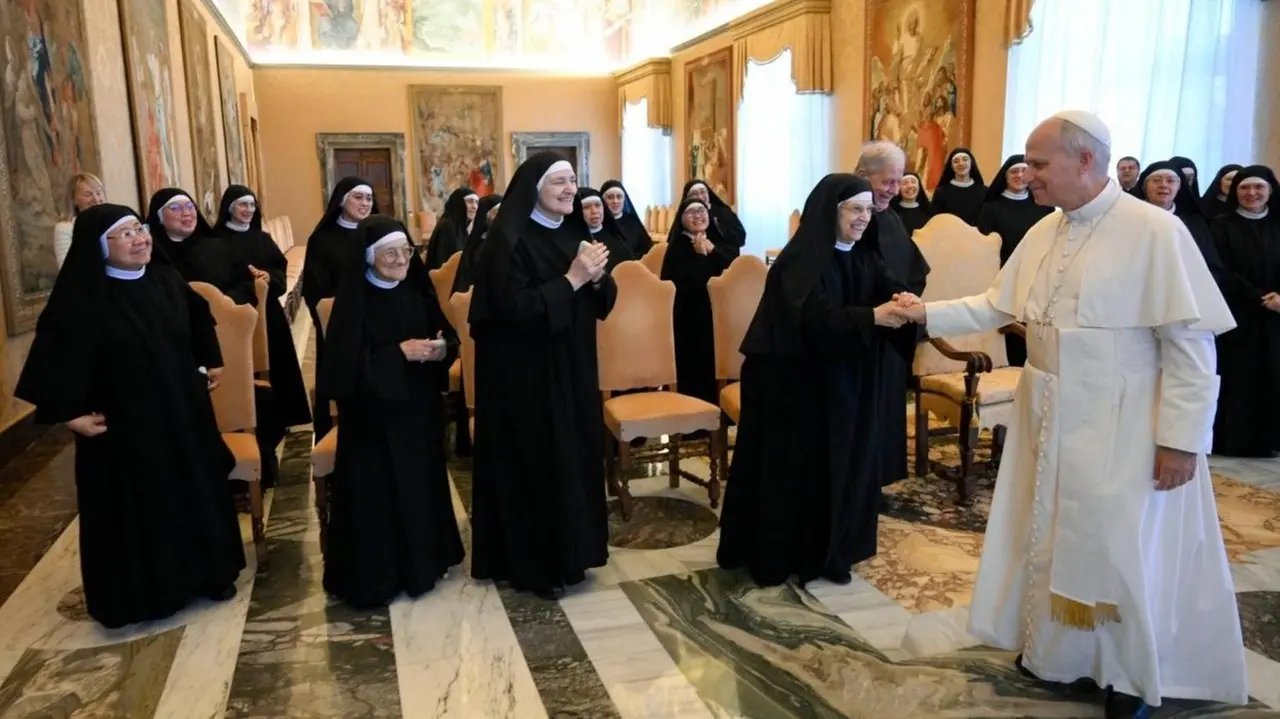
Group 6 and the revision of Mutuae relationes
Group 6 was coordinated by Cardinal Joseph Tobin, the Redemptorist Archbishop of Newark. Its central committee included the heads of the dicasteries concerned. Until 8 May 2025, one of them was Robert Prevost, then Prefect of the Dicastery for Bishops, who was elected Pope that day. Cardinal João Braz de Aviz remained a member until his term at the Dicastery for Institutes of Consecrated Life ended on 6 January 2025, when he was succeeded by Sister Simona Brambilla, who until then had been the group’s secretary. Other members included Cardinals Kevin Farrell and Luis Antonio Tagle; the Augustinian Bishop Luis Marín de San Martín, Undersecretary of the Synod and, since March 2026, Prefect of the Dicastery for the Service of Charity; and Linda Ghisoni, Undersecretary of the Dicastery for the Laity. The group worked for 22 months, from April 2024 to February 2026, through three subgroups led by the Portuguese Bishop José Ornelas, Sister Maria Sidonie Oyembo and Emanuele Colombo. They sent out questionnaires and interviewed bishops, religious superiors and leaders of movements.
Its mandate was to rewrite Mutuae relationes, the document issued on 14 May 1978 by the then Congregations for Religious and for Bishops, which laid down the “guiding criteria” governing relations between bishops and religious. The Synthesis Report from the first session of the Synod, in October 2023, had called for the document to be “reworked”. Since 1978, the Code of Canon Law has changed, coming into force in 1983; the number and geographical distribution of religious have changed; and movements and communities have emerged that either did not exist in 1978 or were still in their infancy. The report uses the acronym AFMENC for these bodies — associations of the faithful, ecclesial movements and new communities. The document runs to 70 pages, with 25 pages of synthesis and the remainder devoted to appendices in the subgroups’ original languages. It describes itself as “a work in itinere of a propositional nature”, to be entrusted “to the Holy Father’s discernment”.
The proposals fall into three sections
Bishops and consecrated life
The first section concerns relations between bishops and religious institutes. On new institutes, the report sets out ten criteria for discernment, including “origin in the Spirit”, ecclesiality, the “credibility of the foundation”, “ecclesial utility and real possibility of development” and “acceptance of times of trial”. It proposes that the criteria be published on the website of the Dicastery for Institutes of Consecrated Life so that every bishop can consult them.
It also says that members of so-called in itinere public associations of the faithful - groups awaiting recognition as religious institutes - should not wear a distinctive habit, use titles associated with consecrated life or adopt a “religious name” before receiving canonical recognition. The aim is to avoid confusion among both the faithful and members themselves over the group’s juridical status. Where an association fails to meet the required criteria, the report calls for clear procedures for its dissolution and for support to be provided to its members. Bishops are also urged to exercise vigilance over private associations that present themselves as religious, “especially if their members hold ministerial positions in the diocese”. For day-to-day relations with existing institutes, the report proposes that every diocese appoint a vicar or delegate for consecrated life, preferably a consecrated man or woman, and that the bishop and the major superiors present in the diocese meet at least once a year.
The proposal singled out in the Secretariat’s statement concerns “binding contracts or memoranda of understanding” between dioceses and institutes: written agreements based on a standard model and covering the mission entrusted to religious, formation, gender equality “in the workplace”, remuneration and property matters. The report also calls for mandatory conciliation committees made up of representatives of bishops and consecrated men and women, “particularly for matters relating to property”, with clear deadlines for resolving disputes. Oversight of relations between dioceses and institutes could be entrusted to the metropolitan bishop and a major superior in each region.
Two proposals concern individual cases. For religious priests seeking to leave their congregation and be incardinated into a diocese, the report calls for “fair and open communication” between the bishop and the superior. It also calls for support for those who leave an institute but wish to continue living a form of consecrated life. A separate section deals with institutes “in transition towards their historical completion”, the expression used for congregations, particularly in the Western world, that are ageing without attracting new vocations. The report recalls the indicators of decline identified in Paul VI’s 1966 motu proprio Ecclesiae Sanctae: a small number of members in proportion to the age of the institute, a lack of candidates over several years and the advanced age of most members.
It asks superiors to keep bishops informed about changes in governance, withdrawal from apostolic works, the care of elderly members and the transfer of property, and to consult the bishop before closing or restructuring an apostolic work. One passage concerns autonomous women’s monasteries. Within the framework of the 2018 instruction Cor Orans, the report says that clarifying the authority of federations of monasteries and their relationship with diocesan bishops “could assist” in decisions about the sustainability of monasteries and the disposal of their assets.
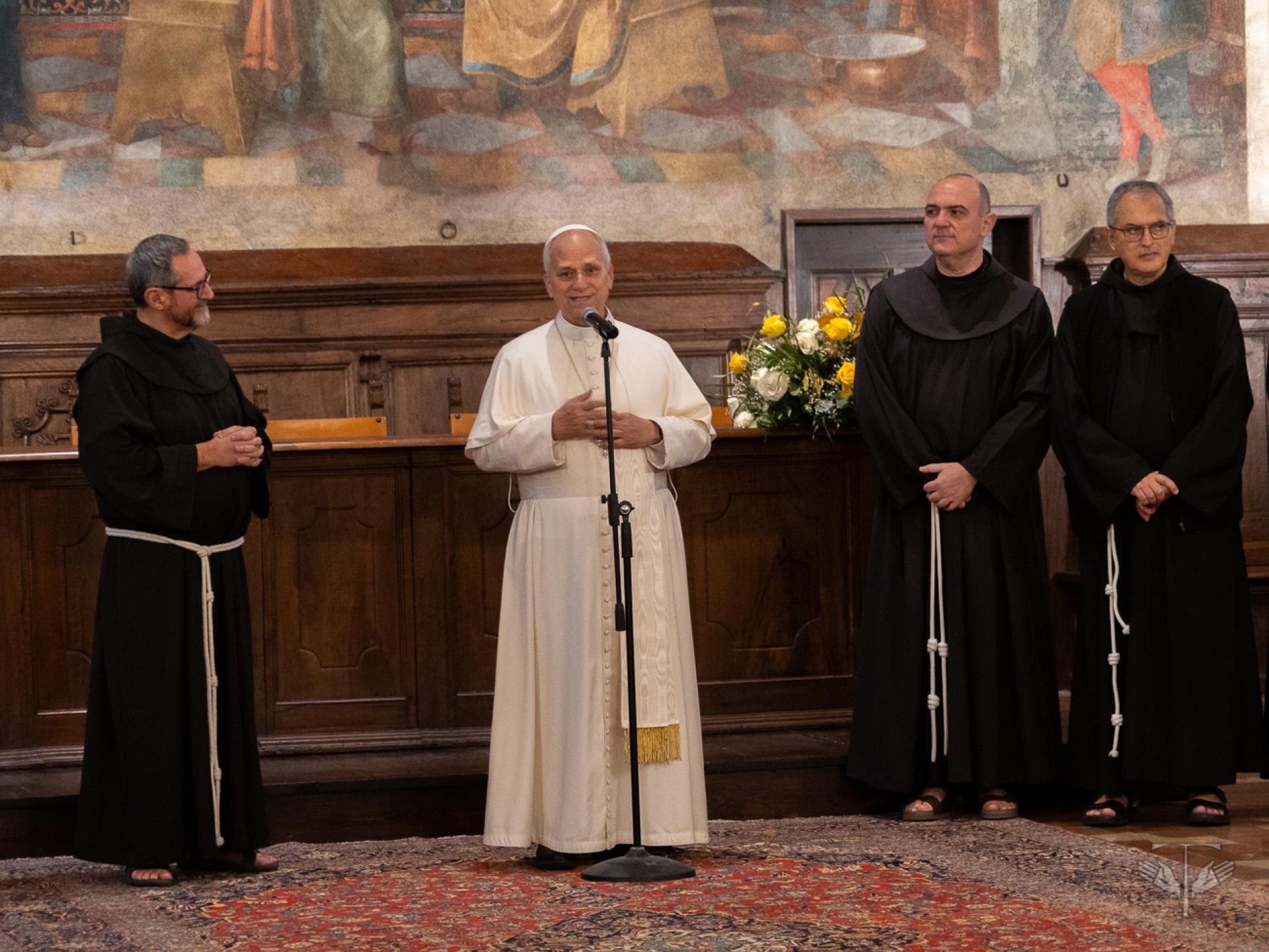
Episcopal conferences and conferences of superiors
The second section concerns relations between episcopal conferences and conferences of major superiors, the national bodies that bring together the leaders of men’s and women’s religious institutes.
This is where the ad limina visit first appears. The report proposes that bishops and religious “prepare [it] together”, “also involving pastoral workers”, and that a pastoral assembly be held after the bishops return from Rome. It proposes that each episcopal conference and the corresponding conference of religious begin, “within the next six months”, a joint one-year project serving vulnerable people on the peripheries.
It also calls for common modules on synodality and ecclesiology to be introduced in seminaries and novitiates; for consecrated people to join the teaching staff of seminaries; for episcopal conferences to have a religious delegate; and for consecrated people and lay people to sit “as full members and not merely as consultants” on diocesan, national and international commissions, “as well as in Vatican dicasteries”.
One proposal calls for women religious to take part in selecting the bishops responsible for consecrated life at national and diocesan level. Another asks the Church to reflect on its “methods of decision-making” when decisions concern the assets of consecrated people or “consecrated persons accused of abuse”.
Movements and associations
The third section deals with movements and associations. The report distinguishes between associations of the faithful - groups with educational, cultural or social purposes that are not necessarily founded on a charism - and movements and new communities, which have a “charismatic foundation”.
Interviews with bishops and movement leaders reveal mistrust on both sides. Among bishops, it stems from “recent scandals linked to various founders” and from the view that “the time of movements has passed”. Among movements themselves, the report identifies a tendency towards self-referentiality.
The proposals range from systematic inclusion in pastoral plans and diocesan bodies - councils for lay associations, pastoral councils and synodal assemblies - to formation for seminarians on the laity, “to overcome the prejudices that often arise precisely within seminaries”. The report also calls for a broader reflection on what happens to a charism “after the founder’s death”, when the original momentum of such groups begins to fade, and for movements to develop an “orderly structuring” of their governing bodies “from their very inception”.
The report also includes, as an appendix, recommendations from the UISG and USG, the international unions of women and men superiors general, whose language is more direct than that of the synthesis. They say that women religious “often lack equal canonical protection and access to decision-making”; describe the incardination of religious priests into dioceses as “a critical and unresolved issue” that must never become “a shortcut to fill pastoral gaps”; and insist that religious life must not be reduced to a solution for pastoral shortages, “especially parish administration”. They also call for the UISG and USG to be “fully involved” in drafting the document that will replace Mutuae relationes.
Group 7 and the ad limina visits
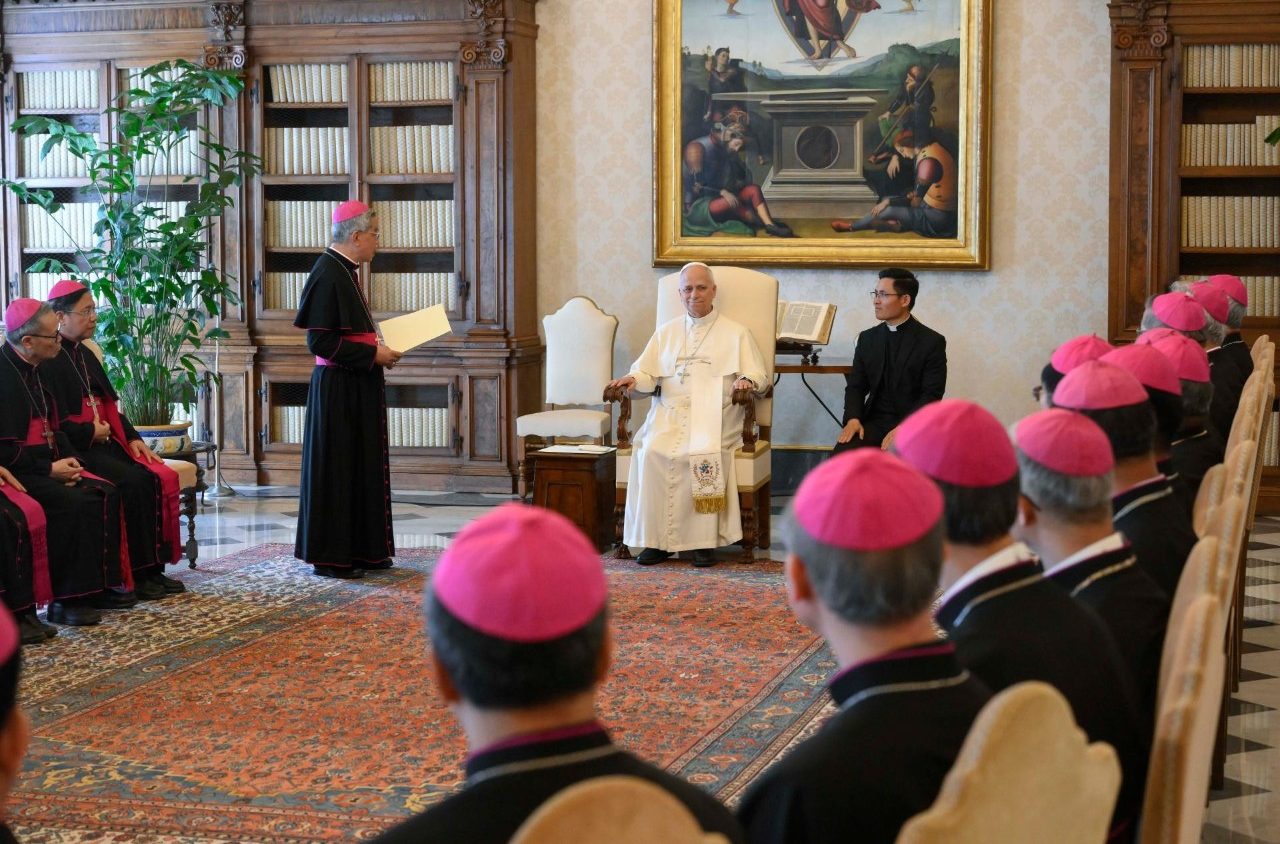
The ad limina Apostolorum visit, literally “to the thresholds of the Apostles”, is the journey every diocesan bishop makes to Rome to pray at the tombs of Peter and Paul, meet the Pope and visit the offices of the Roman Curia. The Code of Canon Law, in canons 399 and 400, links it to the five-yearly report on the state of the diocese, while the practical arrangements are laid down in a Directory issued by the Congregation for Bishops on 29 June 1988.
For many years, bishops have travelled to the Vatican in groups corresponding to their episcopal conference or, in countries with large numbers of dioceses, by region. In practice, the five-year timetable has not been observed for decades. The report says so explicitly and attributes the delays to “the Pope’s increased commitments” and the growth in the number of dioceses around the world.
Group 7, coordinated by Felix Genn, Bishop Emeritus of Münster, published the first part of its work, on the criteria for selecting bishops, on 5 May. The second part draws on consultations with episcopal conferences and the Eastern Churches.
Bishops are asking for shorter questionnaires, more time to prepare them, closer attention to their contents during meetings in Rome, greater emphasis on the spiritual dimension of the visit and more time with the Pope. Some simply want the visits to take place within the timetable already laid down by the rules. The report also records the response of the Curial bodies most closely involved - the Dicastery for Evangelisation, the Dicastery for the Eastern Churches, the Dicastery for Bishops and the Prefecture of the Papal Household. According to them, some of the bishops’ expectations are “legitimate and feasible”, while others “appear difficult to realise” because of the Pope’s commitments, the workload of the Curial institutions and “the concrete possibilities of their Officials”.
The Final Document of the Synod, in October 2024, described the visits as “the apex” of relations between bishops and the Pope, while noting that “many Bishops desire that the way these visits are conducted will be reviewed”. The report says that some dicasteries “are already engaged in work on a procedural reform” and presents its proposals as “a framework of reference” within which that work can be carried out. The proposals follow the three stages of the visit: preparation, the stay in Rome and the return home.
A new body and a new Preliminary Report
The first proposal is organisational. The report calls for an “interdicasterial body”, coordinated by the Prefecture of the Papal Household and including the Secretariat of State, the relevant dicasteries and the Secretariat of the Synod. It would be responsible each year for planning the timetable and overall approach of the visits and for assessing the specific needs of the Churches in a particular territory.
The text is explicit: “Without such a body, many of the proposals that follow may prove difficult to implement.”
On preparation, the report criticises the current questionnaire used for the Preliminary Report - the document on the state of the diocese submitted before the visit - for placing too much emphasis on statistics and for asking the same questions of dioceses throughout the world. It proposes that numerical data be submitted separately and that the report instead focus on the fruits of evangelisation, pastoral challenges, “tensions that require clarification” and what local Churches expect from the visit. Above all, it proposes that the report be prepared not only by the bishop and his closest collaborators but with the participation of priests, deacons, consecrated men and women and lay faithful, beginning with the Presbyteral Council and the Diocesan Pastoral Council.
One of the arguments is reliability. A report produced by a wider group of people, “competent in various areas of pastoral activity”, would be better able “to substantiate the truthfulness of its affirmations”. The reports would then be discussed collegially by the bishops of the ecclesiastical province or episcopal conference, under the guidance of the metropolitan or conference president, and sent to the coordinating body together with the nuncio’s report. Online preparatory meetings with officials of the Curia could be used to reduce the number of commitments during the stay in Rome.
The stay in Rome
The report proposes that ad limina visits take place at least once every eight years, instead of the five-year interval laid down in the Code, with the longer gap offset by more frequent routine contact between the local Churches and the Holy See. It says the pilgrimage and the celebration of the Eucharist in the basilicas of St Peter and St Paul should form the heart of the visit, and recommends scheduling a Mass presided over by the Pope. Other moments of prayer could include a penitential liturgy or a celebration with national communities living in Rome.
The report proposes dividing bishops into smaller groups because “the meeting with the Pope should provide an opportunity for genuine spiritual exchange, something that can only be achieved in small groups”. Different models of visit should also be developed according to the size of each delegation. The programme should avoid visits to dicasteries that are too brief to serve a useful purpose, combining them or leaving them out where necessary. For dialogue with the Curia, the report suggests using “Conversation in the Spirit”, the small-group method used during the synodal assemblies.
It also proposes that a diocesan delegation, chosen by the local Church from among those involved in preparing the report, accompany the bishop to Rome and take part in some of the meetings. “Funding strategies” should be developed so that dioceses farther from Rome or with fewer financial resources are not placed at a disadvantage. Two proposals are more specific. The first concerns abuse. The ad limina visit should become “the ordinary occasion” for assessing the commitment of local Churches to safeguarding minors and vulnerable adults. Bishops would submit a specific report beforehand, which would also be discussed in Rome with the Pontifical Commission for the Protection of Minors, in accordance with the Commission’s Statute of 20 May 2026.
The second concerns the Eastern Churches. Given the migration of Eastern-rite Catholics to countries where the Latin rite has traditionally predominated, the visit should help Latin bishops become more aware of the heritage of the Eastern Catholic Churches.
The return and evaluation
After the bishops return home, the report proposes an online meeting with the coordinating body to assess the outcome of the visit; a written report from the dicasteries to the episcopal conferences, including issues that could not be dealt with in Rome because of lack of time; and one or more public meetings at which the bishop and the faithful who accompanied him report back to the diocese. The bishops of the ecclesiastical province or episcopal conference would then meet again to identify common pastoral priorities. A mid-term online meeting with representatives of the Curia would take place between one ad limina visit and the next.
At regular intervals, an “independent ecclesiastical commission” would assess the entire process, including the work of the coordinating body and the relevant dicasteries. Finally, the report refers to Study Group 12 the question of the theological and juridical status of episcopal conferences, which ad limina visits “in an increasingly global Church” make more urgent.
What happens next
The Secretariat’s statement refers back to its Note of 3 March 2026 in setting out the next stage: the competent dicasteries and the Secretariat of the Synod will have to turn the proposals into practical measures to be submitted to Leo XIV, who will make the final decisions.
Group 6 has completed its mandate with the submission of its report. Group 7 is continuing its work on the judicial function of the bishop, which will be published once that work has been completed.