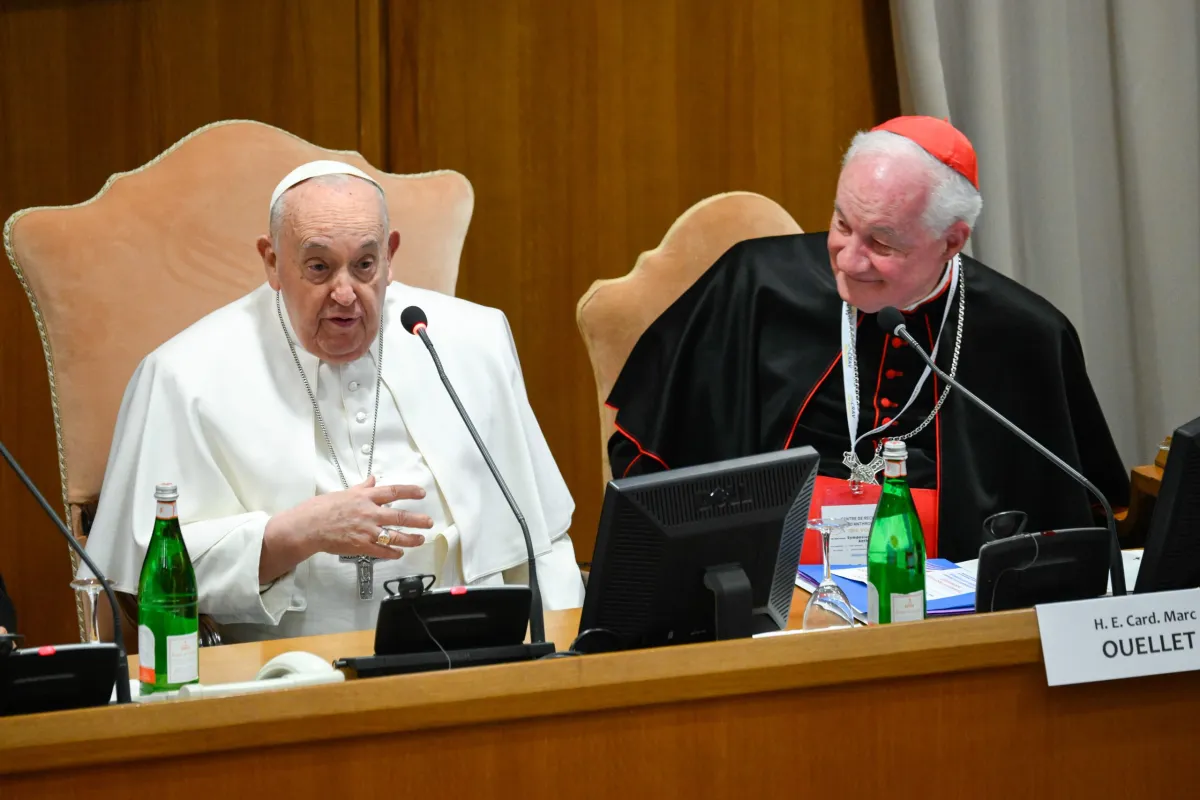
On 31 August, the Quebec Superior Court ruled in favour of Canadian Cardinal Marc Ouellet in the defamation action he brought against Pamela Groleau, the former pastoral worker for the Archdiocese of Quebec who publicly accused him of sexual assault in 2022. Justice Martin Castonguay ordered Groleau to pay the cardinal C$100,000, the amount Ouellet had sought in his counterclaim. The 52-page judgment, delivered after a trial held over seven days in March, brings the civil proceedings to an end in a case that had attracted international attention since 2022 and involved a cardinal who, until only a few years ago, was regarded as one of the most powerful figures in the Roman Curia.
Who Marc Ouellet is
Marc Ouellet was born on 8 June 1944 in La Motte, in the Diocese of Amos, Quebec. He was ordained a priest for the Diocese of Amos on 25 May 1968 and moved to Colombia two years later to teach theology at the major seminary in Bogotá. It was there, in 1972, that he joined the Society of the Priests of Saint Sulpice. Between 1970 and 1989, he divided his time between teaching at seminaries in Bogotá, Cali and Manizales - where he became rector in 1984 - and periods of study in Rome, where he obtained a licentiate in philosophy in 1974 and a doctorate in dogmatic theology from the Pontifical Gregorian University in 1983.
He returned permanently to Canada in 1990 as rector of the seminary in Montreal and, from 1996 to 2002, was professor of dogmatic theology at the Pontifical Lateran University in Rome. John Paul II consecrated him a bishop in St Peter’s Basilica on 19 March 2001. On 15 November 2002, he appointed him Archbishop of Quebec and Primate of the Catholic Church in Canada, an office Ouellet took up on 26 January 2003; on 21 October that year, he was created a cardinal.
From 2010 to 2023, Ouellet headed the Congregation, later Dicastery, for Bishops, the Vatican body responsible for preparing episcopal appointments around the world. He took part as a cardinal elector in the conclaves of 2005 and 2013. His resignation, submitted in 2019 on reaching the age limit, was accepted by Francis in January 2023, with effect from 12 April. He was succeeded by Robert Francis Prevost, then Bishop of Chiclayo in Peru, who was elected pope in 2025 and took the name Leo XIV.
Who Pamela Groleau is
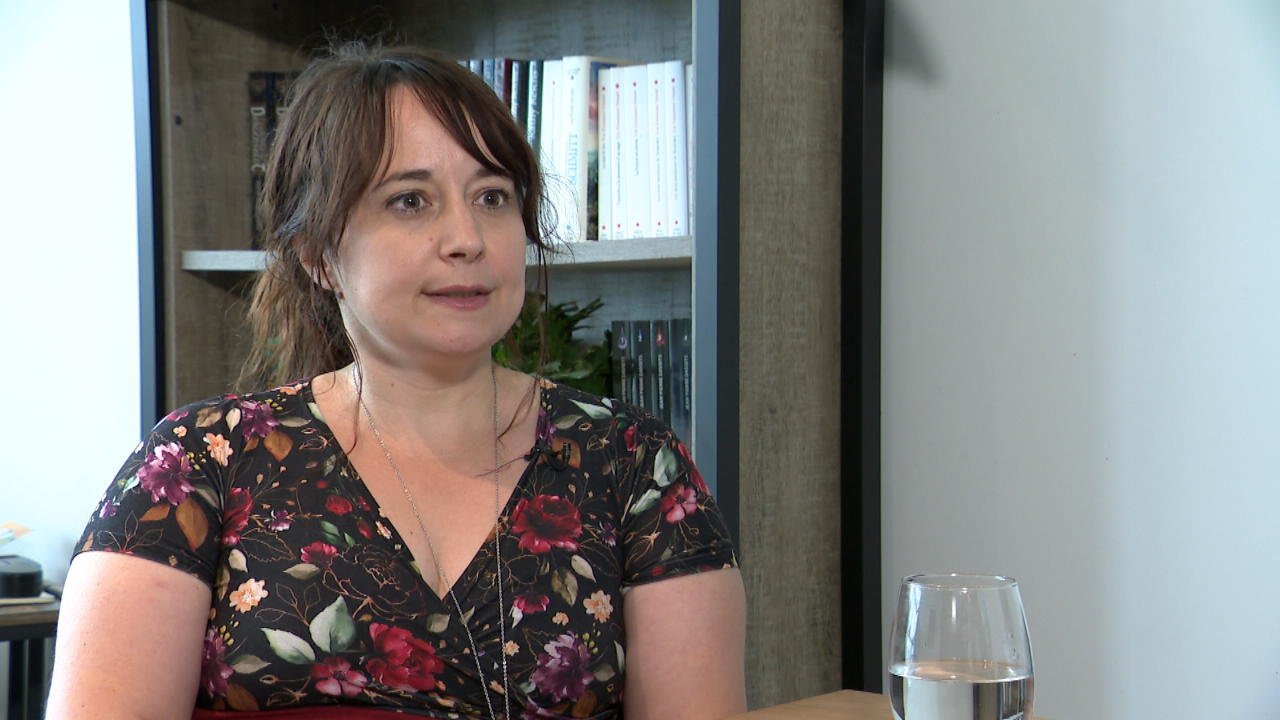
Pamela Groleau was born on 2 October 1984 in Deschambault, into a practising Catholic family, and studied theology. In 2008, while studying for a master’s degree, she obtained an internship as a pastoral worker in the Diocese of Quebec, where she later worked in several parishes until 2019. That year, she joined the Canadian Armed Forces as a civilian employee of the Military Ordinariate.
Between 2019 and 2020, while attending training courses on sexual violence in the workplace, she came to accuse the then Archbishop of Quebec of sexually assaulting her. Since 2023, Groleau has been on leave from work and has received benefits from Quebec’s public compensation scheme for victims of crime.
How the allegations arose
In November 2020, Groleau approached the victims’ support committee established by the Archdiocese of Quebec, initially anonymously. When she was asked to identify the people involved, the committee explained that the case involving Ouellet did not fall within its remit because the cardinal would have to answer directly to his hierarchical superior, the Holy See. The letter naming those involved, dated 26 January 2021, was therefore addressed to Pope Francis.
The Pope asked the Jesuit Fr Jacques Servais to assess the allegations, and on 18 August 2022 the Holy See Press Office announced that, following the appropriate consultations, there were insufficient grounds to open a canonical investigation into allegations of sexual assault by the cardinal against the person identified by the letter F, the pseudonym chosen to protect Groleau’s anonymity.
Two days earlier, on 16 August 2022, documents had been filed in a class action authorised in May that year by Justice Bernard Godbout against the Archdiocese of Quebec. Groleau’s account, in which she was identified as F, was among those set out in the pleadings. The class action concerns people who say they were sexually abused by members of the diocesan clergy from 1940 onwards. The two class representatives, identified as X and Y, were minors when they were abused by the priests Rosaire Giguère and Jean-Marie Bégin respectively. The judgment also refers to five other cases, identified by the letters A to E, involving people who were between five and 15 years old at the time. Groleau, alone among all the cases cited in the action, was 24 when the incidents involving Ouellet were alleged to have begun.
In the summary table attached to the class action, which lists 101 incidents involving 96 people, 89 of whom were minors at the time, the entry concerning Groleau gives the locations of the alleged abuse as the presbyteries of Sainte-Augustine, Cap-Rouge and Sainte-Catherine, as well as several hotels, between 2017 and 2018, when she was 33. The judgment notes that these details correspond only to the relationship Groleau said she had during those years with another diocesan priest, Léopold Manirabarusha, which involved sexual intercourse. In the same entry, however, Cardinal Ouellet’s name also appears among those accused, alongside Manirabarusha’s.
The four incidents
The incidents attributed to Ouellet in the class action are described in the same terms used for the abuse suffered by minors, with the allegations repeatedly referred to in the plural, as though each incident amounted in itself to a sexual assault.
The first dates from 29 September 2008, at the Journée des Mandatés, a diocesan event attended by about 200 people and held at the motherhouse of the Sisters of Charity of Quebec. According to Groleau, while she was sitting at the back of a room that had largely emptied after lunch, she felt two hands placed on her shoulders and massaging them firmly. When she looked up, she saw the cardinal, who allegedly smiled at her and stroked her back before walking away without saying a word.
The second incident dates from November of the same year, during the drinks reception following a ceremony marking the appointment of a colleague, Marie-Pierre Gagné, as a pastoral worker, attended by about 50 people. After a priest who was present, Marcel Pellerin, asked Ouellet whether he knew “the new intern”, the cardinal allegedly replied aloud that he knew her “very well”, then held her hands for a prolonged period while whispering in her ear that she should remind him of her name.
The third incident, which Groleau has never been able to date precisely, concerns a meeting in a room in the basement of a church. According to her account, the cardinal crossed the room to sit beside her during a small-group discussion, making her feel, in her words, “hunted”.
The fourth, on 7 February 2010, allegedly took place at the ordination of a former university classmate, Alexandre Julien, in the Cathedral-Basilica of Notre-Dame de Québec, in front of hundreds of worshippers. Groleau said she approached to congratulate her friend while Ouellet was talking to other people. Noticing her, the cardinal allegedly told her there was nothing wrong with “treating oneself a little”, given that they were already seeing each other for the second time that week, before embracing her and sliding his hand down her back as far as her buttocks.
None of the four incidents, as Groleau herself acknowledged under cross-examination, took place in private: she was never alone with Ouellet, the cardinal never attempted to contact her by telephone or by letter, and apart from these four public encounters there was never any communication of any kind between them.
The trial
The trial was heard over seven days - 2, 3, 4, 5, 6, 9 and 10 March 2026 - before Justice Castonguay. Ouellet was represented by Dominique Ménard, Mathilde Simard-Zakaïb and Christophe Savoie of LCM; Groleau was represented by ADW lawyers Alain Arsenault, Justin Wee and Audrey Labrecque, the same firm acting for the class in the collective proceedings.
Much of the trial centred on the differences between the accounts Groleau had given over time: the letter to the diocesan committee in November 2020, the letter addressed to the Pope in January 2021, her examination for discovery in March 2023 and, finally, her evidence in court on 5 March 2026.
As to the length of the first incident, the shoulder massage, the letter to the Pope gives no duration. In her 2023 examination for discovery, Groleau estimated that it lasted “three or four minutes”; in court, this became “thirty seconds, perhaps a minute”. As for the hand-holding in the second incident, what had initially been described as lasting “five minutes” became “longer than a normal handshake”. Pellerin himself, the only witness to the scene, said he had seen an ordinary handshake, recalling only that the cardinal had leaned over to whisper something in her ear.
The judgment devotes more attention to the fourth incident, which by the end of the trial Groleau described as the only one amounting to an actual sexual assault. She characterised the other three in court as a form of escalation towards it, or otherwise as anecdotal incidents.
Groleau had initially placed the scene on the forecourt of the Church of Saint-Thomas-d’Aquin, confusing Julien’s diaconal ordination with his priestly ordination. A video produced during the trial instead shows that, if the incident occurred at all, it would have taken place in the transept of Notre-Dame Basilica, between the choir and the nave. A master of ceremonies present that day, Jérôme Frenette, also testified that while greeting worshippers the cardinal always held his pastoral cross in his hand, which, according to the court, made the gesture described by Groleau “difficult, if not impossible”.
Groleau’s account of where Ouellet had allegedly touched her also changed over time. In her letter to the Pope, she wrote that the cardinal’s hand had stopped in a “borderline” area; in court, she referred to the “gluteal fold”, the beginning of the crease beneath the buttocks; in the class-action pleading, drafted with the assistance of her lawyers, it says instead that Ouellet slid his hand “as far as her buttocks”.
Asked about the discrepancy, Groleau explained that, at her lawyers’ suggestion, she had consulted an anatomical diagram to determine how to describe the location in the court documents, while acknowledging that the cardinal had never touched the rounded part of her buttocks.
The two other witnesses
Two witnesses were also called during the trial in an attempt to corroborate Groleau’s account, and the judge dismissed the relevance of both. The first was Mélissa Trépanier, who described an encounter with Ouellet on 7 July 2014 during which the cardinal allegedly slipped a C$50 note into the neckline of her jumper while greeting her with an embrace. In court Trépanier said she had felt angry, but the judge noted that this was inconsistent with the letter she herself had written to the Pope, in which she said she had laughed, “not realising what was happening”. Ouellet admitted the incident, describing it as an awkward gesture: he said he had placed the note inside the collar of the woman’s top because his cardinal’s robes had no pockets. The judge considered the account to be of little relevance to the case.
The second witness, Marie-Louise Moreau, gave evidence about an incident in the sacristy of the Grand Seminary of Montreal on Easter Sunday in 1992. According to her account, the celebrant stood behind her, placed his hands on the table on either side of her and rubbed his pelvis against her back.
Moreau never positively identified the man’s face, saying she had identified him from the embroidered designs on the forearms of the chasuble he was wearing. In addition to finding the evidence irrelevant, since no modus operandicomparable to that described by Groleau could be established, the judge accepted Ouellet’s rebuttal evidence: Fr Pierre Léger, who was responsible for the chapel of the Collège de Montréal from 1975 to 1992, testified that during that period he celebrated the Sunday Masses himself and, when necessary, was replaced by one of two other priests, never by Ouellet.
The court’s reasoning
In Quebec, defamation falls within the general principles of civil liability laid down in Article 1457 of the Civil Code, under which a person who causes harm through conduct that departs from that of a reasonable person is required to make reparation. In its 2002 judgment in Prud’homme v Prud’homme, the Supreme Court identified three situations capable of amounting to defamation: making unpleasant statements about someone while knowing them to be false; disseminating unfavourable information that one ought to have known was false; or, less commonly, disseminating true information without just cause.
Where allegedly defamatory statements appear in court proceedings, as in the class action, the case law applies a stricter test consisting of four cumulative conditions: the allegations must be false, irrelevant to the proceedings in which they appear, made maliciously or with recklessness amounting to malice, and made without any reasonable or probable cause.
Castonguay found all four conditions to have been met. On falsity, he wrote that Groleau’s account had been amplified “to the point where the acts attributed to Cardinal Ouellet distort the very context in which they are reported”. On relevance, he observed that the incidents described - a massage lasting a few seconds, a prolonged handshake and an embrace - bore no relation to the abuse suffered by the children at the centre of the class action.
On malice, he stressed that neither in her letter to the Pope nor in her evidence before the court had Groleau ever considered the consequences that associating the cardinal with a group of paedophile priests might have for his reputation, showing concern only for the repercussions the case might have on her own career in the military.
The judgment
In reconstructing the media coverage of the case, the judge relied on a collection of 59 articles filed in evidence by Ouellet, including a National Post article of 17 August 2022 headlined “Sex assault accusations hit the man who could have become history’s first Canadian Pope”. In court, the cardinal said the affair had affected his participation in a number of public events, including an invitation from the Archbishop of Montpellier in 2023 and his attendance at celebrations for Saint Thérèse of Lisieux in 2025.
Groleau must pay the C$100,000 with interest at the legal rate from 13 December 2022, the date on which Ouellet filed his counterclaim, as well as legal costs. The cardinal confirmed his earlier undertaking to donate the entire amount to efforts to combat the sexual abuse of Indigenous people in Canada. The judgment concerns only the allegations made by Groleau against Ouellet. The class action as a whole - concerning alleged abuse of minors by other clerics in the Diocese of Quebec, including the priests Rosaire Giguère, Jean-Marie Bégin, Aurélien Pouliot, Alfred Berthiaume and Stanislas Paradis - remains a separate proceeding and is unaffected by this decision.