‘Death remains an enigma which, for the Christian believer, becomes a mystery, offering neither knowledge nor certainty, but only convictions nourished in the depths of our humanity.’ Enzo Bianchi wrote these words when, already in his eighties, he returned to a book first written forty years earlier. Vivere la morte had been one of his most personal attempts to stand before what human beings tend to push away and what Christians, if they take the Gospel seriously, cannot simply cover over with reassuring words. It was a subject to which he often returned, even in the simplest conversations and in convivial moments with friends. He would say, with a certain sadness: ‘Today, in the Church, we speak far too little about death.’ For him, that silence said something about the way we live our faith.
Death had entered his life early. He was eight years old when his mother, Angela, died. Much later he would write: ‘From my mother’s death I learnt what it means to die as a Christian halfway through one’s days.’ Some experiences settle deep within us and return, transformed, in the way we look at God, at others and at our own end.
In Bianchi, that memory did not give rise to a sombre spirituality. Rather, it gave him a familiarity with human limitation. Death was not something to be tamed. It remained difficult and painful, capable of putting to the test even what a man had preached throughout his life. ‘One can speak about death,’ he wrote, ‘one can listen in peace to the Christian message about it, but there is no certainty that the question will not become tragic at the hour of “my” death.’
It was a very Bianchi sentence. It contained that mistrust of easy answers which accompanied so much of his Christian reflection. In his final years, Enzo did not feel that he had arrived at a faith more secure than the one he had known in maturity. If anything, the opposite was true. He wrote that his faith had changed, that it had become ‘more inhabited by questions and doubts than in the past’. And immediately afterwards, in just a few words, he entrusted to paper what, despite everything, had remained intact: ‘love for the Lord has remained’. Perhaps it is here that the true measure of his life can best be understood.
For decades Bianchi spoke a great deal. He wrote books, commented on Scripture, preached and engaged in discussion with believers and non-believers alike. He was listened to in dioceses, monasteries, universities and places of culture. Yet at the heart of his Christian life there remained something simpler: love for Christ, lived through the Word and within relationships.
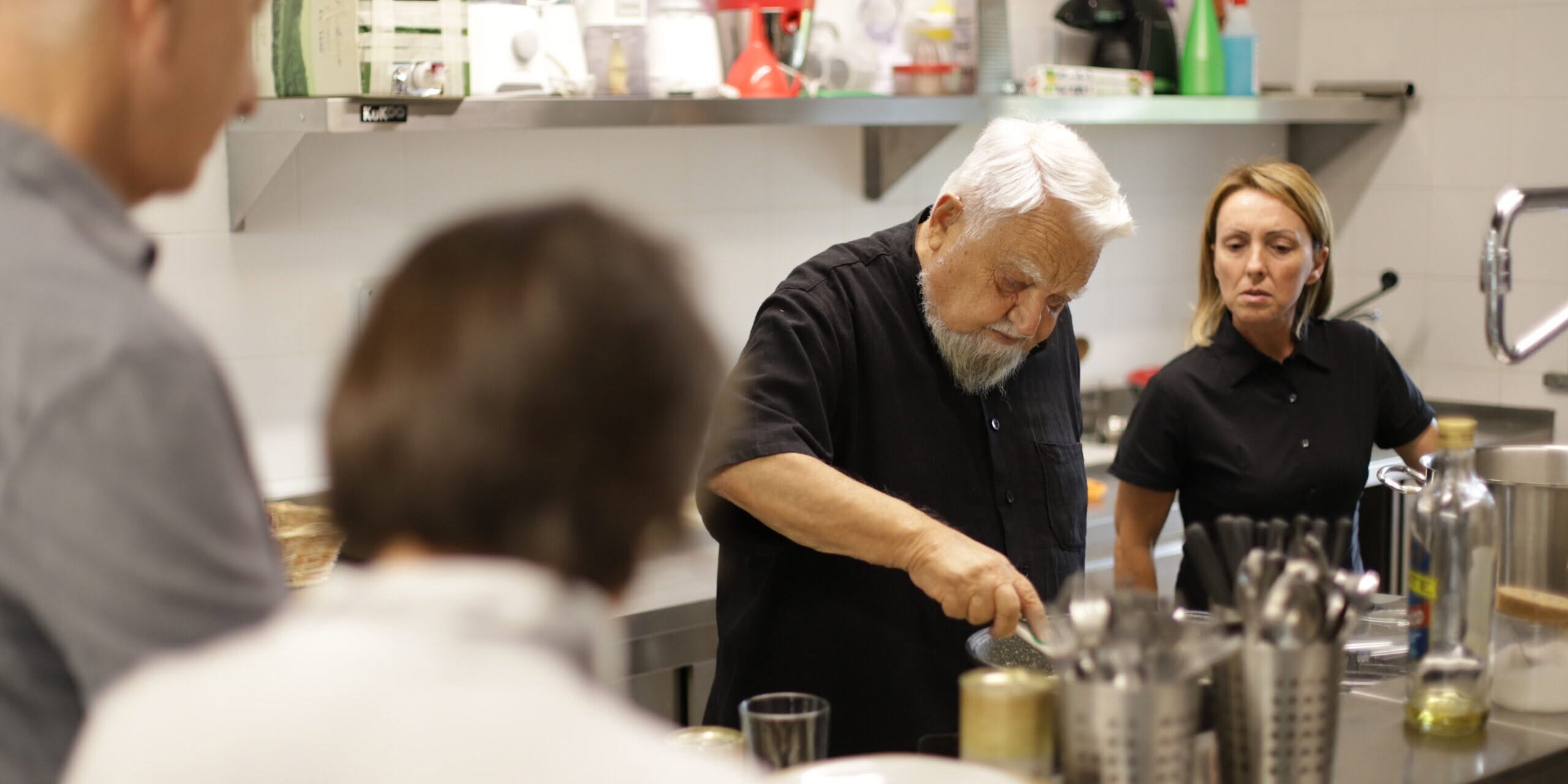
His ecumenism was rooted there too. Long before the word became commonplace in Catholic vocabulary, before meetings between Catholic bishops, Protestant pastors and Orthodox hierarchs became a normal part of ecclesial life, Bianchi had understood that Christian unity could not be merely a matter for official dialogue.
He had come to know Taizé and Roger Schutz. He had met Athenagoras in Istanbul. He had spent time on Mount Athos. He had breathed the atmosphere of that period in which the Second Vatican Council gave the Catholic Church a new awareness of its relationship with other Christians. Then came Bose. On 8 December 1965, on the very day the Second Vatican Council came to an end, Bianchi began his monastic life there. Three years later, two people arrived at the farmstead wishing to share that choice: a Swiss Reformed pastor and a young Catholic woman. The question then was anything but theoretical: could men and women, Catholics and Protestants, live together in a common life of celibacy, prayer and listening to Scripture?
Bose was the answer. Today it is difficult fully to convey just how daring that choice was. Not because Bianchi believed he had resolved the doctrinal divisions running through Christianity. The differences remained. But precisely for that reason, living together mattered. Unity was not proclaimed as though it had already been achieved. It was sought. For many years, this was Bose: a place where Christians from different traditions could pray together, study together, eat at the same table and engage with the Fathers of the Church and the great monastic traditions of East and West.
The search for unity became one of the most recognisable threads running through Bianchi’s life. For around thirty years he worked with the Pontifical Council for Promoting Christian Unity and was a member of the Catholic Committee for Cultural Collaboration with the Orthodox and Eastern Churches. St John Paul II included him in the delegation which, in 2003, took the icon of the Mother of God of Kazan to Patriarch Alexy II in Moscow. But Bianchi’s ecumenism cannot be measured by the positions he held. Perhaps his most enduring insight was another: the Christian must learn to live with the other before seeking to convince them. He must listen. He must recognise that the other’s tradition may preserve something good that he himself has forgotten. He must accept that centuries of division cannot be erased by solemn declarations and yet do not justify indifference.
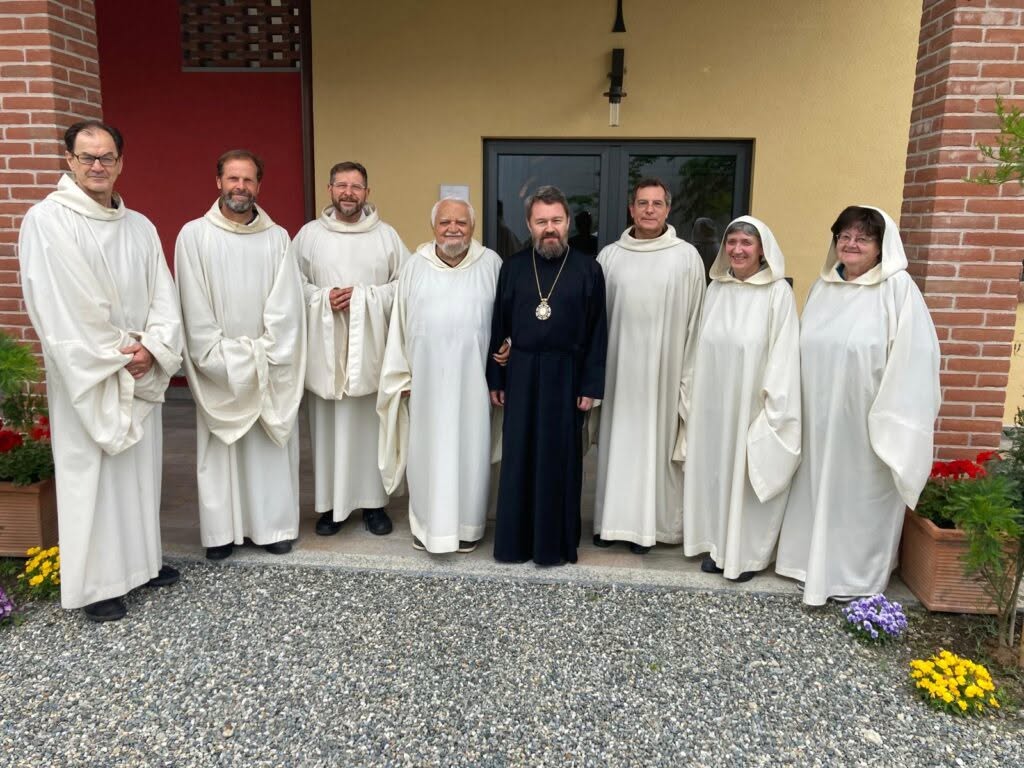
There is something profoundly monastic in this idea. Living together forces us to reckon with the concrete reality of the other person: with their prayer, their language, their habits, their differences.
This was precisely what the early Bose sought. Its Rule spoke of respecting the ‘pace of each person’ and of the need to prevent the community from becoming a copy of the founder’s personality. It is striking to reread those words today. The unity Bianchi sought among the Churches was inseparable from his understanding of what it means to be human. In his Gospel commentaries too, he returned constantly to this point. In Perché avete paura? he wrote that the Gospel narrative offers ‘a practice of humanity’: Jesus’ way of inhabiting the body, building relationships, using words and being in the world.
This is why Bianchi was so often able to speak even to those who did not belong to the Church. He did not ask the reader immediately to enter into a religious system. He brought them face to face with Jesus as a man. With his compassion. His fear. His friendship. His anger. His solitude. His death. Even faith, in Bianchi’s pages, retained something unresolved. He loved the deeply unsettling ending of Mark’s Gospel: the women arrive at the tomb, receive the announcement of the resurrection, flee and are afraid. The disciples have abandoned Jesus; Peter has denied him. Bianchi called Mark the Gospel of ‘difficult faith’. That phrase says something about his own life too.
A difficult faith is a faith that does not turn away from rupture. Bianchi experienced it until the final years of his life. His earthly journey did not end at the Bose he had founded and led for decades. His final years were marked by conflict, exclusion and separation from a community to which he had given his entire life. For Bianchi, it was a devastating wound: the community he had brought into being and accompanied eventually came to treat its own founder as a stranger, culminating in a genuine act of parricide. To that rupture was added his relationship with the institutional Church. Bianchi was subjected to measures he considered unjustified and whose reasons and manner he continued never fully to understand. Pope Francis’s conduct also remained a source of pain for him: he could not understand why such suffering had been inflicted upon him without his being given explanations capable of making sense of it. That question accompanied him through his final years and remained without an answer he could truly recognise as such. It would be false to remember him by erasing that wound. It would be equally false to reduce his entire life to it.
His final years forced him to do what every monk, sooner or later, must do: lose. Lose a role. Lose a home. Lose a way of life that had come to seem almost indistinguishable from his own biography. Perhaps this too is why the pages of Vivere la morte now possess a particular force. Bianchi had written that dying means, above all, being separated. ‘Death remains a difficult event,’ he said, because it brings communication with the living to an end. The men and women we encounter along the way are ‘the pearls, the most precious and important treasures of our lives’. Death takes the measure of relationships because it brings them to an end. And here, almost naturally, the Bianchi who meditated on death meets the Bianchi who devoted his life to ecumenism. Both believed that the human person can be understood only in relationship. ‘Life is essentially a walking together,’ he wrote, again while reflecting on dying. Those words offer us a way of reading his entire ecumenical experience. Walking together means accepting that no one journeys alone. It means that no Church can treat the others as though they were irrelevant to its own faith. It also means recognising that Christian unity demands far more than institutional cordiality.
Bianchi belonged to a generation that had seen this hope take concrete form. John XXIII, the Second Vatican Council, Paul VI and Athenagoras, Taizé, the rapprochement with the Christian East. A generation for whom ecumenism was not a project to be framed and displayed, but a question concerning fidelity to the Gospel itself.
In recent decades, that sense of urgency has perhaps weakened. Photographs of Church leaders together have become familiar. Ecumenical language has entered official documents. And precisely for that reason, it can become harmless.
Throughout his life, Bianchi reminded us that it is not.
Athenagoras, the man he had known and loved, also returned in his meditations on death. Bianchi recalled his final days in hospital, ‘transfigured into a monastic cell’. Alongside him he placed John XXIII. Two deaths, two men who had sought unity. Of them he wrote: ‘they showed all of us how to live and how to die’. Now that reflection concerns him too. Not because death makes a life perfect. In Enzo’s words, death never worked that way. Rather, it stripped away our defences. In his final years, he himself acknowledged that he had fewer certainties. His faith was traversed by questions. Love remained.
And perhaps, in the end, it is precisely this poverty that makes his Christianity credible.
After a lifetime spent studying Scripture, Bianchi did not come before Sister Death claiming to have unravelled its mystery. After a life devoted to unity, he did not see the Churches become fully one again. After building a community, he knew the pain of separation. He went on to bring another remarkable community into being. Much remained unfinished. But for him, Christianity had always also had to do with what remains unfinished.
In 2023 he wrote that, when the time came, he hoped he would be able to say: ‘I rejoice because they say to me: let us go to the dwelling of the Lord!’ He would then have wanted to thank the Lord, ‘those whom I have loved and who have loved me’, the earth and all the creatures that had accompanied him.
Perhaps that is where we can say goodbye to you, Enzo. Between the mystery of death and gratitude. Between a faith that had grown poorer in answers and a love which, as you yourself wrote, had never failed. Among Christians who remain divided, whom throughout your life you asked to continue walking together.
Marco Felipe Perfetti
Director, Silere non possum