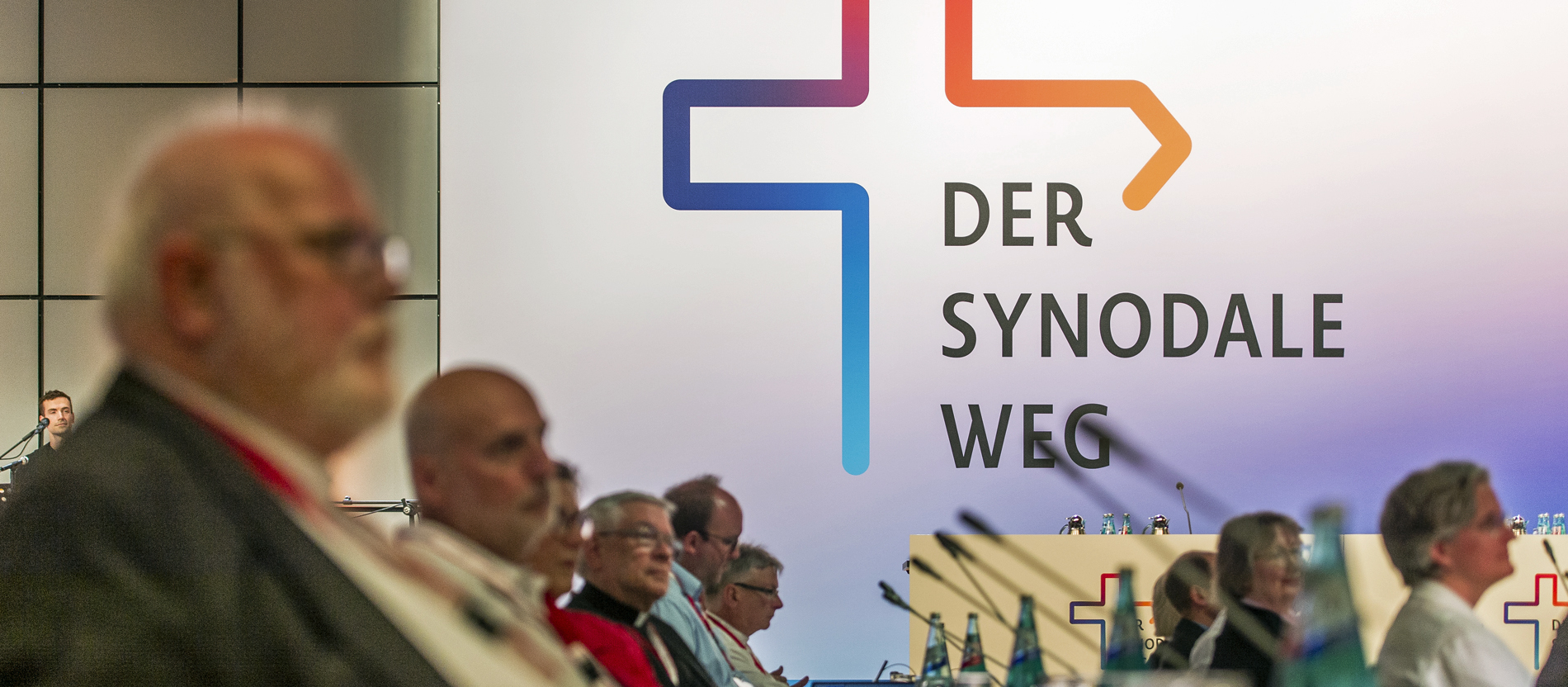
The first meeting of the Synodal Conference of the Catholic Church in Germany, scheduled for 6 and 7 November in Stuttgart, will not take place. Hotel rooms booked for delegates and bishops have already been cancelled, and no alternative date has yet been set. The announcement was made on Friday 28 August by the Central Committee of German Catholics (ZdK), the lay body which, together with the German Bishops’ Conference (DBK), was due to establish the new organisation. There is only one reason: the Vatican has still not approved the statutes establishing it.
This, more than anything else, shows how the ground had already begun to shift beneath the German Synodal Way by 8 May 2025 — a process Robert Francis Prevost had been able to observe at close quarters during his years at the head of the Dicastery for Bishops.
The Synodal Conference is intended to bring together, with equal voting rights, 27 diocesan bishops, 27 representatives of the ZdK and a further 27 Catholics elected from among clergy and laity, making a total of 81 members tasked with dealing with the life of the Church in Germany at national level. It is meant to be the culmination of the German Synodal Way (Synodaler Weg), the reform process launched in 2019 in the wake of the clerical sexual abuse scandal, after the independent study known as the MHG Study had, in the autumn of 2018, quantified for the first time the scale of abuse within the German Church.
The Synodal Way concluded in March 2023, after six often tense plenary assemblies and around 150 pages of resolutions on issues including the ordination of women as deacons, lay preaching during Mass and priestly celibacy. Its most ambitious proposal, however, concerned governance: the creation of a permanent body made up jointly of bishops and lay people, replacing the Joint Conference (Gemeinsame Konferenz), which has operated since 1976 and brings together the DBK and ZdK twice a year, but has no decision-making powers.
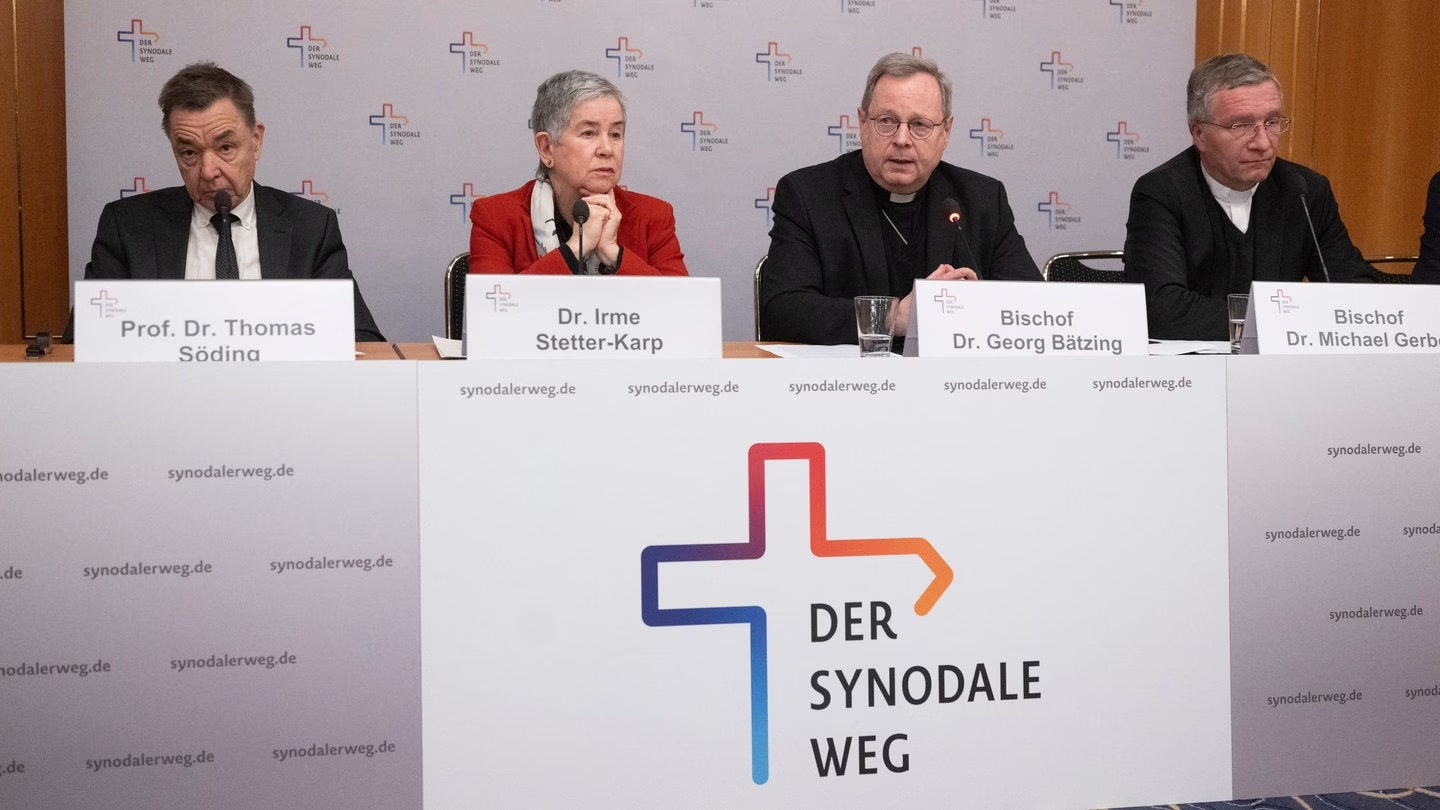
As early as September 2022, when the proposal was still only a draft, the Holy See made clear that neither the German bishops nor the participants in the Synodal Way had the authority to establish such a body, which risked placing itself in practice above the Bishops’ Conference, contrary to the ecclesiology of the Second Vatican Council. Despite that veto, in March 2023 the Synodal Way nevertheless established an interim body, the Synodal Committee (Synodaler Ausschuss), tasked with drafting, by March 2026, the statutes of the future permanent body. Four diocesan bishops - Cardinal Rainer Maria Woelki, Archbishop of Cologne, and the bishops of Eichstätt, Passau and Regensburg, Gregor Maria Hanke, Stefan Oster and Rudolf Voderholzer respectively - chose not to take part, considering it incompatible with the universal synodal process launched by Pope Francis, while not rejecting synodality itself.
The statutes, drawn up between 2024 and 2025, include from their opening lines a clause specifically intended to reassure Rome: the Synodal Conference is required to “respect the constitutional order of the Church and safeguard the rights of diocesan bishops”. The most sensitive issue, however, remained the actual powers of the new body. The initial draft gave it the authority to deliberate and decide on ecclesial matters of supra-diocesan importance without further qualification. Following objections from Rome, that wording was amended, making decisions subject to “synodal decision-making processes”, an expression taken from the final document of the universal Synod on Synodality, which concluded in 2024. There was also a second issue, this time financial. Part of the Synodal Committee wanted the new financial commission of the Synodal Conference to take over the responsibilities of the board of the Association of German Dioceses (VDD), the body that coordinates the budgets and assets of the country’s 27 dioceses. The proposal met with resistance from, among others, the Bishop of Würzburg, Franz Jung, and the Archbishop of Paderborn, Udo Markus Bentz, and ultimately remained in the statutes only as a non-binding statement of direction.
The resistance has not come solely from Rome. A number of lay people and priests have raised concerns and accused the leaders of the body of excluding those who voiced doubts.
The final text of the statutes was approved unanimously by the Synodal Committee on 22 November 2025 in Fulda. On 28 November it was also ratified by the plenary assembly of the ZdK. Bätzing, still president of the DBK at the time, said in January that he was confident Roman approval would arrive in time, while acknowledging that launching the Synodal Conference without Rome’s consent would amount to a “provocation” that the German Church intended to avoid.The plenary assembly of the German Bishops’ Conference approved the statutes only on 24 February 2026, during its spring meeting in Würzburg, the same gathering at which Wilmer was elected the new president, succeeding Bätzing. On 31 March, Wilmer, the Bishop of Hildesheim, personally delivered the text to Rome for the recognitio ad experimentum, the provisional approval that would have allowed the body to begin operating on an experimental basis. Since then - around five months ago - the Holy See has said nothing further.
“It is a way of slowing down this ideological process,” a senior prelate of the Roman Curia tells Silere non possum. Under Leo XIV, work has begun to clarify the very concept of synodality, which the Pope intends to disentangle from the ideological interpretations that have been imposed upon it in recent years. Prevost believes firmly in synodality, recognises its usefulness and also looks with interest at the possibilities it opens up for ecumenical dialogue. At the same time, however, he believes that many have still not fully understood what it actually means. This is despite a Synod whose very objectives included clarifying its nature, method and purpose. In a number of circles, synodality has in fact been interpreted as a means of diminishing the role of ordained ministry or as a process of progressively declericalising the Church.
After the November vote, the president of the ZdK, Irme Stetter-Karp, defended the substance of what had been achieved. The statutes, she said, would not turn the Synodal Conference into a “paper tiger”, because bishops and lay people had approved them unanimously, determined to deliberate and make decisions together on the equal basis set out in the text.
Wilmer had already begun to lower expectations in May, during the Katholikentag in Würzburg: “Personally, I do not expect that we will be able to meet as early as November,” he said. Asked again by the diocesan magazine Kirche+Lebena few days before the postponement was officially announced, he repeated that he knew “from those responsible in Rome” that the process would still take some time, while saying that he remained confident progress could be made. It was then the ZdK spokeswoman, Britta Baas, who made the decision public through the German Catholic news agency KNA, explaining the practical reason behind it: for a gathering of this size, venues and hotel rooms have to be booked well in advance, and at a certain point cancellation charges force a decision in order to avoid “throwing away considerable sums of money”.
It is unclear when the Synodal Conference will be able to meet, or whether its second session, already scheduled for 16 and 17 April 2027 in Würzburg, will also be postponed. In any case, some of the key figures have changed since the six plenary assemblies of the Synodal Way: there is a new pope, Leo XIV; a new president of the German Bishops’ Conference, Wilmer himself; and also a new Apostolic Nuncio to Germany.
Rome’s priority now is to scale back these ambitions and guide the German Synodal Way and its leading figures towards a more accurate understanding of synodality and of their relationship with the universal Church. Leo XIV is paying particular attention to the positions expressed in recent years by cardinals and bishops such as Rainer Maria Woelki. The more progressive sections of the German episcopate therefore have to recognise that a significant change has taken place: voices that until yesterday appeared isolated, often left crying in the wilderness, now have in Rome an authoritative interlocutor who listens to them and recognises their wisdom, prudence and gentleness.