
Last Friday, 15 May, on the margins of the Katholikentag in Würzburg, the president of the German Bishops’ Conference (DBK) and Bishop-elect of Münster, Bishop Heiner Wilmer S.C.I., gave an interview to the broadcaster Phoenix. Among other things, he said that he personally did not expect the Synodalkonferenz to be able to meet as early as November, because of the Roman dynamics: the matter, he explained, continues to move from one dicastery to another within the Curia.
This is the “Synodal Conference” (Synodalkonferenz), the new permanent body at federal level, made up of bishops and lay people, conceived as the continuation and stabilisation of the German Synodal Way. Wilmer’s words point to a concrete postponement: a first session had already been scheduled in Stuttgart for 6 and 7 November, followed by a second meeting in Würzburg on 16 and 17 April 2027. After what the president of the DBK has now said, that timetable collapses.
It should also be remembered that his appointment to Münster, decided by Leo XIV himself, came immediately after his election as president of the Bishops’ Conference and sounds like a warning: “We are putting you in Münster, but help us bring Germany back on track.” Even in this context, Wilmer said he was confident that the process “will move forward”, while asking for “a little patience”. He explained that, as president of the DBK, he had presented to Rome the requests coming from Germany, and that these are now moving from one sector of the Curia to another. He added that he trusted that, in future, the German bishops would remain united and assume common responsibilities, despite the diversity of regions and cultural sensitivities.
Yet this very insistence on the various dicasteries sounds like an attempt to shift responsibility: it is as though Wilmer wanted to tell German Catholics that the problem is not him, but Rome, which is bouncing the matter from one office to another in order to slow the process down. It should not be forgotten, however, that these bishops live on the money paid to them by German Catholics: and this is precisely the point that deserves reflection.
As for the procedure, the statute of the Synodal Conference was officially submitted to the Holy See at the end of March. Wilmer presented it to the Prefect of the Dicastery for Bishops, Archbishop Filippo Iannone O. Carm., stating that he was acting “in continuity” with his predecessor Georg Bätzing. Since then, the text has been under examination by the Curia.
Some media outlets have described a German Church that does not move forward without Rome and is, for that very reason, fragile; others, by contrast, praise it as “obedient”. It is worth remembering, however, that bishops can be removed by the Pope, and that this has not yet happened only because there is fear of a disastrous economic loss. In Germany, in fact, Catholics directly pay the Church tax. Pope Francis played on ambiguity: partly because of the money, partly because, deep down, what was happening did not displease him. The only thing that truly worried him was the loss of authority: his own, that of the Pontiff. Leo XIV, by contrast, wants to see clearly: if he is firm with traditionalists, he is just as firm with modernists. Either one remains united and faithful to Rome, or one goes nowhere.
fr.F.K.
Silere non possum
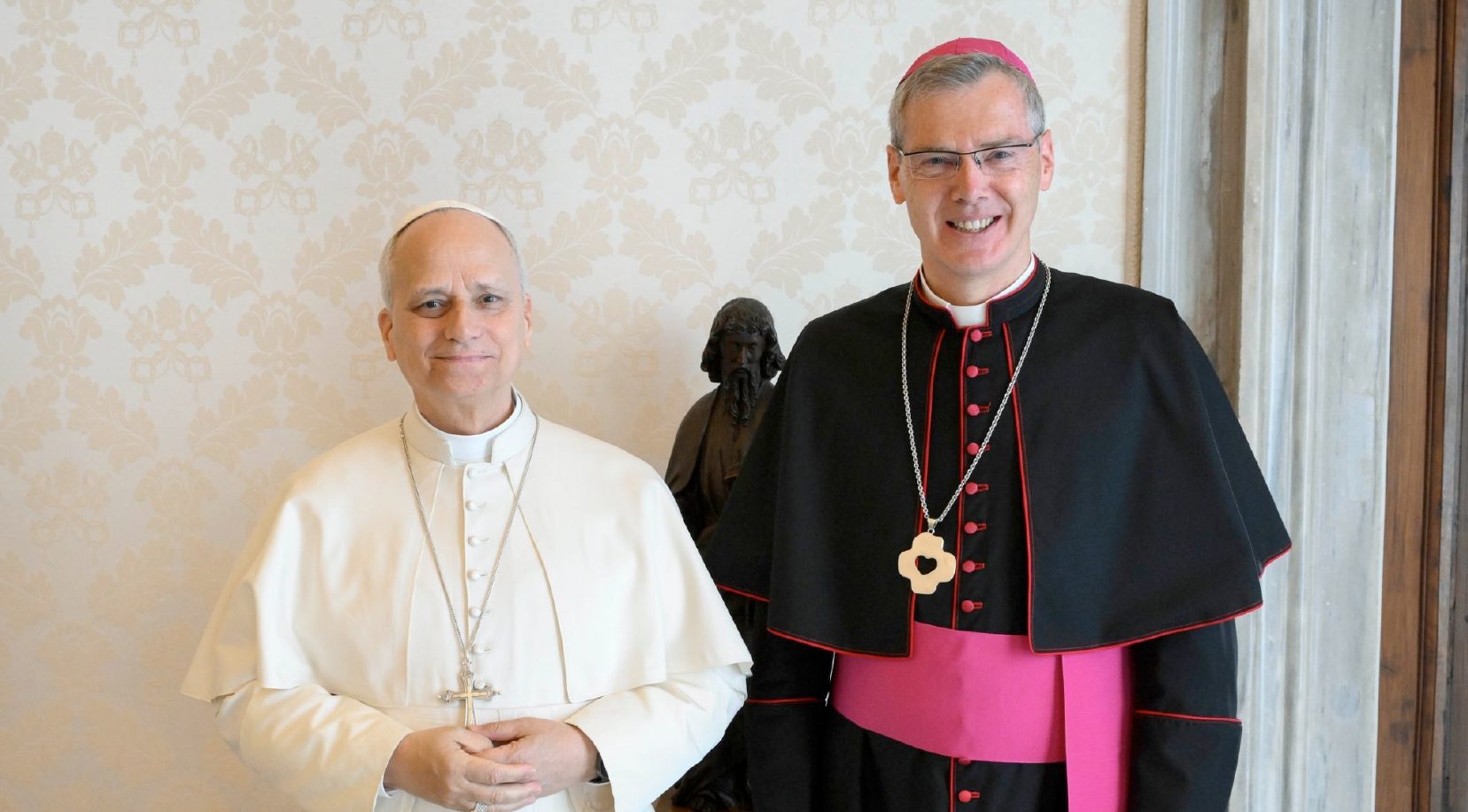
Leo puts an end to “double standards”: why the German Synodal Way is slowing down
After the tightening of the reins on traditionalists, the German dossier reveals the other side of the same line: ecclesial unity, Roman oversight and fidelity to the Pope.
SUPPORT SILERE NON POSSUM
If this article is online, it is also thanks to your support.
Silere non possum chooses to make most of its investigations and content freely accessible, because independent journalism must be able to reach everyone.
Supporting our work means allowing us to continue verifying, reporting and publishing what others would prefer to keep hidden.
Catholic Church
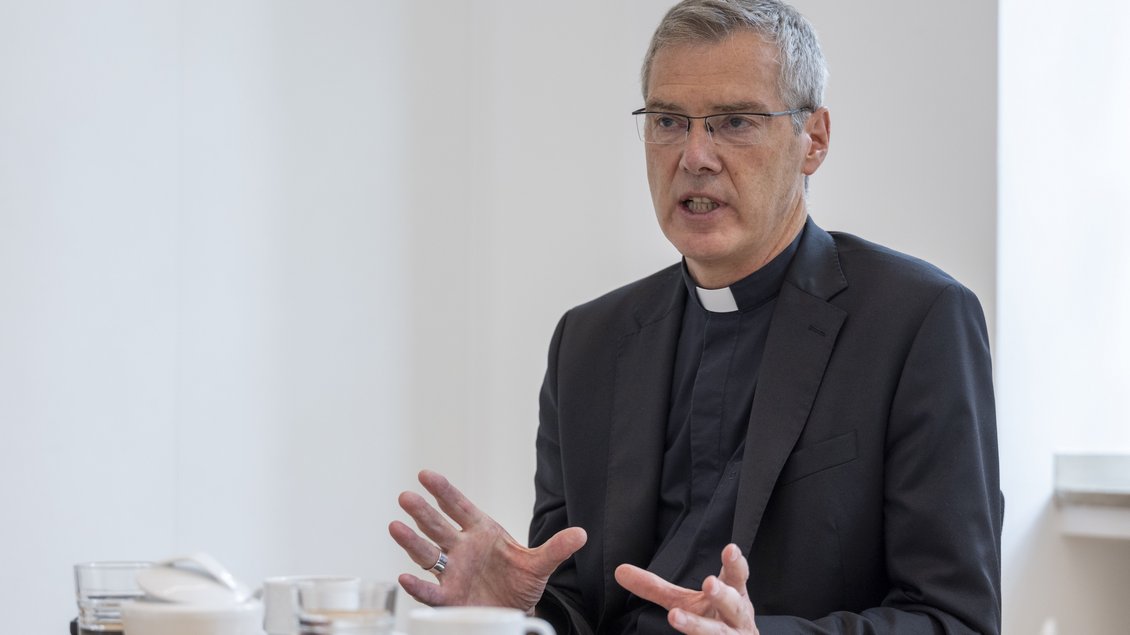
Heiner Wilmer: “The Church is synodal”. German Bishops’ Conference president has no intention of reining in lay “preachers”
Catholic Church
Heiligenkreuz: Heim steps down as Rome bars monks from electing new abbot
Catholic Church
Lafont and the Church beyond the ‘Gregorian model’: Petrine primacy need not govern everything