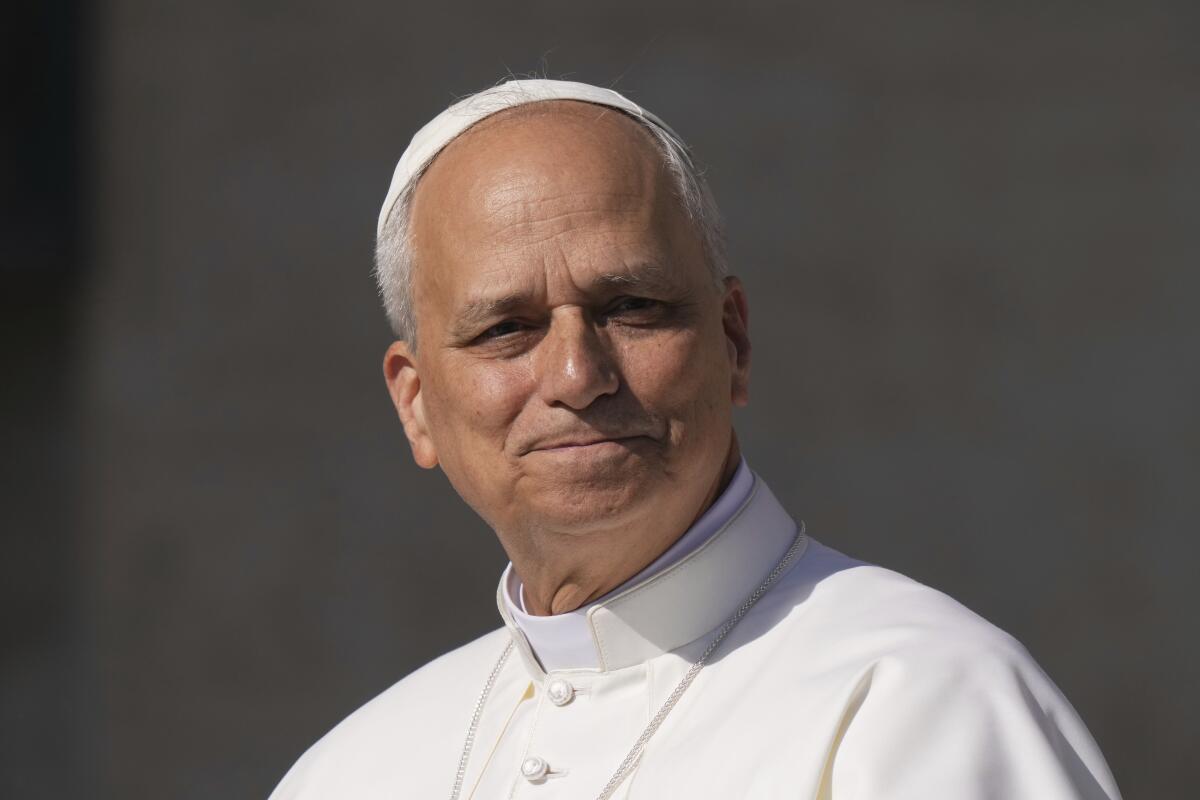
As the United States prepares to mark the 250th anniversary of the Declaration of Independence, Pope Leo XIV has sent a letter to the American bishops to mark the semiquincentenary. The document, dated 25 June 2026, is addressed to all Americans.
“I extend my heartfelt congratulations to all Americans on the occasion of the 250th anniversary of the signing of the Declaration of Independence,” the Pope writes in his opening lines, recalling 4 July 1776 as “that defining moment” which “gave enduring voice to the ideals of liberty, equality, the pursuit of happiness, justice and democratic self-government”.
Not Only a Celebration
The letter is far more than a routine act of protocol. Leo XIV describes the anniversary as “an invitation not only to celebrate the nation’s remarkable journey, but also to reflect upon the responsibilities” that “the sons and daughters of this country bear to one another, and to the generations who will inherit the nation that is being shaped today”.
It is a subtle but clear shift: from mere commemoration to a genuine examination of conscience. And it is the first American Pontiff in history who makes this appeal to his own country.
The first principle to which the Pope turns is religious freedom: “the right of every person to worship according to conscience and to practice their faith openly, without coercion or fear”. Freedom of religion, he notes, “has long been central to the American promise”, protecting both individual dignity and “the peaceful coexistence of a diverse people”.
It is precisely this freedom, Leo XIV observes, which has enabled the Catholic Church “to take root and flourish within the United States, to the advantage not only of her own members, but of the entire nation”, through education, preferential care for the poor, healthcare and essential social services.
The Echo of Leo XIII
Significantly, the Pontiff invokes the Pope whose name he has taken. Citing Leo XIII’s encyclical Sapientiae Christianae, he recalls that “no better citizen is there… than the Christian who is mindful of his duty”.
“In fact, faith - far from standing in opposition to the responsibilities of citizenship - lends new vigor to the pursuit of justice, peace and the common good,” the Pope writes. Catholics are called to continue serving the nation “in the faithful fulfilment of duty - to God and country -”, as “leaven for the growth of a civilization of love”.
The reference is not accidental. Leo XIII wrote Sapientiae Christianae in 1890, at a time when the compatibility of Catholic faith and modern citizenship was openly contested. His fourteenth successor recalls him to affirm the opposite: the Catholic is not a citizen despite his faith, but a better citizen because of it. At least, that is what he should be.
Life and Immigrants: The Uncomfortable Passages
The letter does not avoid the two issues on which the American political landscape is most divided, and on which each party would prefer the Pope to say only half of what he actually says.
On the one hand, Leo XIV states that a full understanding of human dignity “leads to recognizing the importance of safeguarding human life from its beginning at conception until natural death”. On the other, in the very next paragraph, he makes clear that “defending human life also includes welcoming, protecting and assisting immigrants, whose hopes, sacrifices and contribution have formed part of the history of this country from its very beginning”.
To receive them “with compassion and generosity”, the Pope writes, “is not only an act of charity, but also a recognition of the dignity that belongs to every human person”.
The timing of the passage is significant. On 4 July, while America marks its national holiday, the Pope will be in Lampedusa, among migrants and at the graves of those who have died at sea, after declining an invitation to spend Independence Day in the United States. Earlier today, meanwhile, he addressed the National Constitution Center in Philadelphia, which awarded him the 2026 Liberty Medal. The letter, the speech and the visit form a single, coherent magisterial gesture.
Magnifica Humanitas and the Common Good
Leo XIV also cites his recent encyclical, Magnifica Humanitas: “Building a world in which everyone can flourish requires shared responsibility and courage. No one can single-handedly bear the weight of the challenges the world is facing”.
“We need one another,” the Pope adds, “and we need to work together in unity to confront the challenges that the world is facing today.”
The letter concludes by entrusting the nation to the Immaculate Conception, patroness of the United States, “that she will continue to watch over America and protect all who dwell therein”, and by expressing the hope that “the spirit of 1776” may “continue to inspire hope and unity as the United States of America moves into the future”.
A birthday letter, then, written by a father who loves his country enough to tell it the truth: liberty is not an inheritance to be consumed, but a duty to be fulfilled.