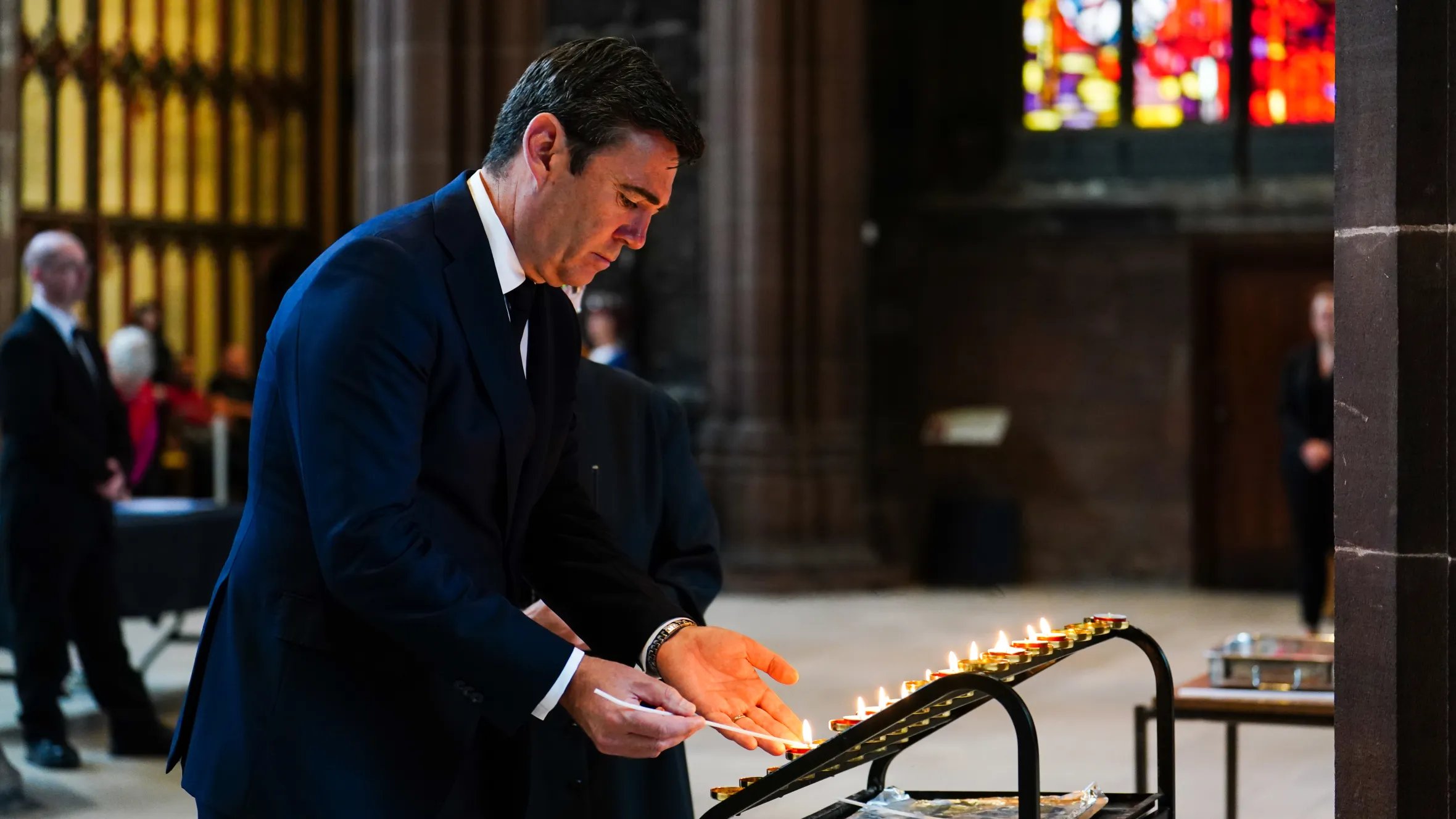
Andy Burnham’s victory in the Makerfield by-election on Friday 19 June has turned something that, until a few weeks ago, remained the subject of speculation into a matter of timing: the end of Keir Starmer’s premiership. The outgoing Mayor of Greater Manchester won the Commons seat with almost 55 per cent of the vote, comfortably beating the Reform UK candidate. In doing so, he secured the one thing he lacked to challenge the Prime Minister where it matters most: in Parliament. As an MP, rather than simply a regional mayor, he can now contest the leadership of the Labour Party and, by extension, vie for Downing Street.
A crisis months in the making
This did not happen in a vacuum. Starmer won the 2024 general election with an overwhelming majority of more than 170 seats, yet on a relatively modest share of the popular vote that has proved fragile in government. His first two years in office have been marked by collapsing approval ratings, criticism from across the party - Labour’s right has challenged his approach to immigration and tax rises, while the left has attacked his position on Gaza, welfare reform and his refusal to introduce a wealth tax - as well as the growing strength of Reform UK and the Greens in local elections and by-elections.
Since the spring of 2026, those tensions have developed into open revolt. Between April and May, a series of high-profile resignations unfolded, beginning with Health Secretary Wes Streeting and followed by several junior ministers. More than ninety Labour MPs called on the Prime Minister to resign, or at least to set out a timetable for his departure. Starmer held on, relaunching a “promise of renewal” and securing letters of support from more than one hundred MPs. Yet this was a truce rather than a solution.
One decision proved decisive, and probably counterproductive. In February, the party’s governing body, the National Executive Committee, blocked Burnham’s candidacy in the Gorton and Denton by-election, ostensibly because the party did not want to fund another mayoral election in Manchester. Starmer himself voted against the move. The seat, which Labour subsequently lost, became a de facto referendum on his leadership and accelerated the confrontation rather than defusing it.
Makerfield, the point of no return
The Makerfield by-election settled the remaining questions. Back at Westminster with a commanding result, Burnham described his victory as an opportunity to “change course” and indicated that he intends to use it to challenge the Prime Minister. Over the weekend, several Cabinet ministers urged Starmer to set a timetable for a handover, hoping for an “orderly and managed” transition that would avoid a damaging internal conflict. Some MPs who had signed appeals against a leadership contest in May have since changed their position. Former Home Secretary Alan Johnson summed up the mood with a blunt remark directed at the Prime Minister: for him, the game is over.
Starmer, for his part, continues to resist. He has repeatedly insisted that he will not “walk away” and that he is ready to fight any leadership contest, citing the mandate he received two years ago. His central argument is political before it is personal: removing a Prime Minister halfway through a Parliament, he argues, would throw the country into chaos and open the door to a far-right government - the same script which, in his view, cost the Conservatives power. It is an argument based on the prospect of chaos after his departure, but its strength now depends more on parliamentary numbers than on rhetoric.
The numbers and the rules of the game
This is the heart of the matter. To trigger a formal leadership election, the support of 81 Labour MPs is required: 20 per cent of the parliamentary party. Once that threshold is reached, two scenarios remain possible: a full contest involving several candidates or, should Burnham’s lead appear impossible to overcome, a “coronation” without a vote, with the other contenders stepping aside. A full leadership contest generally takes around two months, and the timetable is in the hands of the National Executive Committee, which can shape it as it sees fit.
Burnham is not the only name in circulation. The British media have long mentioned Health Secretary Wes Streeting, Deputy Prime Minister Angela Rayner, Home Secretary Shabana Mahmood and Energy Secretary Ed Miliband among the possible successors. Yet it is the Mayor of Manchester, nicknamed the “King of the North”, who has emerged as the favourite.
Who Burnham is and why he could succeed
At 56, Burnham is a long-standing Labour figure. A former Health Secretary and Culture Secretary under Gordon Brown, and a leadership candidate in both 2010 and 2015 - defeated on each occasion - he found a second political life as Mayor of Greater Manchester from 2017. There he built a popular profile that was relatively independent of the party leadership. His soft-left rhetoric on inequality and the divide between the North and South of the country has given him a recognisable political identity, although critics on the left place him firmly within the Blairite tradition and doubt that his rise would change the substance of the government’s policies.
His strength lies precisely in what Starmer lacks: personal support seen as genuine, within a party hungry for someone capable of stemming the loss of votes to Reform and the Greens. His vulnerability is the speed at which events are moving. His allies would prefer a slower transition, allowing time to prepare for government, while part of the parliamentary party wants the matter settled immediately.
What to expect now
The coming days will be decisive. Pressure from the Cabinet on Starmer to set a date is likely to increase, and analysts point out that, once support around a Prime Minister begins to fragment, the collapse tends to be swift. In practical terms, Burnham’s election to the Commons also triggers a by-election for the office of Mayor of Greater Manchester, expected at the end of July - a sign that the machinery of succession is already in motion.
The usual uncertainty of British politics remains: whether the departure will be negotiated and orderly, as many in the party hope, or whether it will come through a rupture. In either case, the outcome appears increasingly hard to avoid. For Starmer, the question is no longer whether he will leave Downing Street, but when and on what terms. And for Andy Burnham, after two failed attempts in fifteen years, the door to the Labour leadership - and potentially to leading the country - has never been so close.
S.G.
Silere non possum