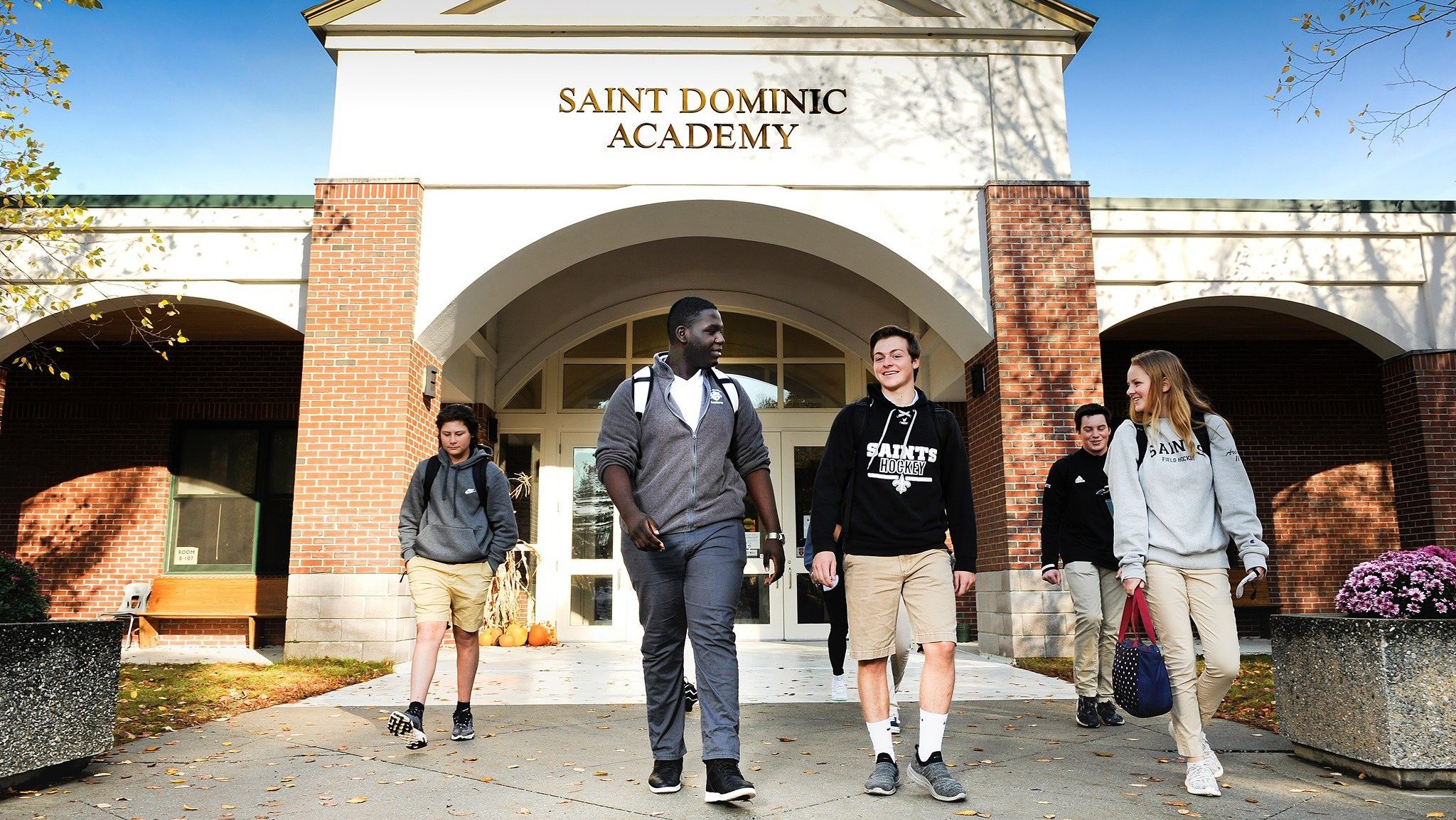
In Auburn, Maine, St. Dominic Academy closed its high school before the judges had finished writing their opinion. The school was facing operating losses and declining enrollment, and in March it abandoned plans to reopen in Lewiston after failing to secure enough funding. By July 2, 2026, when the U.S. Court of Appeals for the First Circuit issued its 108-page opinion in St. Dominic Academy v. Makin, the school that gave the case its name had largely become a matter of principle.
That principle is worth examining because the court reached a straightforward conclusion and, in our view, the right one: A state cannot exclude a school from public funding because it is religious. But it can require any school that accepts taxpayer money not to discriminate.
A school program unlike any other
The case begins with an unusual feature of life in Maine, a rural state where many towns do not operate their own high schools. For more than a century, state law has provided for what is known as “town tuitioning.” School districts without their own schools pay for students to attend a public or private school chosen by their parents, as long as the school has been approved by the Department of Education.
In 1981, the Maine Legislature added a nonsectarian requirement. Only “nonsectarian” schools could receive public money. Catholic schools operated by the Diocese of Portland, which had served rural families through the program for decades, were excluded. That exclusion ended on June 21, 2022, when the U.S. Supreme Court ruled in Carson v. Makin, by a 6–3 vote, that barring schools from a public benefit “solely because of their religious character” violated the Free Exercise Clause of the First Amendment. It was a landmark victory for religious liberty and was celebrated as one. Maine lawmakers, however, had already taken their next step.
The Legislature’s move
In 2021, while Carson was still pending before the Supreme Court, the Maine Legislature enacted Chapter 366, a package of amendments to the Maine Human Rights Act. The new provisions added religion and gender identity to the protected categories in education and narrowed the religious exemption. Religious organizations remained free to follow their beliefs on matters involving sexual orientation and gender identity, but only if they did not receive public funding. Any school that joined the tuitioning program would also become subject to the state’s antidiscrimination law, with penalties of up to $100,000 for repeated violations.
Critics called the measure a “poison pill.” Then-Attorney General Aaron Frey made the state’s position clear. On the day Carson was decided, he said the schools at issue “promote a single religion to the exclusion of all others” and refuse to admit gay and transgender students. A law professor later wrote in The New York Times that Maine had found “a way to outmaneuver the Supreme Court.” The public record is unusually clear: Maine lawmakers knew what they were doing. The legal question, however, was whether they had the authority to do it.
The District Court: Judge Woodcock says yes
The Diocese of Portland, St. Dominic Academy and the Radonis family - Catholic parents from Whitefield who wanted to use town tuition funds to send their children to the diocesan school - filed suit in June 2023 with the assistance of the Becket Fund for Religious Liberty.
They sought a preliminary injunction against the new provisions, arguing that Maine had simply recreated, through indirect means, the exclusion the Supreme Court had struck down in Carson. On August 8, 2024, U.S. District Judge John A. Woodcock Jr. denied the request in a 75-page order. His reasoning deserves close attention. Woodcock acknowledged that the provisions imposed a real burden on the school’s exercise of religion. He even found that Chapter 366 was not generally applicable because out-of-state schools and private postsecondary institutions could receive public funding without being subject to the same law. In theory, that finding should have subjected the law to the highest level of constitutional scrutiny. The law nevertheless survived. Woodcock concluded that Maine had a compelling public interest in eliminating discrimination at institutions supported by taxpayer money and that the provisions were narrowly tailored because they targeted discriminatory conduct. The school, he wrote, remained free to practice and teach its faith as it saw fit. It could not, however, demand that the state subsidize religious teaching that conflicted with antidiscrimination law.
The appeal: same result, different path
On July 2, 2026, the First Circuit largely upheld that result in an opinion written by Judge William Kayatta, although it adopted a different legal analysis. The appeals court held that the antidiscrimination provisions covering religion, sexual orientation and gender identity were neutral and generally applicable. They therefore had to satisfy only rational-basis review, a standard they easily met.
The practical result is clear: A private school that accepts public tuition-assistance funds cannot discriminate against students based on sexual orientation or gender identity. It also cannot give students of its own faith preferential treatment in admissions. The school did prevail on one issue, and that victory matters because it shows that the judges were not acting out of hostility toward religion. The so-called Religious Expression Rule requires any educational institution that permits religious expression not to discriminate among religions in allowing it. The court found the rule facially non-neutral and likely unconstitutional.
Kayatta offered a striking example. Applied literally, the rule could force a Catholic school to tolerate the recitation of the Hare Krishna mantra in the middle of the Lord’s Prayer, interfering with the school’s ability to maintain an environment consistent with its evangelizing mission. On that issue, the court ordered an injunction in St. Dominic’s favor. As for hiring, Maine law already protected the school’s right to require all employees to conform to Catholic principles, as both the District Court and the Court of Appeals recognized.
Why the court is right
The line drawn by the judges is one that any mature understanding of religious liberty and church-state neutrality should preserve. Carson established that the state cannot penalize a school for what it is. Excluding an institution because it is Catholic is religious discrimination, and it remains religious discrimination.
Chapter 366, however, does not require St. Dominic to stop being Catholic. It requires the school, if and only if it chooses to accept taxpayer money, not to reject a teenager for being gay and not to reserve places for baptized students. No one is forcing the school to participate in the program. Participation is voluntary, and the conditions apply to every school in Maine, whether secular or religious.
The ruling also raises a question for the Church itself. A Catholic school that seeks public funding in the name of equal treatment, then claims the right to select students according to their faith and exclude young people who do not meet its standards, presents the Church as an institution that wants the benefits of common citizenship without accepting its obligations. The evangelizing mission does not require public funding on terms dictated by the school. The First Circuit protected that mission where it properly belonged, in the area of religious expression. As Woodcock put it plainly, the plaintiffs remain free to practice and teach their religion as they believe they should. They cannot require the state to subsidize that teaching when it conflicts with state antidiscrimination law.
The case is not over
Becket argues that Maine wrote the new rules knowing exactly which practices at religious schools they would affect and that the First Circuit’s ruling conflicts with Supreme Court precedents running from Carson through Mahmoud in 2025. The “poison pill” argument has real force. If a state can attach conditions to public funding that no traditional religious school could accept, the victory in Carson risks becoming an empty shell. The Supreme Court has already agreed to hear a similar case from Colorado in the fall, involving the exclusion of Catholic preschools from the state’s universal preschool program.
It is entirely possible that St. Dominic will eventually reach Washington. Given the Supreme Court’s current composition, supporters of the First Circuit’s ruling have little reason to feel secure. For now, however, the principle set down in Boston remains in place: Public funding is not an unconditional entitlement, and religious liberty - which must be firmly defended when the state targets faith itself - is not a license to discriminate at public expense. It is a balance whose value the Church should also recognize if it wants to remain credible when it demands justice for itself.
Fr. L.C.
Silere non possum