
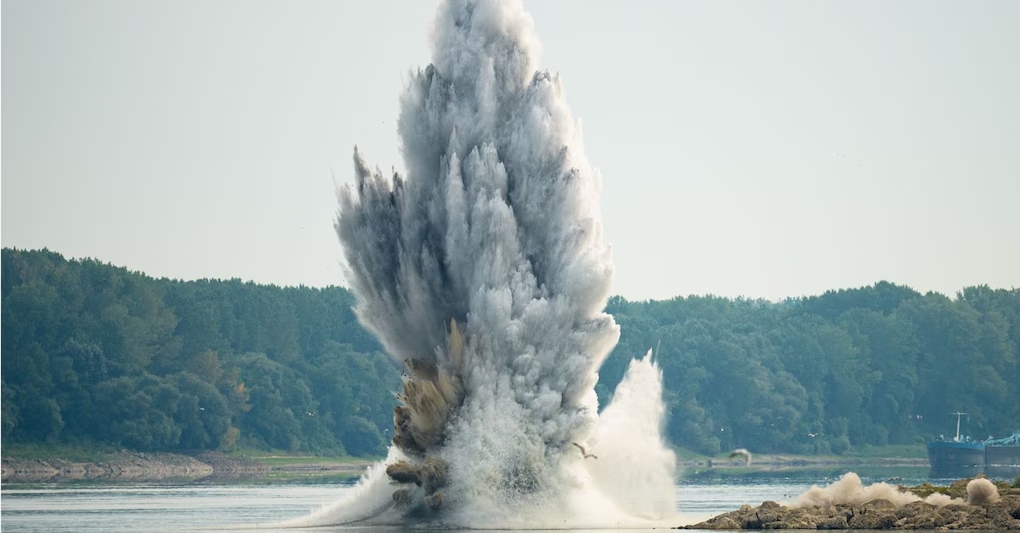
Romanian naval forces used 180kg of explosives in a controlled blast on the bed of the Danube near Cernavodă to remove a rock blocking the intake channel serving the nuclear power station. The drastic operation was ordered to buy a few more days of electricity generation during a summer marked by extreme heat and prolonged drought, which is putting the energy systems of Romania and Hungary under strain. Both countries rely on the waters of the great river to cool their reactors.
How cooling works at a nuclear power station
A nuclear power station produces enormous quantities of heat, which must be removed continuously. The reactor heats water and turns it into steam; the steam drives the turbines that generate electricity; after passing through the turbines, it must be condensed. This is where water drawn from the river comes in, absorbing the residual heat through a circuit that remains separate from the radioactive material. When the river’s flow falls below a certain threshold, the plant must reduce its output or shut down the reactor because it can no longer rely on a sufficient volume of cooling water.
What happened in Romania
At Cernavodă, the only one of the two reactors still operating was at risk of losing an adequate water supply. The level of the Danube had fallen as a result of the combined effects of heatwaves and drought, leaving too little water to reach the channel supplying the cooling system.
The Romanian navy therefore decided to detonate 180kg of explosives to dislodge a boulder obstructing the flow. The operation was carried out on the riverbed, well away from the reactor, as a preliminary step towards building a temporary dam designed to direct more water into the plant’s intake channel.
The defence minister justified the expense by pointing to the economic value of every additional day of generation, which far outweighed the cost of the operation. Bucharest has nevertheless declared a state of emergency in the energy sector for August, a sign that the fall in nuclear output is already weighing on the national grid.
The situation in Hungary
Paks has suffered a similar fate, though with more severe consequences. The plant, which normally supplies nearly half of Hungary’s electricity needs, has been operating at less than half capacity.
Budapest was preparing for a complete shutdown, expected to last several weeks, because forecasts suggest that the Danube will remain too low to provide a reliable supply of water to the cooling system. To prevent the grid from becoming overloaded, the government asked people to cut their electricity use voluntarily, a measure reported to have reduced demand by about 700 megawatts. Several major companies, including the pharmaceutical group Richter, have also announced substantial temporary cuts to their electricity consumption.
A problem affecting the entire region
The heat is creating a twofold squeeze across the Danube region: it is driving up demand for air conditioning and refrigeration while simultaneously reducing the water available to cool power stations and limiting hydroelectric generation.
In Serbia, one of the country’s main hydroelectric power stations is reportedly running at only 20% of capacity because of the low river level. As a result, Romania and Hungary are being forced to import electricity just as regional demand is at its highest and supply is tightening.
Is there a nuclear risk?
The British newspaper The Guardian, which reported on the events, describes no nuclear accident or loss of control over the reactors. Reducing output and, if necessary, shutting them down are precisely the procedures followed when cooling cannot be guaranteed at the required level.
The more immediate risk concerns energy supplies and the economy, with possible blackouts, rationing, rising imports and higher electricity prices. The episode nevertheless exposes a structural vulnerability: although nuclear power generates electricity with relatively low direct emissions, it still depends on environmental conditions and the availability of water. A plant built beside a major river can therefore run into difficulties when prolonged drought and extreme temperatures alter the river’s flow.