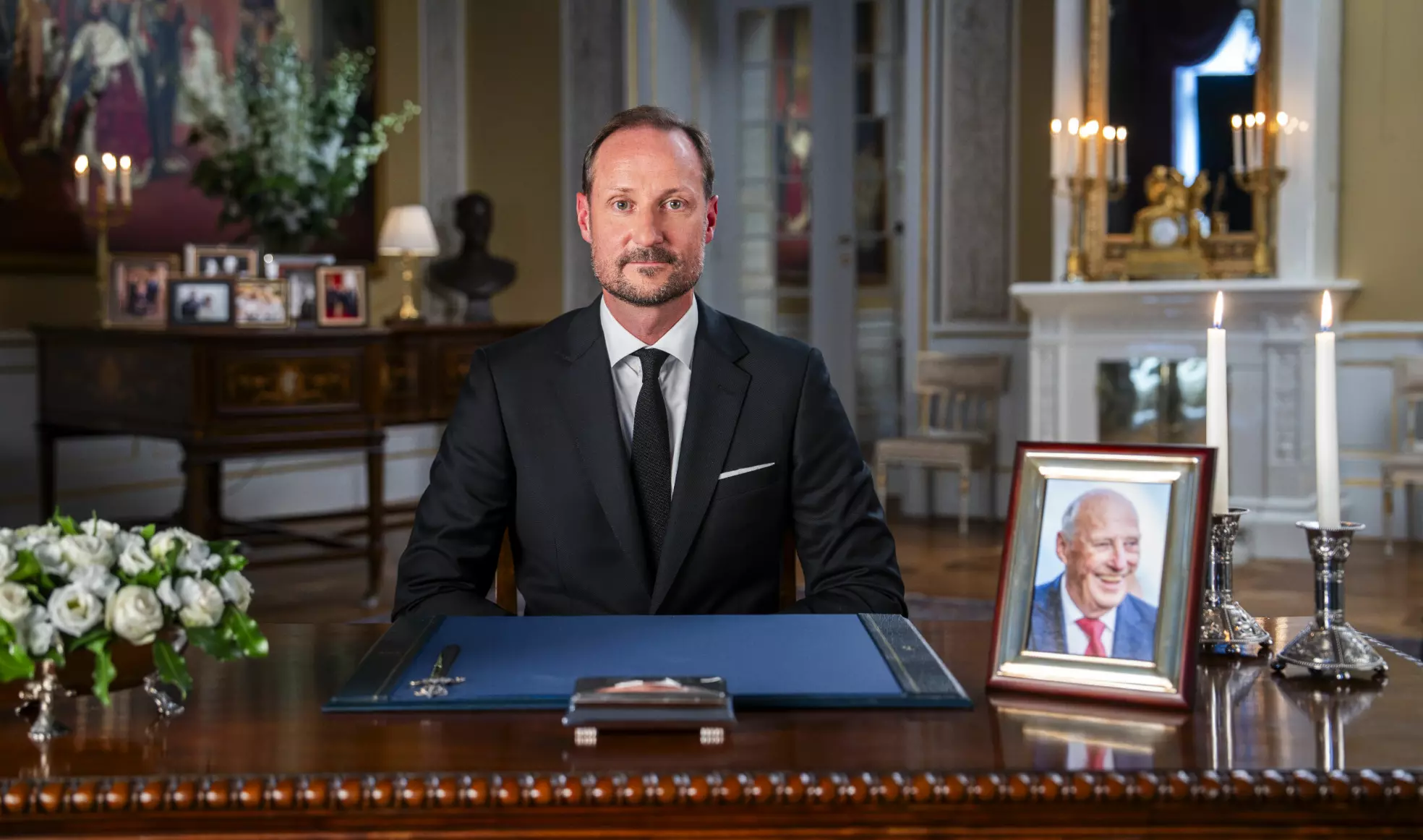
Oslo – ‘Now it is my turn.’ King Haakon said it towards the end of his first address as sovereign, delivered today from the Royal Palace in Oslo. Just a few words, after recalling a succession spanning four generations of the Norwegian royal family: Harald had succeeded his father Olav, who in turn had succeeded Haakon. Now that responsibility has passed to him.
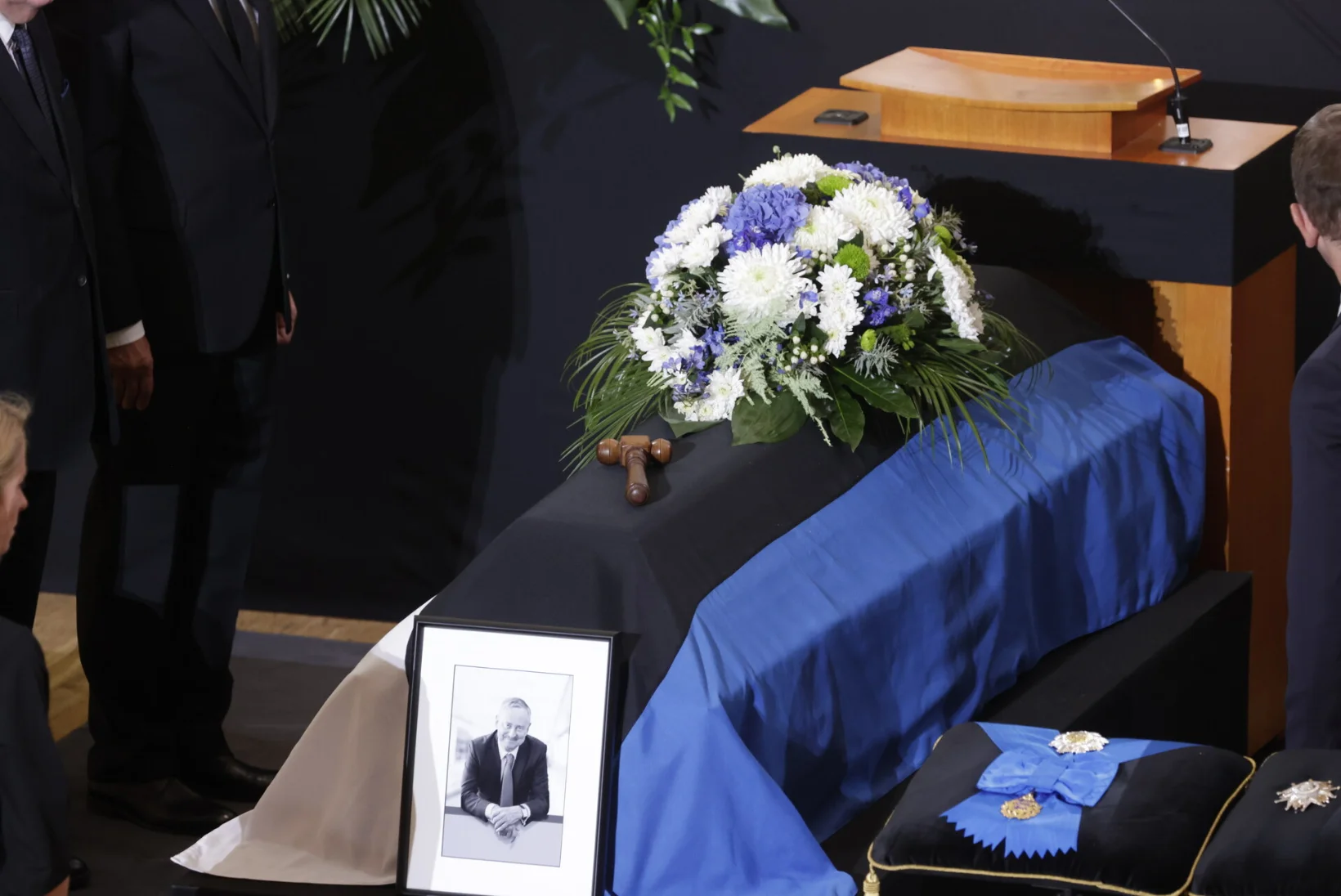
The speech came around a day and a half after the death of King Harald V, who died at 6.35am on Friday 28 August at Rikshospitalet. Norwegians were informed two hours later. Harald himself, 35 years ago, had addressed the country the day after King Olav’s death: the new monarch’s first public appearance following the death of his predecessor is part of the tradition of the Norwegian monarchy.
Haakon began with his father, before speaking of the king. ‘Yesterday morning, at 6.35, His Majesty King Harald V died, my father, whom I loved deeply,’ he said. He then thanked those who, in the hours after the King’s death, had made their way to Slottsplassen, the square in front of the Palace, leaving flowers, messages and lights. ‘We are in mourning. At the same time, it gives us comfort and strength to know that so many people are grieving with us.’
Much of the speech was devoted to Harald the private man. Haakon described him as a loving and reassuring father, a grandfather with a gentle sense of humour, a caring husband and a man who held the family together with an authority that seemed to come naturally to him. ‘Thank you for being such a good father to Märtha and me,’ he said, addressing him directly. ‘Above all, you were a person who always remained true to your values and your commitments.’
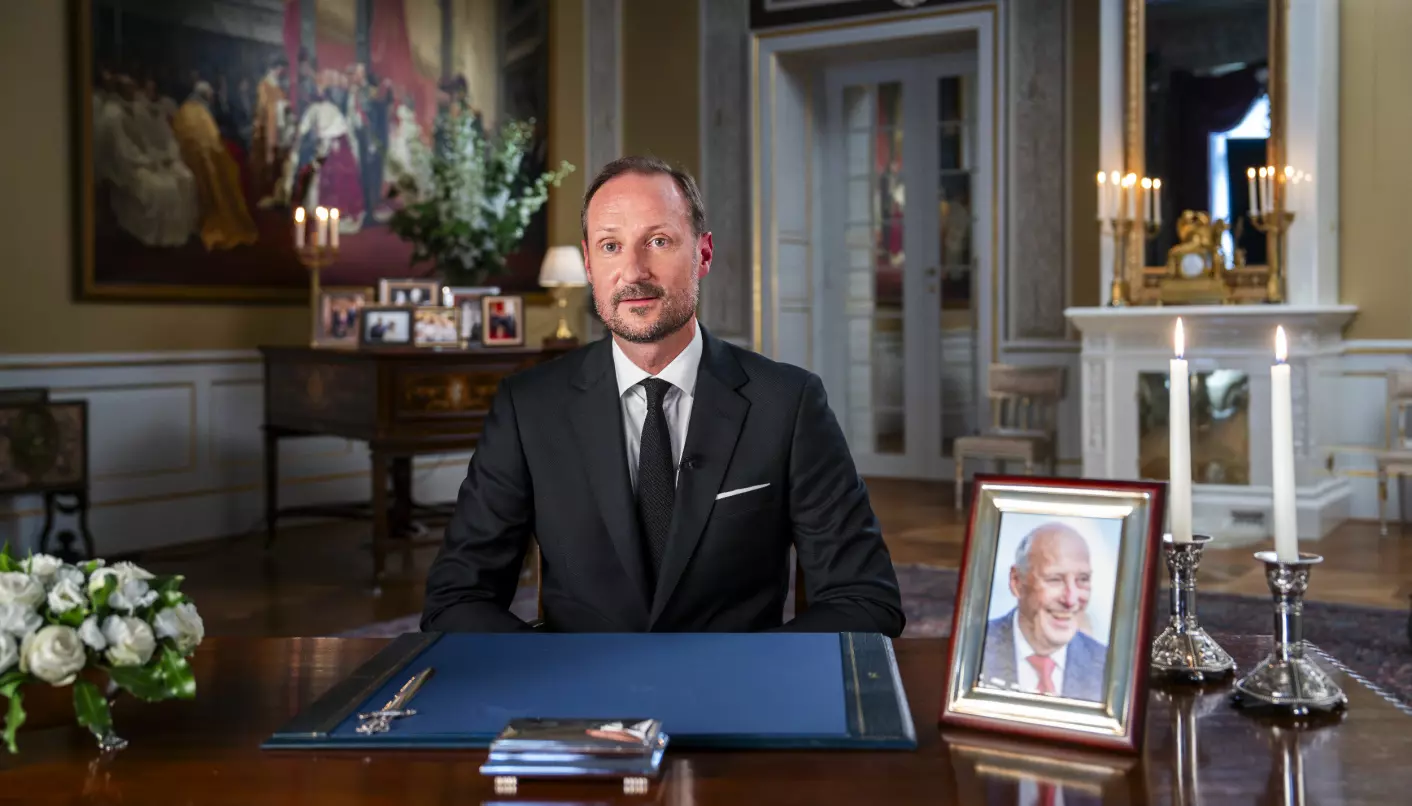
What comes through most strongly in his son’s recollections is the way Harald treated people. He knew how to listen, Haakon said, and had a particular attentiveness towards children and young people. ‘My father always managed to put the people around him at ease.’ His ‘big, warm king’s hand’, he added, would reach out to anyone who needed a handshake. ‘He met everyone with respect and generosity and never made distinctions between people.’ Haakon then chose several episodes from his father’s reign to illustrate that quality. Harald went to meet people affected by a hurricane wearing a puffer jacket and wellington boots; he apologised to the Sami, on behalf of the country, for the injustices they had suffered; he wept alongside Norwegians after the attacks of 22 July 2011 on Utøya and in Oslo’s government quarter. According to the new King, his father was also able to ‘put into words who we Norwegians are’.
There were also much less institutional memories. Harald aboard his sailing boat, wearing a cap and sunglasses, racing and laughing with the other sailors. Or in the Amazon, smiling in a hammock after fulfilling a wish he had had since he was a boy: to spend several days living with the Yanomami. Haakon linked that journey to his father’s interest in protecting nature and animals.
One of the most delicate moments came when the new sovereign spoke about his mother. Haakon remained composed for almost the entire speech, but his voice broke as he recalled his parents’ wedding anniversary. Harald and Sonja had married exactly 58 years earlier, on 29 August. ‘Happy anniversary, dear Mum,’ the King said. Haakon openly acknowledged Queen Sonja’s role in his father’s public life. He described her as the partner with whom Harald had shared his service and as one of the reasons the King had been able to remain steadfast in the duty entrusted to him. Together, he said, they formed a royal couple who complemented one another.
The tone of the speech then changed. From his memories of Harald, Haakon turned to the Norway he inherits. The new King recalled that his father had lived through almost the entire transformation of the country in the post-war period: he was eight when, at the end of the Second World War, he returned to Norway and stepped ashore at the quay outside Oslo City Hall. Since then, Haakon observed, the country has developed into a welfare society in which people from different backgrounds live together.
That picture, however, now coexists with an international situation that Haakon described as more uncertain and unpredictable than during most of his father’s reign. It is a situation that, according to the King, directly affects Norway too and has brought ‘a new seriousness’ to the country.
It was at this point that Haakon spoke about how he understands his own role. Harald, he said, would constantly remind his family that everyone must ‘do things in their own way’, find their own form and be themselves. The new King said he could count on Queen Mette-Marit and their children, and thanked his mother and his sister Märtha for the strength they had shown as they faced the loss of a husband and a father.
Haakon also gave some clear indications about the future of the monarchy. He and Mette-Marit want to be ‘present and willing to listen’. The Queen, Crown Princess Ingrid Alexandra and the King, he said, will seek to understand the different circumstances in which people live.
The most explicitly institutional passage followed immediately afterwards. Haakon spoke of a Norway rooted in its history, expressed his faith in ‘government by the people’ and in democracy, and referred to a society founded on law and justice, in which every person has equal worth. He emphasised a country in which everyone can contribute and feel at home: ‘We believe in a Norway where there is room for everyone.’
Finally, he confirmed the motto adopted by his predecessors: ‘Alt for Norge’, ‘All for Norway’. It had been the motto of Haakon, Olav and Harald and will remain that of the new sovereign. Haakon also offered his own interpretation of it: working to ensure that those who live in Norway can live freely, accepting as a country a responsibility towards the rest of the world and being prepared, in extreme circumstances, ‘to risk everything, even life itself, for Norway’s freedom and independence’.
The speech ended by returning to the grief of these hours. ‘Today we are a family in mourning and a people in mourning,’ Haakon said. He thanked Harald ‘for everything he was and everything he did’ and, as he looked to the task now before him, invoked two sources of support: ‘With God’s help and the support of the people’. His final words were those with which the Norwegian monarchy has for generations linked its service to the country: ‘May God preserve our land.’