Vatican City - On Sunday came the announcement of an agreement to bring the war between the United States and Iran to an end, but only a few hours later far more remains unknown than is truly clear about what has been established. The signing ceremony is scheduled for Friday 19 June in Switzerland, where a G7 meeting is also due to take place in the following days. Yet the contours of the agreement remain elusive, to the point that Iranian Foreign Minister Abbas Araghchi himself has admitted that the text is not yet final and that further sections may still be added.
What is known is above all the framework. The agreement takes the form of a fourteen-point memorandum of understanding, mediated by Pakistan and Qatar and negotiated on Washington’s behalf by Steve Witkoff and Jared Kushner, and for Tehran by Araghchi himself. The document confirms the ceasefire already in force since April and opens a sixty-day window for negotiations on the final agreement. In substance, it is an agreement to begin negotiating seriously: the first stage is the signing of the memorandum; the second, and more difficult, stage is the negotiation itself. There is also a far from secondary detail weighing on the matter: the agreement is said to have been approved by Iran’s senior leadership but, according to reports, not by Supreme Leader Mojtaba Khamenei.
The main issue - the nuclear programme - is precisely what the memorandum postpones. According to details reported by Axios, on the table is a moratorium on uranium enrichment lasting twelve or fifteen years: Iran had proposed five, the United States twenty. Washington would also like to prohibit the use of underground facilities, impose strengthened UN inspections - including surprise checks - and secure the transfer abroad of highly enriched uranium, possibly to the United States. But this is exactly where the distance between the parties becomes clear: Tehran has always rejected handing over the material and prefers to dilute it while keeping it within its own borders. In a phone call with the New York Times, Trump said Iran would be allowed to enrich uranium only for civilian purposes, while threatening to resume military strikes should no final agreement on the nuclear issue be reached.
On the Strait of Hormuz, the announcement appears clear only at first sight. Trump promised its immediate reopening without tolls and the end of the naval blockade on Iranian ports, with pre-war traffic volumes restored within thirty days. The closure of the strait - through which around a fifth of the world’s oil used to pass - had triggered a severe energy crisis, and the news of the truce alone sent crude prices down. But the stretch of sea must first be cleared of mines, and the real timetable for normalisation remains uncertain. Above all, only hours after the announcement, Iran’s Fars news agency reported the existence of a last-minute clause reaffirming the sovereignty of Iran and Oman over the strait and leaving open the possibility of a toll: a version that openly contradicts the White House account.
On the economic front too, there are few certainties. The United States would suspend sanctions on exports of oil and petrochemical products, allowing Iran to resume selling crude on international markets, and would commit not to introduce new sanctions until the final agreement. The full lifting of American and UN sanctions, however, would come only with the definitive agreement, gradually and in proportion to the level of cooperation shown by Tehran: without a precise date, as a US source made clear to Axios.
Finally, there remains the most delicate chapter: Israel and Lebanon. Pakistani Prime Minister Shehbaz Sharif announced that the agreement concerns “every front” of the war, including Lebanon. But Benjamin Netanyahu’s government has not fallen into line. Defence Minister Israel Katz said the army would remain indefinitely in the buffer zones it occupies in Lebanon, as well as in Syria and Gaza; Itamar Ben Gvir denied that the agreement binds Israel in any way; Bezalel Smotrich called it damaging for Israel and for the entire free world. In recent weeks Israeli raids have continued, even striking Beirut over the weekend, irritating the US administration itself.
What emerges, ultimately, is an announcement built more on its framework than on its substance. The parties have agreed to sign a framework and to keep talking; everything else - the fate of the nuclear programme, the stockpiles of enriched uranium, the timing and scope of sanctions relief, the effective reopening of Hormuz, the Lebanese front - remains a matter for negotiation, when it is not openly disputed between the two sides’ versions. Until a shared and signed text appears, the agreement should be read for what it really is: a starting point, not an end point.
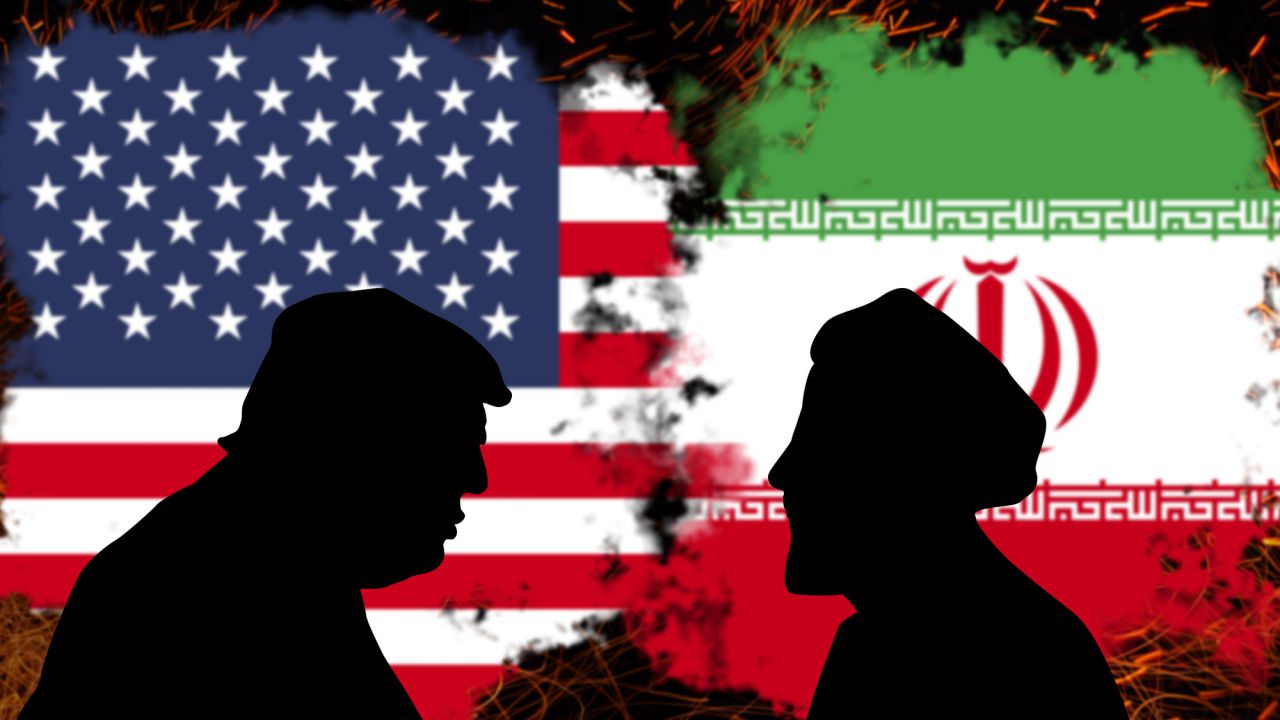
US-Iran: agreement opens negotiations but leaves key issues unresolved
The fourteen-point memorandum confirms the ceasefire and paves the way for sixty days of talks. The nuclear dossier, the fate of the enriched uranium, sanctions, Hormuz and the Lebanese front all remain unresolved.
SUPPORT SILERE NON POSSUM
If this article is online, it is also thanks to your support.
Silere non possum chooses to make most of its investigations and content freely accessible, because independent journalism must be able to reach everyone.
Supporting our work means allowing us to continue verifying, reporting and publishing what others would prefer to keep hidden.