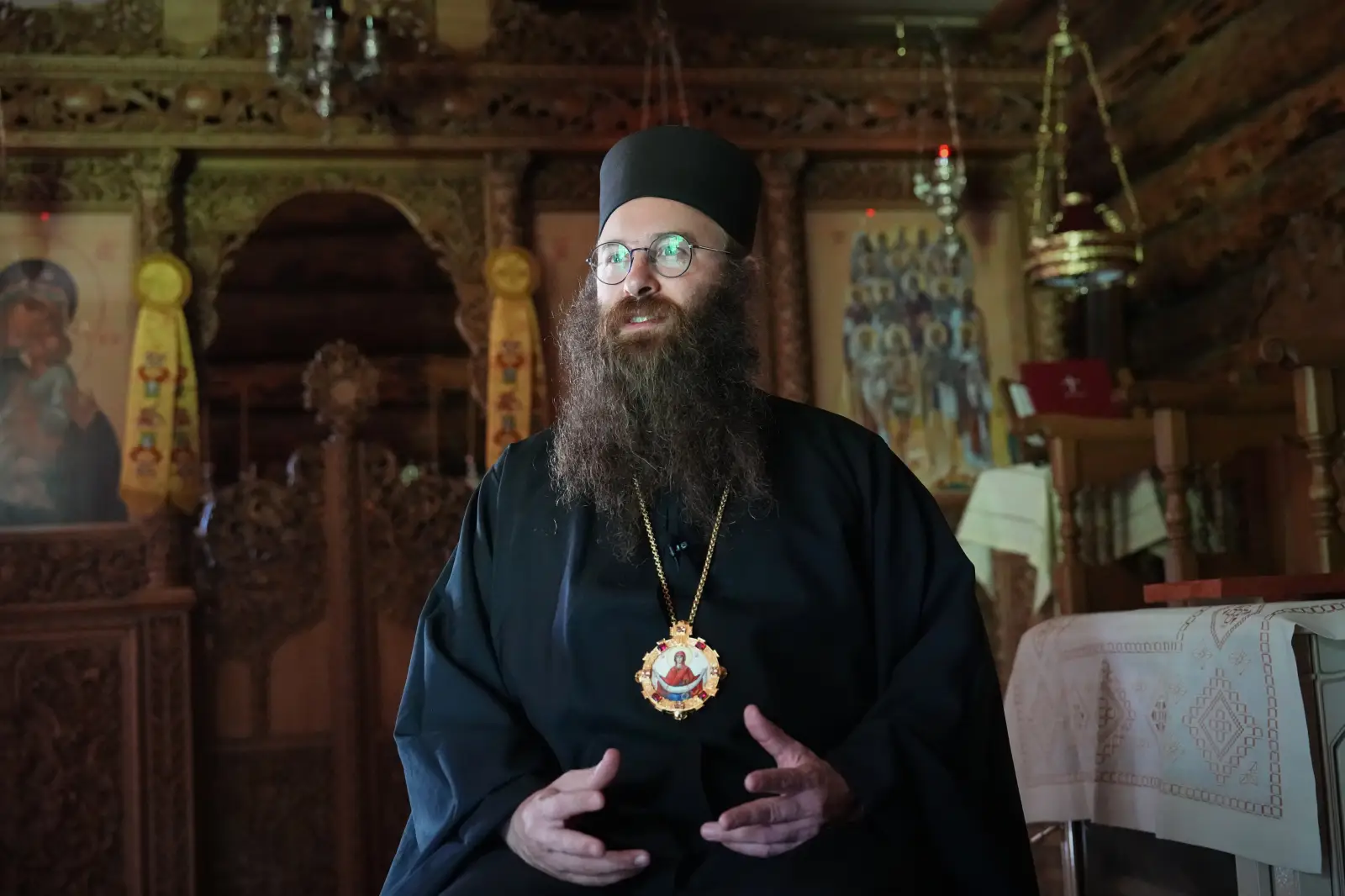
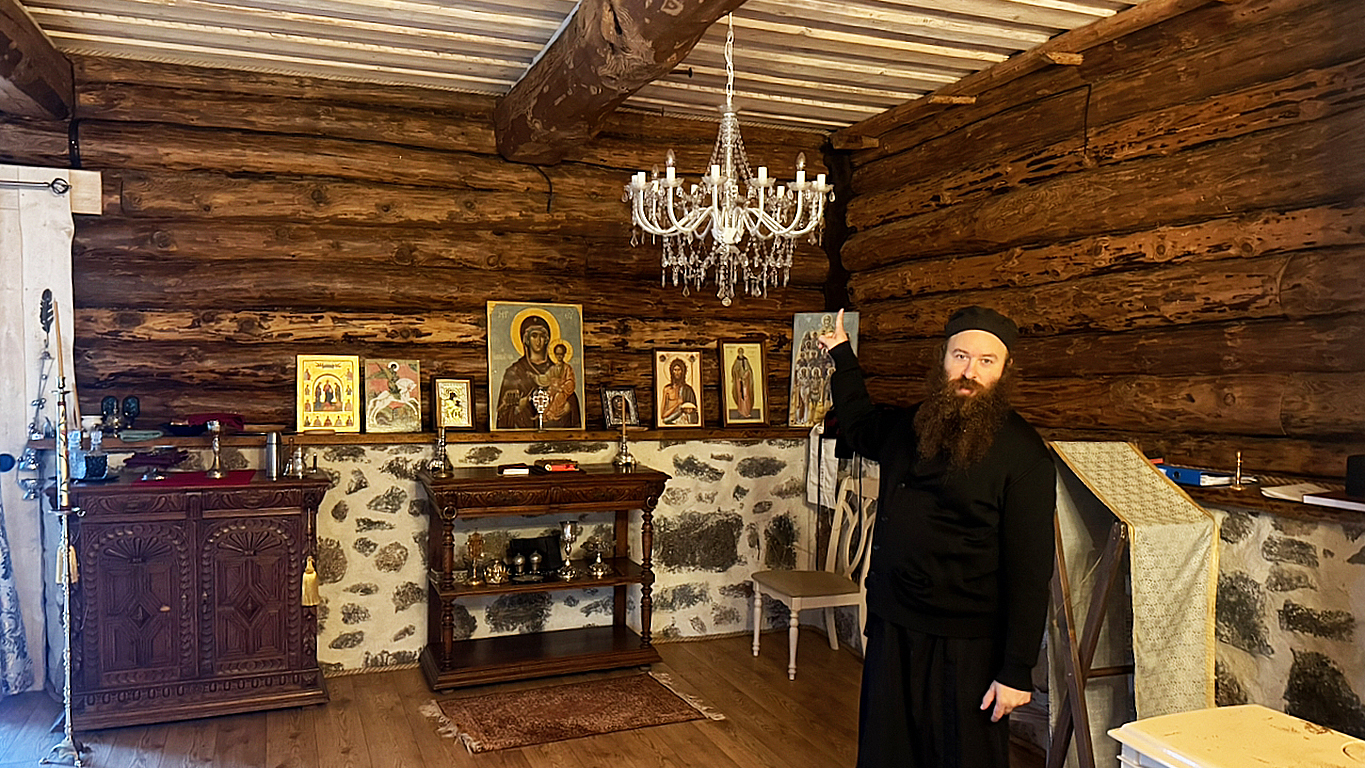
Tallinn - Estonia once again has a male Orthodox monastic community, the first to be established by the Estonian Apostolic Orthodox Church (EAOC) in several decades. It is based in Kirikla, a small settlement in Saue municipality, Harju County, around forty kilometres from the capital, Tallinn. Two monks now live there, Bishop Damaskinos and Father Paisios, in an old farmhouse donated by a local businessman.
The community was founded in 2025, with formal approval from the plenary assembly of the Estonian Orthodox Church following in November that year. Since then, the small brotherhood has begun to take shape around four monastic cells, known in Estonian as kelliad, created within the farmhouse.
The importance of the foundation becomes clearer when set against the recent history of Orthodoxy in the Baltic states. The last time monks lived permanently on Estonian territory was during the interwar years, when the country was independent. Their main spiritual centre was the monastery at Petseri, now Pskov-Pechory, which ended up on the Russian side of the border following the territorial changes of the twentieth century and therefore outside Estonian jurisdiction. From then on, male monastic life within Estonia’s indigenous Orthodox Church effectively disappeared, not least because of the long Soviet period, when religion was discouraged and most monasteries and convents were closed.
Who are the monks?
Damaskinos, 41 and of Finnish origin, is the driving force behind the project. He was tonsured a monk in 2016 at Xenophontos Monastery on Mount Athos and ordained to the priesthood there two years later. He has an unusually extensive academic background, with two master’s degrees, in theology and philosophy, a degree in musicology and a doctorate in theology. Since 2015 he has taught systematic theology and patristics at the University of Eastern Finland. He speaks ten languages, including Estonian and Russian, and can read a further six classical languages. On 12 January 2025, he was consecrated Bishop of Haapsalu in Pärnu.
Alongside him is Father Paisios. Their days follow the rhythm they learnt on Mount Athos: solitary vigil at dawn, a communal liturgy in the morning, work in the fields or on building projects, another service in the evening and, finally, a short period of free time. Neither appears particularly concerned that there are only two of them. The bishop has said that what matters is the spiritual quality of the monks rather than their number.
Kirikla is not the only monastic community belonging to the Estonian Orthodox Church. The women’s monastery of Reomäe has long been established on the island of Saaremaa, where Sister Porfyria and the novice Sister Maria live. Both are under the spiritual guidance of Damaskinos, who therefore serves as spiritual father to the two communities.
One Church, two jurisdictions
The EAOC, under whose authority the Kirikla community has been founded, belongs to the Ecumenical Patriarchate of Constantinople. Estonia is also home, however, to another Orthodox Church, canonically linked to the Moscow Patriarchate, which still has more baptised members in the country.
The foundation of a male monastery linked to Constantinople therefore has implications beyond local religious affairs. It forms part of the wider ecclesiastical tensions that in recent years have placed the two Orthodox jurisdictions at odds with one another in the Baltic states and elsewhere.
Against the European trend
Kirikla also runs against the prevailing trend in European monastic life, where religious houses from a range of traditions are closing because of a lack of vocations. Church historian Priit Rohtmets, who teaches at the University of Tartu, sees the small Estonian community as part of a broader development. Among young people who grew up after the collapse of the Soviet bloc, without the suspicion of religion inherited by earlier generations, he believes a new spiritual curiosity may be emerging, free from both positive and negative preconceptions. In his view, that creates new opportunities for religious communities.
The two monks at Kirikla seem well aware of the opportunity. Although they are still working on their new home, they open the monastery to visitors on certain days and use social media to invite pilgrims and those simply interested in monastic life to see for themselves a way of living far removed from the pace of contemporary Estonian society, one of the most secularised in Europe.
To support themselves, the monks plan to sell produce from their garden and handmade goods such as candles and incense. They also rely on donations from the faithful, including funds raised through an American charitable organisation dedicated to supporting Athonite monastic life in Finland and Estonia.