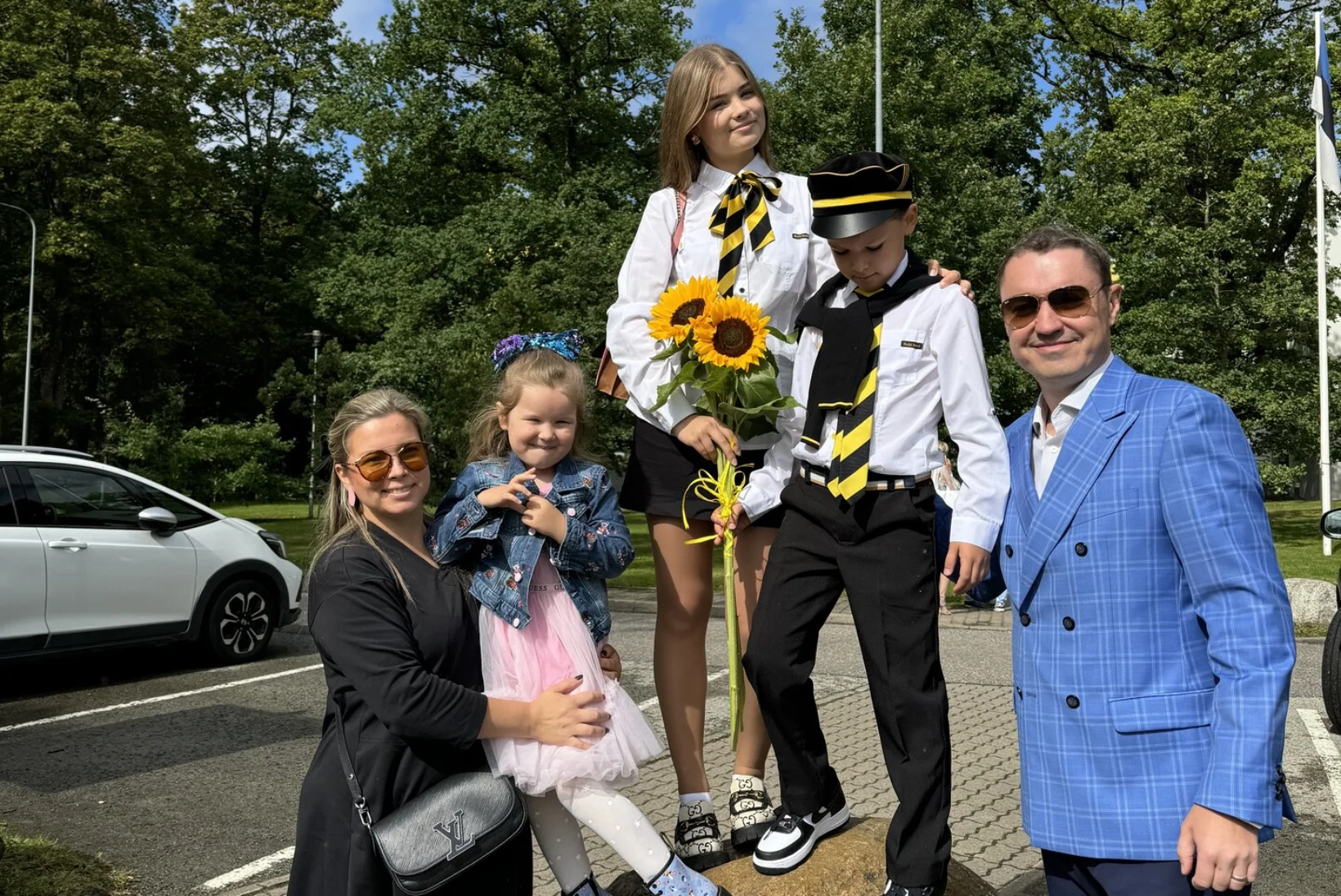
Tallinn - Children heading to school with backpacks on their shoulders and bunches of flowers in their hands, parents walking them to the gates, pupils dressed more smartly than usual and school courtyards filling up for opening ceremonies. In Estonia, 1 September is more than simply the day lessons begin again. It has its own rituals and traditions and, even in 2026, it is a day that is easy to recognise on the streets of the country’s towns and cities.
By law, the school year starts on 1 September. Around 160,000 pupils will attend Estonia’s general education schools this year, with almost 14,700 children starting first grade. In Tallinn, municipal schools will have about 45,700 pupils, including roughly 3,600 first-year children. Final figures will be available after 10 September, once schools have finished entering their data into EHIS, Estonia’s national education information system.
For many schools, however, the first day is nothing like a normal day of lessons. It begins with the avaaktus, the ceremony marking the start of the school year. Each school sets its own programme. Some hold separate ceremonies for different year groups, while others bring pupils together in the courtyard, assembly hall or outside the school building. At Rae Gümnaasium, for example, today’s aktus is due to begin at 11am, followed by a meeting with the form tutor. Normal school activities will then resume according to a staggered timetable over the following days. Tallinna Tondi Kool, meanwhile, is holding three separate ceremonies during the morning and early afternoon.
For children starting first grade, the day is even more ceremonial. In many schools, final-year pupils take the youngest children by the hand and lead them into the ceremony. It is a tradition that has existed in Estonian schools for decades: those about to finish their school years symbolically welcome those who are just beginning theirs. Children are also often given an aabits, the primer from which they will begin learning to read and write.
And then there are the flowers. On 1 September, they are hard to miss outside Estonian schools. Pupils bring them for their teachers, particularly the first-grade teacher or the klassijuhataja, the teacher responsible for a particular class. There is no school rule requiring anyone to turn up with a bouquet, but the custom is so deeply rooted that it has become part of Estonia’s popular traditions.
The Estonian Folklore Archives still describes the first day of school as one on which pupils, both young and old, arrive carrying flowers for their teachers. Traditionally, the most common flowers were those found in Estonian gardens at the end of summer, especially asters and chrysanthemums. Even today, in the days leading up to 1 September, florists and market stalls prepare bouquets specifically for the start of the school year. That helps explain one of the most familiar sights on the morning of 1 September: very young children carrying bunches of flowers almost as large as they are. Soon afterwards, those flowers will be sitting on the teacher’s desk alongside the bouquets brought by the rest of the class.
What pupils wear also marks the day out as something different. The aktus is traditionally attended in smart clothes: a white shirt or blouse, dark trousers or a skirt, and generally formal dress. The white shirt has long been associated with the first day of school and remains a common sight at opening ceremonies even in schools with no specific dress requirements. The tradition dates back at least to the second half of the twentieth century.
Estonia has no national school uniform, and pupils are not all required to wear one. Individual schools decide for themselves whether to introduce their own koolivorm, make certain items compulsory or simply require smart dress for formal occasions.
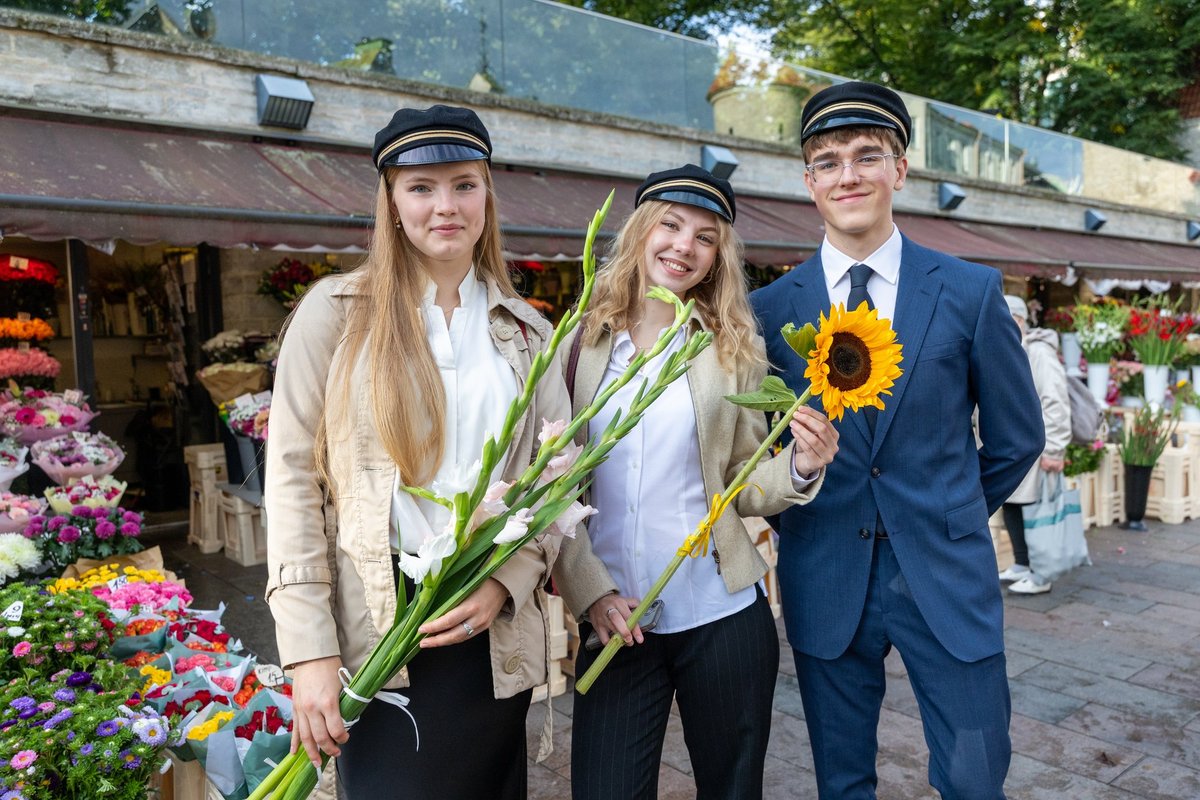
This morning, many pupils can be seen in Tallinn cafés having breakfast with their families before the school opening ceremony, already wearing the uniforms of their respective schools. Some include a school cap and, in certain cases, a bow tie. There are several examples across the city. Tallinn Secondary School No. 53 has its own uniform, including cardigans or waistcoats, polo shirts, ties for boys and neck scarves for girls. Nõmme Põhikool has had its own uniform since 2014. At Tallinna Südalinna Kool, pupils from first to sixth grade must wear at least one item of school uniform every day. On official occasions, pupils up to ninth grade wear the school’s formal uniform, together with its distinctive cap. At some schools, that cap is itself the main symbol of school identity. Known as the koolimüts, it has a particularly prominent place at the historic Tallinna Reaalkool. There, today’s 1 September programme began at 8.30am with the ceremony at which pupils put on their school caps, followed by the traditional procession to the school building on Estonia puiestee.
The significance of 1 September also extends beyond schools. Estonia’s Flag Act expressly designates the date as teadmistepäev, the Day of Knowledge, and it is one of the days on which state institutions, local authorities and public-law legal entities fly the national flag. Estonian flags are also required on school buildings throughout the school year on teaching days. The choice of 1 September has a more complicated history than a simple decision about the school calendar. According to Veronika Varik, head of Tallinn University’s Estonian Pedagogical Archives Museum, the date reached the region through a tradition with roots in the Byzantine calendar and, later, in the education system of the Russian Empire. A regulation issued in 1893 already set 1 September as the beginning of lessons in secondary schools. In independent Estonia, the date was incorporated into legislation in 1931, although the demands of agricultural work made it difficult at the time to apply the rule consistently. The beginning of the school year became firmly established on 1 September in 1945.
The term teadmistepäev became widespread during the Soviet period, particularly from the 1980s onwards, and remained part of Estonia’s legal framework after the restoration of independence. The 2026 school year also brings a practical change to pupils’ daily routines. From this September, the school day must, as a general rule, start at 9am or later. Previously, the benchmark was 8am. The government approved the change in 2025, citing, among other reasons, the sleep and developmental needs of adolescents. Organisational exceptions are allowed, but from this year the national rule shifts the standard starting point of the school day.
The reform of the õppimiskohustus is also continuing. It requires young people to remain in education until the age of 18, or until they have obtained a secondary or vocational qualification if they do so earlier. The reform applies to pupils who completed basic school in the spring of 2026, meaning that this cohort is required to continue its education. The ministry has also said that new vocational education programmes and preparatory courses come into effect from 1 September. For most families, however, those administrative changes remain in the background, at least for one morning. Estonia’s 1 September still has a rhythm of its own: the photograph outside the school, the first-grader being led in by a much older pupil, the newly received aabits, the white shirts and the bunches of asters handed to the teacher. For many pupils, it is on 2 September that timetables, homework and lessons really begin.
R.R.
Silere non possum