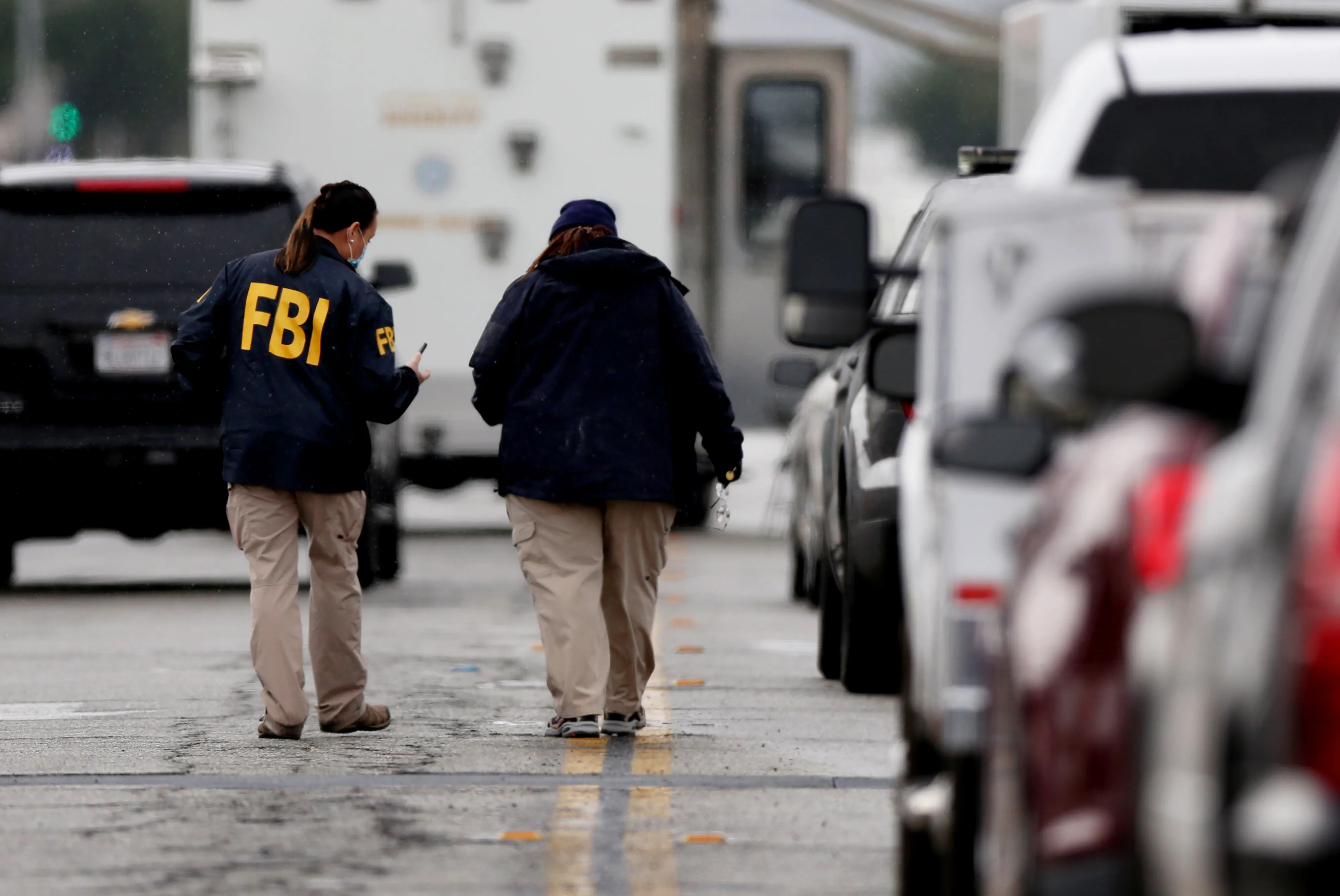
Washington - Few would dispute that the Federal Bureau of Investigation should investigate someone who builds Molotov cocktails, tries to obtain weapons, calls for the killing of minorities and police officers and advocates a shooting at a school. That is exactly the kind of individual at the centre of the case reconstructed in a report published by the US Department of Justice on 28 August 2026 into the so-called Richmond Catholic Memo.
What followed is where the problem lies. The FBI’s Richmond Field Office began with an investigation into that man, then moved on to the Catholic chapel he attended, from there to the priest serving the chapel, and eventually to the priest’s uncle, who was also a priest. Agents gathered information about their movements, cross-checked their travel, pulled flight and credit-card details, searched a phone, examined sermons, looked into a priestly ordination and even established where one of the two men had celebrated his first Mass. One of the priests was placed under surveillance at an airport and followed to a residence.
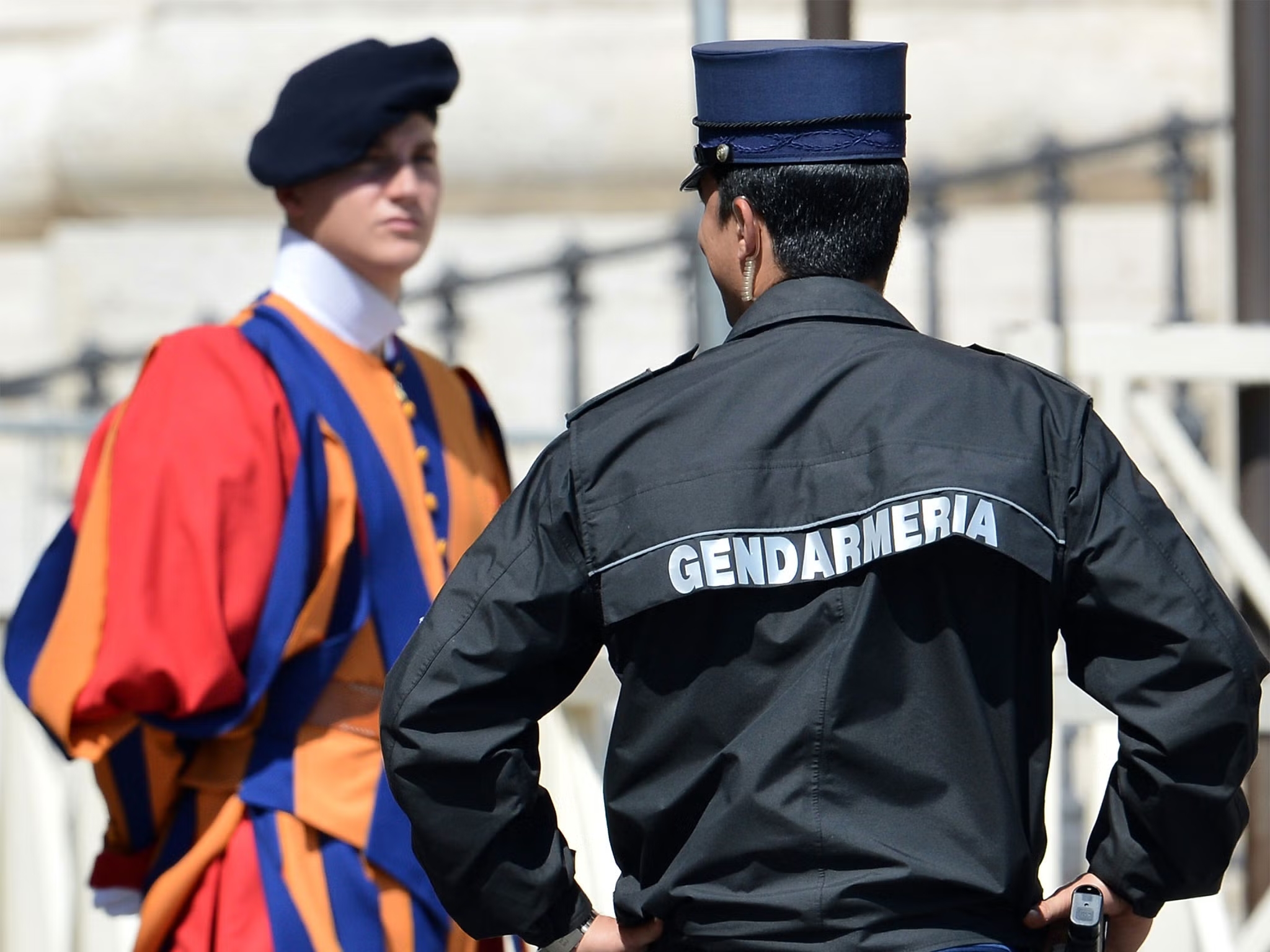
It is hard to find a more accurate description than dossier-building for information-gathering on this scale concerning two ministers of religion who, by the time the assessments were closed, had been found to pose no threat to national security. In some respects, it recalls what the Vatican Gendarmerie routinely does to cardinals, bishops and priests, outside any legislative framework and according to an operational logic that has by now acquired the characteristics of a genuinely rogue intelligence service.
The report was prepared by the Department of Justice’s Weaponization Working Group, established as part of the Trump administration’s initiative concerning the alleged weaponization of federal institutions.
Its political origins have to be borne in mind. At the same time, it would be a mistake to adopt the simplistic reading already appearing on some pseudo-Catholic blogs and automatically attribute these activities to the wishes of the Biden administration simply because they were carried out by the FBI. The FBI is a permanent federal institution. It continues to operate under administrations of different political persuasions, from Biden to Trump, and responsibility has to be established from the documentary record, the chain of command and the individuals involved, rather than inferred from political association.
The case points to a different problem: how easily powers created and justified to deal with genuine crime can be diverted, from within the machinery of the state, towards purposes increasingly remote from law enforcement, eventually reaching into political, religious or ideological areas that should remain outside that kind of surveillance.
And the most important facts do not depend solely on conclusions reached in 2026. The report reproduces and cites internal reports, emails and Guardian assessments, as well as the findings of reviews conducted by the FBI itself in 2023. Those reviews had already identified methodological failings and the improper use of religious affiliation in intelligence analysis.
From an extremist to the priest at the chapel he attended
The man at the centre of the original investigation is identified in the report as “Target 1”. There was little ambiguity about the kind of case the FBI was dealing with. He had expressed racist and violent views, assaulted police officers and, after leaving prison, tried to obtain or build weapons and ammunition. He had assembled several Molotov cocktails and used social media to encourage attacks and killings targeting minorities and law-enforcement officers. He even advocated a mass shooting at a school for children with special needs. In 2025, he was sentenced to more than eight years in federal custody for possession of destructive devices.
In the spring of 2022, he began attending Our Lady of Fatima Chapel, affiliated with the Society of St Pius X. It was this connection that led the FBI to the priest serving the chapel.
Agents interviewed him by telephone on 16 November 2022. The priest, identified in the report only as “Priest 1”, explained that he knew the man through the chapel, but not well. He made three points in particular: the man was not a member of the church, was not Catholic and had never been to confession. He had attended three or four catechism classes. The priest also told investigators that the man’s views would have to be substantially modified before he could join the Church, and described him as having “crazy views about race” and war and as a white supremacist.
A second telephone interview took place a week later. The priest expressed reservations about giving investigators information concerning people in the community and said that he could not “violate” the relationship he had with them. A task-force officer then set out his understanding of what the report calls “papal privilege”, referring to confession and explaining that, in his view, it was not a blanket privilege. The priest’s response was considerably simpler: “I don’t want to be involved.”
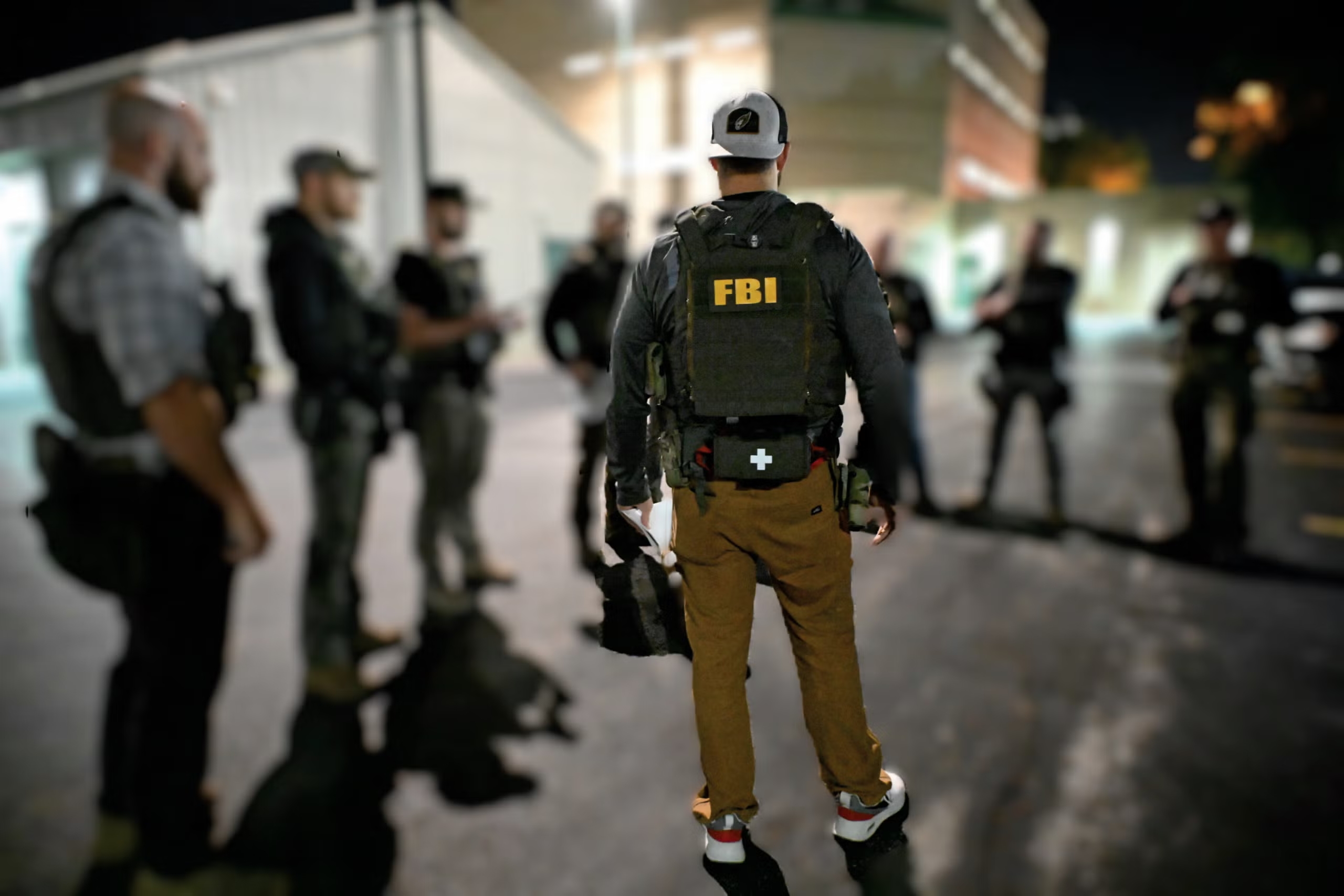
From that point, the priest gradually ceased to be simply someone from whom investigators were seeking information about the suspect. He became a subject of scrutiny himself. His decision to protect information about a person’s faith and religious life — information that is by its nature particularly sensitive — was reinterpreted by investigators as something that could count against him. Yet a priest’s duty of confidentiality does not arise solely from the sacramental seal, which is absolute in relation to anything learned in confession and is protected by the Code of Canon Law. Pastoral ministry itself carries a duty of discretion towards information entrusted to a priest precisely because of his office. Here, that confidentiality came to be treated almost as evidence in itself: the priest’s refusal to disclose certain information was seen by investigators as a possible sign that he was protecting the suspect or even that he was somehow complicit.
Ordination, first Mass, travel and phone records
On 5 January 2023, the Richmond Field Office opened a Guardian assessment on “Priest 1”, the mechanism used by the FBI to determine whether there is a nexus to terrorism or other criminal activity sufficient to justify further investigative resources. The stated purpose was to carry out “investigative steps to determine if [Priest 1] was recruiting and/or radicalizing [Target 1]”. The two factors cited to justify the additional scrutiny were his assignment at the chapel attended by the suspect and the role of the priest’s uncle within the SSPX-MC, the Marian Corps associated with the SSPX Resistance.
This is where the quantity and nature of the information being gathered become increasingly difficult to justify simply as an attempt to establish Target 1’s connections.
Agents examined the priest’s previous travel and cross-checked it against his uncle’s, trying to establish whether the two had been in the same places abroad at the same time. They found nothing: there was no evidence that they had travelled together or had been in the same overseas location at the same time.
The FBI also gathered information about when and where Priest 1 had been ordained and when he had “celebrated his first Mass”, both inside and outside his local seminary. An email dated 6 January went so far as to reconstruct the dates of his first Masses away from the seminary.
It is reasonable to ask what possible investigative relevance a priest’s first Mass could have had to the construction of Molotov cocktails by a man who had attended a handful of catechism classes.
Yet that is precisely the risk that arises, in the United States as elsewhere, when investigators lose sight of the limits the law places on their powers and become wedded to a particular theory of the case. At that point, an investigation can cease to test the evidence and begin instead to look for confirmation. The danger is particularly acute in cases involving allegations that are extremely serious and socially devastating. If, for example, a priest is accused of sexually abusing minors, there is a risk that the investigative hypothesis will be treated as established fact from the outset, with every subsequent piece of evidence interpreted solely through the lens of guilt. Powers that the law subjects to precise limits can then be stretched or used beyond their proper scope, not to establish whether the allegation is well founded, but to prove what investigators have already decided to believe.
Meanwhile, the FBI’s dossier expanded to include the uncle, identified as “Priest 2”. The report says that his phone was searched to determine the extent of his contact with his nephew. Around 9 January, after learning that the priest would be travelling abroad later that month, the FBI pulled his flight and credit-card details.
On 20 January, a Guardian assessment was opened on him as well. Its stated purpose was to determine whether he was or had been involved in the “recruitment and radicalization of Violent Religious Extremists”, including Target 1. Among the grounds cited were publicly available sermons, events and speeches which, according to the agents, indicated rhetoric similar to the suspect’s on antisemitism, anti-establishment views and abortion.
Eight days later, the investigation became even more intrusive
On 31 January 2023, the FBI’s Boston Field Office subjected Priest 2 to what the report itself describes as “surveillance not requiring a court order” at Boston Logan International Airport. On returning from an overseas trip, the priest and a travelling companion were subjected to a secondary search and interviewed by US Customs and Border Protection.
The FBI watched them get into a third person’s car. Agents then followed the vehicle from the airport to a residence associated with the driver. Later that same evening, further surveillance was carried out at a residence associated with the priest. The report even records that the lights inside the property were on.
Two priests had now been drawn into the federal intelligence apparatus. In one case, agents reconstructed details of an ordination and first Masses. In the other, they obtained flight and credit-card information, searched a phone, examined sermons and tracked the priest’s movements. Why? Simply because a terror suspect had turned to a priest in a parish.
How did it end?
The Guardian concerning Priest 2 was closed on 10 February 2023. Five days later, the Guardian concerning Priest 1 was closed as well. In the latter case, the document is explicit: “No identified threat to national security was found” and “no allegation of federal violation or threat to national security has been identified”. No identified threat to national security. No federal violation or threat to national security identified.
To reach that conclusion, investigators had collected travel records, consulted financial information, searched a phone, reconstructed ordinations and Masses, analysed sermons and followed priests from airports to private residences.
The religious freedom guaranteed by the First Amendment matters most when it protects beliefs that are unpopular, held by a minority, controversial or openly disliked by the majority. The Society of St Pius X and the groups that have emerged from it can certainly be criticised on ecclesial, canonical, theological and political grounds. Likewise, criticism of Judaism or of particular forms of Zionism does not, in itself, amount to antisemitism; opposition to a state’s migration policies does not automatically make the person expressing those views racist. The legal point is different: none of those views permits investigators automatically to transfer criminal suspicion from an individual to the religious community he attends and, from there, to the priests exercising their ministry within it.
A recurring abuse of the system
In the conclusions of the report published in 2026, the Department of Justice describes the Richmond Catholic Memo as a “grave failure” by the FBI’s Richmond Field Office in its duty to protect First Amendment rights. That judgement has been issued under Donald Trump, whose administration has an obvious political interest in highlighting abuses and mistakes that occurred during Joe Biden’s presidency. That political interest does not make what happened any less serious.
There is a more uncomfortable point here, because it applies regardless of who happens to be in power.Investigative powers can be turned against people whom the left regards as dangerous or radical; they can just as easily be turned against people whom the right regards as dangerous or radical. The targets change, and so does the language used to describe them, but the underlying problem is the same: once the machinery of the state begins treating political or religious dissent as an indicator of criminal dangerousness, the abuse is serious regardless of the political outlook of the person being targeted.
The report also states that the personnel involved in preparing the memorandum were “terminated from their positions”. It would, however, be reassuring only on the surface to dismiss the affair as the aberrant conduct of a handful of agents. The problem raised by the Richmond Catholic Memo points in the opposite direction: these people were operating within an organisation, under procedures, priorities and chains of command that did not materialise from nowhere. Treating the affair simply as a case of a few officials going rogue avoids the more serious question: how much of this approach was genuinely embedded in the investigative culture of the office, and how much reflected directions coming from higher up the chain of command?
The most disturbing part of the documentation remains what happened before the scandal broke. It shows how readily an investigation prompted by extremely serious criminal conduct began to concern itself with priestly biographies, preaching, ecclesiastical relationships and the religious lives of people whom the FBI ultimately found to pose no threat to national security. Investigative powers of this kind require strict limits. When those limits begin to give way, even the date of a priest’s first Mass can end up in a counter-terrorism file. One question inevitably follows: what would emerge if someone commissioned a serious and independent investigation into the conduct of the Vatican Gendarmerie during the tenures of Domenico Giani and Gianluca Gauzzi Broccoletti?
Fr.M.N.
Silere non possum