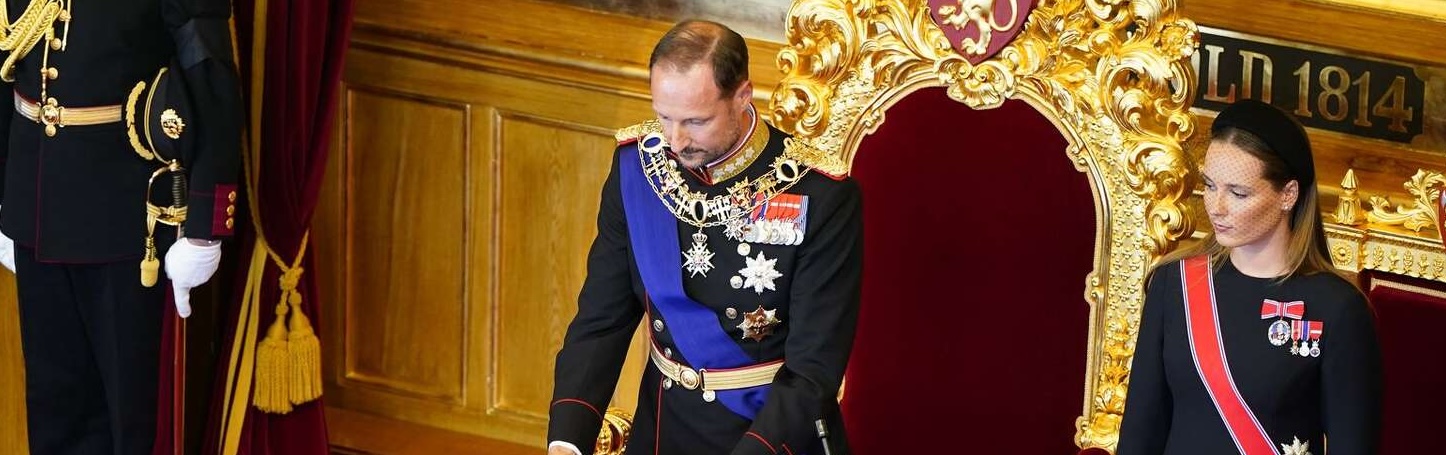
Oslo - At 1 p.m. on Tuesday 1 September, Haakon VIII stood before the Storting and spoke the twenty-five words required by the Norwegian Constitution of every new king: a pledge to govern the Kingdom of Norway in accordance with its Constitution and laws, “so help me God Almighty and Omniscient”. Four days and six hours had passed since the death of his father, Harald V, who died at Oslo’s Rikshospitalet at 6.35 a.m. on Friday 28 August, aged 89. Norway has no interregnum: the moment the monarch dies, the first person in the line of succession is already king. The oath therefore formally binds a monarch whose authority has already passed to him. The edsavleggelse is a legally binding declaration, with potentially significant consequences if the oath is not taken or is subsequently broken.
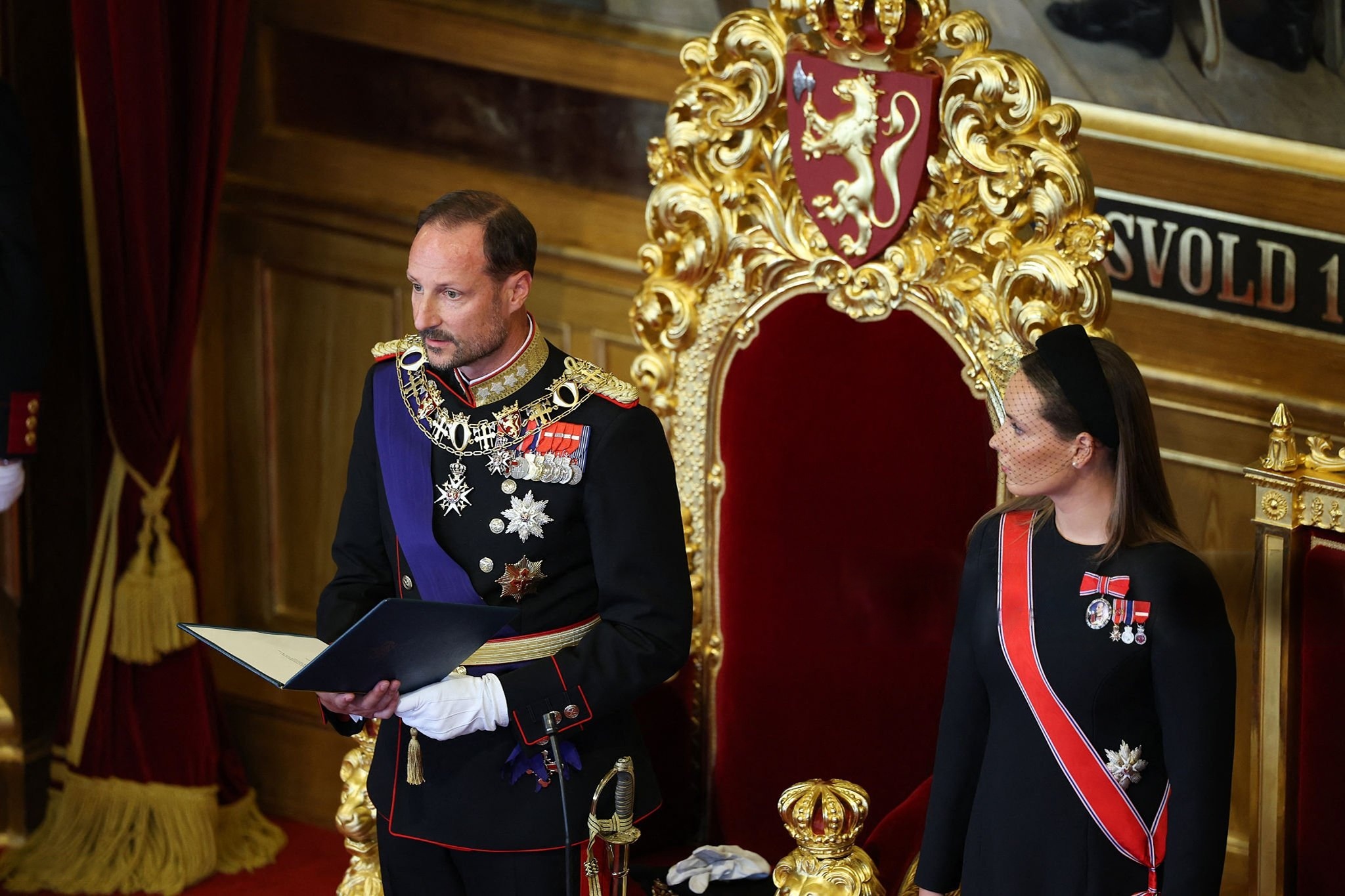
The ceremony was the same as that held on 21 January 1991, when Harald entered the chamber with Sonja at his side and the portrait of Olav V draped in black. This time, however, the timetable was compressed. In 1991 four days passed between Olav’s death, on 17 January, and the ceremony; the same interval was observed this time, except that Parliament was in its summer recess and had to be recalled. The Constitution provides for such a situation: if the Storting is not sitting, the oath must be submitted in writing to the Council of State and then solemnly repeated at the first parliamentary session. That was what happened with Olav V in September 1957, when he renewed the oath at the opening of Parliament on 20 January 1958, in the Lagting chamber because the main hall was being renovated. Earlier still, the kings of the union with Sweden took the oath in French or Swedish, or sent it from Stockholm: Carl IV repeated it in Oslo in 1859, Oscar II in 1872. The first king to take the oath directly before the Storting was Haakon VII, on 27 November 1905, only a few days after the referendum that had chosen him. One hundred and twenty-one years later, his namesake has also taken up the same motto: “Alt for Norge”, All for Norway.
The king left the Palace at 12.50 p.m. in the 1966 Lincoln Continental bearing the registration A-5, the open-top car the family calls “the wedding car”: it was used by Harald and Sonja in 1966 and by Haakon and Mette-Marit in 2001. From 11.30 a.m., the Royal Guard had marched from Akershus along Karl Johans gate to Palace Square, while around a thousand personnel from the Guard, Army, Air Force and Navy formed a cordon along the route. The commander of the Guard, Emil Ottosen, said the arrangements mirrored those used for the ceremonial opening of the Storting in the autumn. Several thousand people gathered in central Oslo, many of them in front of the large screen set up in Eidsvolls plass, as the Parliament building was closed to the public. Queen Sonja and Prince Sverre Magnus had taken their seats in the chamber before the king arrived; Crown Princess Ingrid Alexandra accompanied him inside. The gallery, diplomatic box and press gallery were full, with everyone dressed in black.
Haakon was received at the entrance by the five vice-presidents of the Storting. Its president, Masud Gharahkhani, opened the sitting by reading the government’s formal communication on the death of Harald V and the transfer of the Crown, before giving the floor to the sovereign. After the oath came a speech of only a few sentences. Haakon said he hoped the good relationship with the Storting built up by his father Harald, his grandfather Olav and his great-grandfather Haakon VII could be preserved and developed in keeping with the tasks facing the country. “The Queen and I confirm that we place ourselves at the disposal of the country and its people in order to carry out our service,” he concluded, “and in this tradition I too, as King of the country, have adopted the motto Alt for Norge.” Applause and cheers broke out in the square.
Gharahkhani, the Labour MP born in Tehran, delivered the longest address of the sitting, first paying tribute to Harald and then addressing the new sovereigns. He recalled the late king’s thirty-five-year reign, his decision to marry Sonja, which “showed that the Royal House too could renew itself without losing its foundations”, and his speech about a plural Norway, delivered in the Palace gardens exactly ten years earlier, on 1 September 2016. “It was easy to become fond of King Harald, which is why it is so incredibly hard to say goodbye to him,” he said. After a minute’s silence, he turned to Haakon and Mette-Marit: “Your Majesties have now inherited the Kingdom of Norway, and with that responsibility come great expectations.” Gharahkhani stressed that the monarchy must evolve alongside the democracy it is called upon to protect, “only in this way can it endure”, and placed the day within a wider setting: “We live in a world marked by greater unrest than we have seen for a very long time; democracy is under attack.” He ended with the old invocation, “Gud bevare kongen og fedrelandet”, God preserve the King and the fatherland. Then came the royal anthem, sung to the melody of God Save the King, followed by the sovereign’s departure. Only after the king had left the building was the president able to close the sitting.
Shortly before the ceremony, Gharahkhani had said that “monarchy and democracy are not in contradiction; they belong together”, and that the difference compared with 1991 lay in the number of members of the royal family present: “I know Queen Sonja very much wanted to be here. Everyone knows that she and King Harald were a team.” In the afternoon, Ingrid Alexandra signed her own written oath to the Constitution at the Palace, which the king will report to the next Council of State before forwarding it to the Storting. Of the 169 MPs, Altinget calculated, only two had been sitting in the chamber the last time a king took the oath.
The Queen, however, was absent. A Palace statement issued on Monday had still listed her alongside her husband and daughter. On Tuesday morning, a note from pulmonologist Are Holm of the Rikshospitalet changed the programme: complications “on several occasions since the operation, including today” meant that the patient needed to remain under observation throughout the day. Mette-Marit, 53, was diagnosed with pulmonary fibrosis in 2018; the condition worsened in 2025 and 2026, and in June she underwent a lung transplant, before being discharged in mid-July. Michael Perch, senior consultant at Copenhagen’s Rigshospitalet, said that three months after the operation immunosuppressive treatment is at its most intensive and the risk of infection is higher: in a crowded room, staying at home “is a reasonable choice”. At around 5 p.m., Haakon himself drove the court Range Rover to the Rikshospitalet, with his wife sitting in the back; at 5.40 p.m. Princess Märtha Louise also arrived, her husband Durek Verrett having undergone kidney surgery at the same hospital the previous week. The king left alone at 6.22 p.m. and returned just over two hours later.
The timing of the oath coincided with an opinion poll the Royal House had been awaiting for months. A Norstat survey for NRK, conducted over the weekend immediately after Harald’s death, put support for the monarchy as a form of government at 72 per cent, eight points higher than the 64 per cent recorded in May; 20 per cent would prefer a republic or another form of government, while 8 per cent were unsure. Haakon receives a rating of 8.8 out of 10, compared with 8.1 when he was Crown Prince; Mette-Marit rises from 4.4 to 5.2.
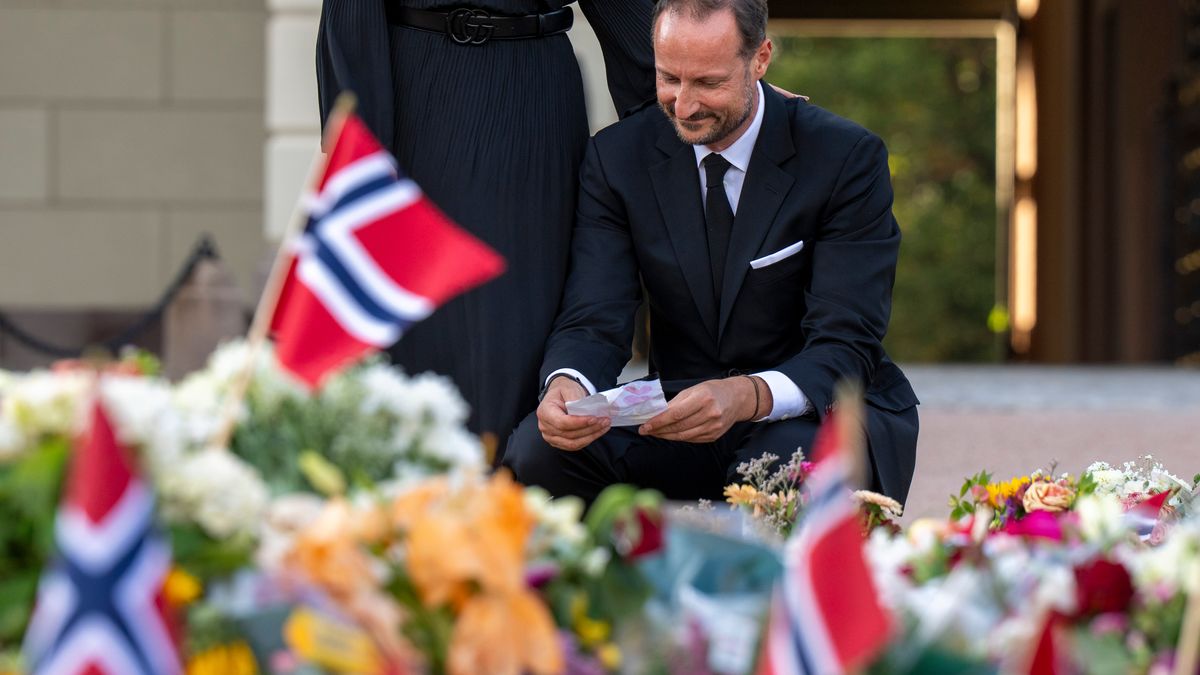
The rest of the week has already been laid out. Since 9 a.m. on Monday, the carillon of Oslo Cathedral has been sounding every hour until 9 p.m., playing hymns and funeral music by Norwegian composers never previously used for royal occasions; it will continue until the funeral. Harald’s coffin was moved on Monday from the Red Drawing Room to the Slottskapellet, where members of the public have been able to pay their respects since Tuesday; some travelled on the overnight train from Bergen to do so. The funeral is set for Wednesday 9 September at Oslo Cathedral, with invitations sent to every country with diplomatic representation in the capital and a police operation that the police themselves describe as one of the largest ever mounted.