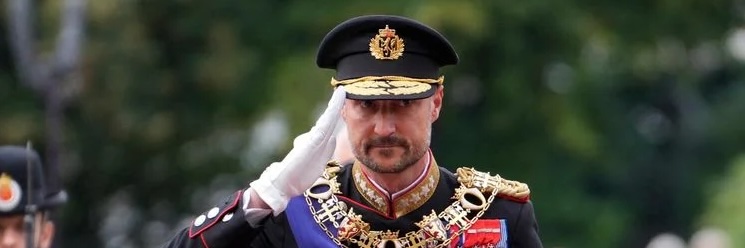
Oslo - The new King Haakon VIII has suspended almost all Royal Family engagements until 9 October. Meanwhile, thousands of people are being given the opportunity to pay their respects at Harald V’s coffin at the Royal Palace, while Oslo prepares for the State Funeral on 9 September, which will be attended by several European royal families as well as Estonian President Alar Karis.
The death of King Harald V continues to shape almost every aspect of public life in Norway. On Wednesday 2 September, five days after his death, the new King Haakon VIII announced that the Court would remain in mourning until 9 October, exactly one month after his father’s funeral. The Court mourning period will therefore last longer than the national mourning declared by the government, which will end after the funeral on 9 September.
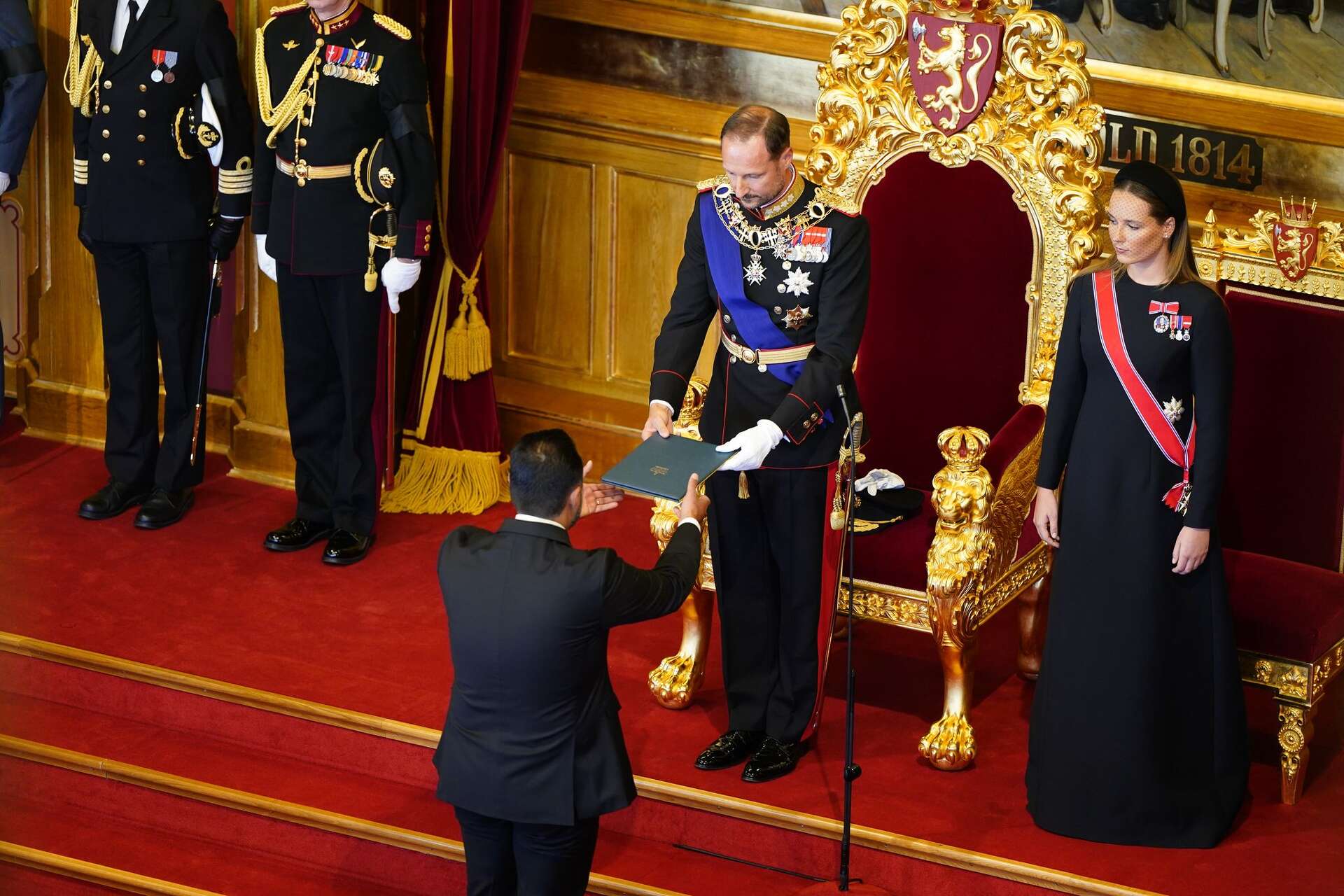
Harald died at 6.35am on Friday 28 August at Oslo’s Rikshospitalet, where he had been admitted to hospital. He was 89 and had been King since 1991. His death meant that his son Haakon immediately became Haakon VIII; on Tuesday he took the oath required by the Constitution before the Storting, Norway’s parliament.
The decision announced on Wednesday will have a direct impact on the workings of the new Royal Household. Until 9 October, all official engagements that can be postponed will be cancelled. Only the King’s constitutional duties will continue, including meetings of the Council of State, the formal opening of the Storting and certain audiences. Members of the Royal Family and Court staff will wear dark clothing or, when in uniform, a mourning band. Public activities at royal properties will also be suspended.
The Palace also gave one detail that offers a fairly clear indication of what the change of monarch will mean in practice: trips and engagements in Norway and abroad that had been scheduled during Harald’s reign will, “as a general rule”, be cancelled. Public duties will gradually resume after 9 October and the Royal Household’s diary will be reorganised. This is therefore about more than cancelling a few weeks of engagements: a substantial part of the programme drawn up before the King’s death will have to be rescheduled.
There will nevertheless be some exceptions over the coming days. At 11am on Friday 4 September, Haakon VIII will preside over a meeting of the Council of State at the Royal Palace and, shortly afterwards, will receive representatives of the Sámi Parliament and the Armed Forces at condolence audiences. He will be accompanied at both engagements by Crown Princess Ingrid Alexandra.
The Storting also took part in the ceremonies on Wednesday morning. The President of Parliament, Masud Gharahkhani, the other members of the presidium and the parliamentary party leaders went to the Royal Palace, filed past Harald’s coffin and later laid flowers in Slottsplassen, the large square in front of the Palace.
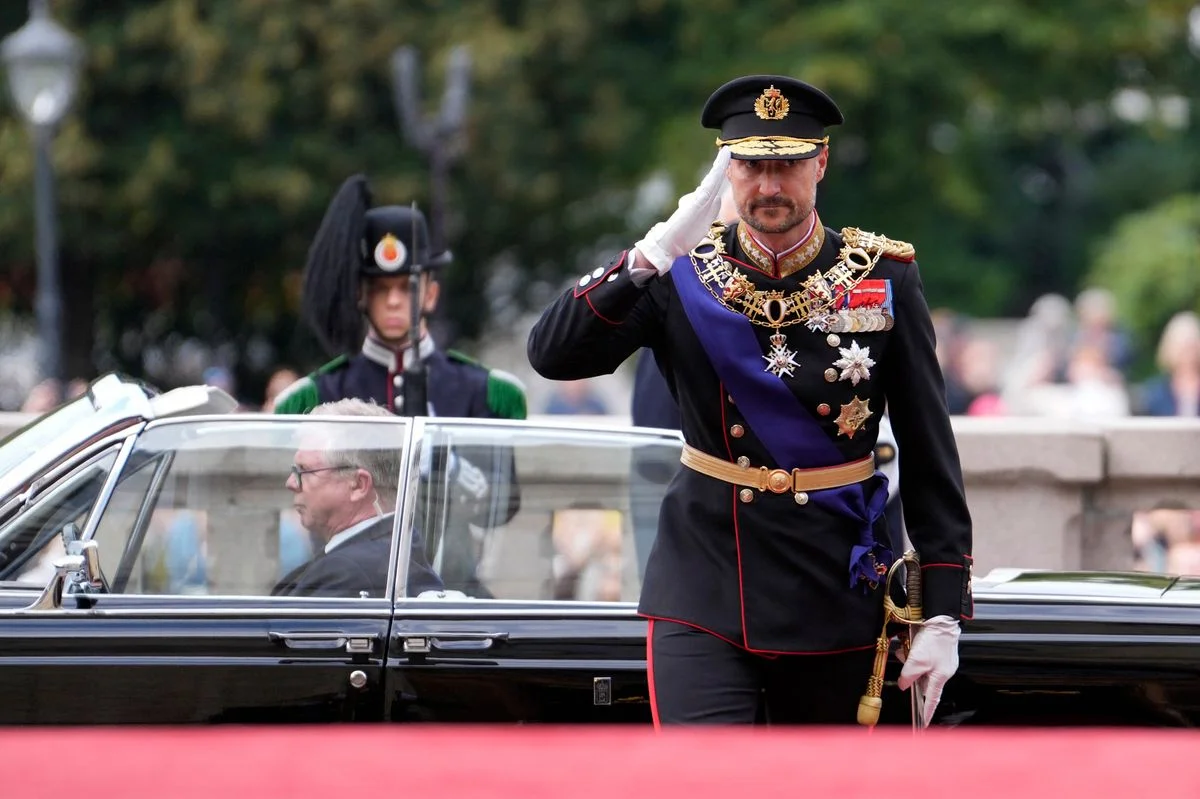
The King’s coffin is lying in the Slottskapellet, the Palace Chapel, where it was transferred on Monday after a ceremony attended only by the family, the Court and the King’s aides-de-camp. The chapel has been open to the public since Tuesday. On Wednesday, the normal opening hours planned for this stage of the mourning period came into effect: it will remain open every day from 10am to 6pm until 8 September, the day before the funeral.
Visitors pass through security checks in the Palace grounds before making their way slowly through the chapel and past the coffin. Photography and filming are not allowed, and flowers may not be left inside. The rituals surrounding the Norwegian monarchy, normally conducted with relatively little public display, have become part of the country’s daily news in recent days.
Meanwhile, Oslo is preparing above all for Wednesday 9 September. Harald’s funeral will begin at 1pm in Oslo Cathedral and will follow the funeral liturgy of the Church of Norway. The service will be led by Olav Fykse Tveit, Preses of the Church of Norway, together with the Bishop of Oslo, Sunniva Gylver. At the start of the ceremony, the entire country will observe a minute’s silence, from 1pm until 1.01pm, marked by the ringing of church bells.
Before the service, the coffin will be carried in procession from the Royal Palace to the cathedral. The route will run along Karl Johans gate, the main street through central Oslo, before continuing along Kirkegata to the cathedral. After the funeral, a second procession will take the coffin to Akershus Castle Church, where a private ceremony will be held. Harald will be buried in the Royal Mausoleum in a new double sarcophagus that is also intended eventually to hold Queen Sonja.
The Armed Forces will play a highly visible role. Troops from the different branches of the military will line the route, while the ceremonial gun salutes will be fired from Akershus Castle. The Foreign Ministry has organised a briefing for journalists on Thursday specifically on the involvement of the military and police: their presence in central Oslo will increase considerably over the coming days.
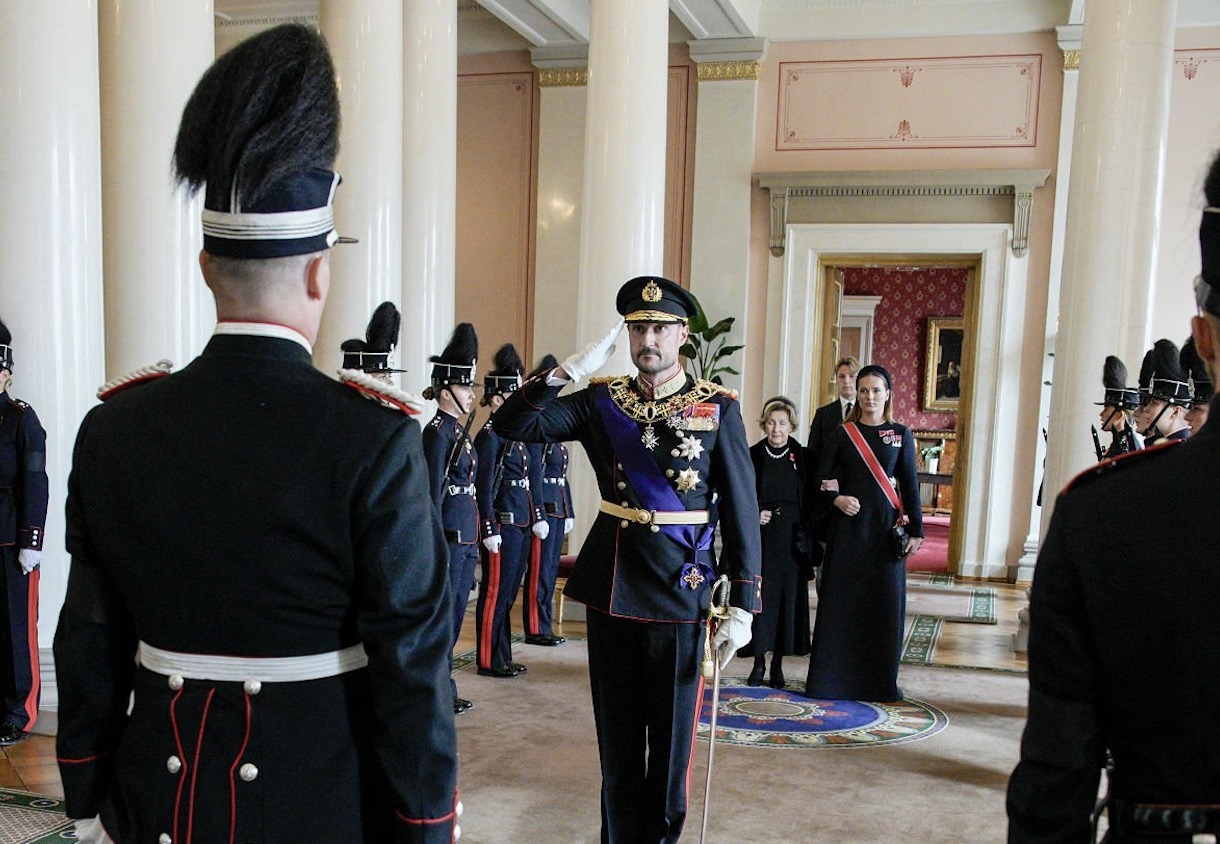
Behind the arrangements is a plan that has been many years in the making. “Handlingsplan K” is the contingency plan drawn up by the Norwegian authorities for the death of the sovereign and has been under preparation since 1991, the year Harald came to the throne. It covers the arrival of foreign delegations, security, movement through the centre of the capital and the more difficult task of balancing the protection needs of dozens of heads of state with allowing Norwegians to watch the procession.
Foreign delegations have been confirming their attendance in recent hours. An unusually large contingent of the Swedish Royal Family will be present: King Carl XVI Gustaf and Queen Silvia, Crown Princess Victoria and Daniel, Prince Carl Philip and Sofia, Princess Madeleine and Christopher O’Neill, and Princess Christina, the King’s sister, with her husband Tord Magnuson.
King Frederik X and Queen Mary have been confirmed from Denmark. King Philippe and Queen Mathilde of Belgium will also attend, as will King Willem-Alexander and Queen Máxima of the Netherlands together with Princess Beatrix, and Japan’s Crown Prince Akishino with his wife Kiko.
Among the heads of state already confirmed are German President Frank-Walter Steinmeier and the presidents of the three Baltic states: Alar Karis of Estonia, Edgars Rinkēvičs of Latvia and Gitanas Nausėda of Lithuania. The list is not yet final: every country with diplomatic representation in Oslo has been invited, together with NATO, European Union and European Economic Area states that do not have their own representation there. Space in the cathedral, however, is limited.
There is also the question of the new Queen, Mette-Marit. On Tuesday she was unable to accompany Haakon to the Storting for the oath-taking ceremony. Dr Are Holm of the Rikshospitalet had said that she had developed further complications following her lung transplant and would remain under observation throughout the day.
Haakon was therefore accompanied by his daughter Ingrid Alexandra, while Sonja and Prince Sverre Magnus watched the ceremony from the parliamentary chamber. By Wednesday evening, the Royal Household had not issued a further bulletin on Mette-Marit’s condition.
For that reason too, at least for now, Ingrid Alexandra has become the most visible member of the Royal Family alongside the new King. She will, for example, join her father for the constitutional duties and audiences already announced for Friday.
After the funeral, Harald’s coffin will be taken to Akershus and the flags, which have remained at half-mast throughout the period of national mourning, will be raised again. Haakon and the Royal Family are then expected to return to the Palace and appear on the balcony overlooking Slottsplassen. The period of national mourning will be over; the Court’s mourning, following the decision taken by the new King on Wednesday, will continue for another month.