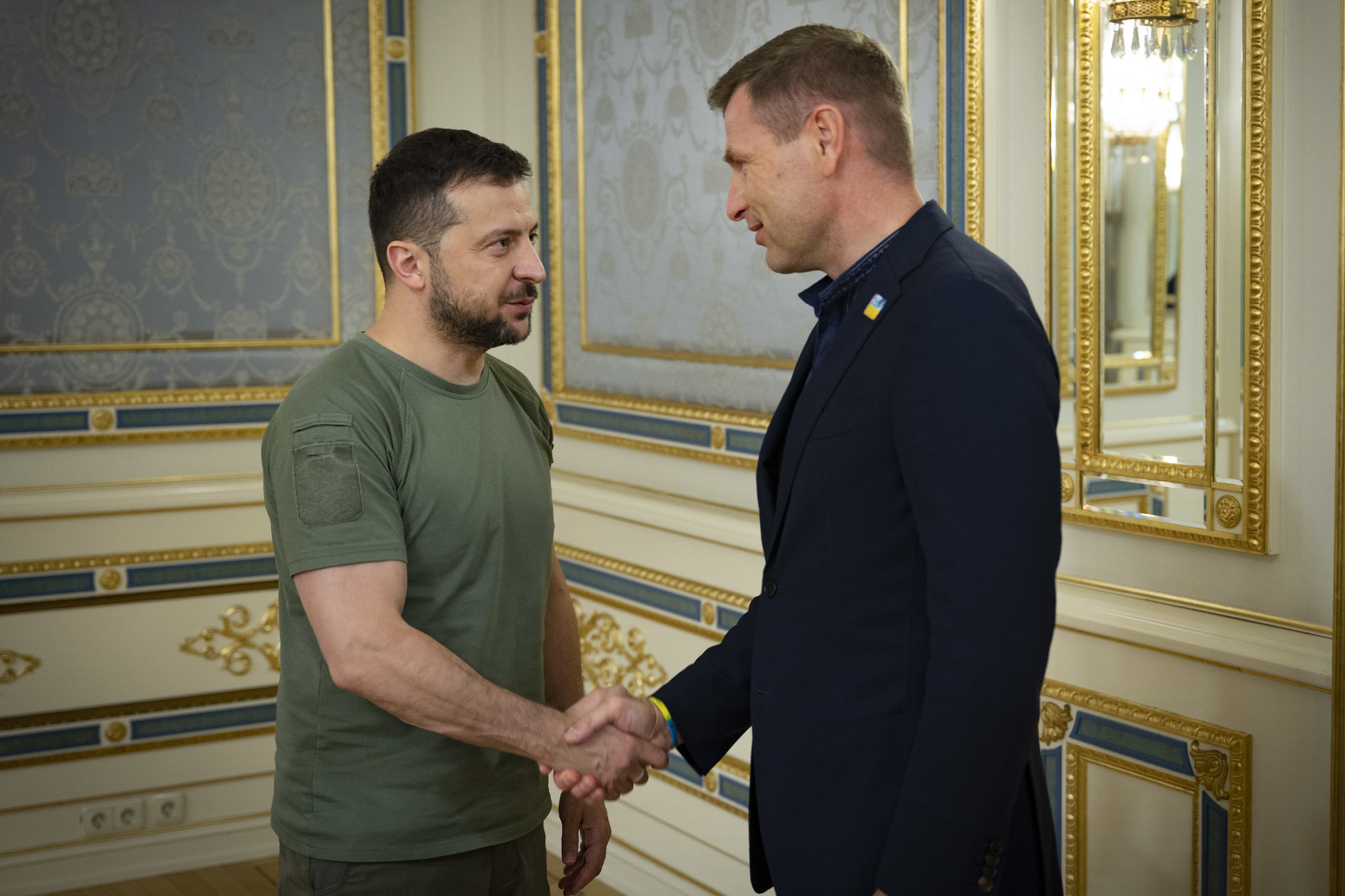
Tallinn - On Wednesday evening, Hanno Pevkur announced on ERR’s Aktuaalne kaamera news programme that he was stepping down as defence minister. He used a line that he repeated in a social media post published at the same time: a minister does not count socks and cartridges or negotiate contracts, but the findings of the Riigikontroll concerning the work of the Defence Forces and the Centre for Defence Investments (RKIK) raise a question of political responsibility, and he is taking that responsibility. He ended the interview by saying that Prime Minister Kristen Michal must now find a new minister.
Pevkur had been defence minister since 18 July 2022, first in Kaja Kallas’s government and then in Michal’s, both from his own Reform Party. He had previously served as minister for social affairs, justice and the interior. His resignation must be approved by the Riigikogu, which resumes its ordinary sittings on 14 September: until then, he remains in office. Earlier that same day, just a few hours before, the Riigikogu had elected Chancellor of Justice Ülle Madise president of the Republic with 71 votes in the first round. The affair that led to Pevkur’s resignation unfolded over ten days, but its roots lie in an audit from a year ago.
The 27 August audit
Every year the Riigikontroll, Estonia’s state audit body, examines the government’s consolidated accounts. The audit for 2025 was published on 27 August and contained just one qualification, but a significant one: the auditors were unable to confirm the accuracy of the stock balance for the Ministry of Defence and the bodies under it, recorded in the accounts at €1.2 billion. Because of shortcomings in the Defence Forces’ accounting, it is unclear which stocks, in what quantities and at what value, appear in the accounts, and which were left out without justification. The rest of the state accounts were judged to be correct.
The Riigikontroll also found that the ministry had introduced, through an internal regulation, an exception to the state’s general accounting rules that was not provided for under those rules, and had used it to keep some stocks off the balance sheet. Auditor General Janar Holm wrote that society is making an increasing effort to finance the expansion of defence capabilities, while the ministry, the Defence Forces and RKIK have failed to make a sufficient effort to resolve problems already identified in the previous year’s accounts. He added that these problems have concrete consequences, because they give anyone entering the system through incompetence or bad faith an easy opportunity to waste or divert public money and assets.
The Riigikontroll proposed measures that no minister is likely to welcome: temporarily removing responsibility for accounting for assets and stocks from the Defence Forces and RKIK and centralising it within the ministry until the system has been put in order, while establishing a chain of accountability extending down to individual posts.
The 2025 precedent
The most politically difficult part for Pevkur was that all of this had already been put in writing. In its audit of the 2024 accounts, published in autumn 2025, the Riigikontroll had found problems with contracts involving bodies under the ministry and had encountered serious difficulties even in obtaining the necessary data. Urmas Reinsalu, leader of Isamaa and chairman of the Riigikogu’s State Budget Control Select Committee, recalled discussing precisely this disorder with Pevkur and Holm a year ago, and receiving assurances that the problems would be resolved. The ministry’s Secretary General, Kaimo Kuusk, has acknowledged in recent days that what was done was not enough.
A year later, the Riigikontroll says the situation has worsened. For a minister who had promised to put things right, a second negative audit on the same issue is more damaging than the first.
The €70 million and the Indian company
The issue the opposition has focused on most concerns the Riigikogu. In autumn 2025 the ministry had assured MPs, in its budget documents, that intermediary contracts through which Estonia buys military supplies for partner countries using European funds created no financial liabilities for the state. The August audit instead found that those contracts had created risks and liabilities for the budget amounting to €70 million. Reinsalu said the Riigikogu had simply been told something untrue, and that lying to parliament is, in any country, an indisputable reason for resignation.
The weekly Eesti Ekspress reconstructed where those €70 million came from. Estonia wanted to buy ammunition for Ukraine and paid advances amounting to that sum to Indian businessmen who, according to the report, had never sold a single round of ammunition. The first contract between RKIK and the company Datasel dates from August 2024, with an initial transfer of €15 million financed through the European Peace Facility; the second was signed in October 2024, with another advance of more than €10 million. The ammunition never arrived; promises did, and the dispute is now before a court.
Accounts differ over who made the decision. Elmar Vaher, the current director of RKIK, said he would not have signed the contract and that the decision had been taken within a very small circle, to the point that the head of procurement at the time knew nothing about it. Magnus-Valdemar Saar, who headed RKIK at the time, replied that buying ammunition from third countries involves risks known to everyone, but that no significant decision was taken without the approval of the ministry’s senior leadership. During negotiations for the first contract, according to Ekspress, Minister Pevkur and the then Secretary General Kusti Salm were kept informed; the new Secretary General, Kuusk, was subsequently kept up to date.
On Tuesday 1 September, prosecutors opened criminal proceedings concerning the Ministry of Defence and the bodies under it in relation to the matters described in this year’s and last year’s audits. No one has formally been placed under investigation.
The political pressure
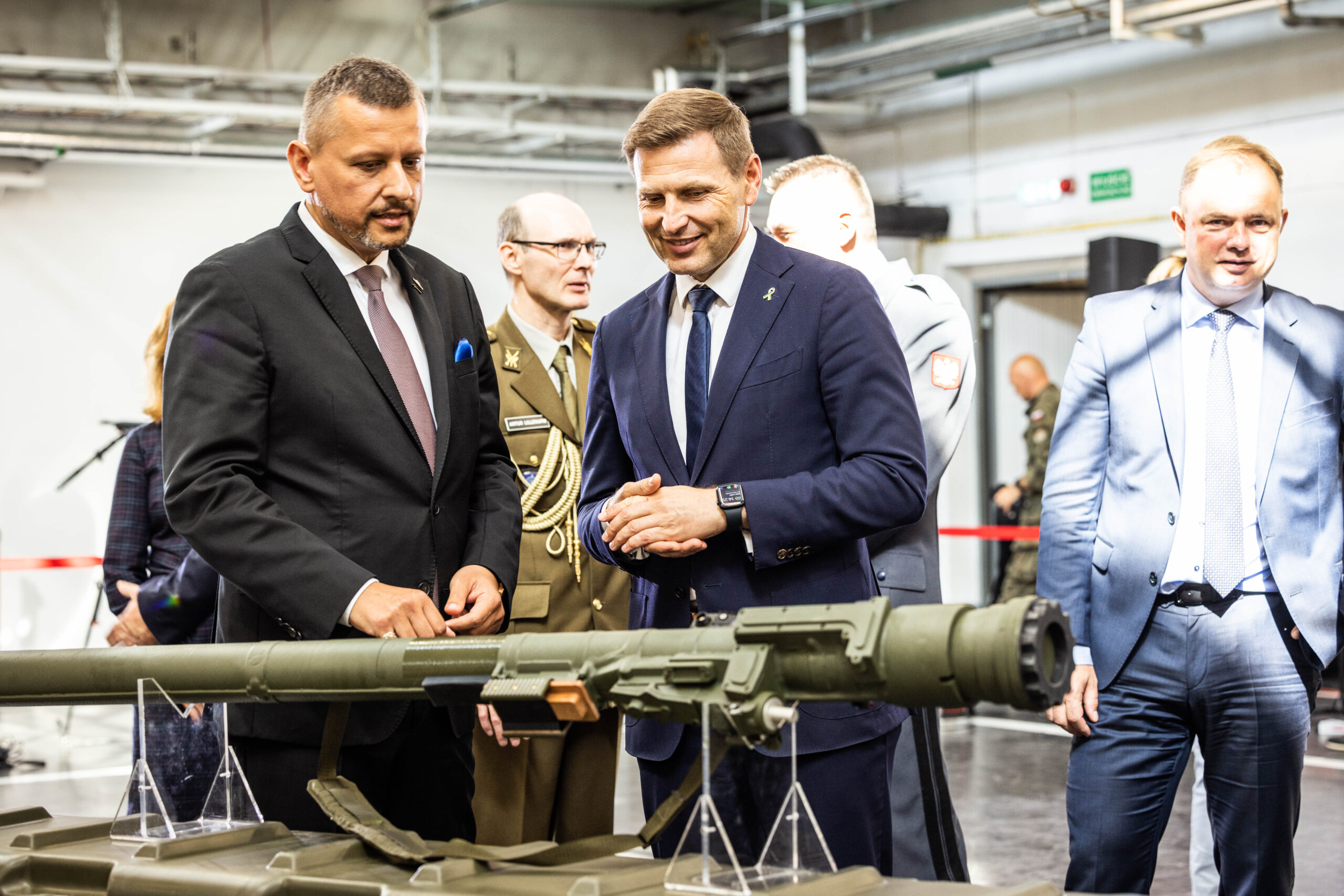
Calls for Pevkur’s resignation came from across the opposition and also from outside the Riigikogu. Reinsalu had already called for him to go on 28 August, arguing that Pevkur was incapable of providing leadership for national defence and that shifting the blame on to subordinates did not help. On Tuesday, Lauri Läänemets, leader of the Social Democrats, told Terevisioon that Pevkur had become the face of declining public confidence in national defence; he added that he knew him personally and regarded him as a capable and likeable person, but that in a year he had failed to resolve problems of this scale, and that if he did not resign voluntarily a no-confidence motion would follow. Lavly Perling of Parempoolsed placed responsibility on the prime minister: Michal, she said, shares responsibility for a failure that humiliates Estonian defence. Martin Helme, leader of EKRE, said the most appropriate course would be a vote of no confidence in the entire government.
Michal maintained a middle position until the end. On Tuesday he said he saw no personal fault on the minister’s part, but that this did not rule out taking political responsibility, and that the decision rested with Pevkur after a cabinet meeting scheduled for Thursday morning, to which Holm, Commander of the Defence Forces Andrus Merilo, Vaher and Kuusk had been summoned. The prime minister also indicated where he believed the responsibility lay: with former RKIK employees and managers who signed the contracts and made the payments knowing that they could generate liabilities for the state, without informing anyone. He said he would not rule out civil action against them.
Pevkur pre-empted everyone by resigning on the evening before the meeting. In his post he wrote that he was leaving confident that the decisions taken to strengthen defence had been the right ones and that Estonia was better defended than ever. He thanked Kallas and Michal for their trust. Uued Uudised, a news site close to EKRE, commented that there was little to celebrate, arguing that the minister had by then found himself in a position too compromised for him to remain in office.
The third minister in ten months
Pevkur is the third Baltic defence minister to leave office since last October, and in none of the three cases was the departure linked to policy towards Russia or NATO. In Lithuania, Dovilė Šakalienė was suspended on 20 October 2025 over a scandal involving influencers and resigned two days later amid a dispute with Prime Minister Inga Ruginienė over military spending; since 11 November the ministry has been headed by the Social Democrat Robertas Kaunas. In Latvia, on 7 May 2026 several drones entered from across the Russian border, two crashed on Latvian territory and one damaged an empty fuel depot in Rēzekne. Military detection systems had failed to spot them, and alerts were sent to residents’ phones around an hour after the impact. Prime Minister Evika Siliņa demanded the resignation of Defence Minister Andris Sprūds, who stepped down on 10 May, accusing New Unity of sacrificing him because of opinion polls ahead of October’s Saeima elections. Siliņa herself fell on 14 May after the Progressives withdrew from the coalition; on 28 May Andris Kulbergs became prime minister and Colonel Raivis Melnis defence minister.
All of this is happening after a summer in which concern about Russia has been at its highest level since 2022. On 6 August the Wall Street Journal, citing US intelligence, reported that Moscow could test NATO with a limited incursion as early as the autumn. On 25 August CIA Director John Ratcliffe made a surprise trip to Moscow, during the same period in which Archbishop Paul Richard Gallagher was also in the Russian capital, to warn the Kremlin against escalating tensions with US allies, particularly Estonia, Latvia and Lithuania. Baltic diplomats have confirmed that further information was received over the summer about Russian false-flag operations, although there were no signs of an imminent conventional attack. On 30 July European Commissioners Kaja Kallas, Andrius Kubilius and Valdis Dombrovskis, together with their Polish and Finnish colleagues, wrote to Ursula von der Leyen warning of a deteriorating security environment and increasingly frequent airspace violations and drone incursions, and called for around $115 billion for frontline countries.
All three Baltic states have reached or are approaching military spending equal to 5 per cent of GDP, with Lithuania at 5.38 per cent, and the European Union has begun disbursing around $14 billion in defence loans for the region. Never before has so much money passed through these ministries. The drone wall announced last year still does not exist because of financial, technical and legal problems; Rail Baltica has abandoned its 2026 target and even 2030 is now in doubt. In Latvia, the money translated into anti-drone systems that failed to detect incoming drones. In Estonia, it has translated into €1.2 billion in stocks that nobody knows how to count. People paying the tax increases introduced to finance defence read the audits, and the gap between the phrase “better defended than ever” and the Riigikontroll’s accounts has become Michal’s political problem.
What happens now
The prime minister must put forward a candidate for defence minister and secure approval from a Riigikogu that resumes on 14 September, with prosecutors at work, the 2027 budget approaching and an opposition determined to turn the RKIK affair into a case against the government. The State Budget Control Select Committee, chaired by Reinsalu, has already scheduled a hearing on the audit. The Riigikontroll is awaiting a response to its proposal to centralise accounting within the ministry. And a court case is pending against Datasel over €70 million that Estonia had paid for ammunition intended for Ukraine.
R.S.
Silere non possum