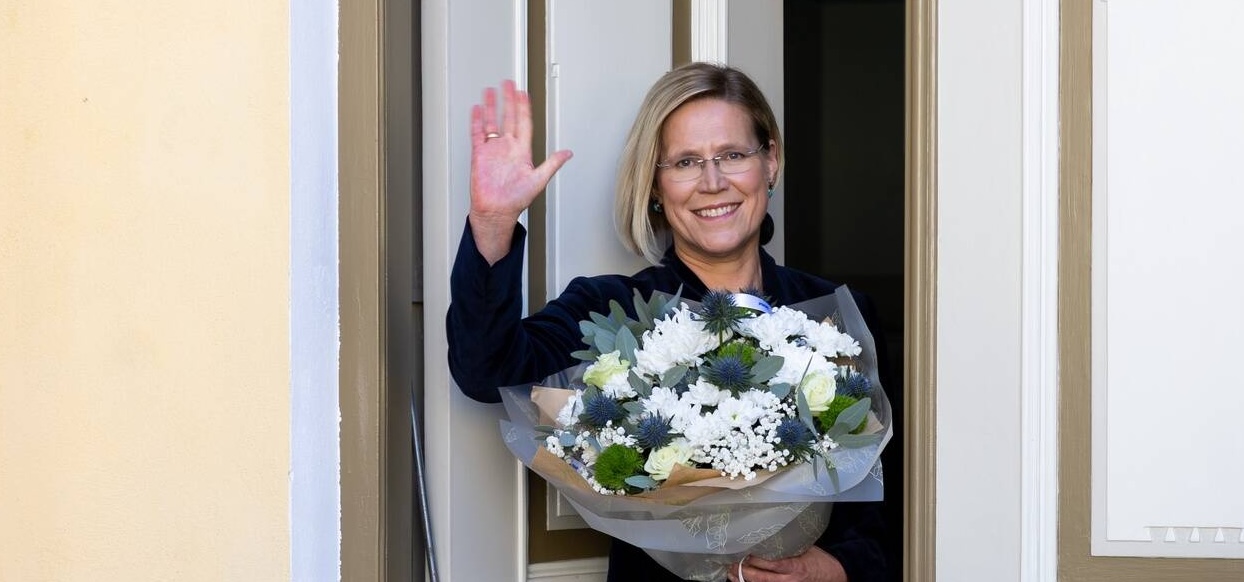
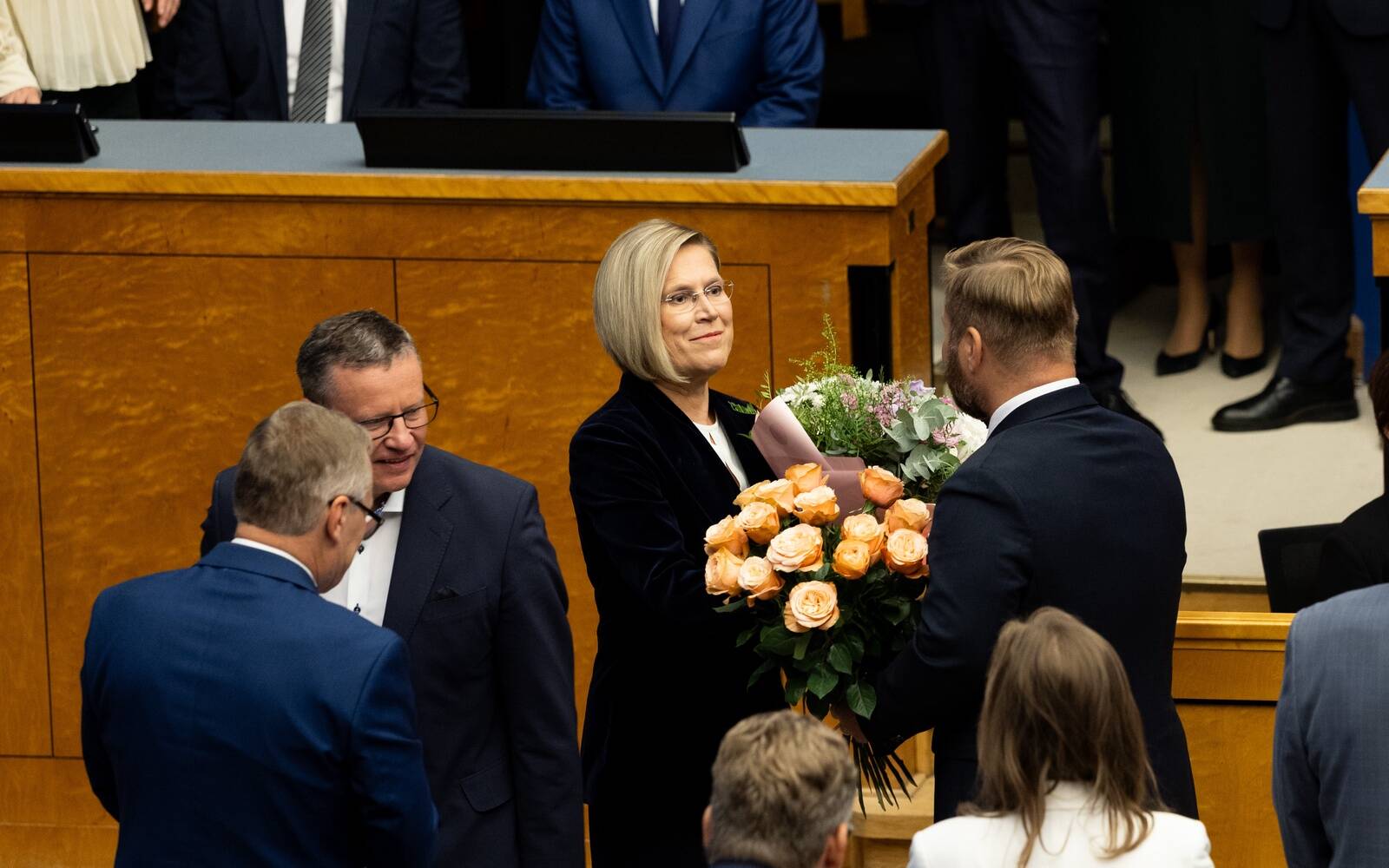
Tallinn - The extraordinary sitting of the Riigikogu on 2 September opened at noon and ended in the early afternoon with just one name on the ballot paper. Ülle Madise, Chancellor of Justice since 2015, received 71 votes in the secret ballot; seven ballot papers were returned blank and none was declared invalid. The constitutional threshold of two thirds, 68 MPs out of 101, was cleared in the first round. Seventy-eight MPs collected a ballot paper and all 78 placed it in the ballot box. The other 23, from the EKRE and Keskerakond parliamentary groups, stayed out of the vote, as they had announced they would do weeks earlier.
After the result was announced, Madise addressed the chamber briefly: she would do her best to be worthy of the trust placed in her, she said, and hoped that, by debating vigorously when necessary and supporting one another, much could be done to make life in Estonia happy, good and safe. Alar Karis responded on social media within an hour: Parliament had made its choice, he would soon hand over the office to her, and serving as head of state was a great honour and an even greater responsibility. On Thursday morning, 3 September, the president-elect went to Kadriorg for her first official meeting with her predecessor.
Madise, 51, becomes the seventh person to hold the office since Konstantin Päts and the sixth since the restoration of independence, after Lennart Meri, Arnold Rüütel, Toomas Hendrik Ilves, Kersti Kaljulaid and Karis. She is the second woman to do so after Kaljulaid, who served as head of state from 2016 to 2021.
Why there was only one name on the ballot
Until June, the contest had looked very different. Karis, elected in 2021 with 72 votes and also the sole candidate on that occasion, had not ruled out seeking a second term, and in a Norstat poll conducted in early March, 41.6 per cent of respondents named him as their preferred president; Madise received 4.2 per cent in the same survey. On 23 June, at the Võidupüha parade in Rapla, the president opened his speech by wishing the Estonian people a happy Võidupüha and a happy Jaaniõhtu «for the last time» as head of state. He told the press that he had made the decision some time before, for personal reasons, and that the only question had been when to make it public without disrupting his day-to-day work.
From that point, the negotiations shifted onto more familiar political terrain in a pre-election year: finding a candidate as quickly as possible who could command the broadest possible support, so that the parties could return to concentrating on the Riigikogu elections in March 2027. Prime Minister Kristen Michal asked the political parties to step «out of the trenches for a moment» and look for the best candidate between late June and July. Support for Madise consolidated over the summer, bringing together the governing coalition - Reformierakond, Eesti 200 and the Social Democrats - and the opposition Isamaa party. On 24 August, the first day on which nominations could be submitted, 75 MPs signed her nomination; only 21 were required. The following day, the National Electoral Committee registered her candidacy. A poll conducted around the same time found that 43 per cent of Estonians supported her election.
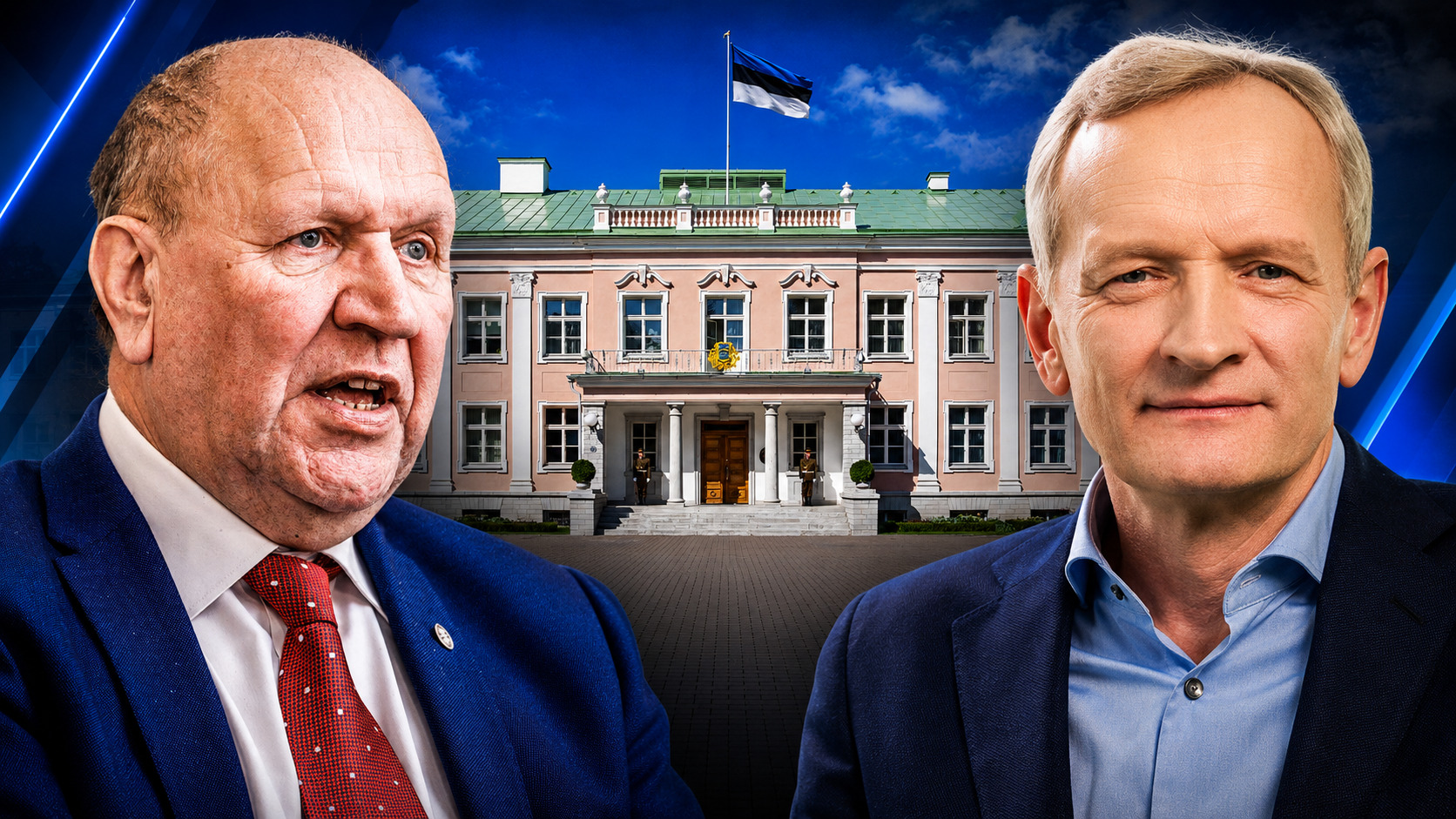
The two opposition parties left outside that agreement took different approaches. Mihhail Kõlvart’s Keskerakond had backed TalTech rector Tiit Land and, lacking the numbers to nominate him, chose not to take part in what its leader described as an appointment rather than an election. EKRE, meanwhile, pursued the candidacy of Mart Helme, whom Martin Helme had said he was prepared to put forward in the electoral college if the Riigikogu failed to elect a president. On 27 August, nine MPs from the group challenged Madise’s registration before the Supreme Court. Their argument was that a serving Chancellor of Justice, whose constitutional role is to oversee whether laws passed by Parliament comply with the Constitution, cannot simultaneously ask that same Parliament to elect her without breaching the separation of powers; she should have resigned first. The Court dismissed the challenge on the eve of the vote, while recognising that MPs had a right to bring such a challenge even though the Presidential Election Act does not expressly provide for one. Presidential powers, it observed, are acquired upon taking the oath of office, not upon becoming a candidate; Madise would have had to refrain from political statements capable of undermining her independence, and no such statements had been found. On Wednesday morning, EKRE held a protest outside Toompea Castle while the vote was taking place inside.
Who the new president is
Ülle Anton was born in Tartu on 11 December 1974. She studied law at the University of Tartu, where she also completed a master’s degree, and in 2007 received a doctorate in administrative management from TalTech. Her career has been spent entirely within Estonia’s institutions. She worked at the Ministry of Justice, where in the early 2000s she headed the legislative policy department and took part in work on the introduction of electronic voting; she later moved to the secretariat of the Riigikogu’s Constitutional Committee, during the years when Estonia was bringing its legal system into line with European Union law ahead of accession, and subsequently joined the National Audit Office as chief auditor. At the same time, she taught public and constitutional law at several Estonian universities and, helped by her frequent television appearances, became one of the country’s best-known constitutional lawyers.
In 2009, Toomas Hendrik Ilves brought her to Kadriorg as his legal adviser. She became more widely known during the Jääkelder affair in 2012, when protests over the system of party financing prompted the president to bring representatives of political parties and civil society together around the same table. Anton’s regular presence alongside Ilves helped establish her at the time as one of the president’s closest advisers. Ilves himself has said that even then he considered her suited to the presidency of the Republic, although she was still too young. Her name did in fact begin circulating again in the autumn of 2016, when neither the Riigikogu nor the electoral college initially managed to elect a new president.
In January 2015, the Riigikogu elected her Chancellor of Justice on Ilves’s nomination: she was the first woman to hold the post. She took office on 31 March. The term lasts seven years and in 2022 she was confirmed for a second term. In more than a decade, she has given the office of the õiguskantsler a profile extending beyond scrutiny of the constitutionality of legislation, frequently intervening in the practical workings of public administration as well: from the proliferation of rules and administrative requirements to the police use of automatic number-plate recognition cameras and requests by public authorities to access citizens’ banking data.
Her most serious clashes with the government, according to former State Secretary Taimar Peterkop, date back to the pandemic. One image from that period also became well known: a photograph from spring 2021 showing Anton posing without a mask beside President Kersti Kaljulaid, who was wearing one. Asked about the episode, she said it would have been hypocritical to put one on solely for the photograph after spending an hour and a half talking without masks, and argued that a surgical mask was not capable of stopping the virus. The episode helped reinforce, particularly among some of her critics, the image of her as a vaccine sceptic, a description she has always rejected.
She is married to Lauri Madise, a judge at the General Court of the European Union in Luxembourg. Given the nature of his position, his personal reserve and the fact that he works abroad, he is unlikely to take on a particularly visible public role alongside his wife, much as Georgi-Rene Maksimovski did during Kersti Kaljulaid’s presidency.
Asked what kind of president she would be, Anton replied that, health and life permitting, she would like to be a president devoted to her office, hard-working and down-to-earth, without giving up her belief that public life also needs more lightness, humour and creativity. When it was suggested that she cultivate a more elegant and polished image, she replied that she did not know how to pretend and had no intention of learning.
The speech she delivered in the chamber before the vote was built largely around one word: trust. Trust in teachers and doctors, in journalists and police officers, in public officials and elected representatives. Anton argued that the constant production of regulations, reporting requirements and checks is often itself a symptom of the absence of that trust. She asked when Estonians had stopped fighting together to build a better future for their country and instead started fighting one another. In an interview, she added that if a governing political force were to attack judges, the free press or public officials, citizens would be able to count on her.
How a president is elected
Under the 1992 Constitution, the president is elected by the Riigikogu. A candidate must be an Estonian citizen by birth and at least forty years old; anyone serving on active duty in the Defence Forces is ineligible, as is anyone completing a second consecutive term. A candidate must be nominated by at least one fifth of MPs, or 21. Voting is by secret ballot and a two-thirds majority of all members, 68 votes, is required in each of the three possible rounds: the first is held on the first day, the second and third on the following day, with the final round restricted to the two candidates who received the most votes in the second. This year the dates were 2 and 3 September.
If Parliament fails to elect a president, the decision then passes within a month to the electoral college, the valimiskogu, made up of the 101 MPs and representatives of municipal councils. Administrative mergers have reduced its size over the years: the 374 members of 1996 had already fallen to 208 by 2021 and would have numbered 208 again this year, including 107 local delegates, on 26 September in Tallinn. There, a majority of those voting is sufficient, with no more than two rounds; if the electoral college also fails, the process returns to the Riigikogu. That happened in 2016, when five consecutive votes failed and Parliament elected Kaljulaid only on 3 October, after a process that had gone entirely off script.
Since 1992, the Riigikogu has elected the president on its own four times - in 1992, 2011, 2016 and 2021 - while the electoral college has done so three times, in 1996, 2001 and 2006. The term lasts five years and may be renewed only once consecutively. In 2021, Karis received 63 votes in the first round and 72 in the second, and in his inauguration speech he asked Parliament to consider either direct presidential elections or a larger electoral college, offering to submit a constitutional amendment himself if he saw sufficient political support for it. Only one change to the law emerged from that discussion: nominations must now be submitted between twelve and nine days before the vote, rather than between four and two. This year’s window opened on 19 August and closed on 24 August. 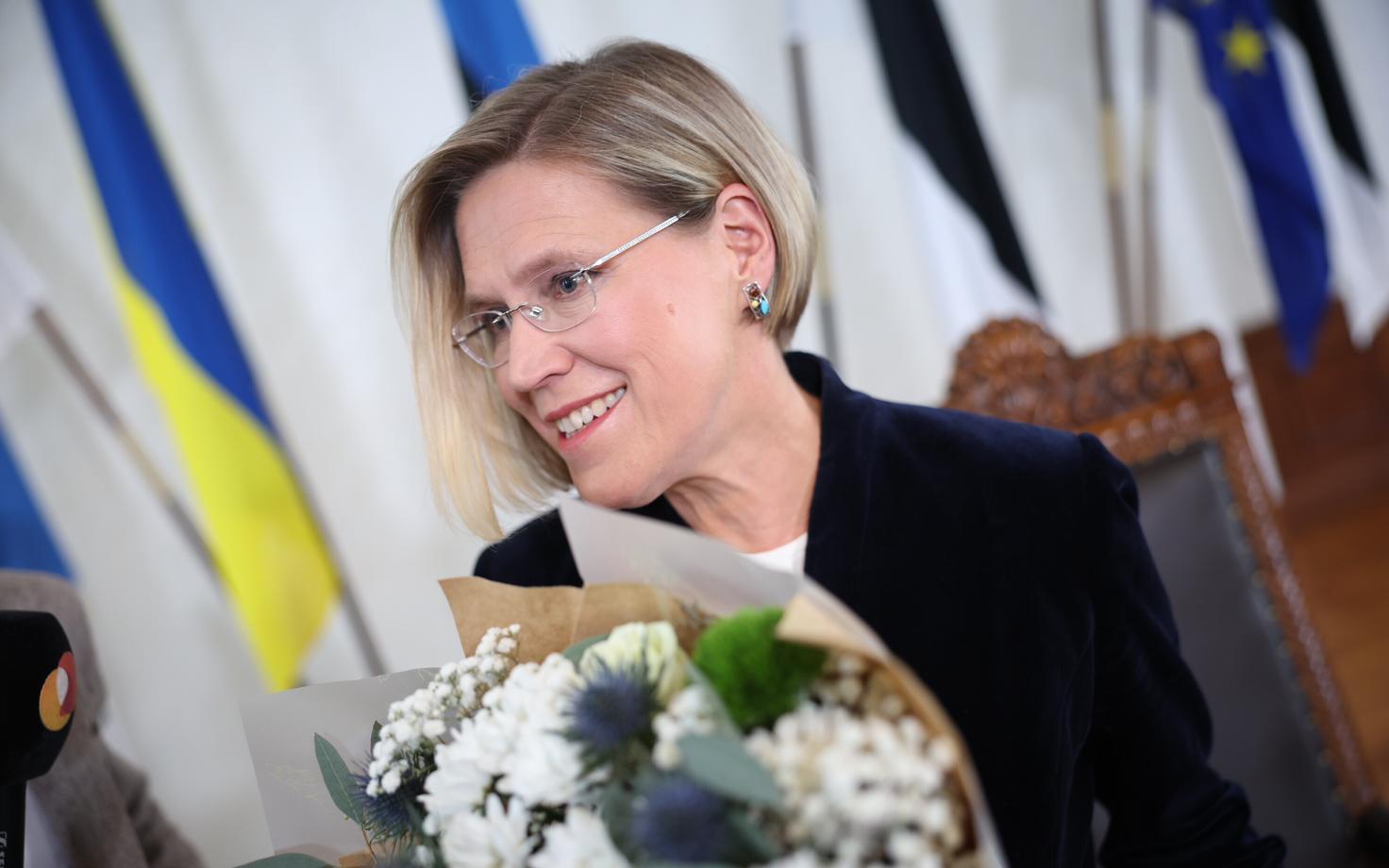
From 2 September to 12 October
Karis’s term expires five years after he took the oath of office on 11 October 2021. Madise will take hers on Monday, 12 October before the Riigikogu, and from that moment will exercise the powers of the office. The wording of the oath is laid down in Article 81 of the Constitution: whoever takes it pledges steadfastly to uphold the Constitution and the laws of the Republic, to exercise the powers entrusted to them impartially and to perform their duties faithfully for the benefit of the Estonian people and the Republic.
The programme for the day has not yet been officially announced. If it follows the pattern of 2021, the two presidents’ motorcade will leave Kadriorg for Toompea in the early afternoon; in the parliamentary chamber, the outgoing president will deliver a speech, followed by the oath, the national anthem performed by a choir and the new president’s address; the outgoing president will then place the presidential chain, the ametiraha worn on that occasion, around her neck. This will be followed by the signing of the visitors’ book in the Valge saal, the official photograph, an inspection of the guard of honour in Lossi plats and the return procession to Kadriorg. In 2021, Kaljulaid said farewell with a message in which she spoke of five years spent serving the best country in the world; Karis, who has already exchanged public courtesies with Madise and has said that he wants to be judged in ten or fifteen years’ time, has not yet said what he will do from 13 October.
There is still one position to fill. The Constitution gives the Riigikogu responsibility for appointing the Chancellor of Justice, on the proposal of the President of the Republic, for a seven-year term; Madise’s second term would have lasted until 2029. Until 12 October, it would be for Karis to make the nomination; after that, the responsibility will pass to Madise herself. Neither has yet said who should succeed her in an office she has occupied for longer than anyone else since 1993.
R.S.
Silere non possum